Angelshark
Squatina squatina (Linnaeus, 1758)
Critically Endangered- Maximum length
- 2.44 m
- Depth range
- Shallows to 150m.
- FAO code
- AGN
Meet the Angelshark
Angelsharks are a flat-bodied species of shark named for its angel-like appearance, created by the flattened pectoral fins around the top of its head, resembling a halo. Masters of disguise, Angelsharks have a well camouflaged body making it an expert ambush predator.
- What they eat
- Ambush predators - they lie in wait for fish, skates, crustaceans, molluscs, and cephalopods.
- Also known as
- ANGELSHARK, Angel Shark, Monkfish, Engelhai (DEU), Angelote (ESP), Ange De Mer (FRA), Squadro (ITA), Zee-engel (NLD), Anjo (PRT). *angel shark (as two words) refers to the family Squatinidae while Angelshark (as one word) refers to species common names.
How to identify
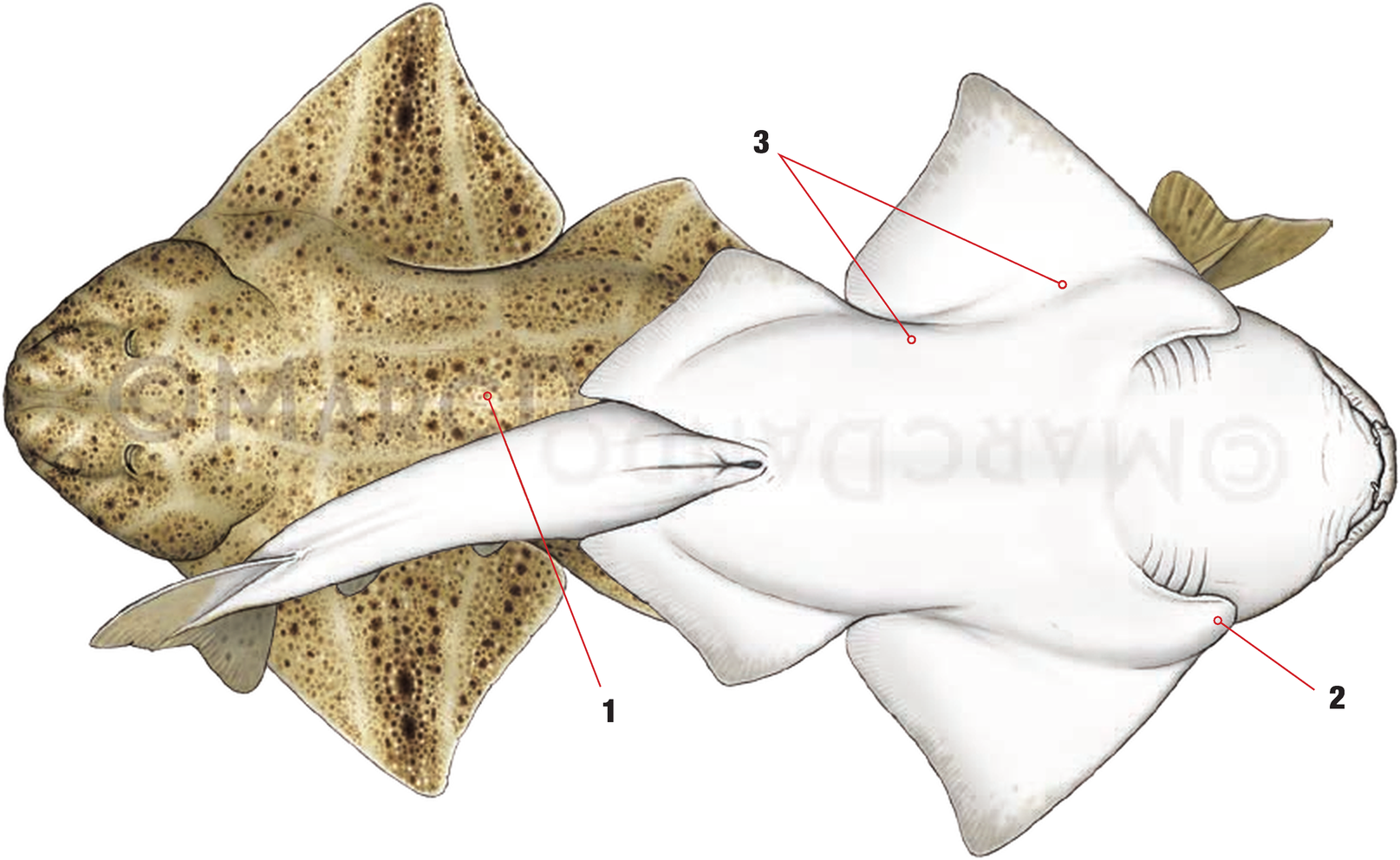
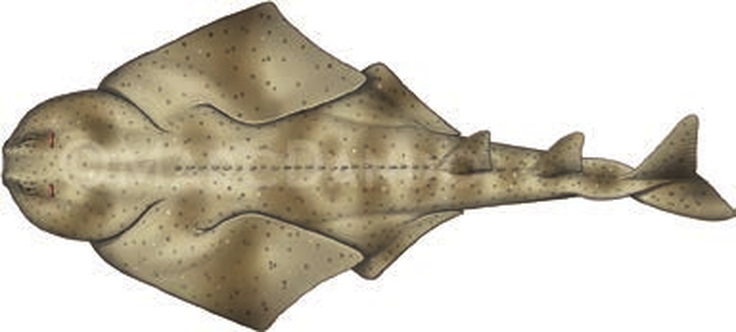
The numbers match the arrows on the illustration.
- Broad, flattened body.
- Pectoral fins not fused to the head.
- Dorsal fins set back on tail.
Colouring & markings
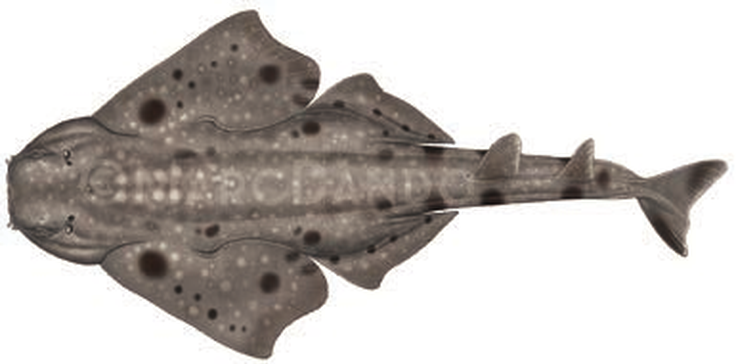
- Grey to red-brown dorsally with small white spots and scattered dark blotches. Pattern of light lines sometimes visible.
- White ventrally.
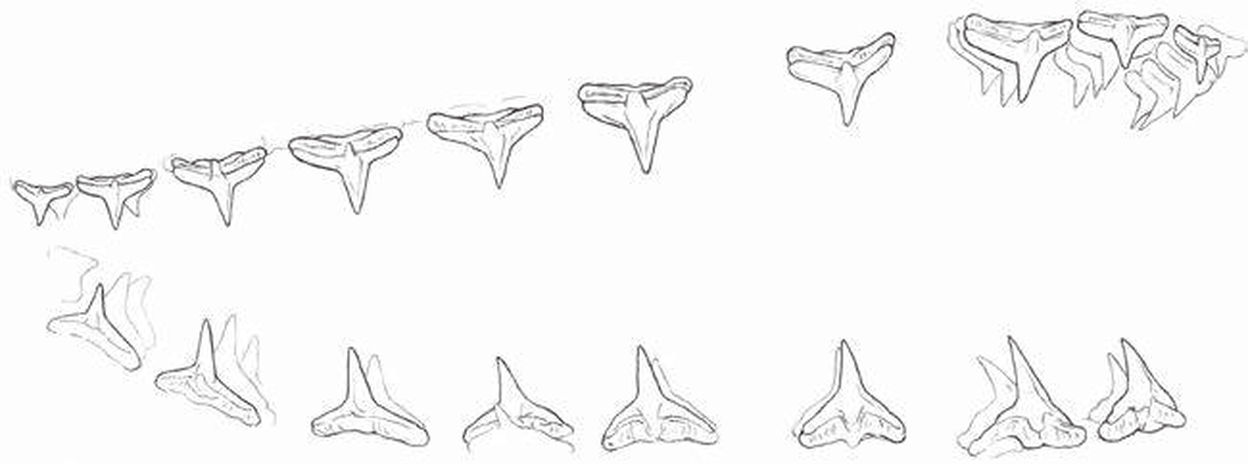
Teeth
Large, sharp, oblique single-cusped teeth. Upper jaw:18–22. Lower jaw:18–22.
How big do they get?
Where they live
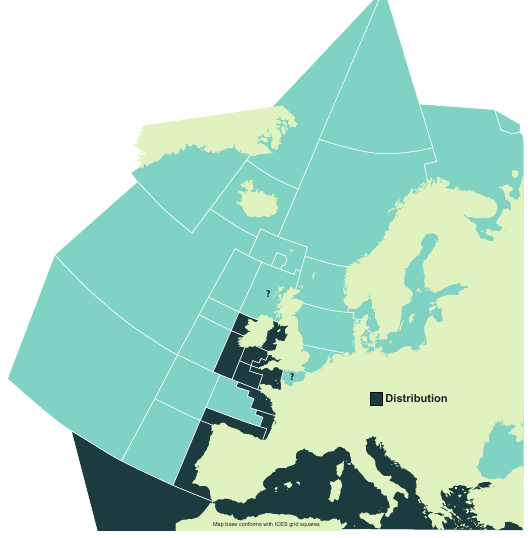
Distribution
Reduced from much of its former range. Found in the Northeast Atlantic and Mediterranean Sea. Regularly encountered in the Canary Islands, occasional records from Celtic and Irish Sea and records across the Mediterranean Sea.
Habitat
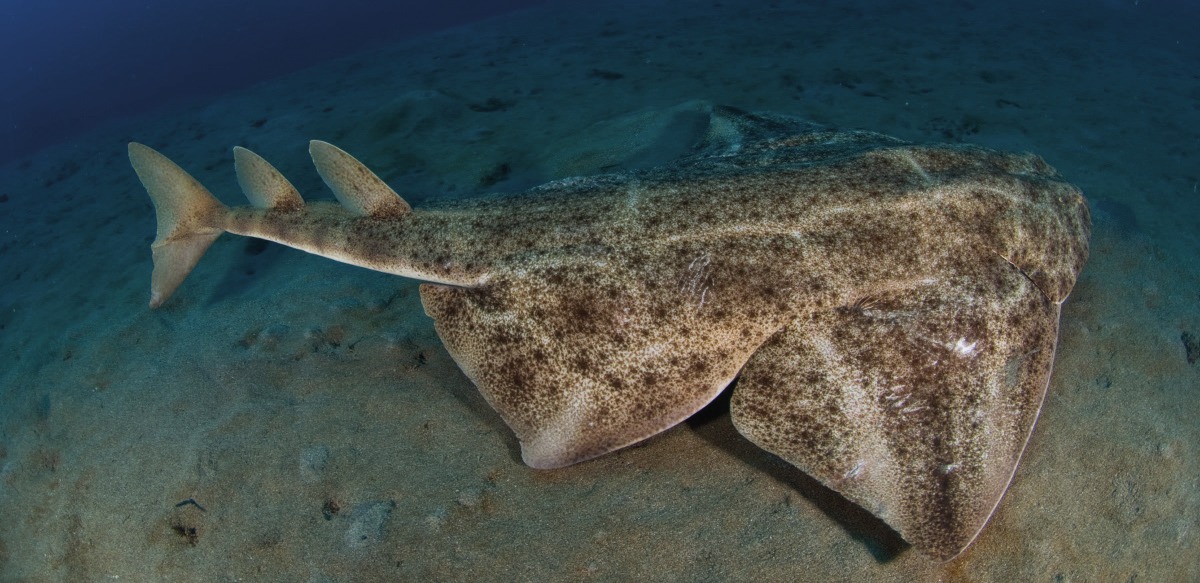
Demersal predator found in temperate waters from shallows to 150m. Prefers muddy and sandy substrates in coastal waters and bays. Active nocturnal predator, rests during the day often with only eyes and spiracles showing above substrate. Limited tagging data indicate high site-fidelity; some longer-distance movements reported. In the northern parts of its range this species has been known to migrate seasonally, which may be offshore to inshore, or south to north migrations during summer.
In the wild
-
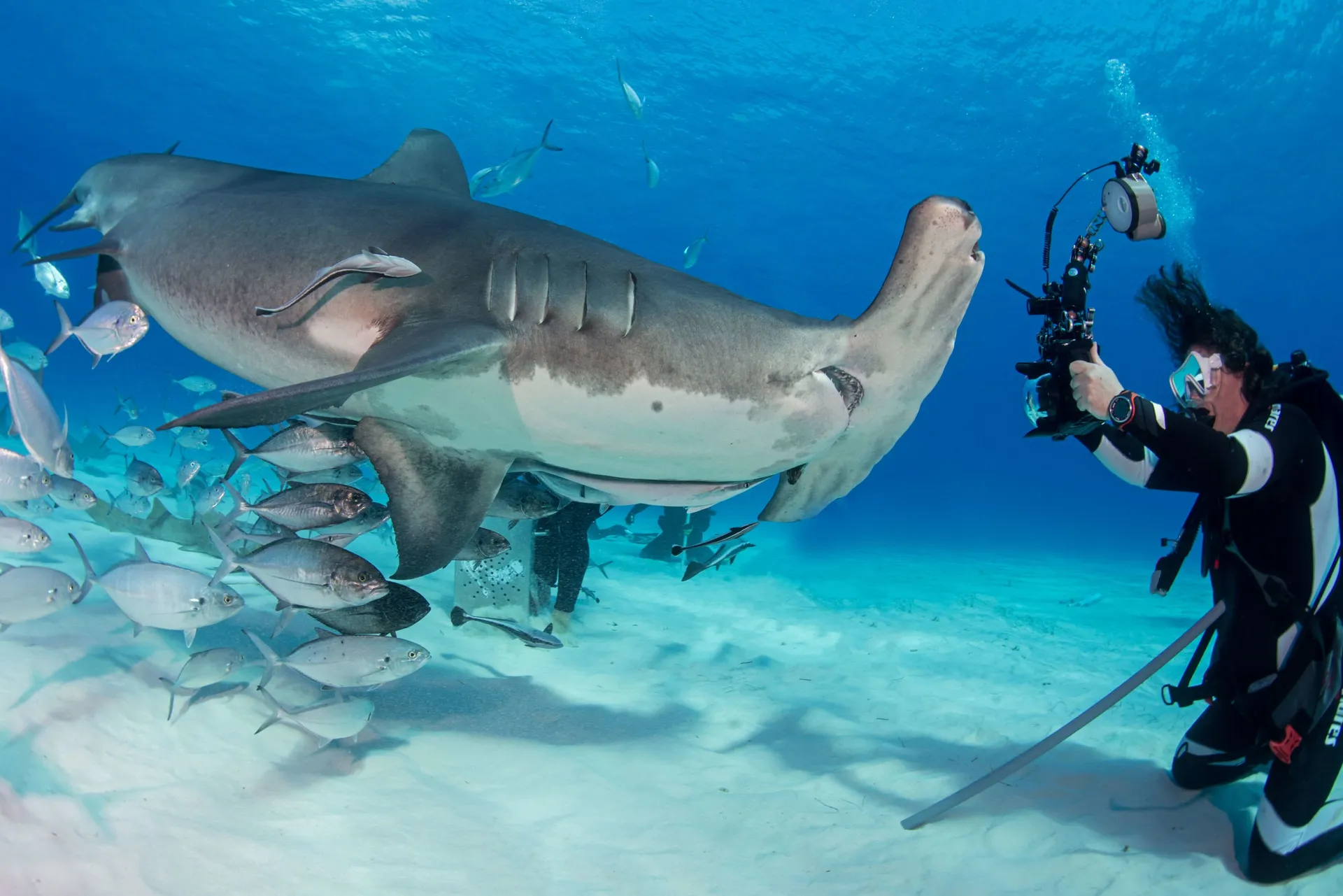
Recorded on a Shark Trust survey dive -
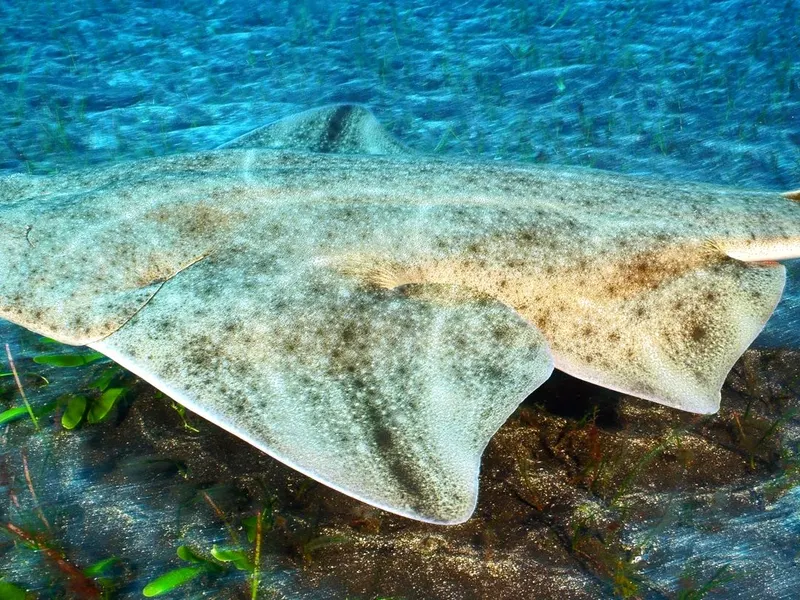
Resting on a sandy seabed -
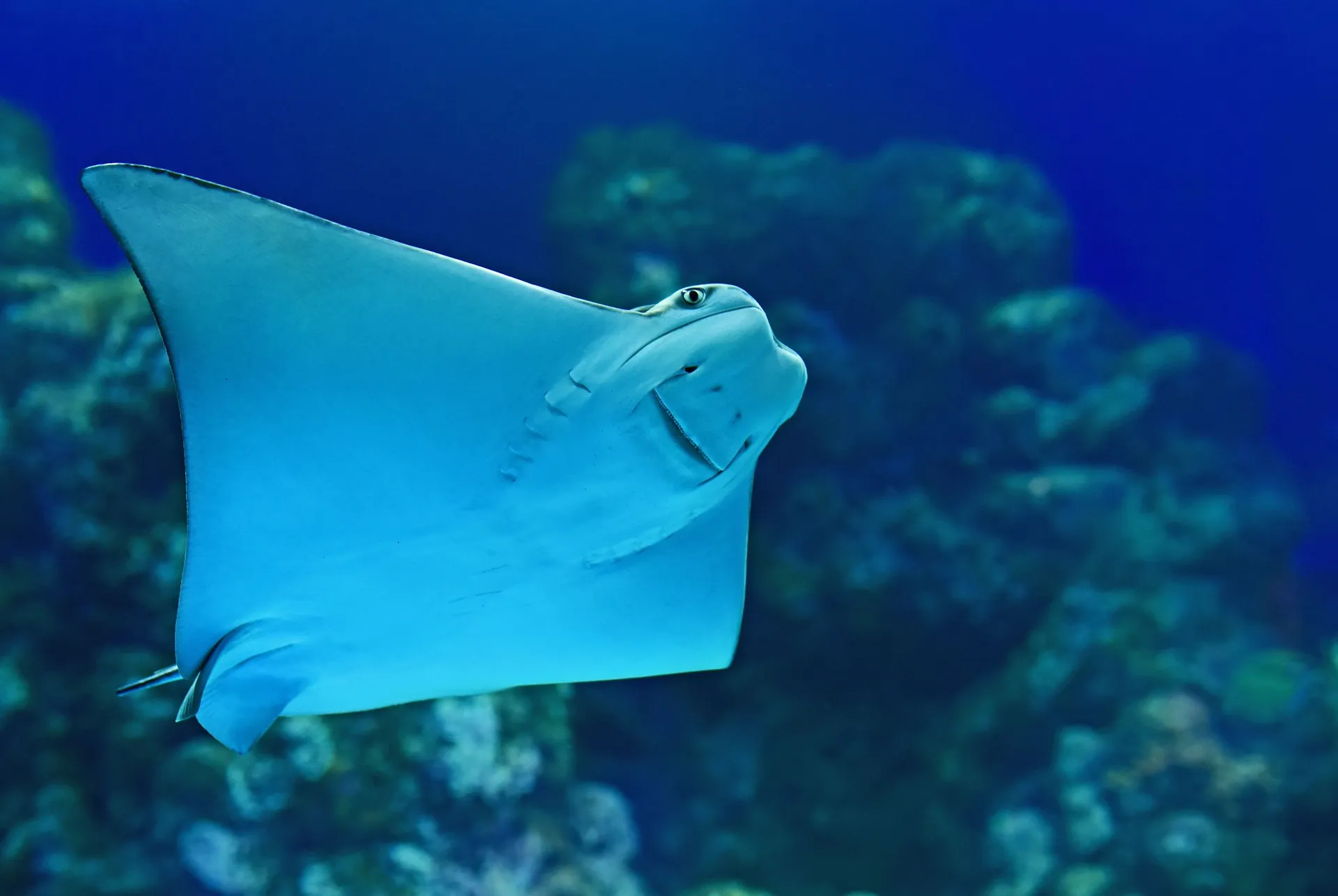
Cruising close to the sea floor -
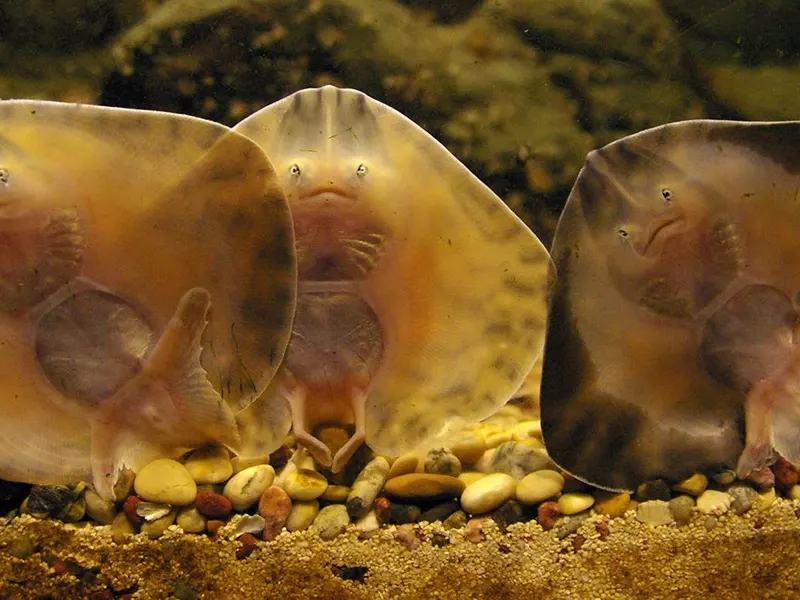
In the shallows at dusk -
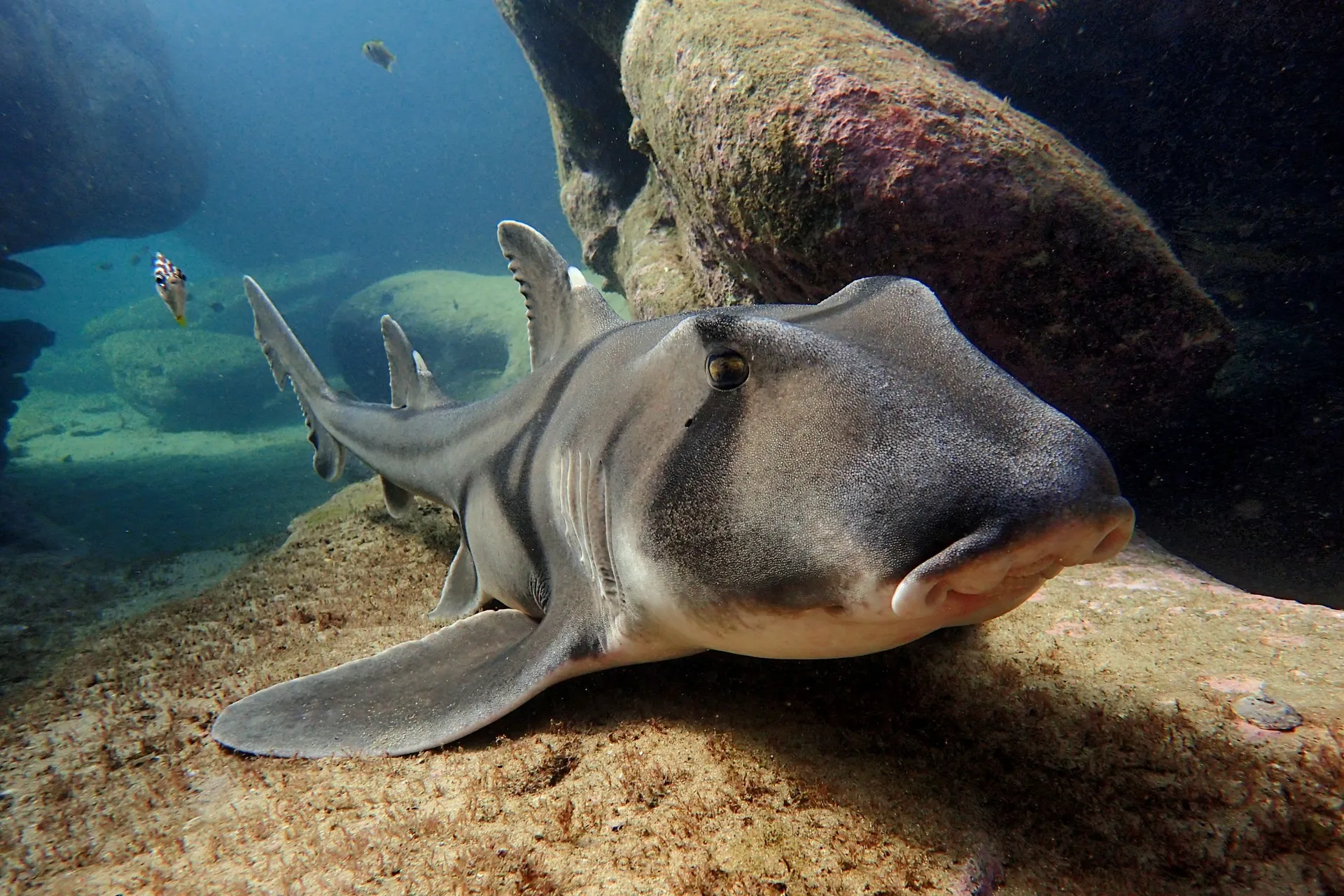
Sheltering on the reef
Go deeper
Size & biology
- Birth: 24–30cm.
- Matures: female 128–169cm; male 80–132cm.
- Max. TL: female ~244cm; male 183cm.
- Ovoviviparous, gestation period 8–10 months. Litters of 7–25 pups recorded, litter size depends on size of female. Pups born Dec-Feb in Mediterranean.
- Ambush predator: predominantly feeds on teleosts, esp. flatfish. Eats other demersal fishes, skates, crustaceans, and molluscs.
Conservation status
IUCN Red List: Global: Critically Endangered (2019) Europe: Critically Endangered (2019) Mediterranean: Critically Endangered (2016) Conservative life history traits and intense fishing activity throughout species range have led to significant decline in abundance. Conservation action is guided by the Eastern Atlantic and Mediterranean Angel Shark Conservation Strategy, the Canary Islands Action Plan and the Mediterranean Regional Action Plan.
Management
Subject to prohibitions under the CFP, RFMO and FNA regulations. Additional international regulations apply.
Commercial importance
Historically landed for human consumption, liver oil, and fishmeal. Occasionally reported as bycatch in trawl, longline and set-net fisheries.
References & further reading
Assessment: AGN/NEA/2020
- Ebert et al.
- Kabasakal & Kabasakal.
- Barker et al.
- Gordon et al.
- Ebert & Stehmann.
- Morey et al.
- ICES WGEF Report. Gordon et al.