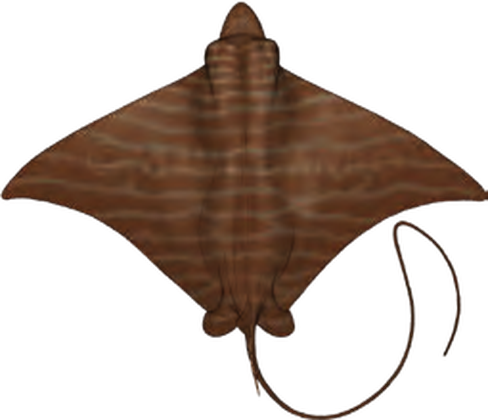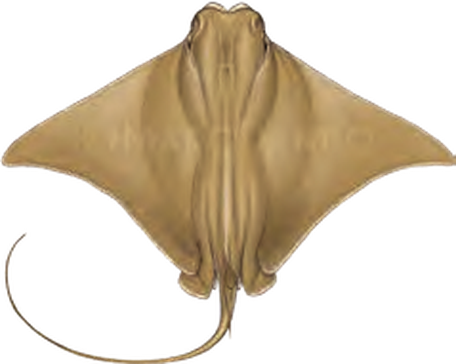
Common Eagle Ray
Myliobatis aquila (Linnaeus, 1758)
Critically Endangered- Maximum length
- 1.5 m
- FAO code
- MYL
Meet the Common Eagle Ray
- Also known as
- COMMON EAGLE RAY, Bull Ray, Sea Eagle, Whip-ray, Toad-fish, Eulenrochen (DEU), Aguila Marina (ESP), Aigle Commun (FRA), Aquila di Mare (ITA), Chuchu Aquila (NLD), Ratão (PRT).
How to identify
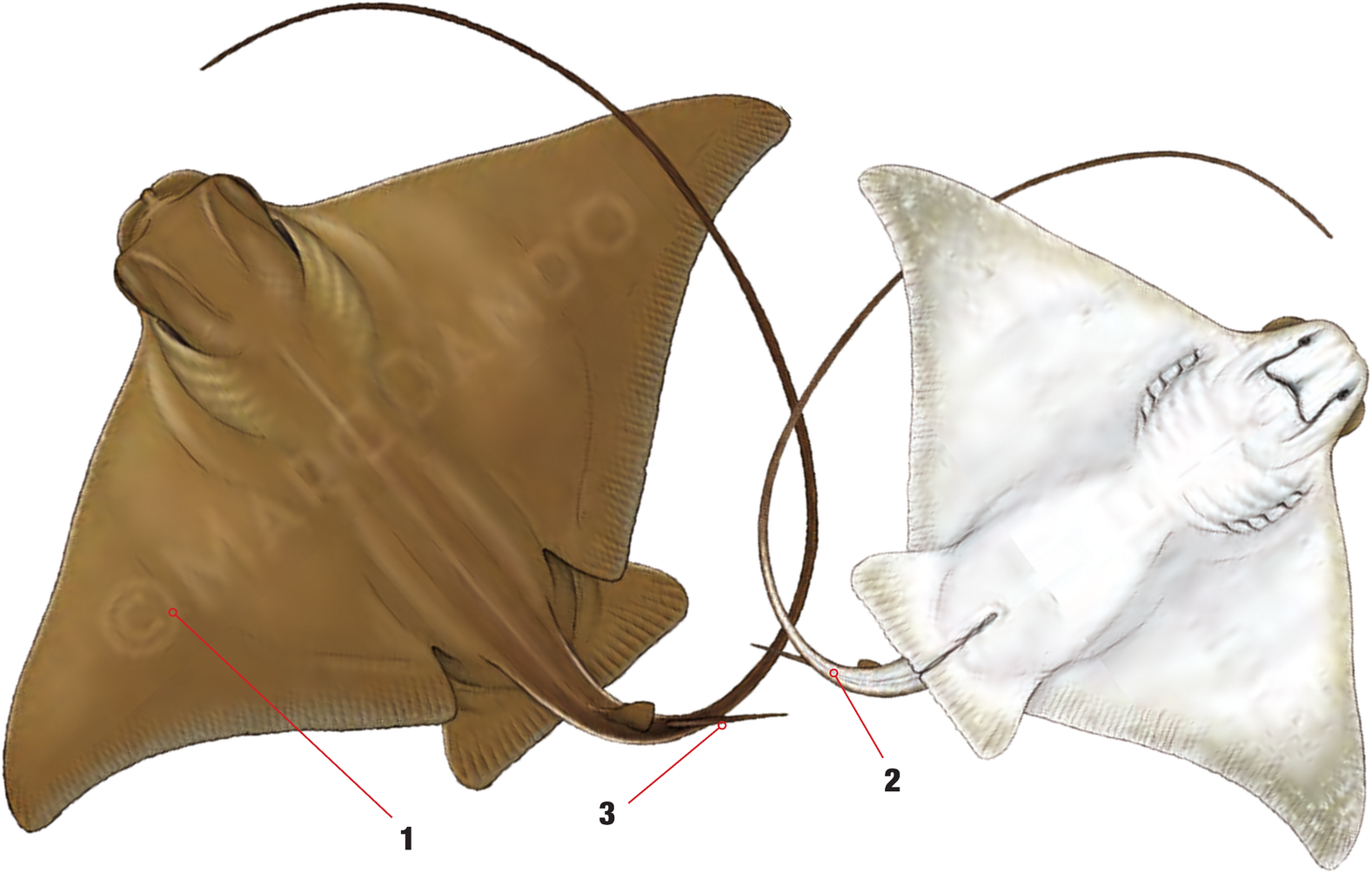
The numbers match the arrows on the illustration.
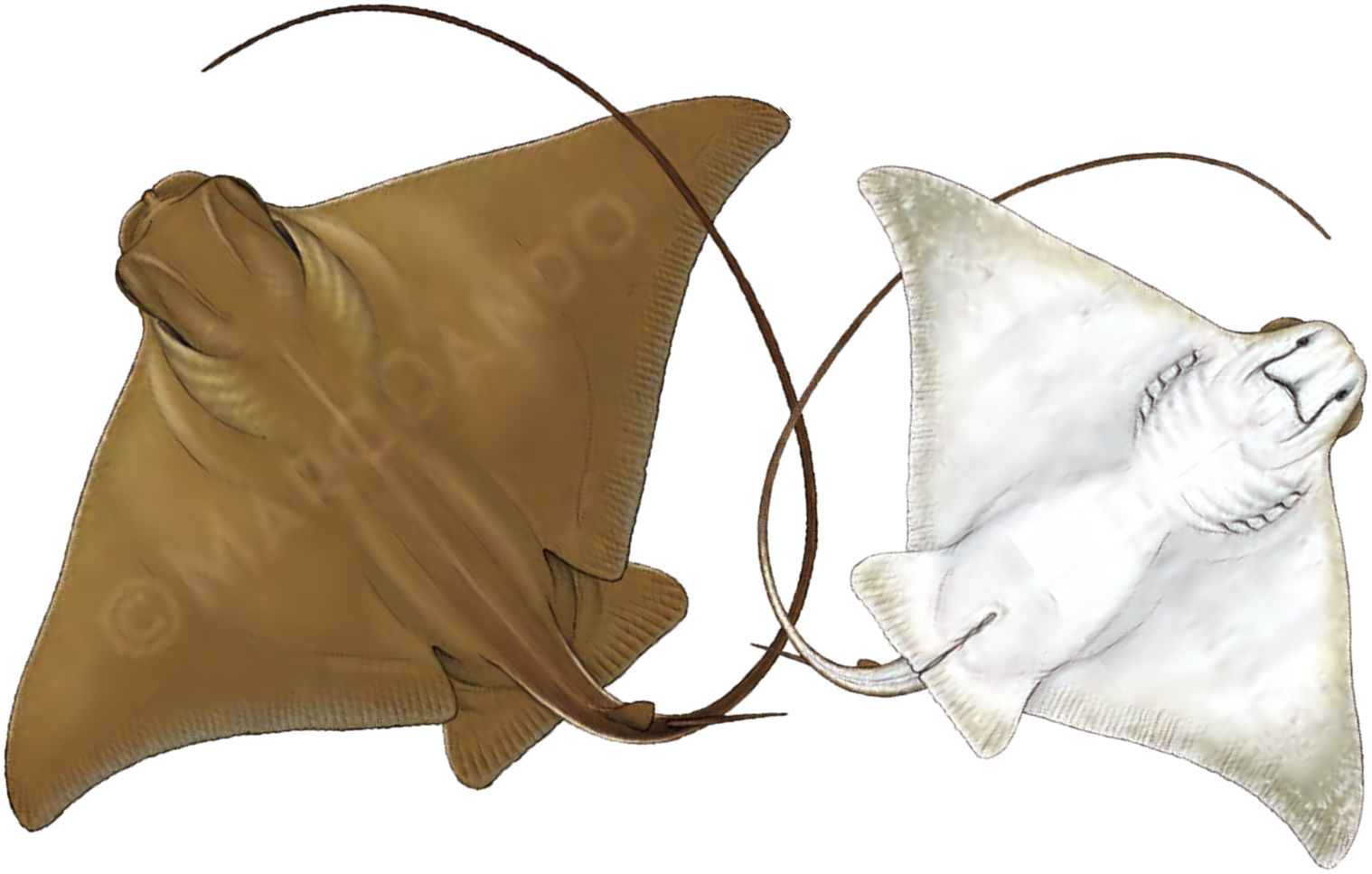
- Wide body with sharply angled wings.
- Tail 2–2.5 times length of body (when undamaged).
- Serrations on venomous spine: ~66 female; ~72 male.
Colouring & markings
- Dorsal surface uniformly dusky bronze to almost black with no markings.
- Ventral surface white with darker margins.
Teeth
Upper and lower jaws: 7 rows; flat, thick, hexagonal shaped teeth fused into dental plates for crushing and grinding prey. Teeth in central row (4) of upper jaw are much wider than teeth in the surrounding rows.
How big do they get?
Where they live
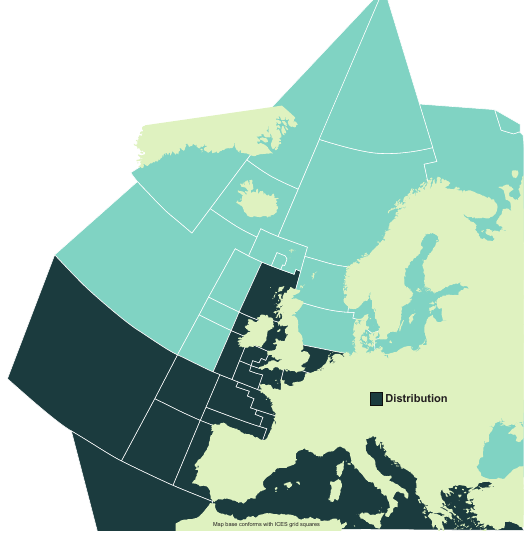
Distribution
Widespread in the tropical and warm temperate seas of the eastern Atlantic, from the British Isles to South Africa, incl. Madeira, Azores, Canary Islands and Mediterranean Sea. Summer vagrants may reach the southern and western parts of the British Isles. Distribution extends into the western Indian Ocean.
Habitat
Demersal to pelagic, from 0–100m. Coastal, found in bays, estuaries and lagoons on sandy and muddy bottoms. Occasionally found further offshore. Schooling behaviour is frequently observed.
In the wild
-

Recorded on a Shark Trust survey dive -
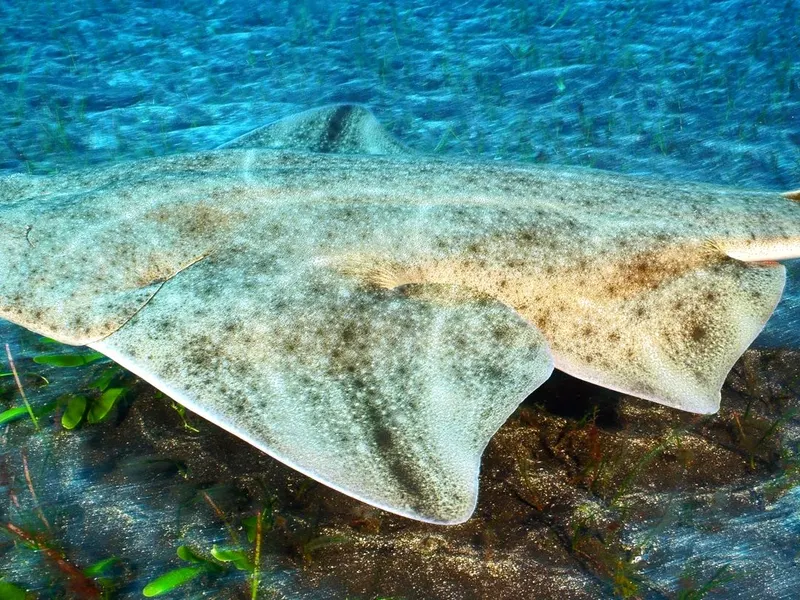
Resting on a sandy seabed -
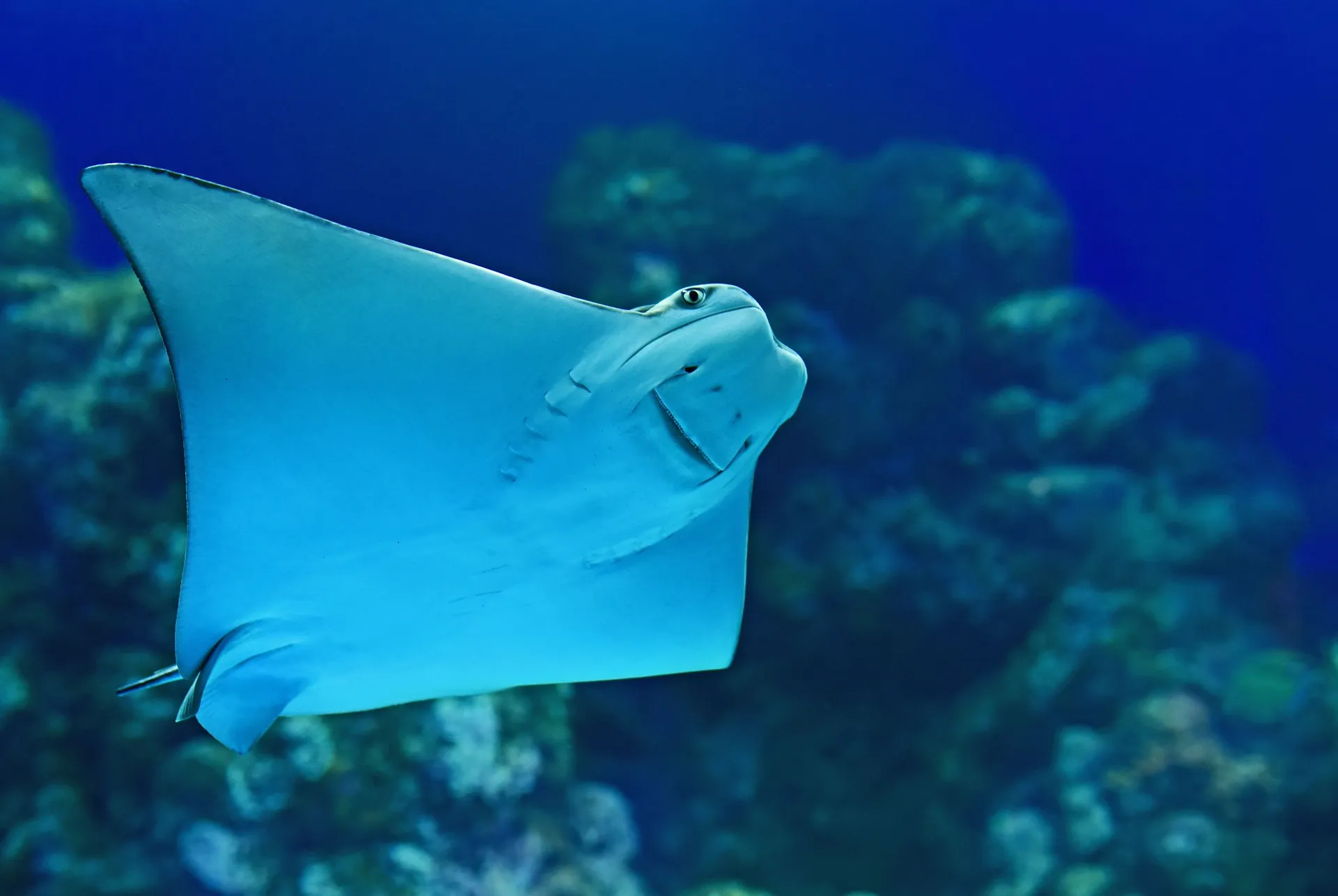
Cruising close to the sea floor -
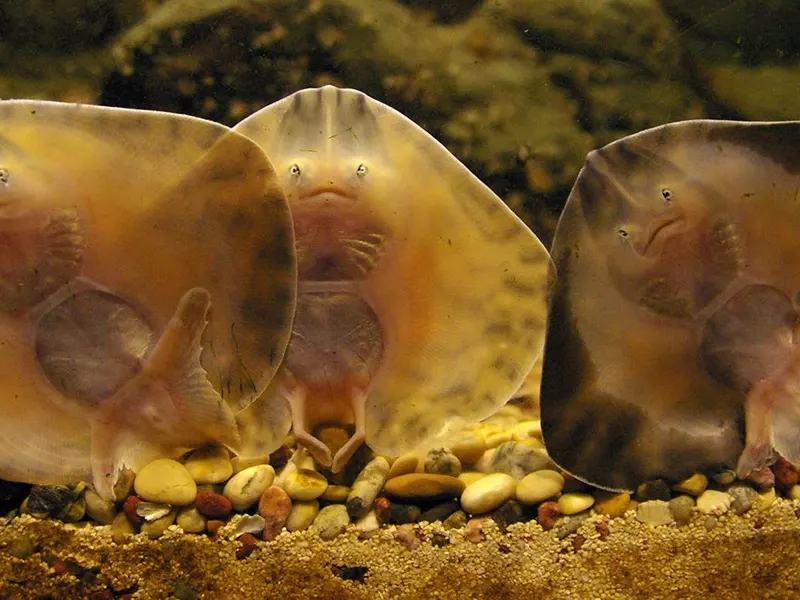
In the shallows at dusk -
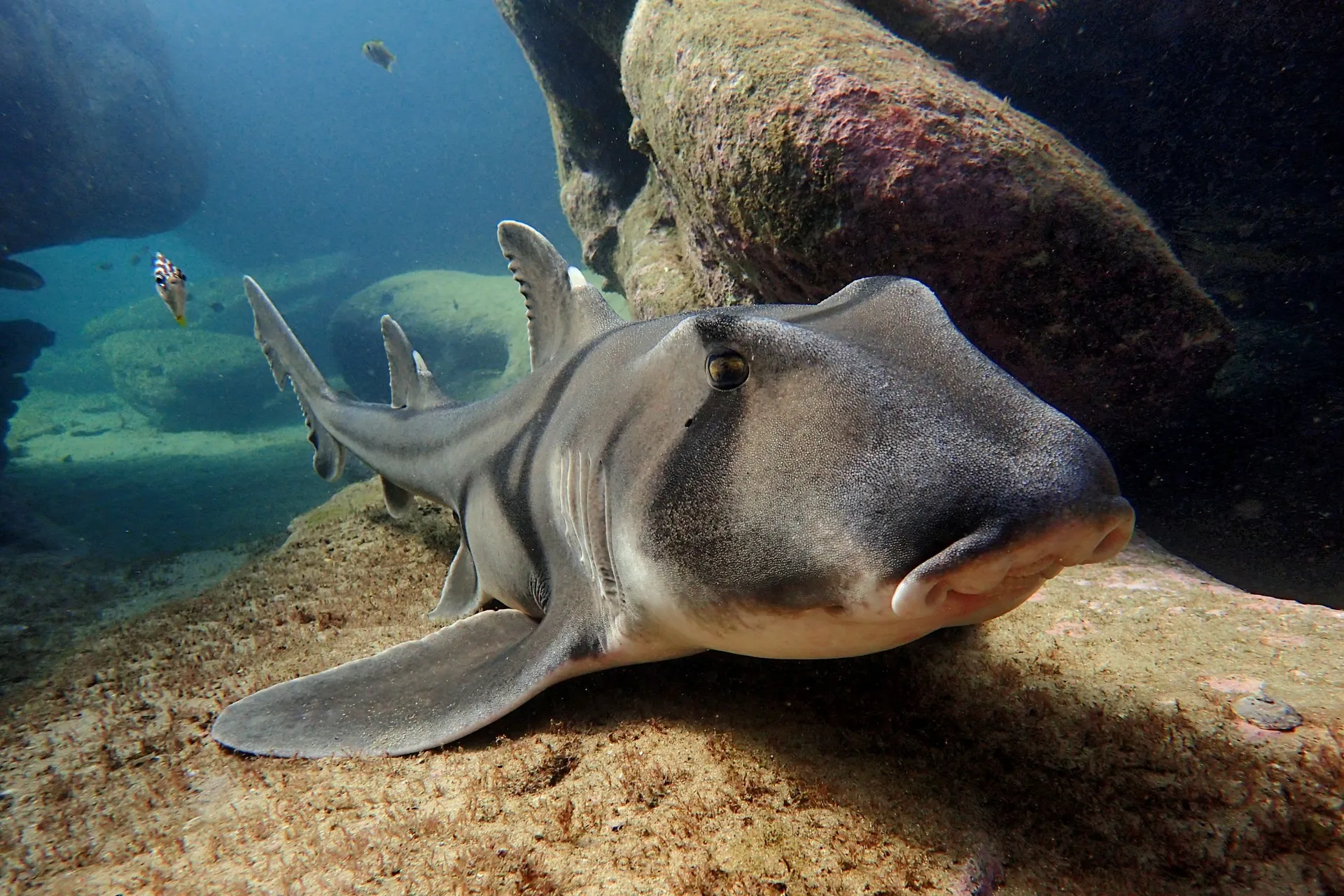
Sheltering on the reef
Go deeper
Size & biology
- Birth: <19cm DW.
- Matures: female 43–60cm DW; male 32–40cm DW.
- Max. DW: 150cm in Mediterranean, usually smaller elsewhere.
- Max. TL: 260cm (incl. tail).
- Litters of 3–7 pups each year after a 6–8 month gestation.
- Feeds on bottom-dwelling invertebrates, incl. crabs, molluscs and worms.
Conservation status
IUCN Red List: Global: Data Deficient (2009) Europe: Vulnerable (2015) Mediterranean: Vulnerable (2016) Found at depths where fishing pressure is high. This species is suspected to have declined by at least 33% over three generations (33 years) in European waters. Further monitoring and population analysis are necessary to assess trends throughout its range.
Management
No species-specific management in the Northeast Atlantic.
Commercial importance
Taken as bycatch in commercial fisheries using a variety of fishing gear incl. purse seine, trawl, gillnet and line. Targeted in tropical Atlantic artisanal fisheries. Wings are utilised for human consumption. The schooling nature of this ray makes it vulnerable to being captured in large numbers with minimal effort.
References & further reading
Assessment: MYL/NEA/2020
- Ebert & Stehmann.
- Holtzhausen et al.
- Last et al.
- La Mesa et al.
- Serena et al.
- Bester, C. n.d.