Giant Devil Ray
Mobula mobular (Bonnaterre, 1788)
Critically Endangered- Maximum length
- 5.2 m
- FAO code
- RMM
Meet the Giant Devil Ray
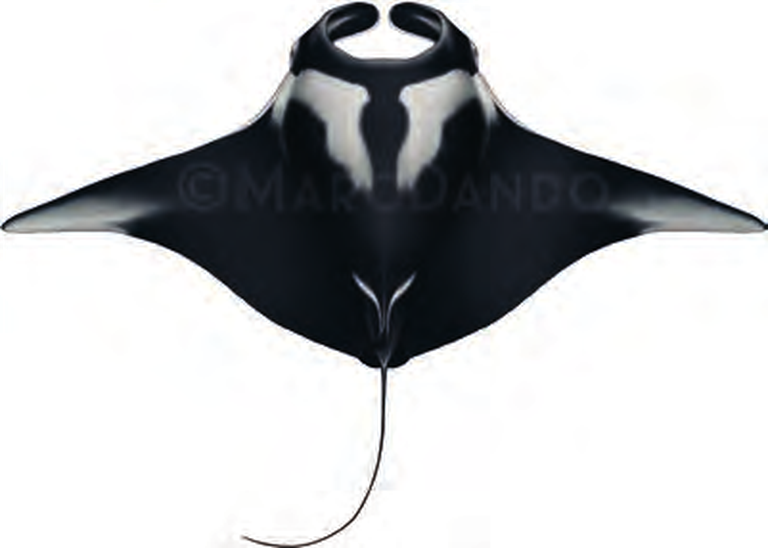
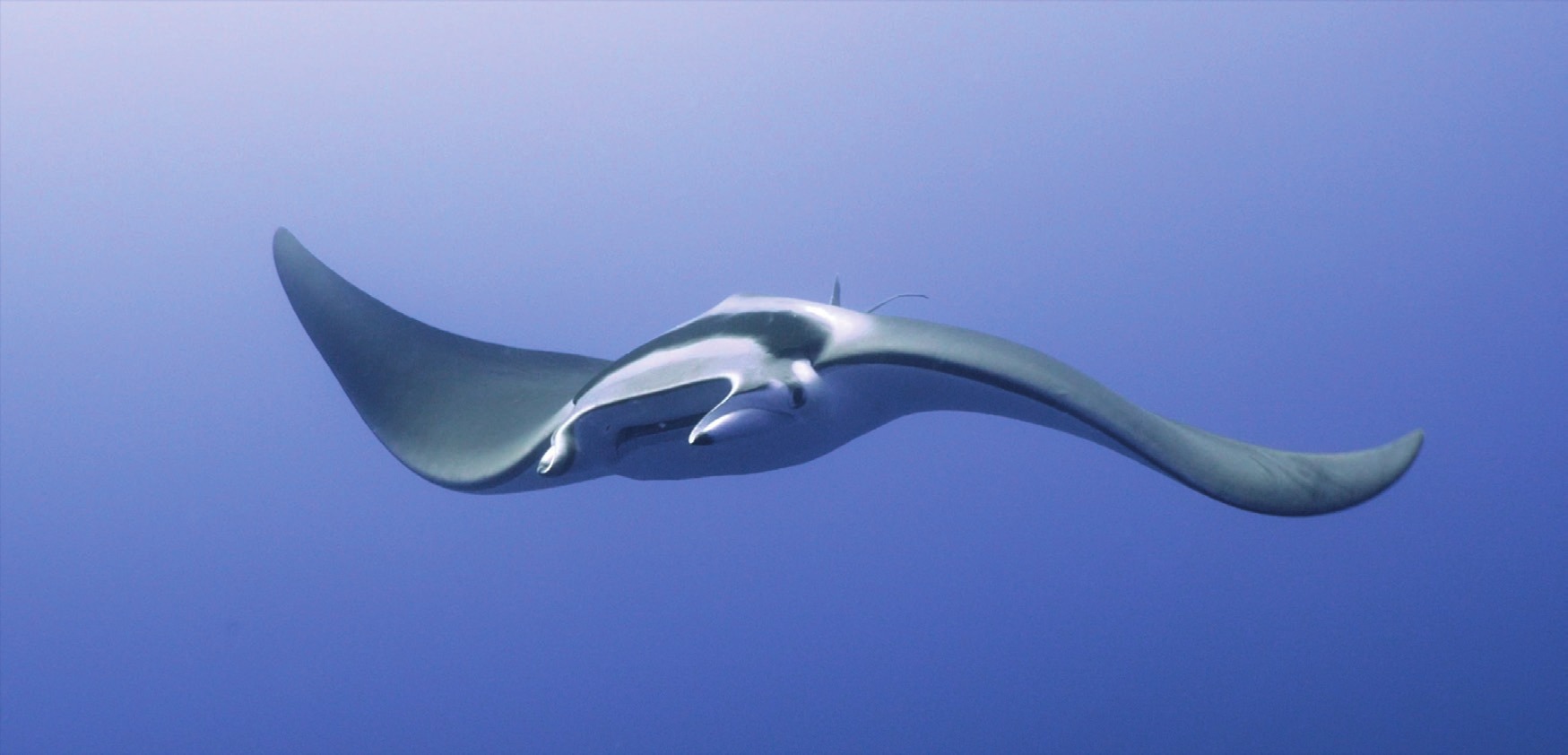
The Giant Devil Ray is a majestic marine species characterised by its impressive size, graceful movements, and distinctive horn-shaped cephalic fins.
- What they eat
- Planktonic crustaceans and small bony fishes.
- Also known as
- GIANT DEVIL RAY, Mediterranean Devil Ray, Devil Fish, Horny Ray, Mobularochen (DEU), Manta Mobula (ESP), Diable de Mer Méditerranéen (FRA), Diavolo di Mare (ITA), Duivelsrog (NLD), Diabo-do-mar (PRT).
How to identify
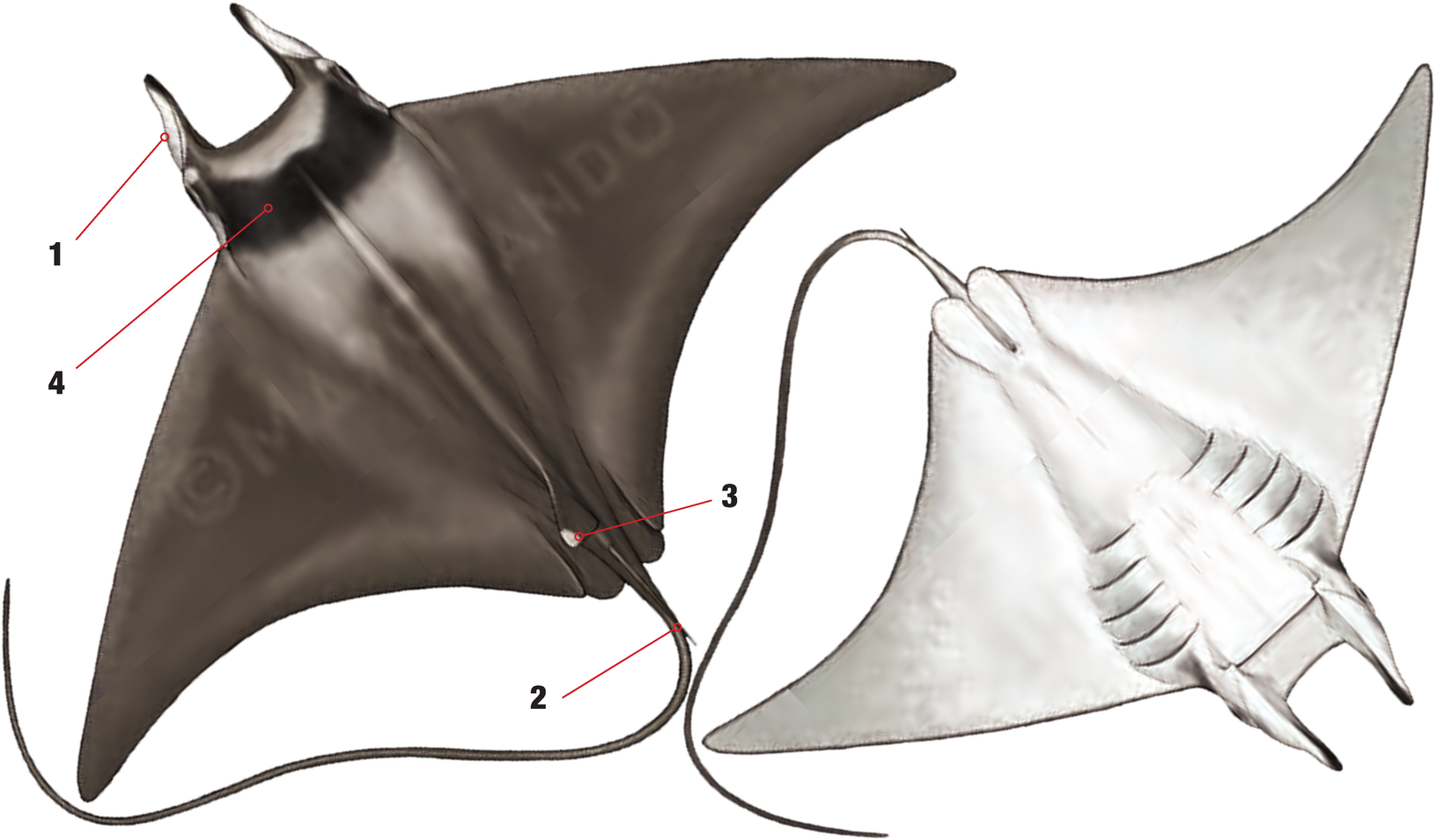
The numbers match the arrows on the illustration.
- Cephalic lobes present.
- One or more long, serrated spines at base of tail.
- Small dorsal fin with white tip present before spine.
- Dark collar occasionally present across head.
Colouring & markings
- Both surfaces covered in coarse denticles.
- Dorsal surface dark brown to blueish-black.
- Ventral surface white, sometimes with dark patches.
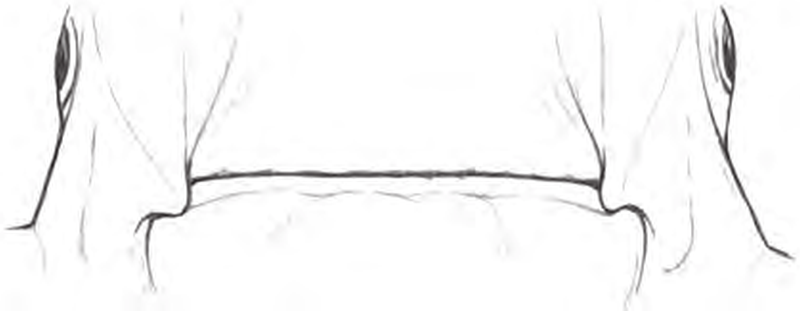
Teeth
Upper and lower jaw: 150–160 transverse rows of tiny flattened teeth arranged in a mosaic pattern.
How big do they get?
Where they live
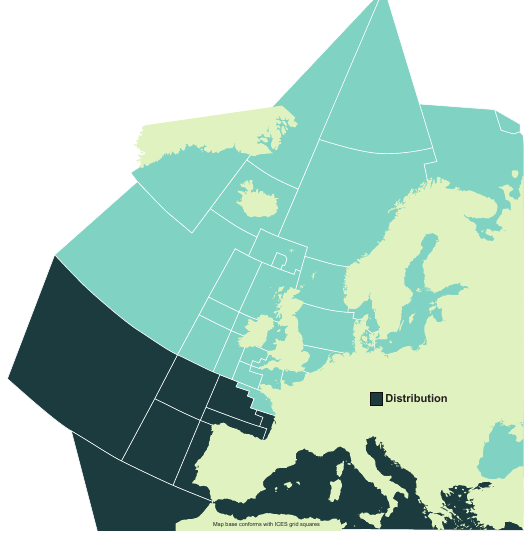
Distribution
Probably circumglobal but patchily distributed in tropical and warm temperate waters. Northeast Atlantic from the Bay of Biscay to Senegal incl. the Canary Islands, Azores and Madeira. Present in the Mediterranean Sea.
Habitat
Pelagic, found in inshore and offshore waters over continental and insular shelves. Surface to 1,112m, primarily to <50m. Often found in pairs or small groups. Makes long migrations near the surface of the sea.
In the wild
-
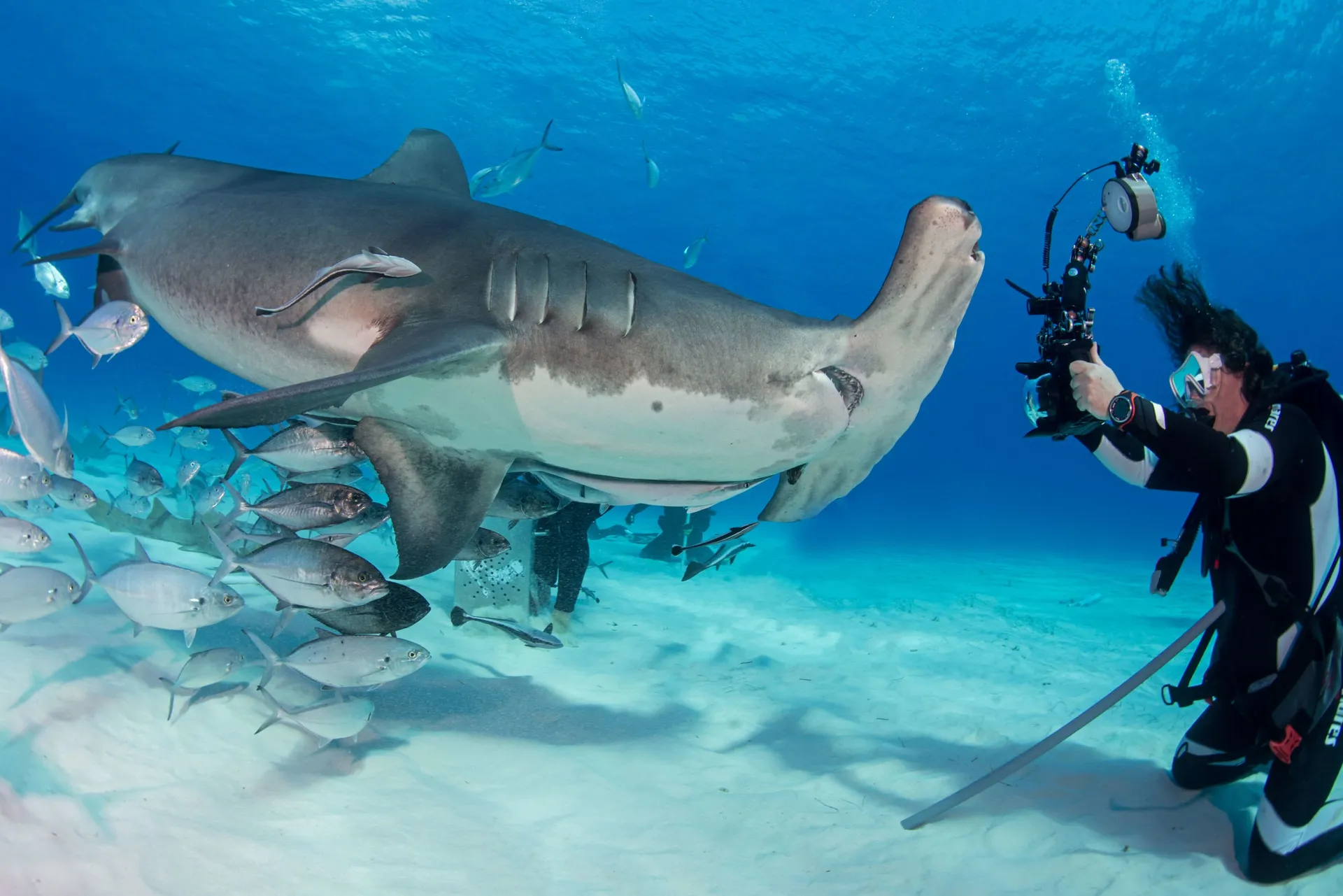
Recorded on a Shark Trust survey dive -
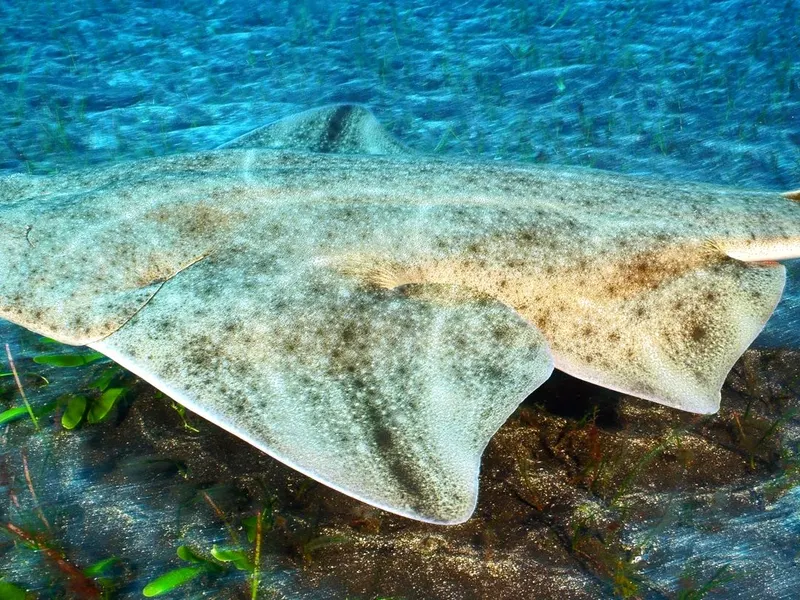
Resting on a sandy seabed -
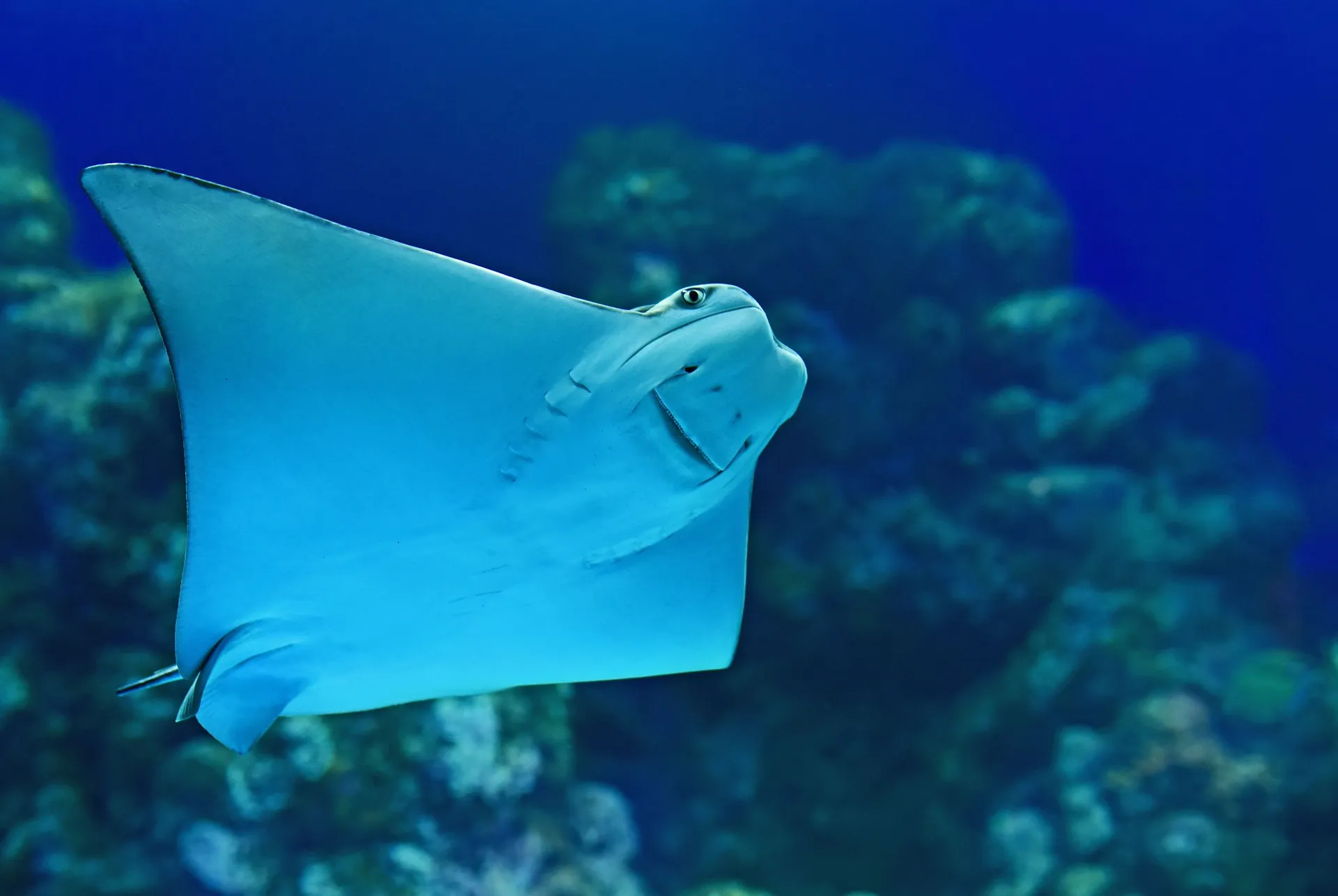
Cruising close to the sea floor -
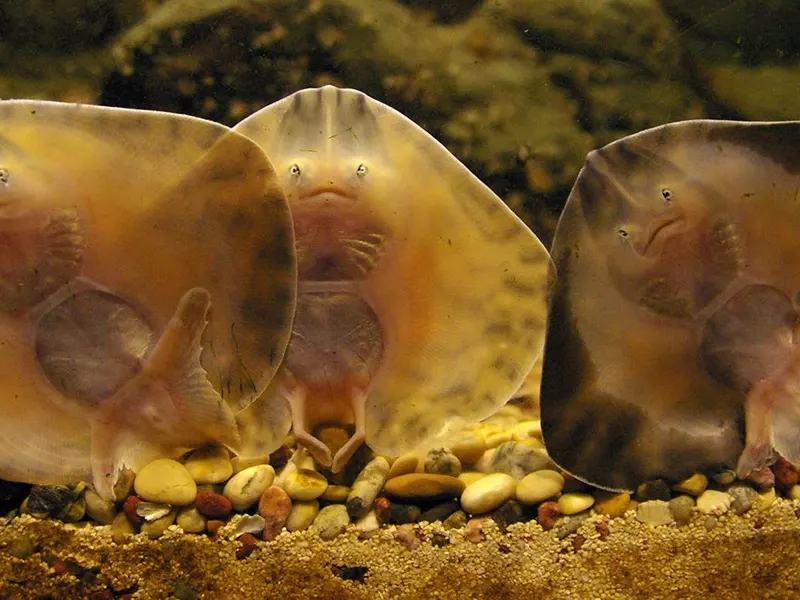
In the shallows at dusk -
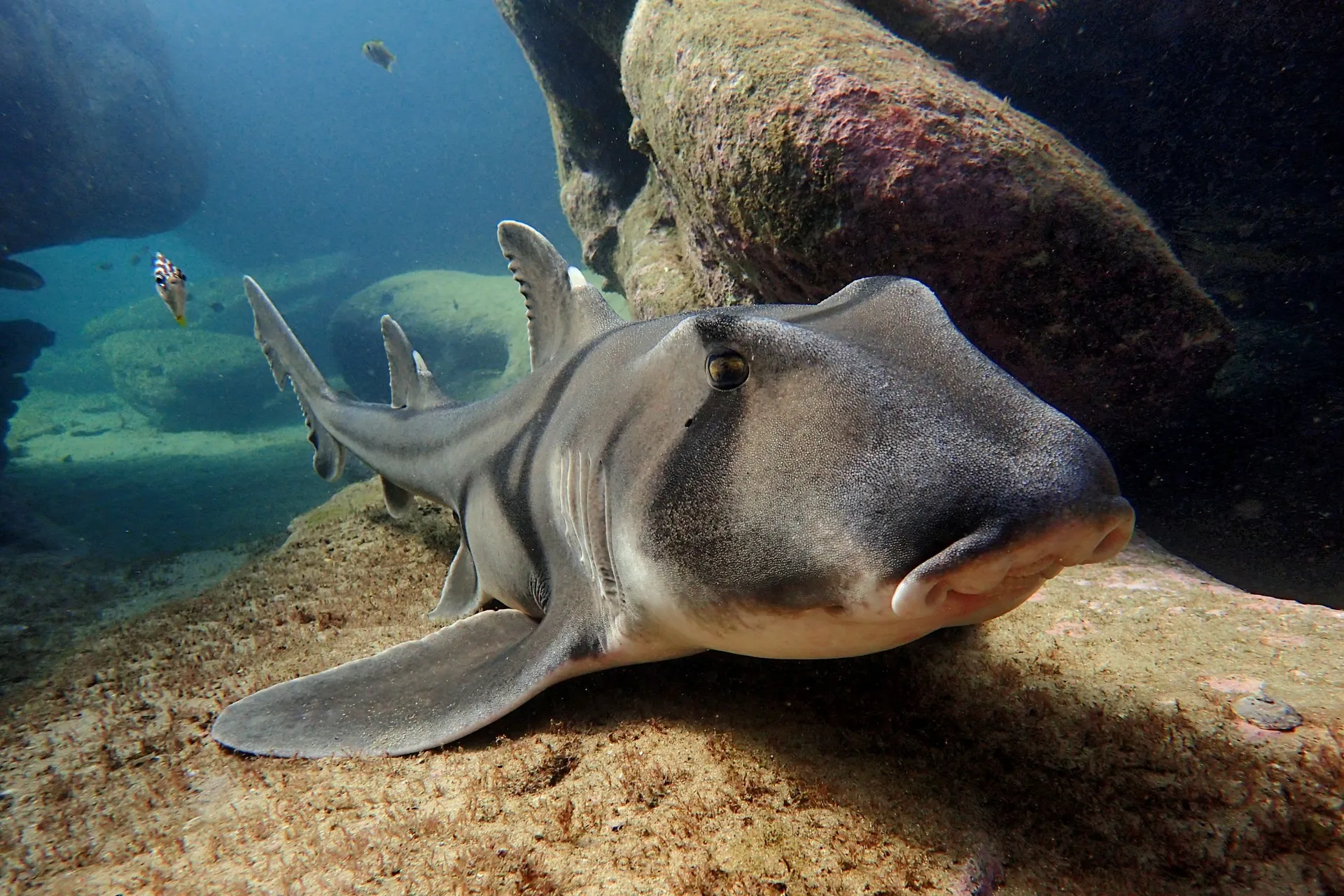
Sheltering on the reef
Go deeper
Size & biology
- Birth: 90–160cm DW.
- Matures: female 215–240cm DW; male 200–220cm DW.
- Max. DW: 520cm.
- Females give birth to a single pup (occasionally two pups per litter) after a gestation period estimated to last up to 12 months.
- Feeds on planktonic crustaceans and small schooling fishes.
Conservation status
IUCN Red List: Global: Endangered (2019) Europe: Endangered (2015) Mediterranean: Endangered (2016) A large Mobula ray with very low reproductive capabilities and slow life history characteristics. Significant declines in population trends have been observed with an estimated global population decline of 50-79% over three generations (38 years).
Management
Subject to prohibitions under the CFP, RFMO and additional international and national regulations.
Commercial importance
Targeted and taken as bycatch in industrial and artisanal fisheries across its range. Of little commercial value in the Northeast Atlantic. Sometimes landed along the Mediterranean coast of Africa and West African coast where the wings are utilised for human consumption. Utilised in some regions for its meat, skin, liver oil and gill plates.
References & further reading
Assessment: RMM/NEA/2020
- Ebert & Stehmann.
- Marshall et al.
- Notarbartolo di Sciara et al.
- Last et al.
- ICES WGEF Report.
- Canese et al.
- Croll et al.