Smalltooth Sandtiger
Odontaspis ferox (Risso, 1810)
Endangered- Maximum length
- 4.5 m
- FAO code
- LOO
Meet the Smalltooth Sandtiger
- Also known as
- SMALLTOOTH SANDTIGER, Herbst’s Nurse Shark, Ragged-tooth Shark, Sand Shark, Bumpytail Raggedtooth, Schildzahnhai (DEU), Solrayo (ESP), Requin Feroce (FRA), Cagniacco (ITA), Tubarão-areia (PRT).
How to identify
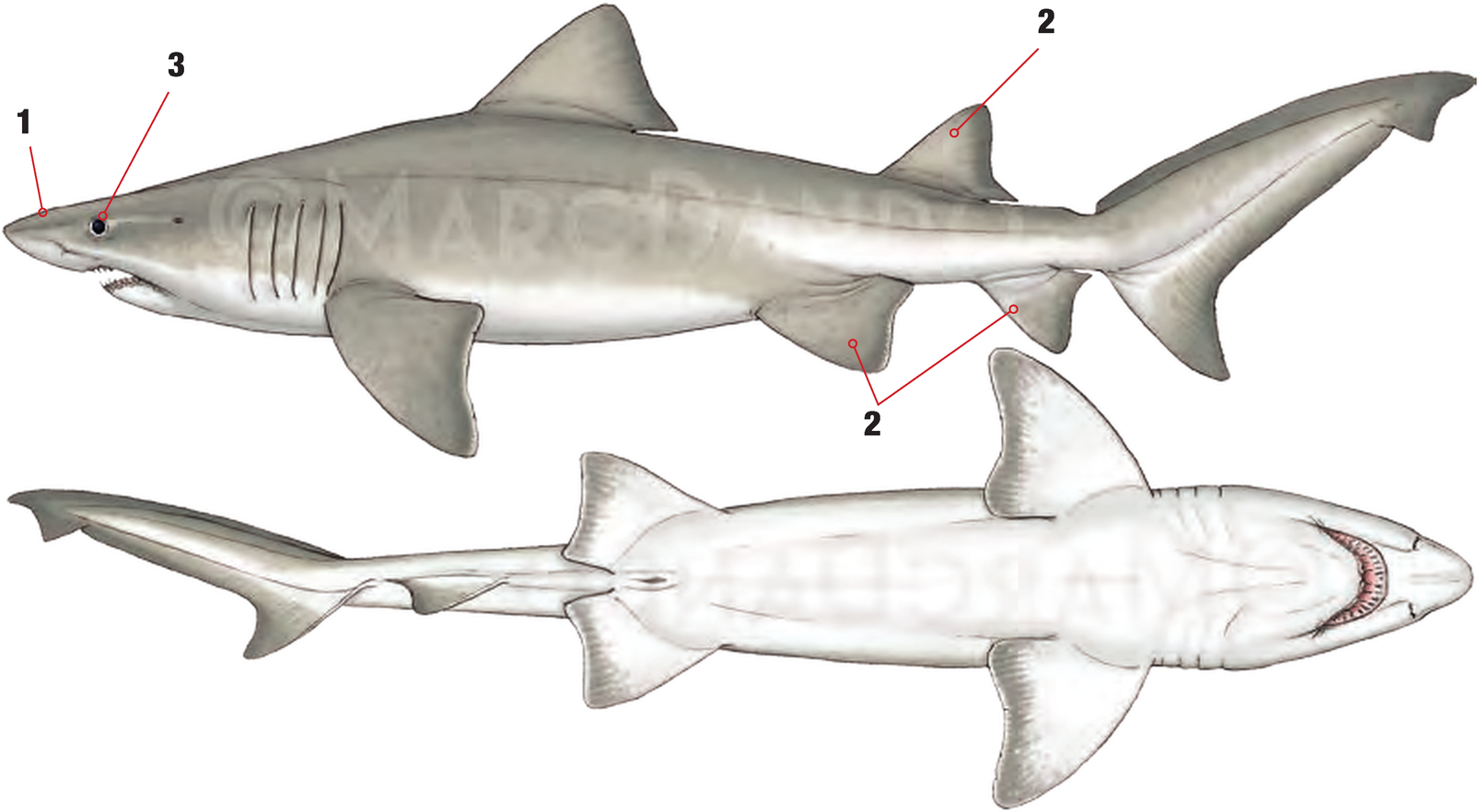
The numbers match the arrows on the illustration.
- Slightly flattened head with a long, conical bulbous snout.
- Second dorsal, pelvic and anal fins large.
- Eyes moderately large.
Colouring & markings
- Light grey to grey brown dorsally.
- Occasionally darker reddish/brown spots scattered over body.
- Lighter ventrally.
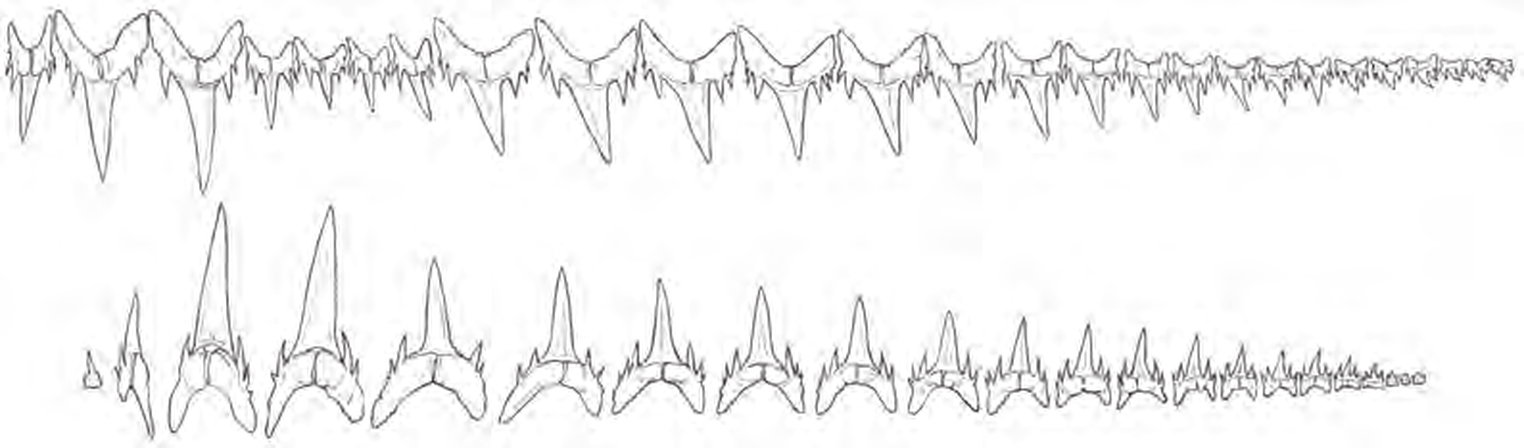
Teeth
Teeth with long, central cusp with 2-3 smaller cusplets Similar in both jaws. Upper jaw: 46–56. Lower jaw: 34–48.
How big do they get?
Where they live
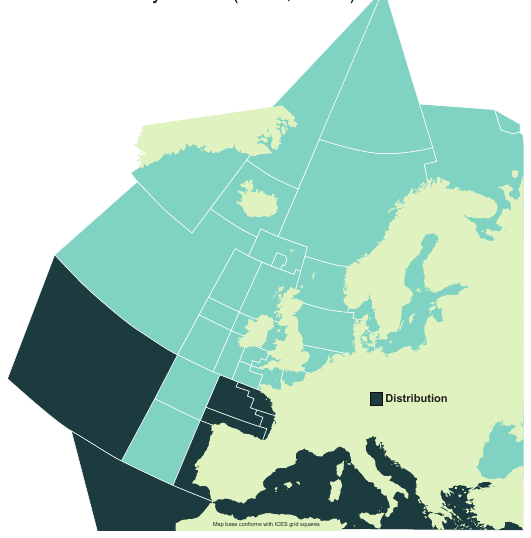
Distribution
Circumglobal, patchy distribution in tropical and warm temperate waters. Reported from the Bay of Biscay to Morocco, including the Azores and Mediterranean Sea. Dead specimen found on beach in Western France verified as most northerly record (46°N, 04°W).
Habitat
Demersal to epipelagic from 10–880m, most commonly to <300m. Found over rocky reefs, sandy and muddy bottoms and steeply shelving inclines over continental and insular shelves and upper slopes. Size segregation appears to take place with juveniles and adults occupying depths of 300–600m whilst intermediate sized specimens occur <150m.
In the wild
-

Recorded on a Shark Trust survey dive -
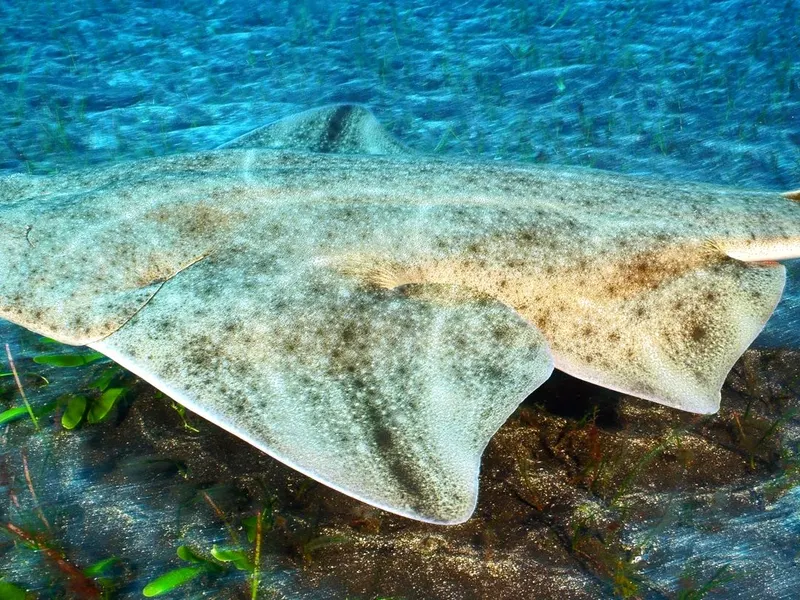
Resting on a sandy seabed -

Cruising close to the sea floor -
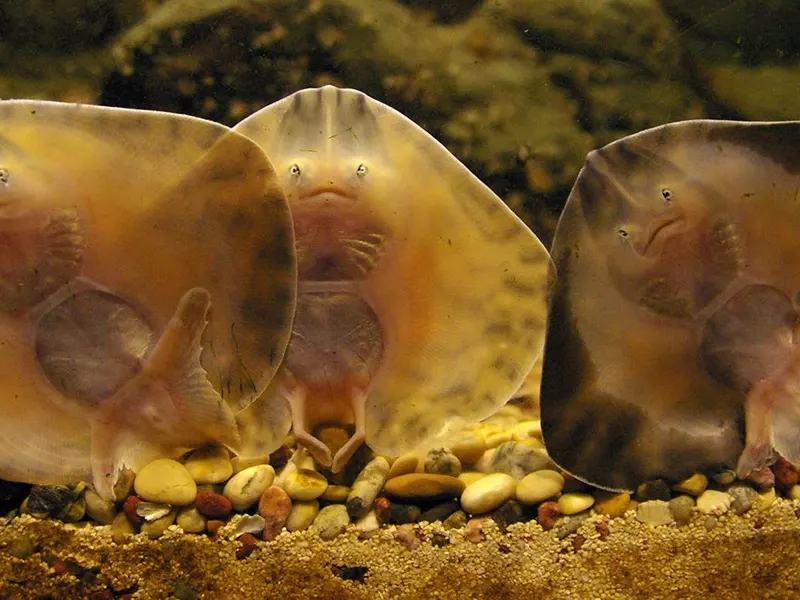
In the shallows at dusk -
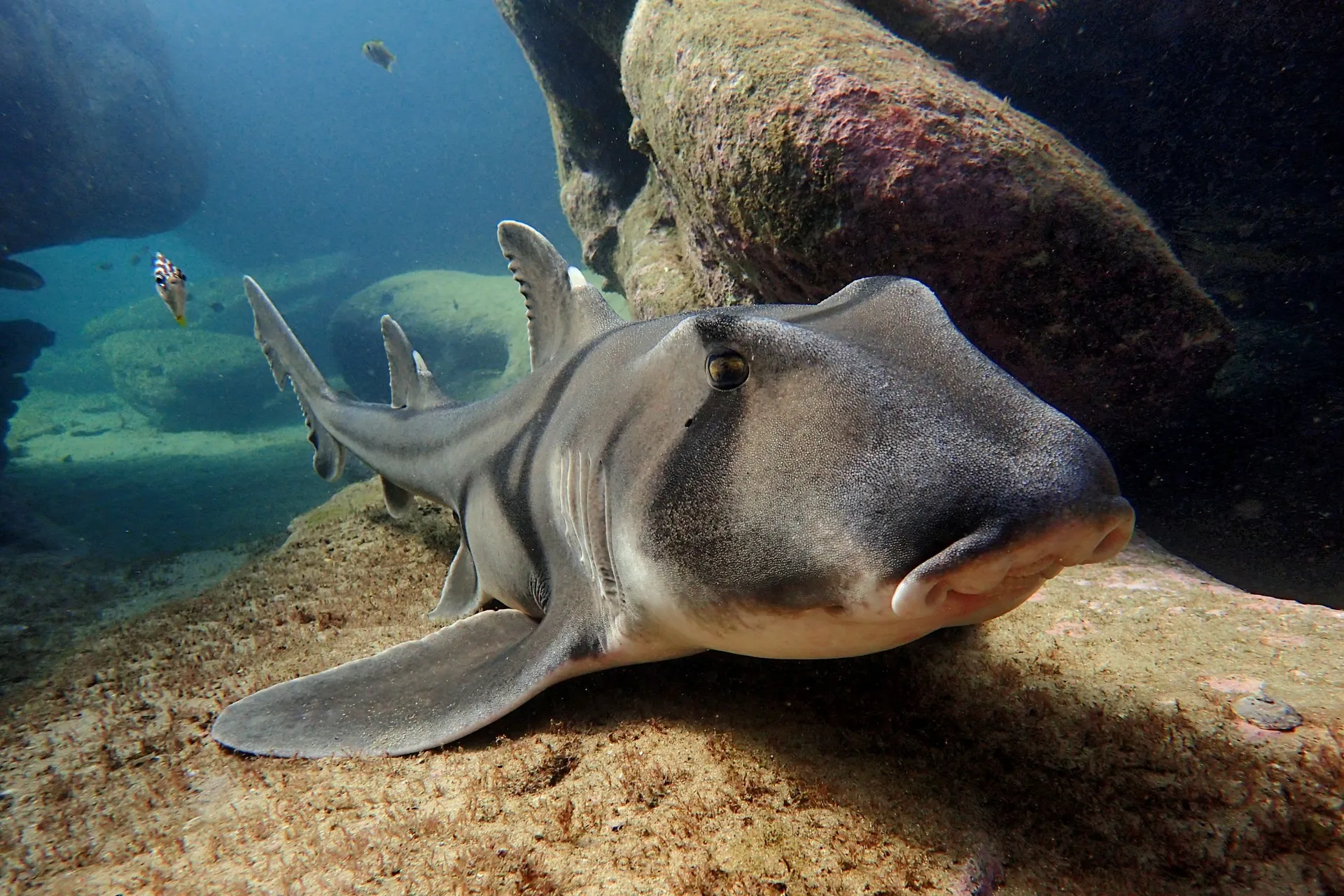
Sheltering on the reef
Go deeper
Size & biology
- Birth: 100cm.
- Matures: female 300–350cm; male 200–250cm.
- Max. TL: 450cm.
- Reproductive biology is poorly understood but presumed to be viviparous, producing 1–2 pups per year. 1-4
- Diet consists primarily of teleosts, cephalopods, crustaceans and other elasmobranchs.
Conservation status
IUCN Red List: Global: Vulnerable (2016) Europe: Critically Endangered (2015) Mediterranean: Critically Endangered (2016) Widespread but fragmented distribution. Thought to have a similarly low fecundity to that of the Sandtiger (Carcharias taurus). Occasionally taken in trawl and longline fisheries. Aggregations of Smalltooth Sandtiger Sharks witnessed in shallow waters may make it vulnerable to localised overexploitation. Suspected population declines in the Northeast Atlantic and Mediterranean Sea.
Management
Subject to FNA regulations. No species-specific management in the Northeast Atlantic. Subject to prohibitions under RFMO elsewhere.
Commercial importance
No target fisheries exist for this shark, but it is taken as bycatch in trawl, gillnet and longline fisheries. When retained, this shark has been utilised for human consumption.
References & further reading
Assessment: LOO/NEA/2020
- Ebert et al.
- Ebert & Stehmann.
- Graham et al.
- Pollard et al.
- Fergusson et al.