Smooth Hammerhead Shark
Sphyrna zygaena (Linnaeus, 1758)
Vulnerable- Maximum length
- 4 m
- FAO code
- SPZ
Meet the Smooth Hammerhead Shark
- Also known as
- SMOOTH HAMMERHEAD SHARK, Common Hammerhead Shark, Round Headed Hammerhead Shark, Gemeiner Hammerhai (DEU), Cornuda Cruz (ESP), Requin-Marteau Commun (FRA), Capa a martiello (ITA), Peixe-canga (PRT).
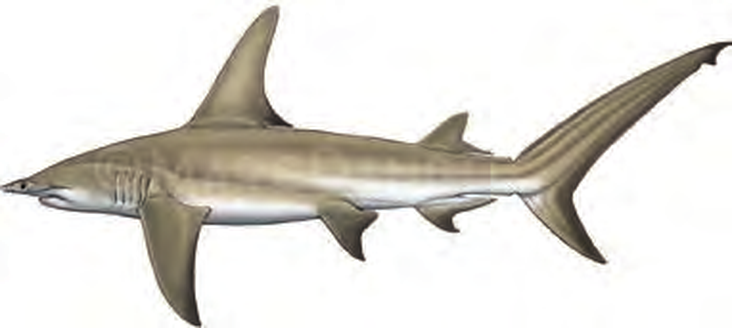
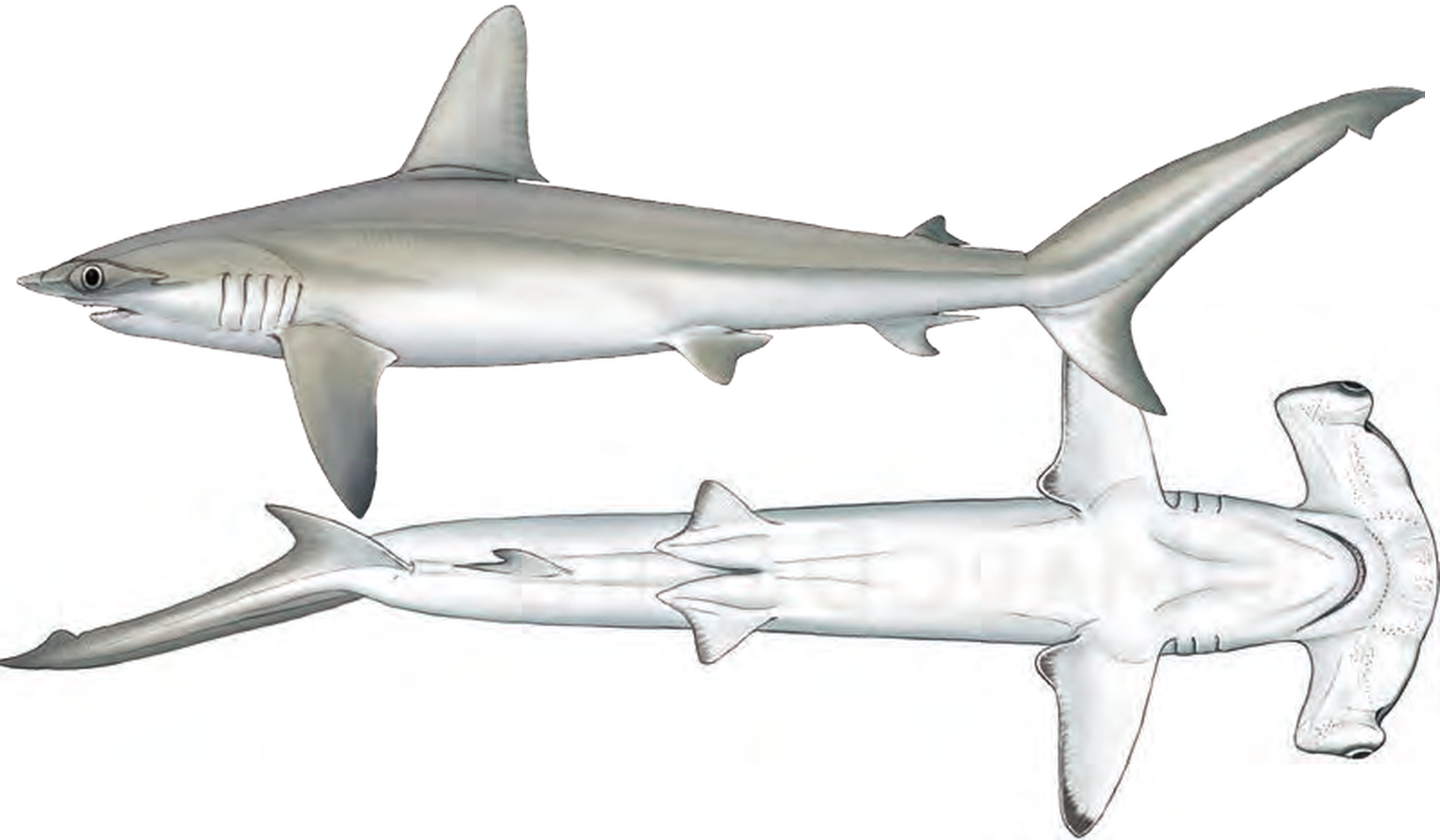
How to identify
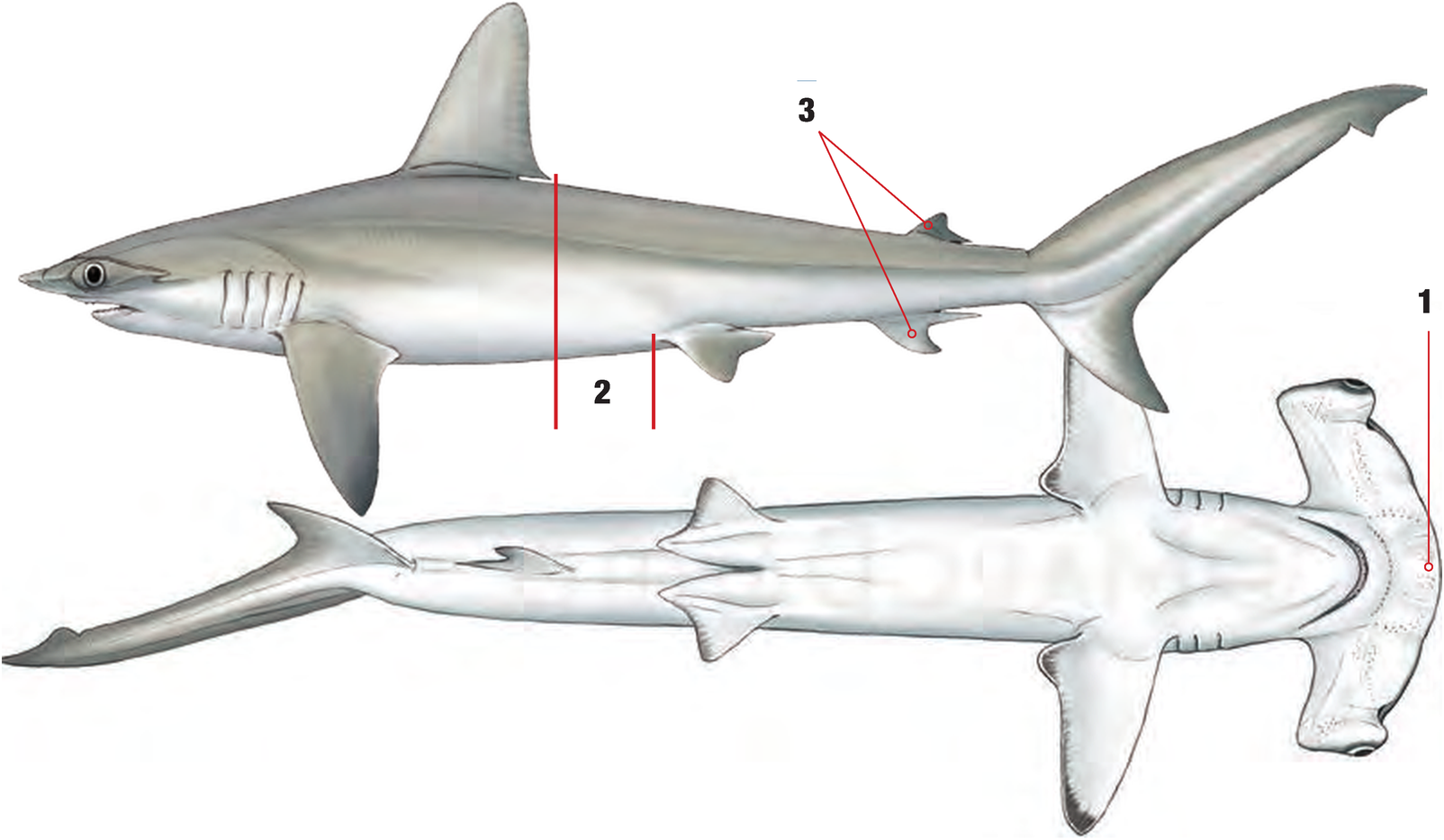
The numbers match the arrows on the illustration.
- Broad cephalofoil with no median indentation.
- Moderately high first dorsal fin with free rear tip originating in front of pelvic fins.
- Anal fin slightly larger than second dorsal fin.
Colouring & markings
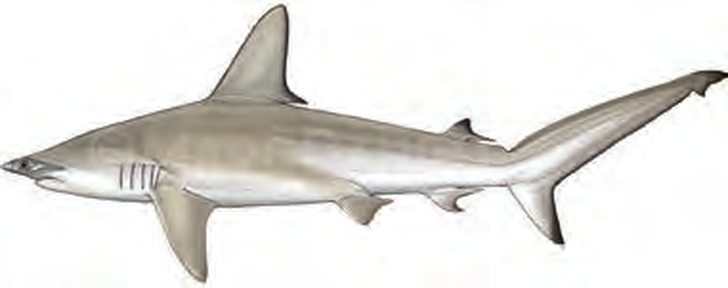
- Dark olive to grey brown dorsally.
- White ventrally.
- May have dusky edged pectoral fins.
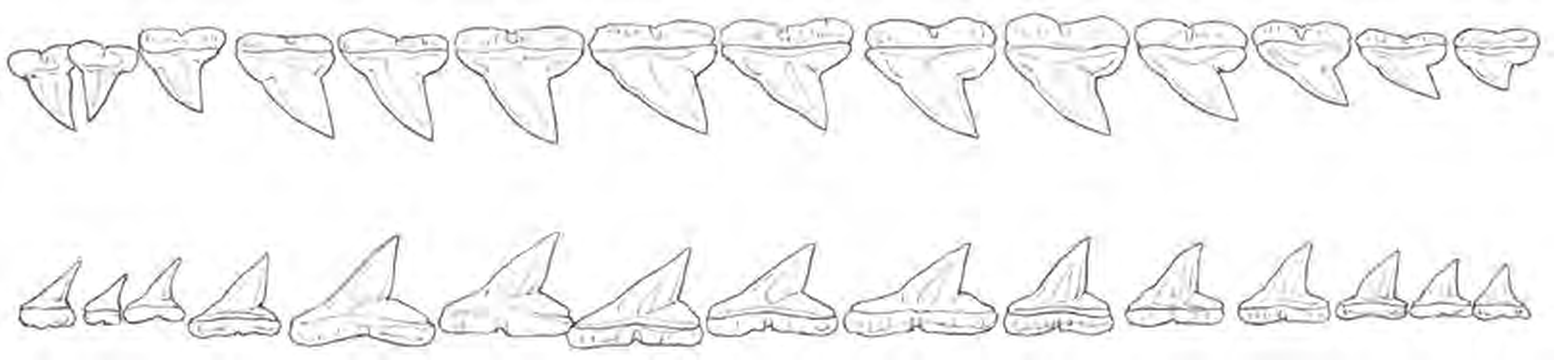
Teeth
Anterior teeth with broad, moderately long cusps and Posterior teeth mostly cusped. Upper jaw: 29–32. Lower jaw: 25–31.
How big do they get?
Where they live
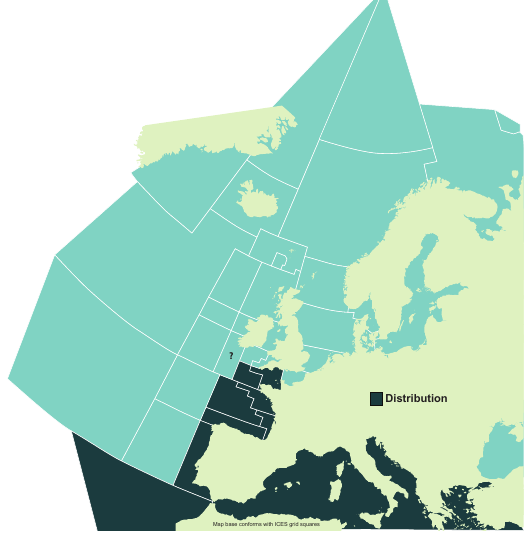
Distribution
Circumglobal in temperate and tropical waters. Eastern Atlantic from the southern British Isles to Angola, incl. the Mediterranean Sea. Northwest Atlantic from Nova Scotia, Canada to the Virgin Islands.
Habitat
Coastal to oceanic species that is generally pelagic; found inshore and over continental and insular shelves, with adults moving into more offshore oceanic habitats. From surface to 200m, primarily <20m. Capable of long trans-equatorial migrations. Adults may form small groups during migrations; juveniles ≤150cm can form larger aggregations.
In the wild
-

Recorded on a Shark Trust survey dive -
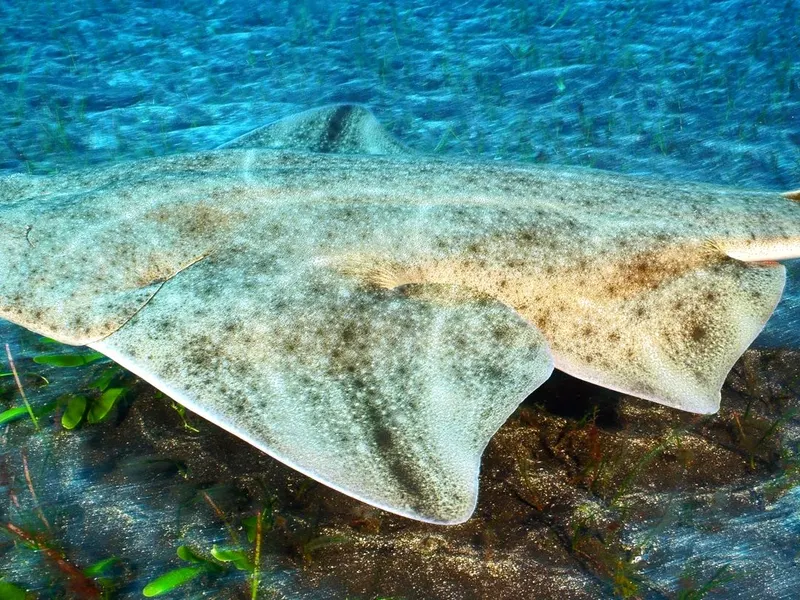
Resting on a sandy seabed -
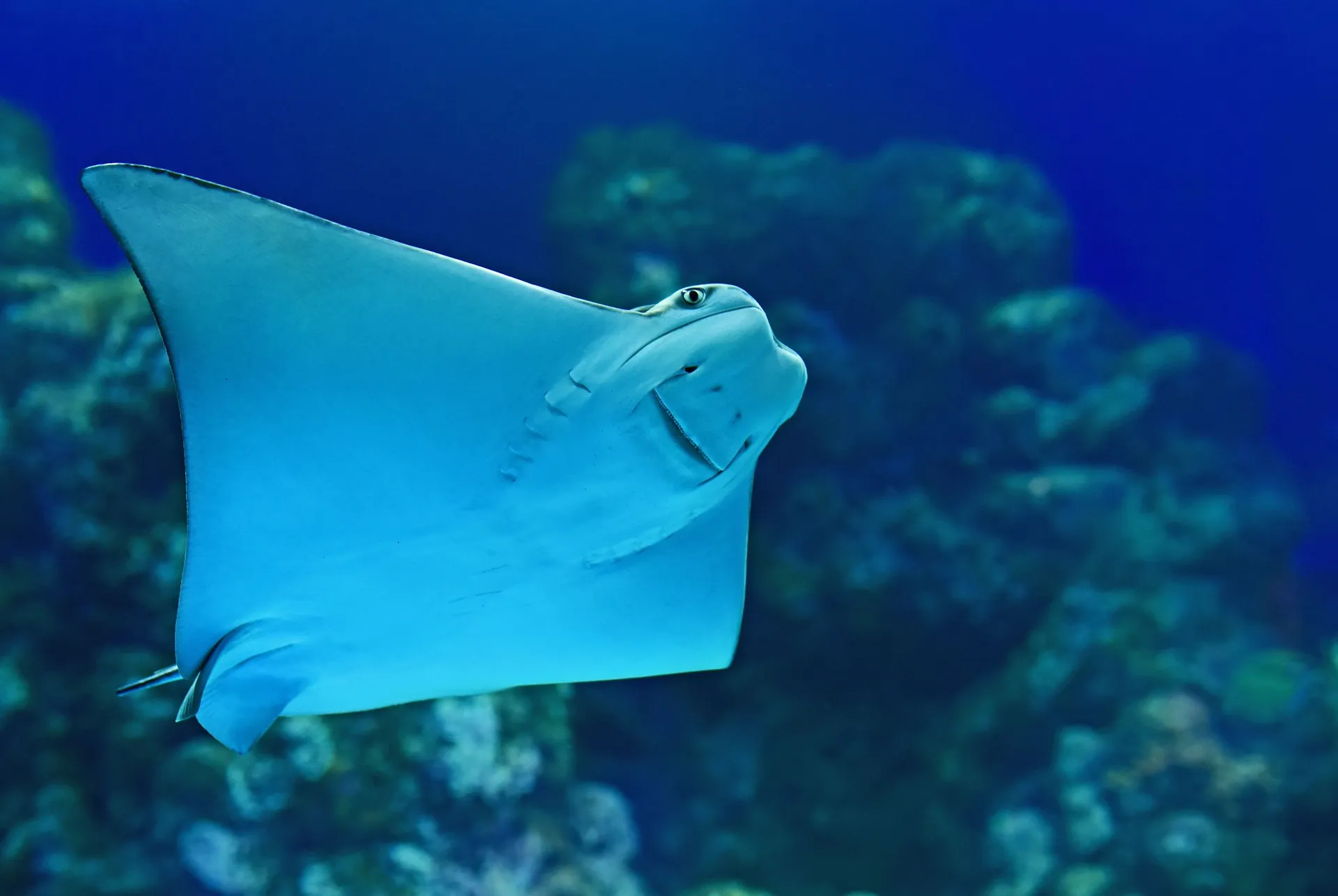
Cruising close to the sea floor -
In the shallows at dusk -
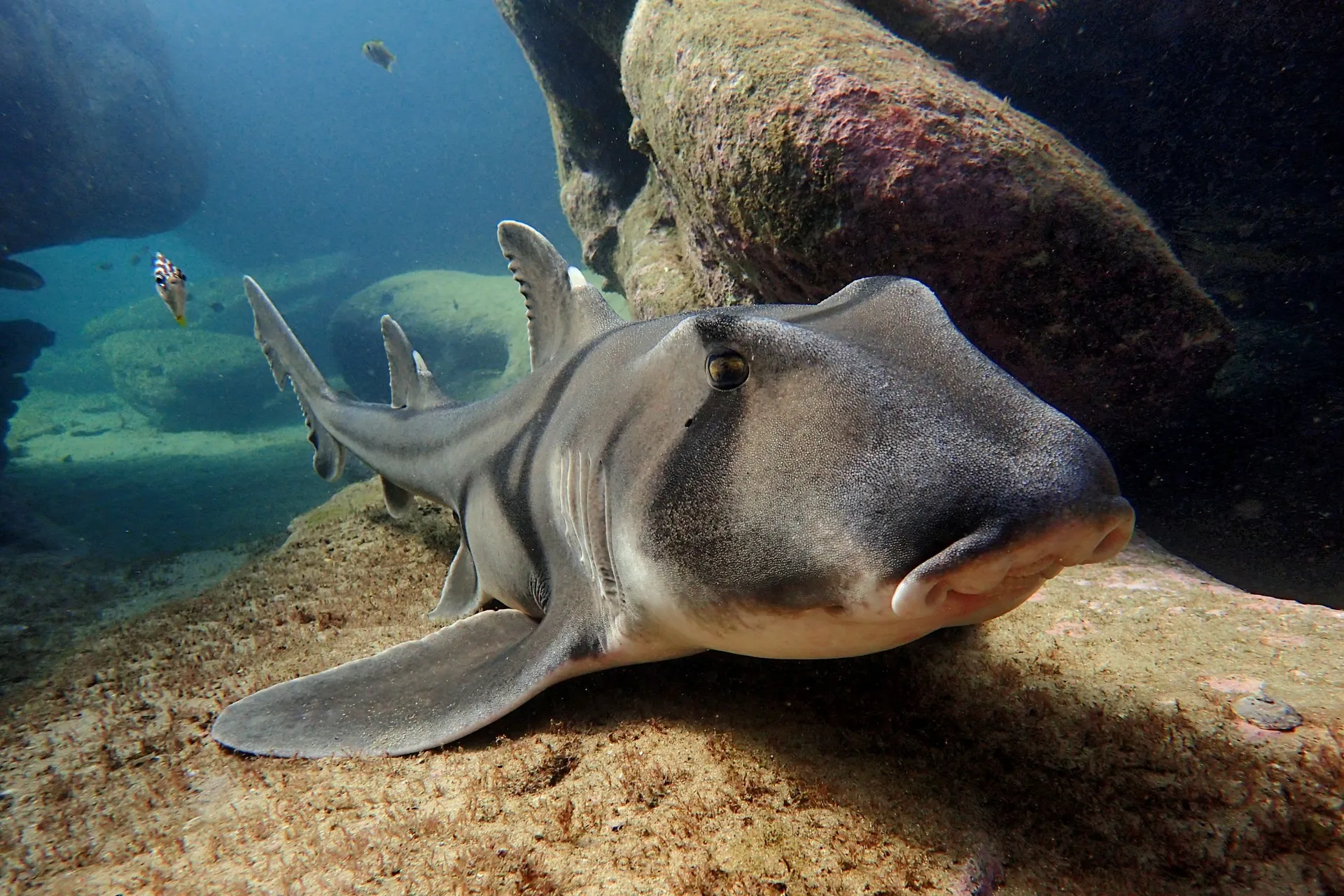
Sheltering on the reef
Go deeper
Size & biology
- Birth: 50–61cm.
- Matures: female 246–265cm; male 250–260cm
- Max. TL: 370–400cm.
- Max. age est.:18 years.
- Viviparous, litters of 20–50 pups born in spring/early summer after a 10–11 month gestation period.
- Feeds on teleost fishes, other elasmobranchs, cephalopods and crustaceans.
Conservation status
IUCN Red List: Global: Vulnerable (2019) Europe: Data Deficient (2015) Mediterranean: Critically Endangered (2016) A valued bycatch caught in a variety of fishing gears. Often mistaken for the Scalloped Hammerhead in tropical waters and grouped in a single category with other hammerhead species across its range. It’s life history characteristics make it vulnerable to fishing. Species-specific catch data are necessary to determine the status of this species population in the NE Atlantic.
Management
Subject to FNA regulations, prohibitions under RFMOs and additional international regulations.
Commercial importance
Taken as a valued bycatch in coastal and oceanic longline, handline, purse-seine and trawl fisheries across its range. Fins, meat, liver and hides utilised for human consumption and use. Fins are highly valuable; any sharks taken as bycatch are likely to be retained.
References & further reading
Assessment: SPZ/NEA/2020
- Rigby et al.
- Ebert et al.
- Ebert & Stehmann.
- Ferretti et al.
- Bester, C. n.d.
- Santos & Coelho. 2018.