Angel Sharks
CHAMPIONING SOME OF THE OCEAN'S MOST VULNERABLE SPECIES
SubRegional Action Plan: Implementation (Illustrative Reports)
Building on the Mediterranean Angel Sharks: Regional Action Plan (MedRAP) and associated SubRegional Action Plans (SubRAPs) (2018-2021) this report represents the second phase of work delivered by a team of well-connected and experienced NGOs and Institutes in Türkiye, Cyprus and Tunisia. This publication highlights the outputs of the Shark Conservation Fund (SCF)-funded project (2023-2026) supporting the delivery of priority in-country SubRAP objectives for angel sharks, creating evidential change on the water.
ABOUT ANGEL SHARKS
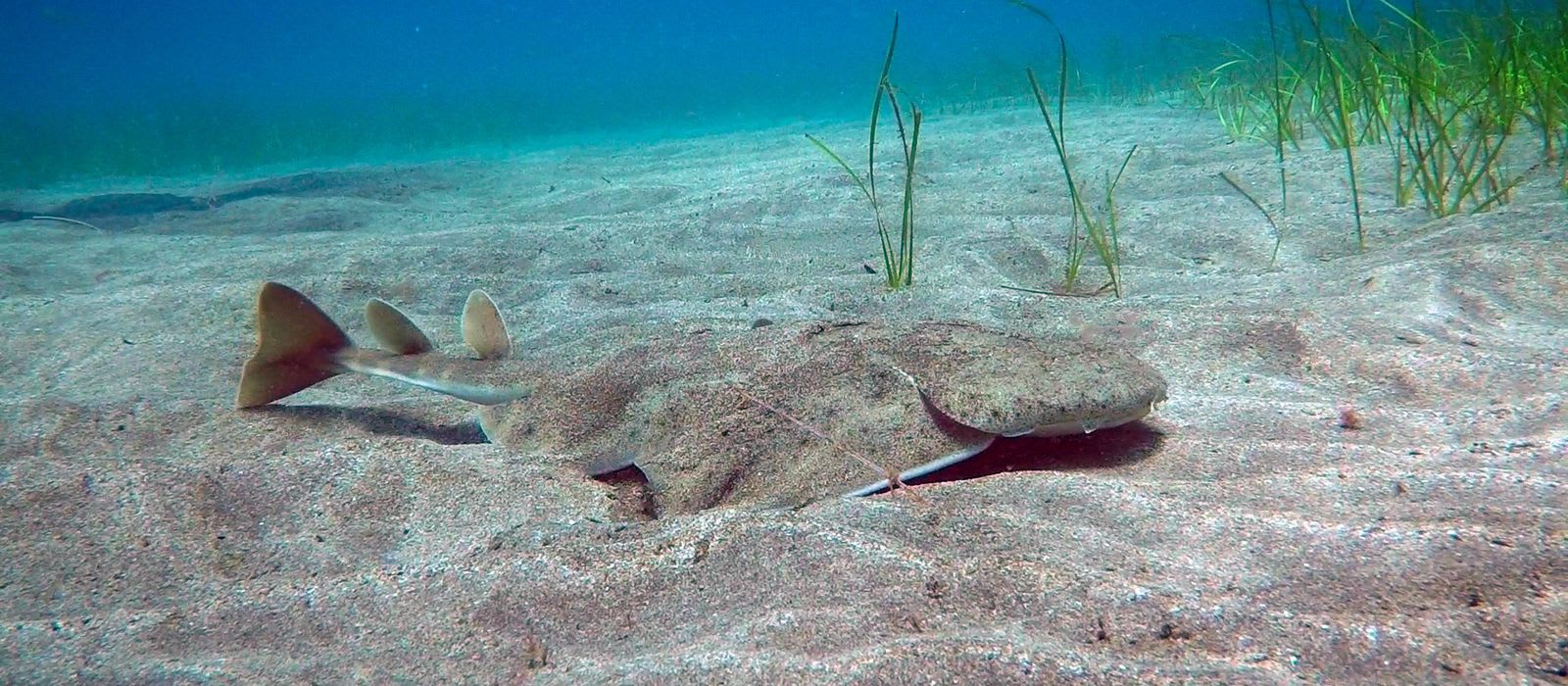
Angel sharks* are large, flat-bodied, bottom dwelling species. As ambush predators, they lie in wait for unsuspecting prey (particularly flatfish) to swim past. There are now at least 24 species of angel shark making up the family Squatinidae – which is amongst the most threatened families of elasmobranchs (after sawfishes, wedgefishes and giant guitarfishes).
Fishing methods that scour the seabed indiscriminately capture this species. As a result, many species have suffered steep population declines and now face a high risk of extinction. More than half of these species are now listed in a threat category: 8 Critically Endangered, 4 Endangered, 2 Vulnerable with the other listed as follows: 2 Near Threatened, 6 Least Concern, 2 Data Deficient, 1 Not Evaluated on the IUCN Red List of Threatened Species.
As a species which live on the seabed, they're vulnerable to being caught as bycatch. When caught accidentally by fishers, we can maximise post-release survival by following a set of safe release steps. This animation takes you through essential steps to safely handle and release angel sharks if caught accidentally, ensuring we give them the best chance of survival.
*angel shark vs Angelshark:
‘angel shark’ (as two words) refers to multiple species in the family Squatinidae
‘Angelshark’ (as one word) is used within species common names.
ANGEL SHARK CONSERVATION
We’ve been working to better protect angel sharks for over a decade now. We helped first secure protection for the Angelshark (Squatina squatina) in England and Wales in 2008 under the Wildlife and Countryside Act and then under the Scottish Elasmobranch Protection Order. In terms of conservation planning, we co-authored the Angelshark Action Plan for the Canary Islands, led on the development of the Eastern Atlantic and Mediterranean Angel Shark Conservation Strategy and now are leading on the Mediterranean Angel Sharks: Regional Action Plan. We’re also on the Steering Group for the Angel Shark Project: Wales, an exciting new project working through fisher-participation, heritage, and citizen science.
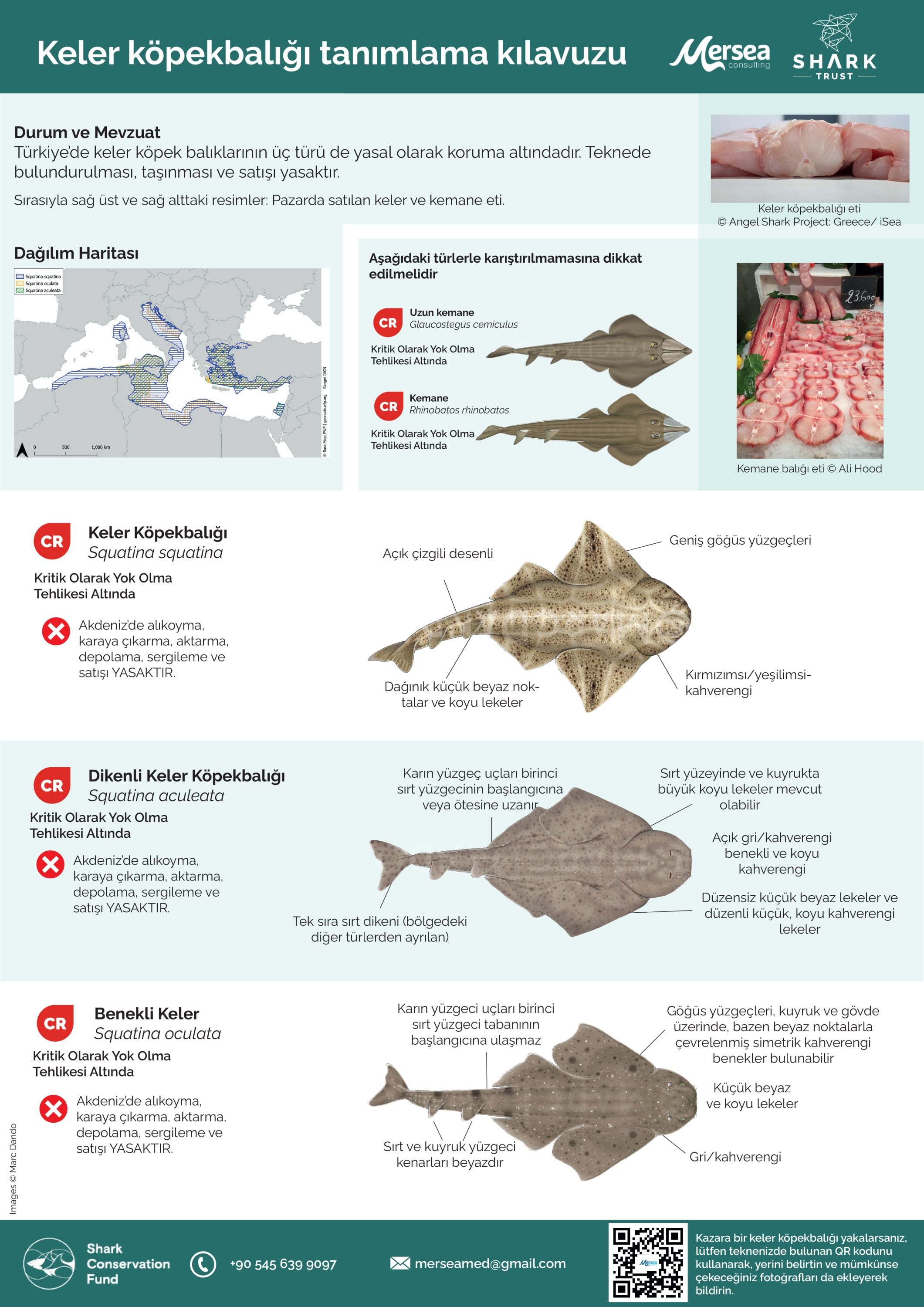
The Angelshark is now protected across much of its current range. It’s listed as a Prohibited Species under the Common Fisheries Policy (CFP) as well as receiving domestic protection in a number of countries. Regulations do exist for management and protection of all three Mediterranean species - Sawback Angelshark (S. aculeata), Smoothback Angelshark (S. oculata), and Angelshark (S. squatina) - however not all are implemented. This is our current focus.
Click on the drop down menus below to find out more about our work on angel sharks.
Funded By:
Banner image © Tom Young
Frequently asked questions
ANGEL SHARK CONSERVATION NETWORK (ASCN)
The Angel Shark Conservation Network (ASCN) was established to enable individuals and organisations working to protect angel sharks to stay connected. The success of the Conservation Strategy and Regional Action Plans is down to those working together towards the common Visions.
Quarterly email bulletins provide updates on conservation activities from members. All interested parties are invited to join the ASCN and help to deliver the objectives laid out in each document.
► To join the ASCN, submit angel shark sightings and download extra resources, visit www.angelsharknetwork.
► Single Species Action Plan for the Angelshark in the Mediterranean Sea & CMS Decision 14.104 -
Annex IV, Tools and Guidelines to Support Implementation
ANGEL SHARK PROJECT: GREECE
The discovery of several records of angel sharks in the Cyclades and Dodecanese Islands indicated that these areas are potentially highly important for the three species of Mediterranean angel sharks. In light of this, the Mediterranean Angel Sharks: SubRegional Action Plan (SubRAP) GSAs 22/23 (the Aegean Sea and Crete) was developed in line with the Mediterranean Angel Sharks: Regional Action Plan, aiming to advance angel shark conservation in Greece.
The Angel Shark Project: Greece was established as a collaborative project, it is led by iSea and supported by ULPGC, ZFMK, ZSL, and the Shark Trust. It has an overall aim to investigate the importance of the Greek side of the Aegean Sea for all three angel shark species present in the Mediterranean (Squatina aculeata, Squatina oculata, and Squatina squatina).
Find out more:
ANGEL SHARK PROJECT: WALES
Listed as Critically Endangered, Angelshark (Squatina squatina) numbers have declined rapidly over the past ~100 years across their range. They are now a Prohibited Species to commercial vessels fishing in EU waters. In addition, they have domestic protection in England and Wales, giving them full protection from other activities, including recreational fishing'.
Angel Shark Project: Wales was launched by the Zoological Society of London and Natural Resources Wales in 2018. The Shark Trust is one of 15 partners which sit on the Steering Group. The aim of the project is to better understand and conserve Angelsharks in Welsh waters, through fisher-participation, heritage, and citizen-science.
► History of Angels interactive eBook (ENGLISH | WELSH)
► Best Practice Guidance for fishers (ENGLISH | WELSH)
► Wales Angelshark Action Plan (ENGLISH)
EASTERN ATLANTIC & MEDITERRANEAN ANGEL SHARK CONSERVATION STRATEGY
There are three species of angel shark in the Eastern Atlantic and Mediterranean:
- Angelshark (Squatina squatina)
- Sawback Angelshark (S. aculeata)
- Smoothback Angelshark (S. oculata)
All three are Critically Endangered on the IUCN Red List of Threatened Species. Most information is known about the ecology, distribution, and decline of the Angelshark, with much less known about Sawback and Smoothback Angelsharks.
The Eastern Atlantic and Mediterranean Angel Shark Conservation Strategy (Gordon et al., 2017) was developed as a framework for improved protection of these three Critically Endangered species. It serves as a catalyst for action and strives to bring regional experts together to deliver the Strategy goals. The main aims are to:
- Improve the overall profile of angel sharks
- Increase the number of sightings reported
- Generate a better understanding of current distribution
- Contribute to IUCN Red List reassessments, and
- Identify new collaboration opportunities to increase conservation action.
The vision of this Conservation Strategy is that: Angel sharks in the Eastern Atlantic and Mediterranean are restored to robust populations and safeguarded throughout their range.
We’re now actively pursuing the goals of this Strategy, particularly through implementation in the Mediterranean.
► Eastern Atlantic & Mediterranean Angelshark Conservation Strategy (pdf): ENGLISH | FRENCH | SPANISH
► Extinction risk and conservation of critically endangered angel sharks in the Eastern Atlantic and Mediterranean Sea (review article in ICES Journal of Marine Science)
MEDITERRANEAN ANGEL SHARKS: REGIONAL ACTION PLAN
The Mediterranean is a risky place to be a shark. At least 50% of rays and 54% of sharks in this region face an elevated risk of extinction, including the three species of angel sharks. While measures do exist for the management of these species under the General Fisheries Commission for the Mediterranean (GFCM), not all are implemented.
The Mediterranean Angel Sharks: Regional Action Plan is designed to focus efforts to help restore these enigmatic species to robust populations in the region. Development of the Action Plan was led by the Shark Trust and is a result of a major collaborative effort from organisations within the Angel Shark Conservation Network and across the Mediterranean. It acts as a call to action for stakeholders to work together to address the challenges faced by these Critically Endangered species.
The Vision of the Action Plan is that: 'Mediterranean angel sharks are restored to robust populations fulfilling their ecological roles in healthy ecosystems', with Goals focusing on the following:
- GOAL 1 - Fisheries-based angel shark mortality is minimised in the Mediterranean
- GOAL 2 - Angel shark habitat is identified and protected
- UNDERLYING GOAL 3 - National legislation for angel sharks is established, implemented and enforced
To allow a tailored approach in priority regions of the Mediterranean, SubRegional Action Plans (SubRAPs) are being developed to facilitate further coordinated action by engaging regional stakeholders, including governments and industry. The areas covered by each SubRAP relate to recognised Geographic Subareas (GSAs) established by the GFCM.
► Download the Regional Action Plan (pdf): ENGLISH | FRENCH | SPANISH | ARABIC
► SubRegional Action Plan for Aegean Sea & Crete (pdf): ENGLISH | GREEK | TURKISH
► SubRegional Action Plan for Northern Cyprus (pdf): ENGLISH | TURKISH
► SubRegional Action Plan for Republic of Cyprus (pdf): ENGLISH | CYPRIOT GREEK
► SubRegional Action Plan for Southern Ionian Sea (pdf): ENGLISH | ARABIC
► SubRegional Action Plan for Northern Levant Sea (pdf): ENGLISH | TURKISH
► SubRegional Action Plan for Central Mediterranean Sea (pdf): ENGLISH | FRENCH | ARABIC
►SubRegional Action Plan: Implementation (Illustrative Reports): FULL REPORT (ENGLISH), NORTHERN CYPRUS (TURKISH), REPUBLIC OF CYPRUS (GREEK), TUNISIA (FRENCH), TÜRKIYE (TURKISH)
Do you have any information about angel sharks in the Mediterranean? If so, please get in touch.
ANGELSHARK ACTION PLAN FOR THE CANARY ISLANDS
The Angelshark was once common in the Northeast Atlantic, Mediterranean Sea, and Black Sea, but their range has drastically declined during the past century due to intensified fishing. Although there have been increased reports from Cardigan Bay (Wales) and occasional reports from across the Mediterranean, the Canary Islands is the only known location where they can be regularly encountered. We need to take action to ensure this population is protected.
In 2016 we teamed up with the Angel Shark Project (a collaboration between Zoological Society of London, University of Las Palmas Gran Canaria, and Zoological Research Museum Alexander Koenig), the IUCN Shark Specialist Group, and Submon. Together we developed the Angelshark Action Plan for the Canary Islands (Barker et al., 2016) which outlines goals and objectives to meet the vision that Angelsharks in the Canary Islands are abundant and protected in their unique stronghold.
This plan now forms the backbone of conservation action for this species around the Canary Islands.
► Angelshark Action Plan for the Canary Islands (pdf): ENGLISH | SPANISH
INTERNATIONAL ANGEL SHARK DAY
In 2020 we celebrated the first ever International Angel Shark Day - we now celebrate it each year on the 26th June!
Taking to social media, the 23 different species around the world are profiled, sharing facts, resources, and work from different researchers and conservationists around the world.
Visit our YouTube channel to find out more and watch the talks from 2020 and 2021.
Follow along on social media using #AngelSharkDay
Discover Angel Sharks:
► Angel Sharks Poster (pdf) - showcasing all 23 described species of the angel shark family
► Colouring in sheets: Adult (pdf) | Kids (pdf)
► Read our Angel Sharks Creature Feature Blog