Common Stingray
Dasyatis pastinaca (Linnaeus, 1758)
Vulnerable- Maximum length
- 68 cm
- FAO code
- JDP
Meet the Common Stingray
- Also known as
- COMMON STINGRAY, Blue Stingray, Gewöhnlicher Stechrochen (DEU), Raya Látigo Común (ESP), Pastenague Commune (FRA), Pastinaca Commune (ITA), Pijlstaartrog (NLD), Uge (PRT).
How to identify
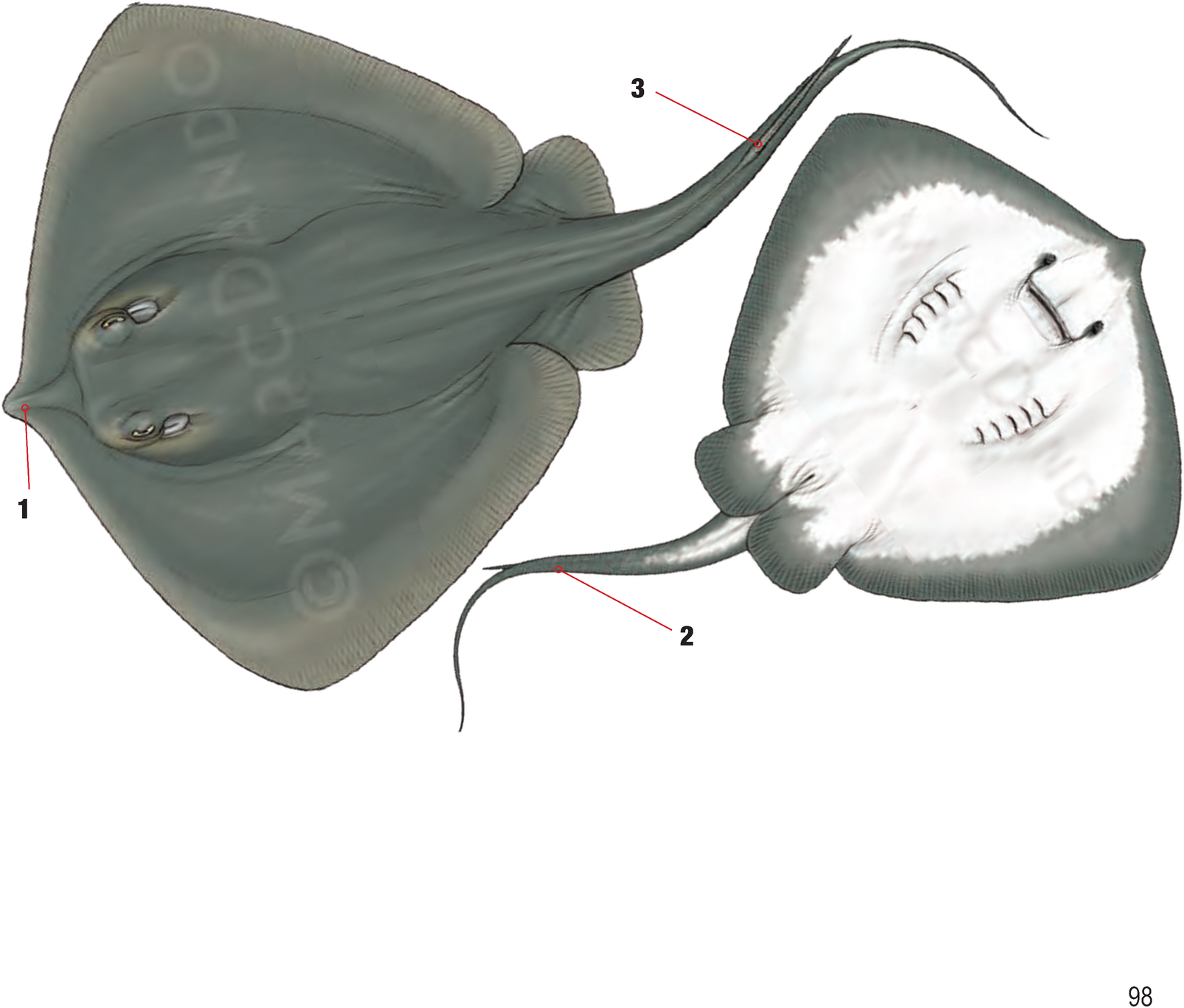
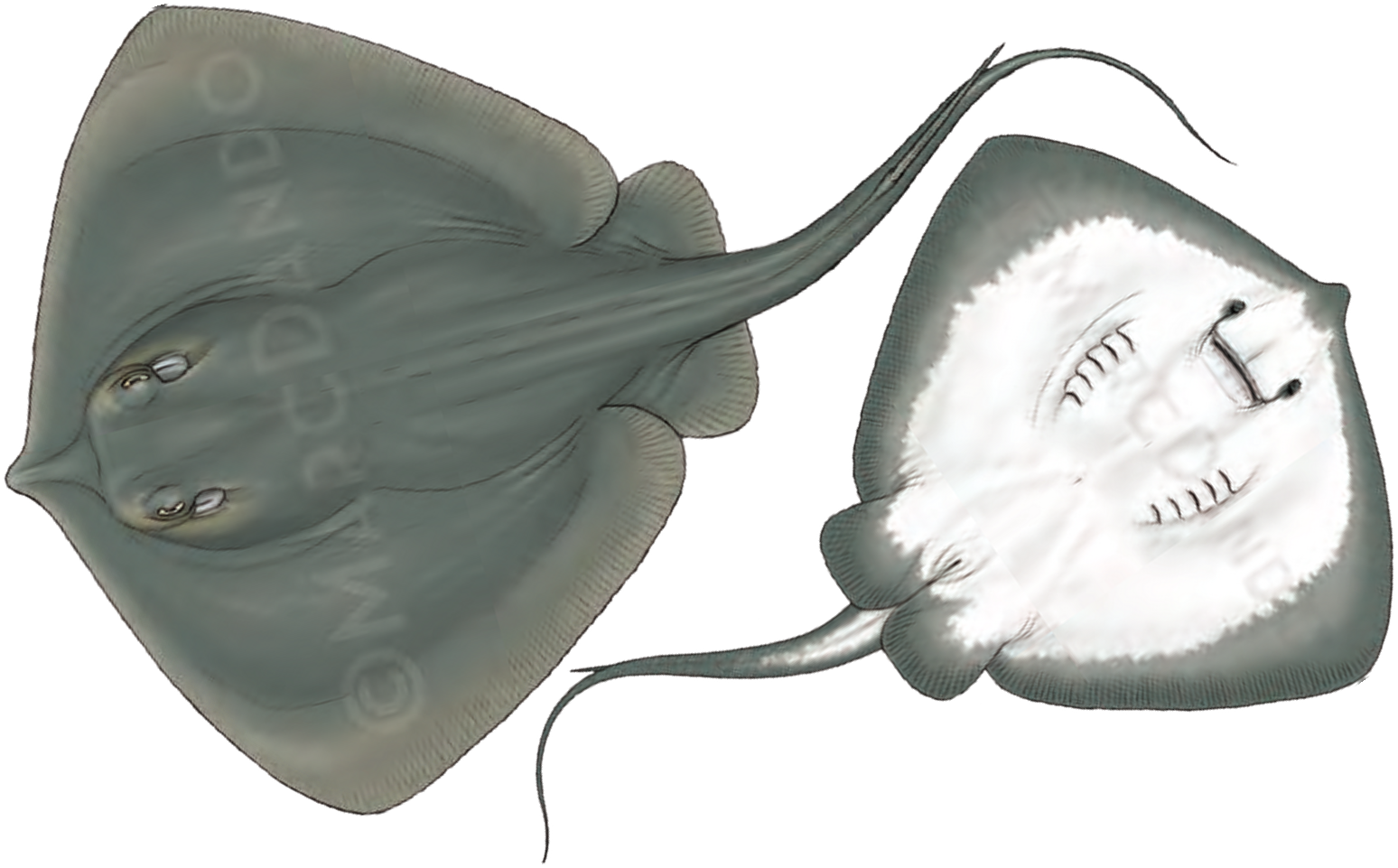
The numbers match the arrows on the illustration.
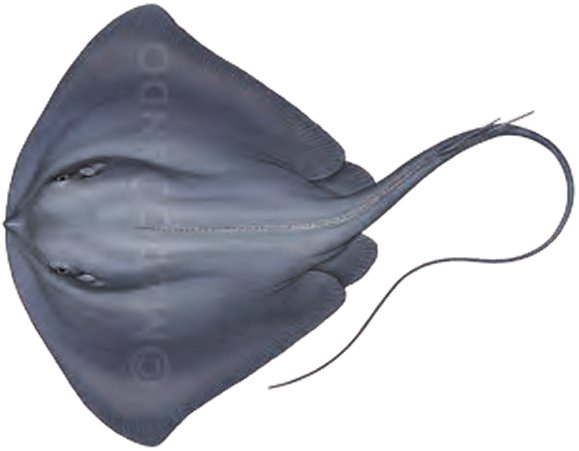
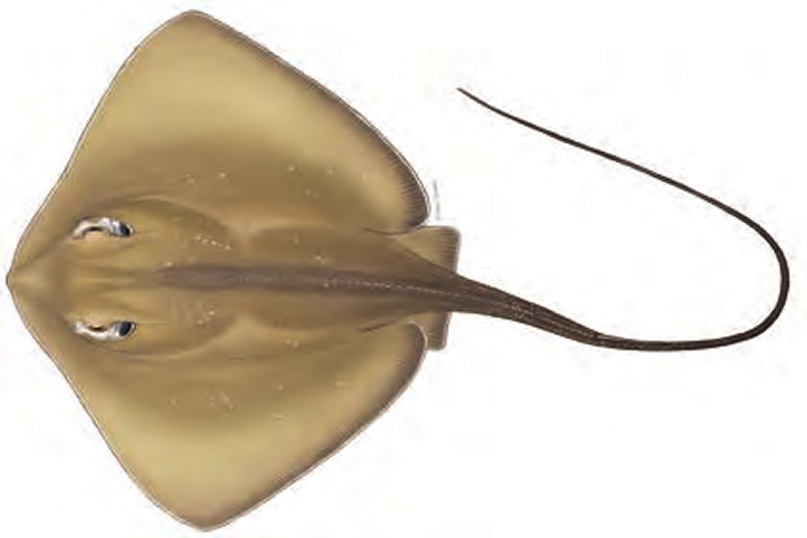
- Short snout with straight leading edges of disc.
- Long, thin tail up to 1.5 times the length of the body.
- Spine on tail up to 12cm long with serrations: 74 female; 98 male.
Colouring & markings
- Dorsal surface uniform dark brown-grey to olive.
- Ventral surface white with dark margins.
Teeth
Flat teeth arranged to form pavement like structure. Upper jaw: 28–43.
How big do they get?
Where they live
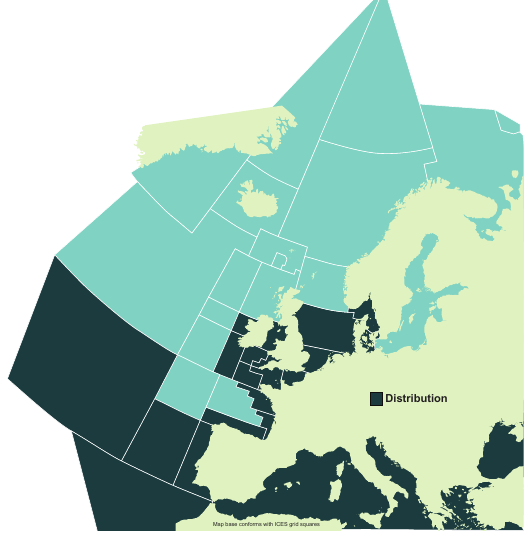
Distribution
Southern Norway and British Isles to Morocco, incl. the Azores, the Canary Islands and Madeira. Found in the Mediterranean and Black Seas.
Habitat
Demersal from shallows to 200m, most commonly to 60m. Found on continental shelves and in estuaries and areas with brackish water. Prefers sandy and muddy substrates.
In the wild
-
Recorded on a Shark Trust survey dive -
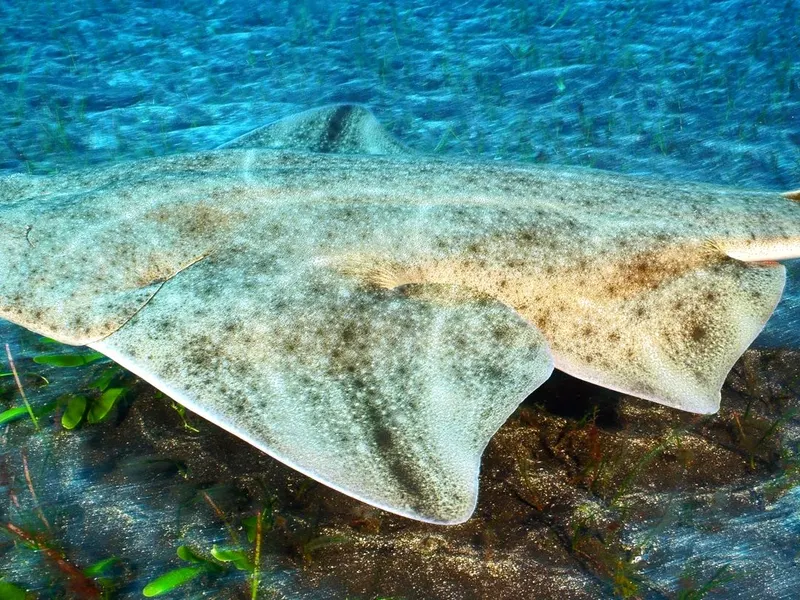
Resting on a sandy seabed -
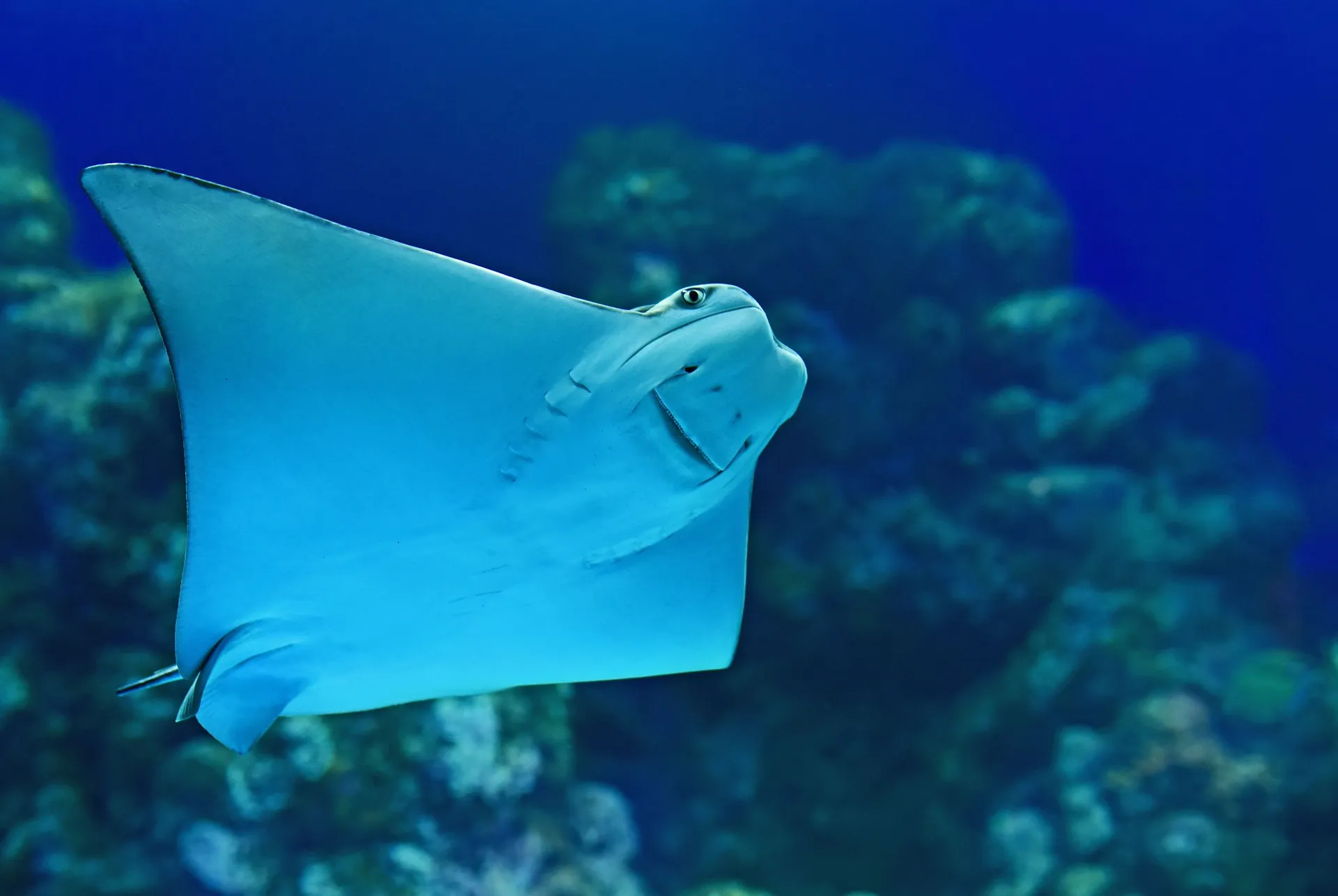
Cruising close to the sea floor -
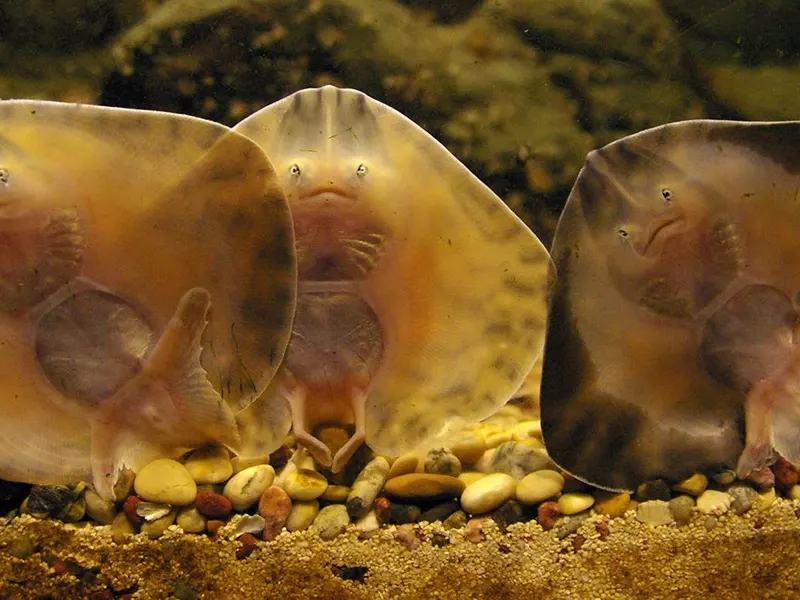
In the shallows at dusk -
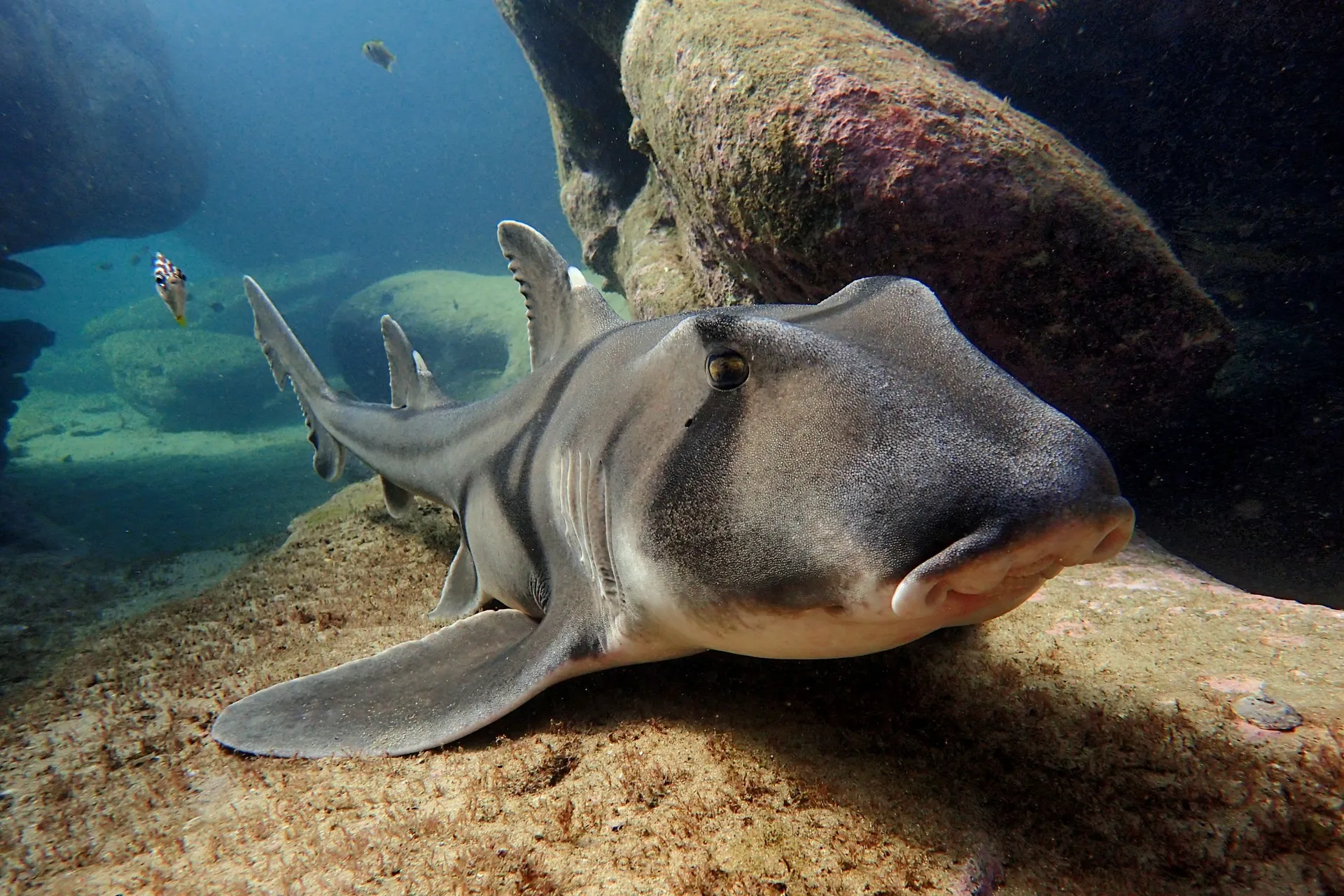
Sheltering on the reef
Go deeper
Size & biology
- Birth: 12cm.
- Matures: female 38–41cm; male 30–31cm.
- Max.: DW: 68cm; but with reports to 140cm.
- Litters of 4–9 pups are delivered in shallow waters after a four month gestation.
- Primarily feeds on benthic crustaceans, small molluscs and teleosts.
Conservation status
IUCN Red List: Global: Data Deficient (2009) Europe: Vulnerable (2015) Mediterranean: Vulnerable (2016) The shallow depth distribution of this stingray makes this species vulnerable to coastal fisheries.
Management
No species-specific management in the Northeast Atlantic.
Commercial importance
Occasionally targeted by regional and artisanal fisheries in Mediterranean and African waters. Taken as bycatch in small-scale trawl, longline, trammel net and rod and line fisheries. Often discarded but where retained its wings are utilised smoked or dried and salted for human consumption, its liver for oil and carcass for fish meal.
References & further reading
Assessment: JDP/NEA/2020
- Ebert & Stehmann.
- Last et al.
- Serena et al.
- Serena et al.
- Ismen, A.
- Saadaoui et al.