Pelagic Stingray
Pteroplatytrygon violacea (Bonaparte, 1832)
Least Concern- Maximum length
- 1.6 m
- FAO code
- PLS
Meet the Pelagic Stingray
Unlike most stingrays, this unique species is characterised by its preference for the open ocean, rather than the ocean floor. fishes.
- What they eat
- Planktonic crustaceans, jellyfish, squid, octopus, shrimp, small pelagic
- Also known as
- PELAGIC STINGRAY, Violet Stingray, Blue Stingray, Guiler’s Stingray, Pelagischer Stechrochen (DEU), Raya Latigo Violeta (ESP), Pastenague Violette (FRA), Trigone Viola (ITA), Violette Pijlstaartrog (NLD), Uge-violeta (PRT).
How to identify
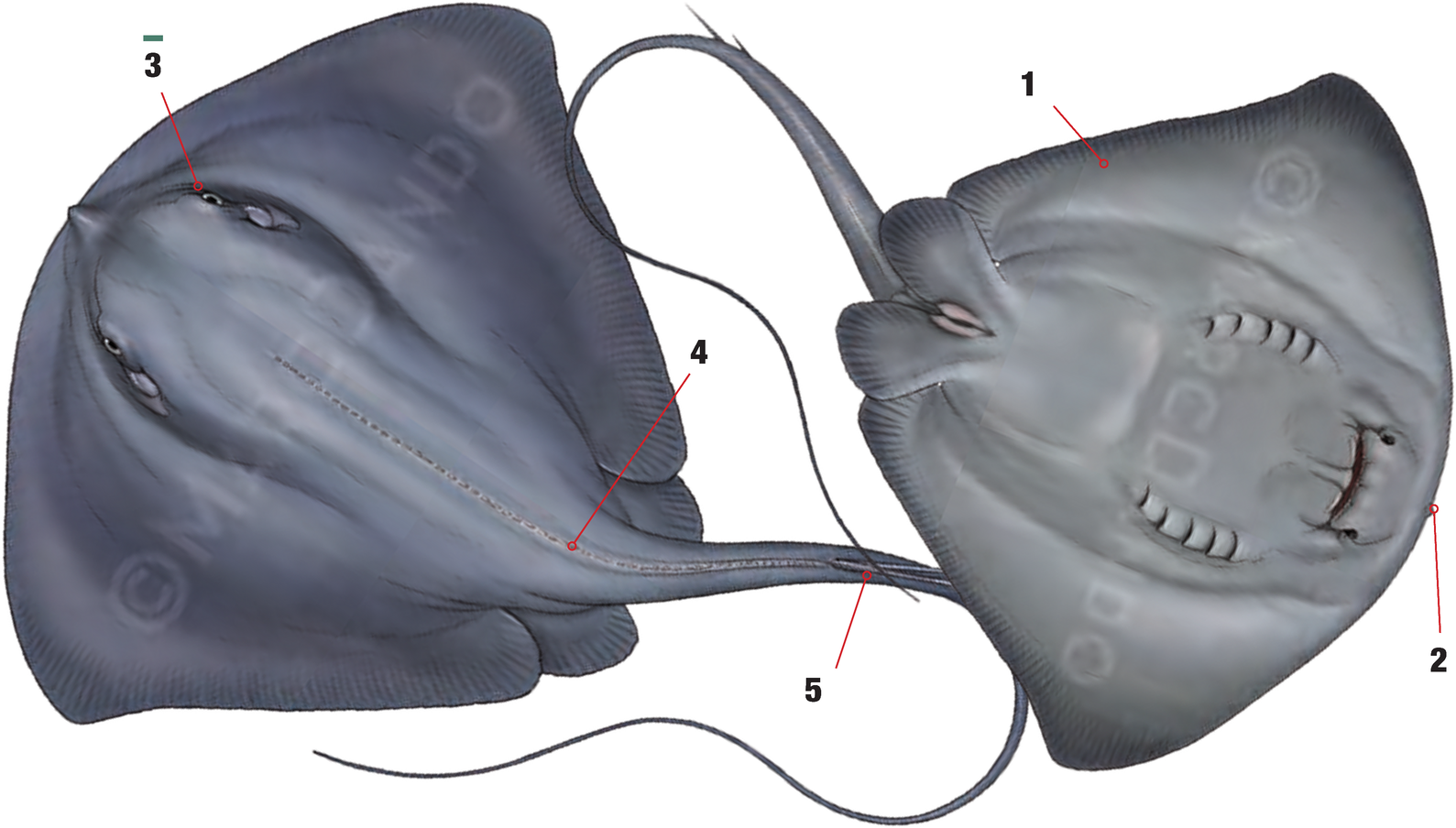
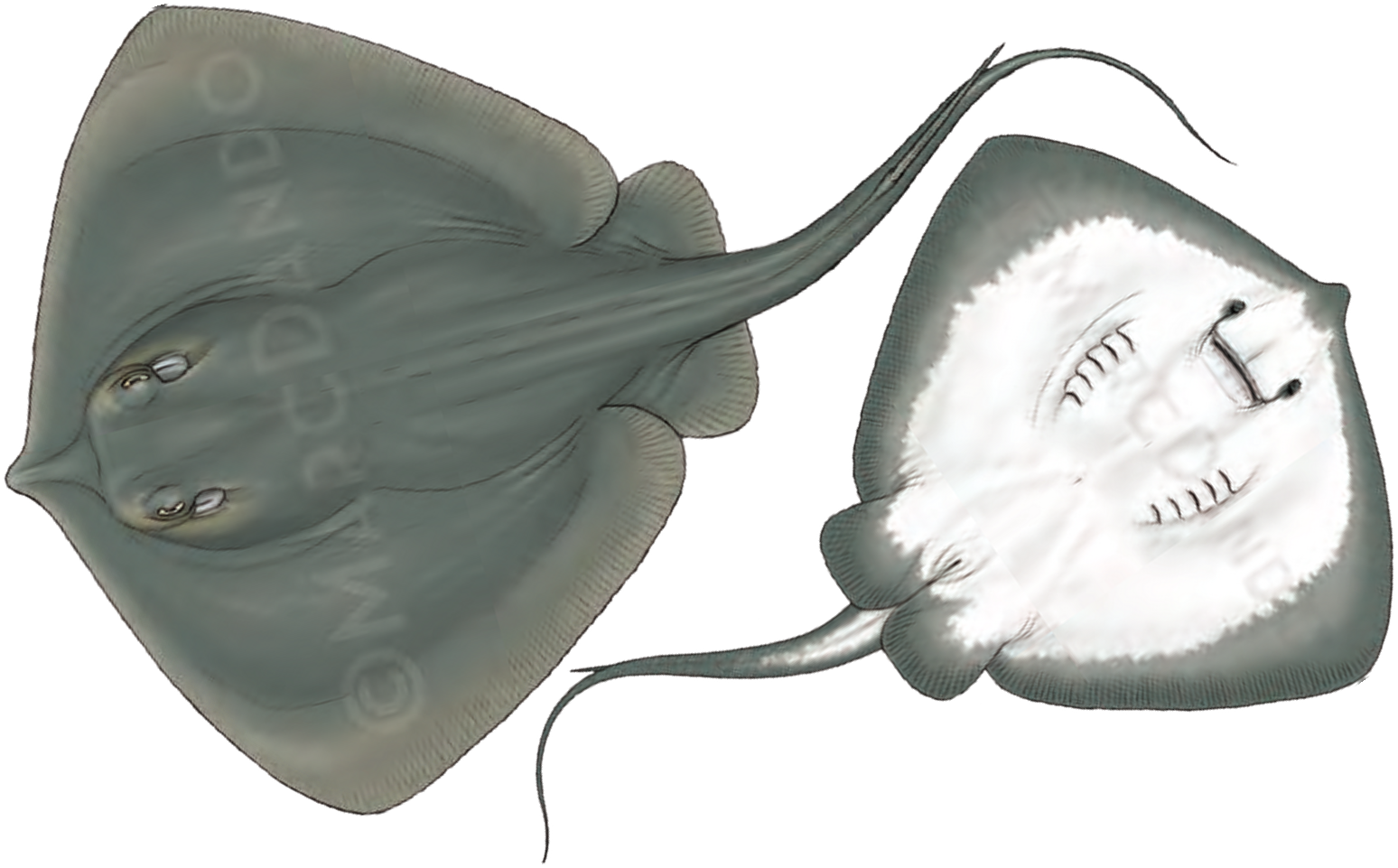
The numbers match the arrows on the illustration.
- Flattened broad disc, wider than long, nearly triangular in shape.
- Short, bluntly rounded snout.
- Small eyes do not protrude from body.
- Row of small thorns from nape to spine.
- Serrated tail spine.
Colouring & markings
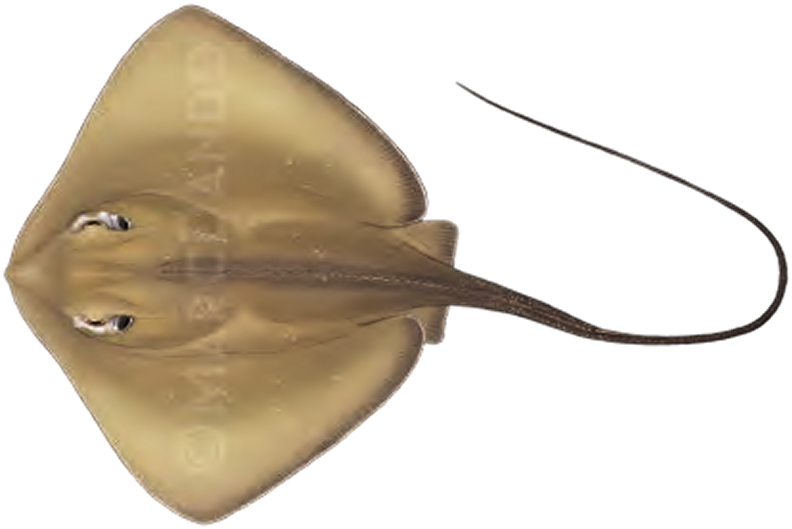
- Uniform dark purple to blue-green or black dorsally.
- Ventral side slightly lighter than dorsal surface.
Teeth
Sharp teeth set in pavement pattern. Upper jaw: 28–34 rows. Lower jaw: 19 rows either side a symphysial tooth.
How big do they get?
Where they live
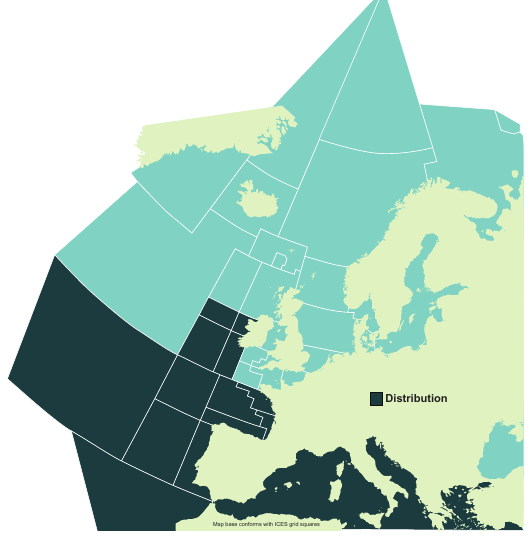
Distribution
Circumglobal in tropical and warm temperate waters in the Atlantic, Pacific, and Indian Oceans. Eastern Atlantic primarily from the Bay of Biscay to South Africa but vagrants reported around the British Isles. Occurs in the Mediterranean Sea.
Habitat
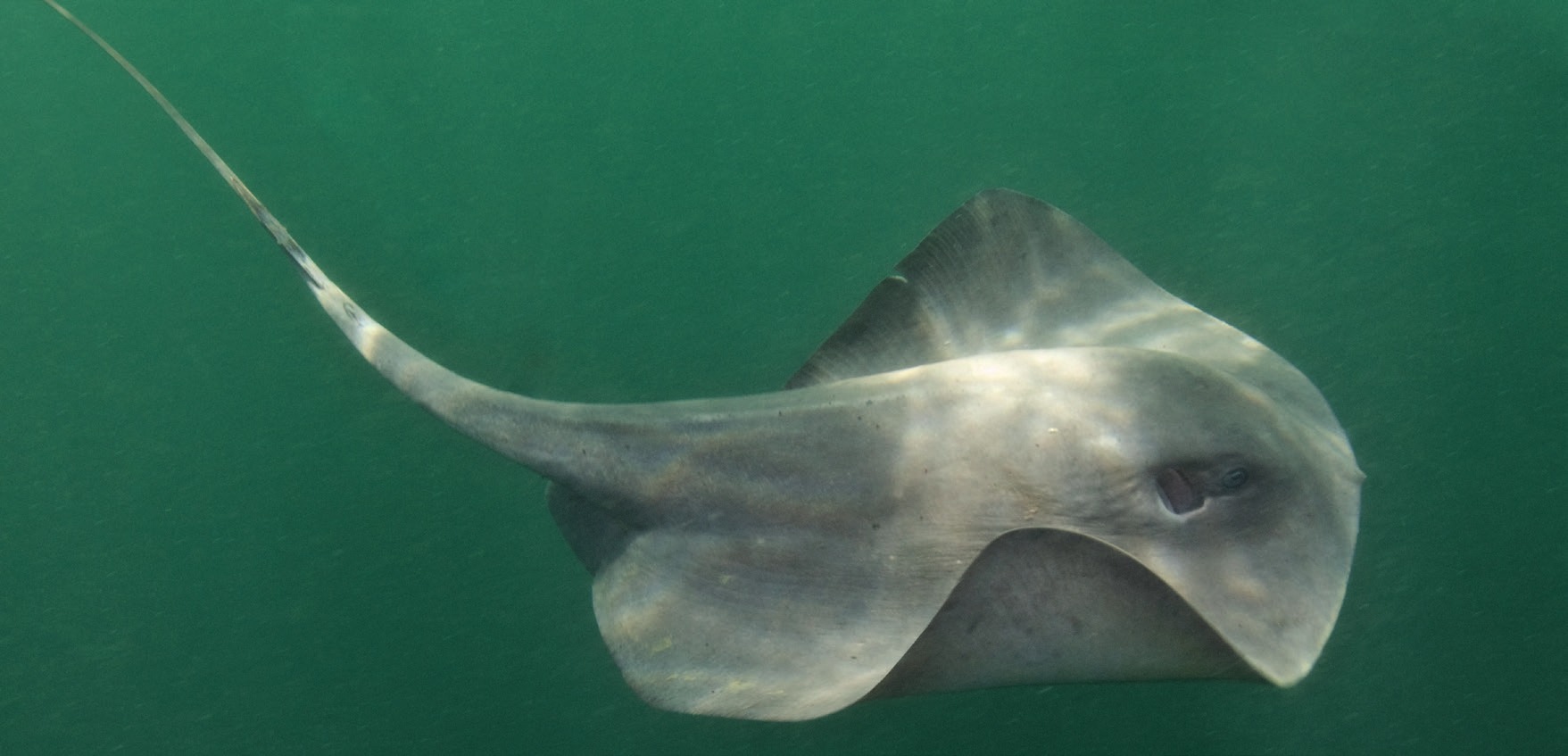
Possibly the only pelagic and oceanic stingray species. Surface to 240m. Most commonly to 100m over continental and insular shelves and the open ocean.
In the wild
-

Recorded on a Shark Trust survey dive -
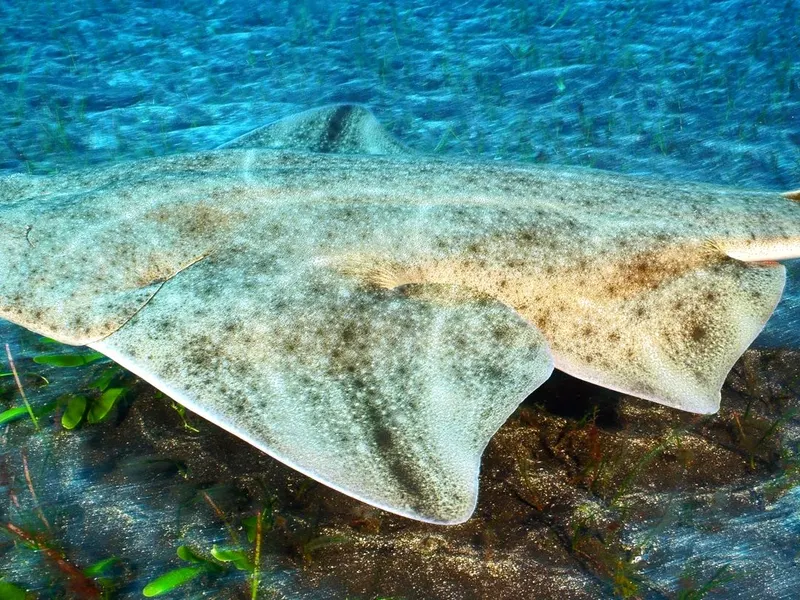
Resting on a sandy seabed -
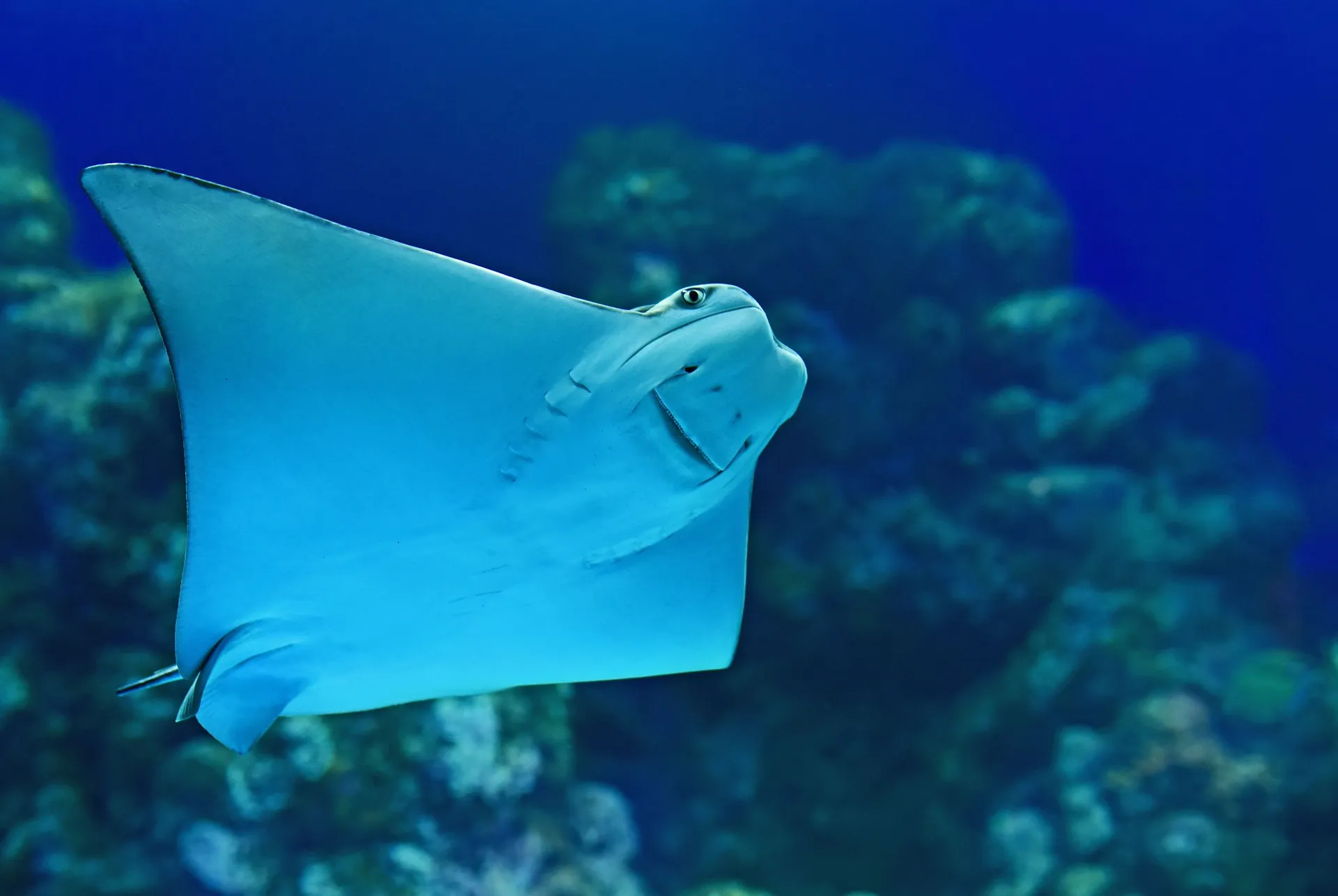
Cruising close to the sea floor -
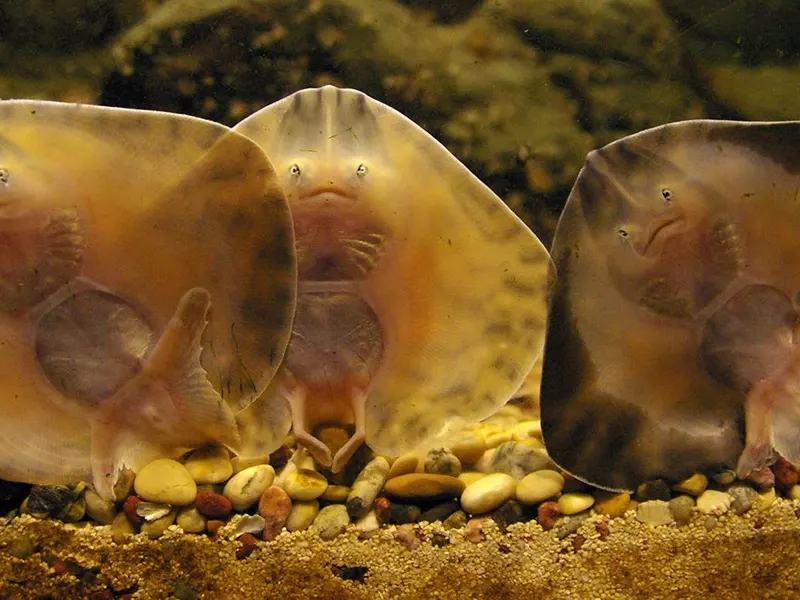
In the shallows at dusk -
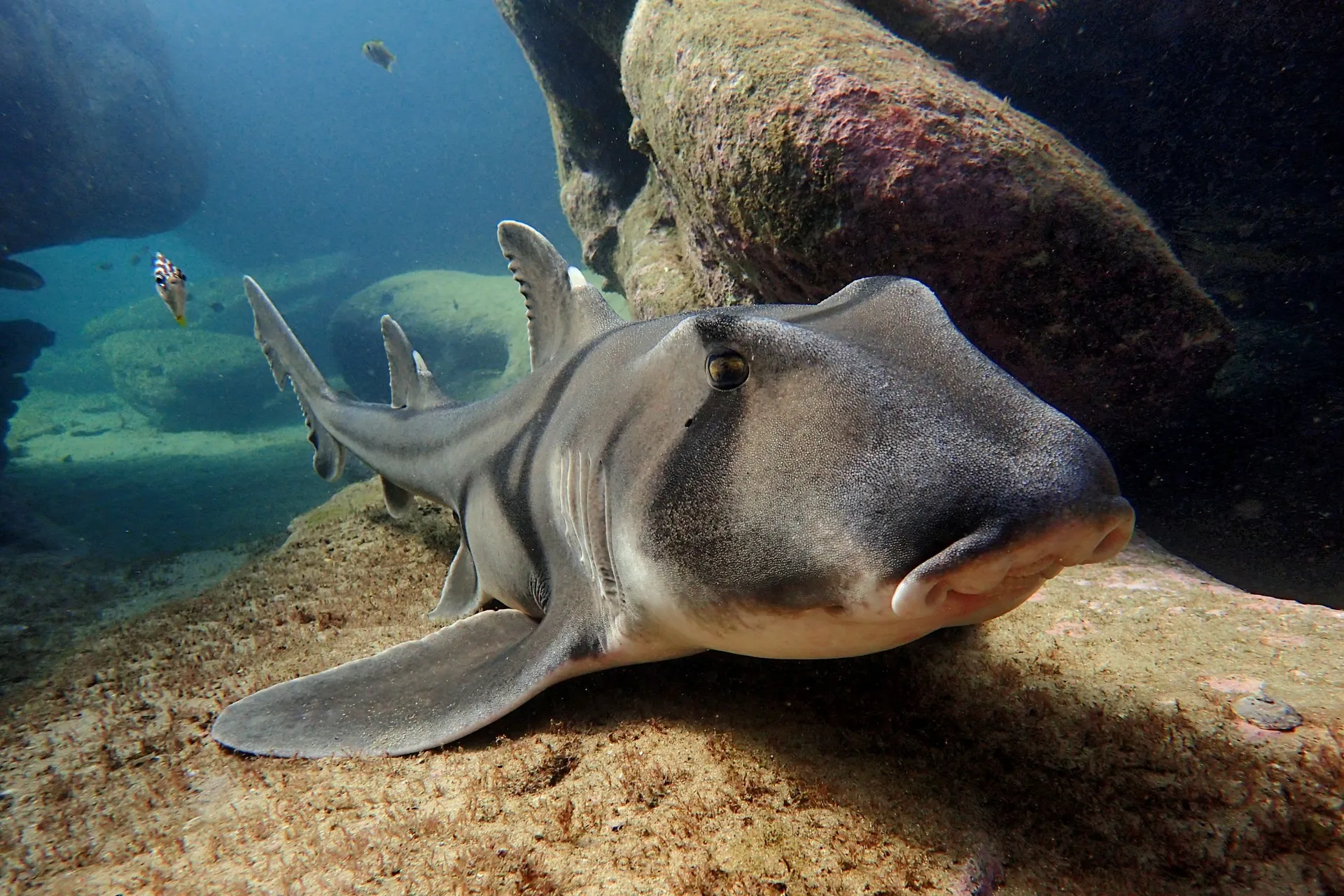
Sheltering on the reef
Go deeper
Size & biology
- Birth: 14–24cm DW.
- Matures: female 40–50cm DW; male 35–40cm DW.
- Max. TL: 80cm DW; 160cm TL (if tail is undamaged). Size varies with latitude and temperature.
- Viviparous, litters of 2–9 pups born after a 2–4 month gestation.
- Diet consists of cephalopods, crustaceans and bony fishes.
Conservation status
IUCN Red List: Global: Least Concern (2019) Europe: Least Concern (2015) Mediterranean: Least Concern (2016) Widespread, oceanic species commonly bycaught in pelagic fisheries, where it is usually discarded. Moderately high fecundity and wide distribution makes this species more resistant to fishing pressure.
Management
No species-specific management in the Northeast Atlantic.
Commercial importance
Low commercial importance. Regularly taken as bycatch across its range in pelagic longline, driftnet and purse seine fisheries targeting swordfish and tuna; generally discarded but landed and utilised in some regions.
References & further reading
Assessment: PLS/NEA/2020
- Kyne et al.
- Baum et al.
- Bester et al. n.d.
- Ebert & Stehmann.
- Last et al.
- Schwartz, F.J.
- Lipej et al.
- Mollet, H.F.
- Báez et al.