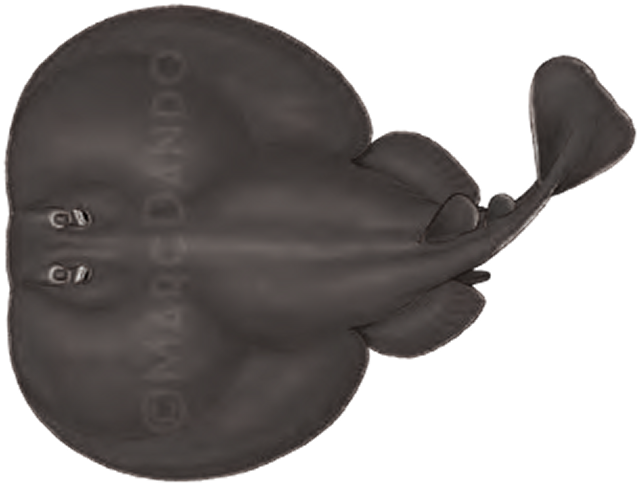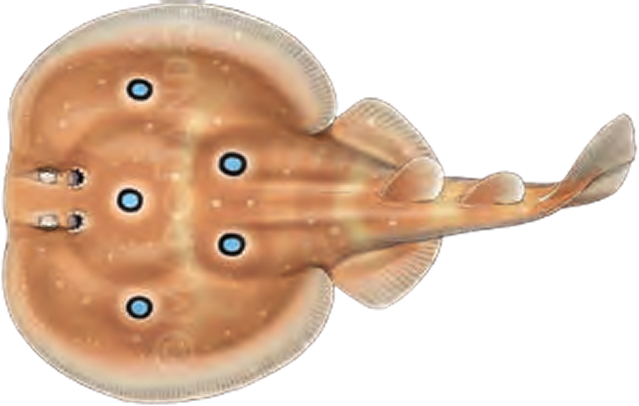
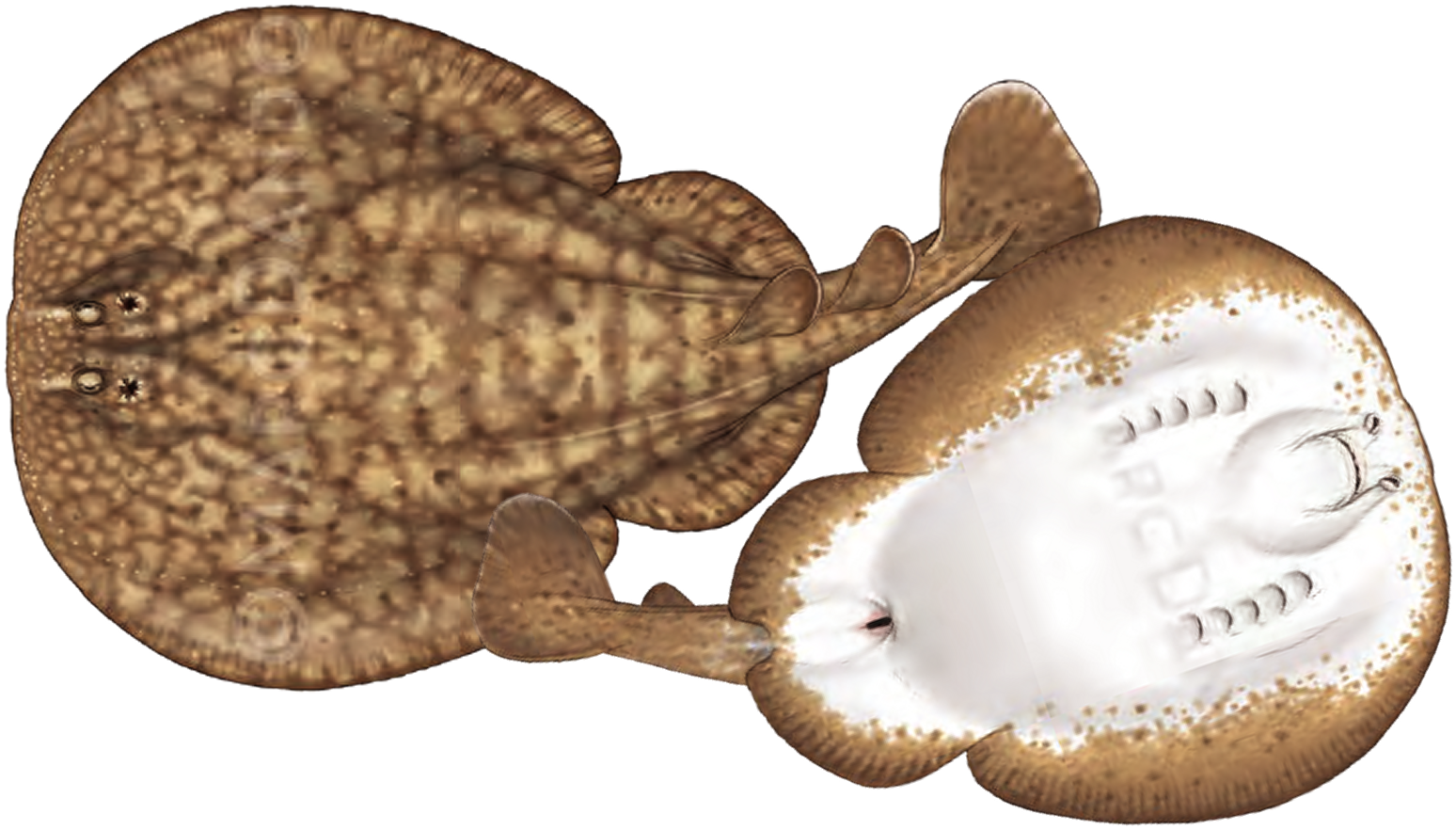
Marbled Torpedo Ray
Torpedo marmorata Risso, 1810
Vulnerable- Maximum length
- 1 m
- Depth range
- From surface to 200m, most commonly 10 to 30m.
- FAO code
- TTR
Meet the Marbled Torpedo Ray
- Also known as
- MARBLED TORPEDO RAY, Marbled Electric Ray, Spotted Torpedo Ray, Common Crampfish, Numbfish, Marmorierter Zitterrochen (DEU), Tembladera (ESP), Torpille Marbrée (FRA), Torpédine Marmorata (ITA), Gemarmerde Sidderrog (NLD), Tremelga Marmoreada (PRT).
How to identify
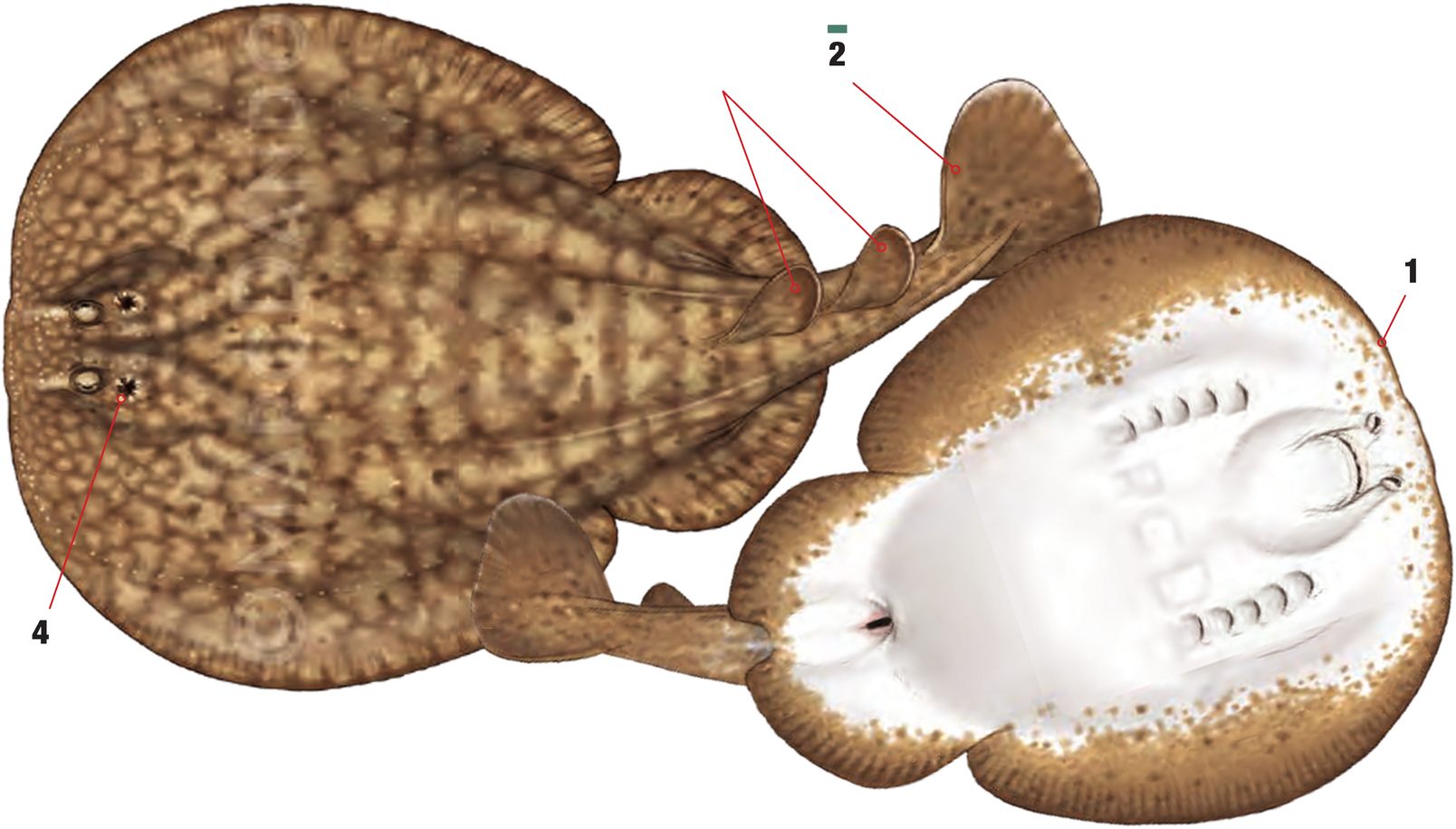
The numbers match the arrows on the illustration.
- Thick, rounded body with straight leading edge.
- Short, thick tail with large caudal fin.
- Two well-developed close-set dorsal fins.
- 6–8 papillae around each spiracle.
Colouring & markings
- Dorsal surface pale and dark brown, usually with a pronounced marbled pattern (this can be faint in some specimens).
- Ventral surface creamy white with darker margin.
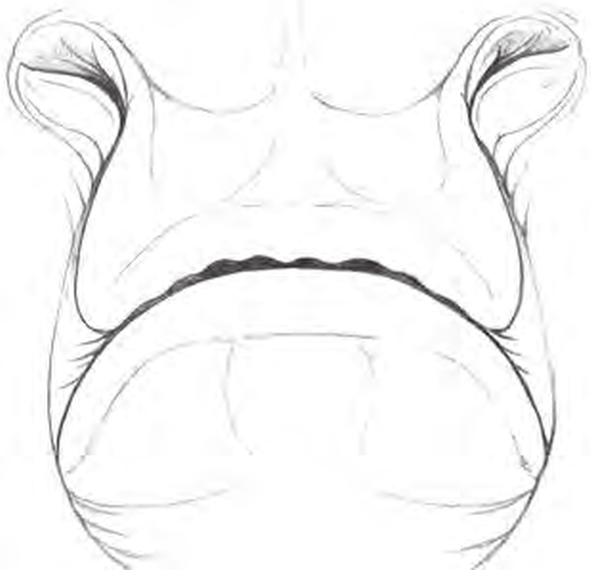
Teeth
Small, single-cusped teeth arranged in ≤26 rows.
How big do they get?
Where they live
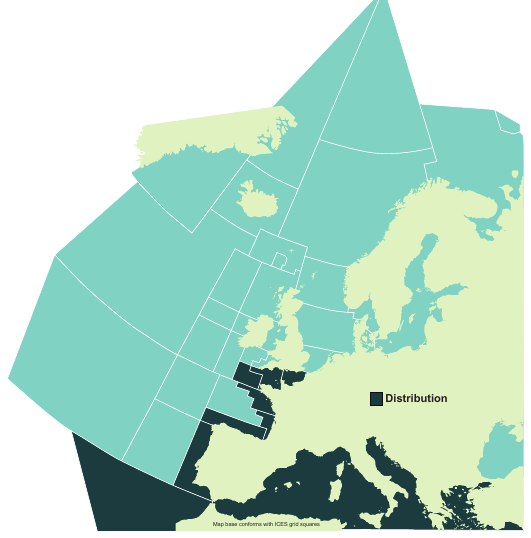
Distribution
Eastern Atlantic from the English Channel to South Africa incl. the Mediterranean Sea. Occasional vagrants occur further north to western Scotland and Denmark.
Habitat
Demersal on continental shelf and slope to 200m, most common 10–30m. Found over sandy and muddy substrates and in seagrass and rocky reef habitats.
In the wild
-

Recorded on a Shark Trust survey dive -
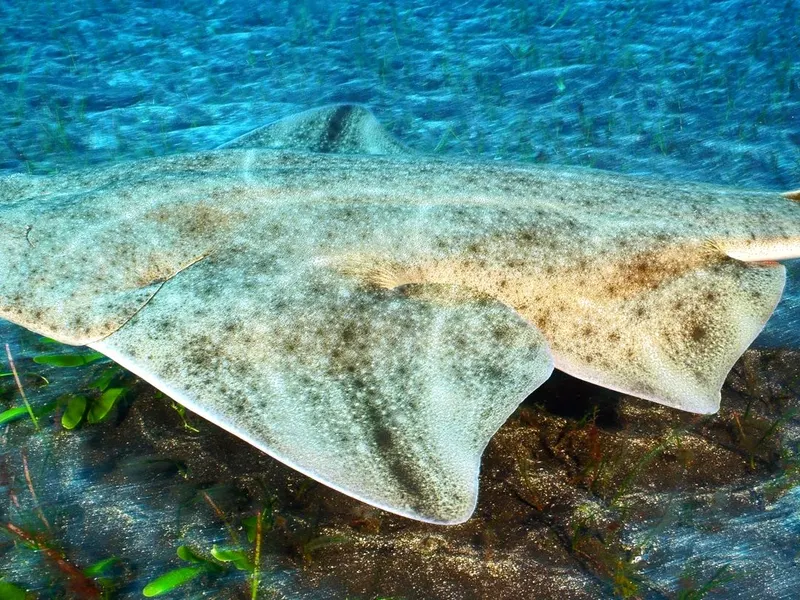
Resting on a sandy seabed -
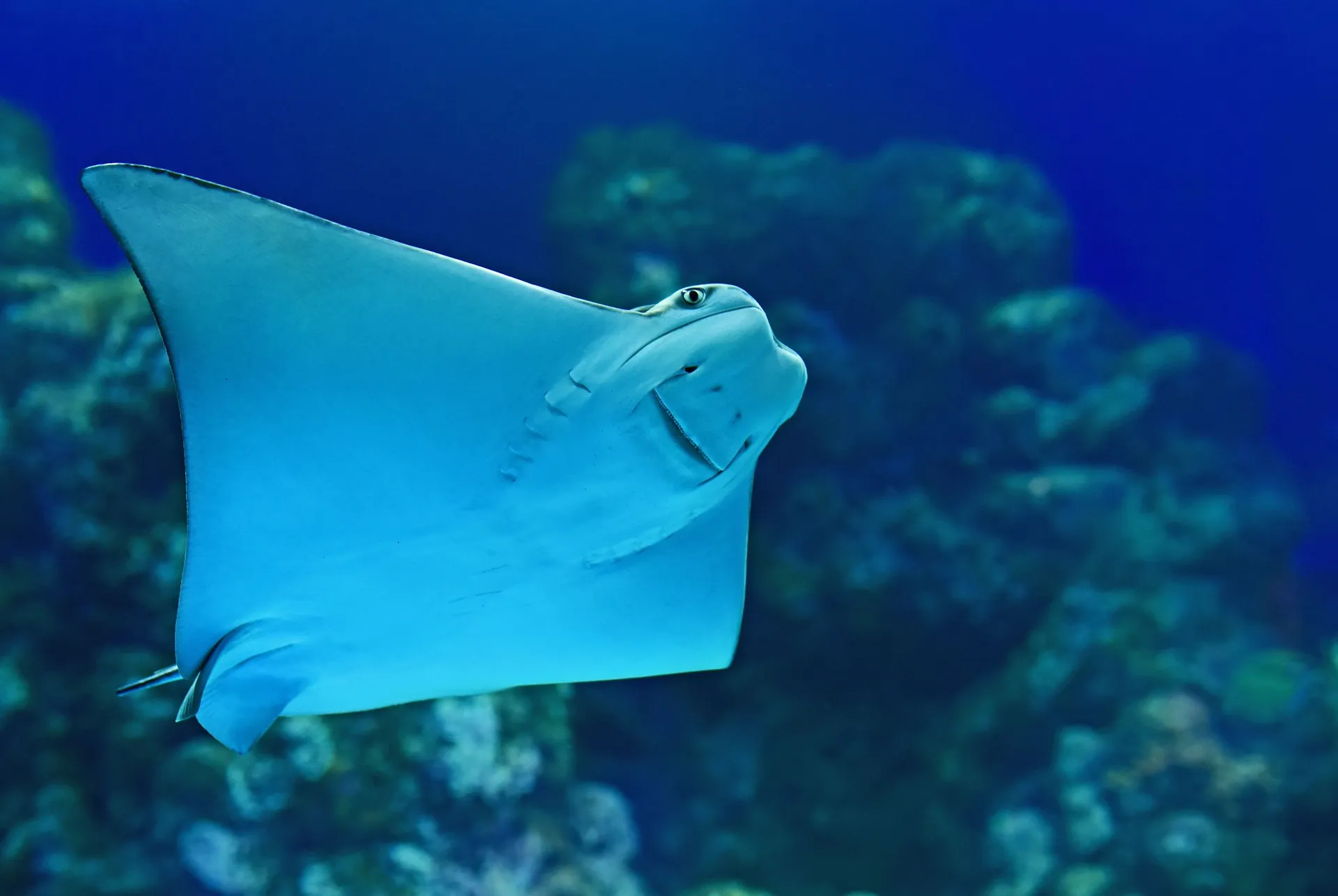
Cruising close to the sea floor -
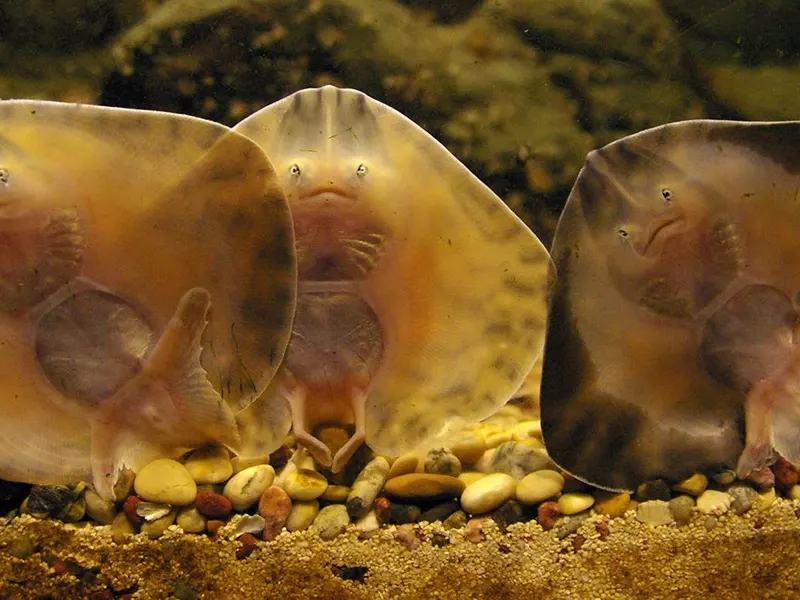
In the shallows at dusk -
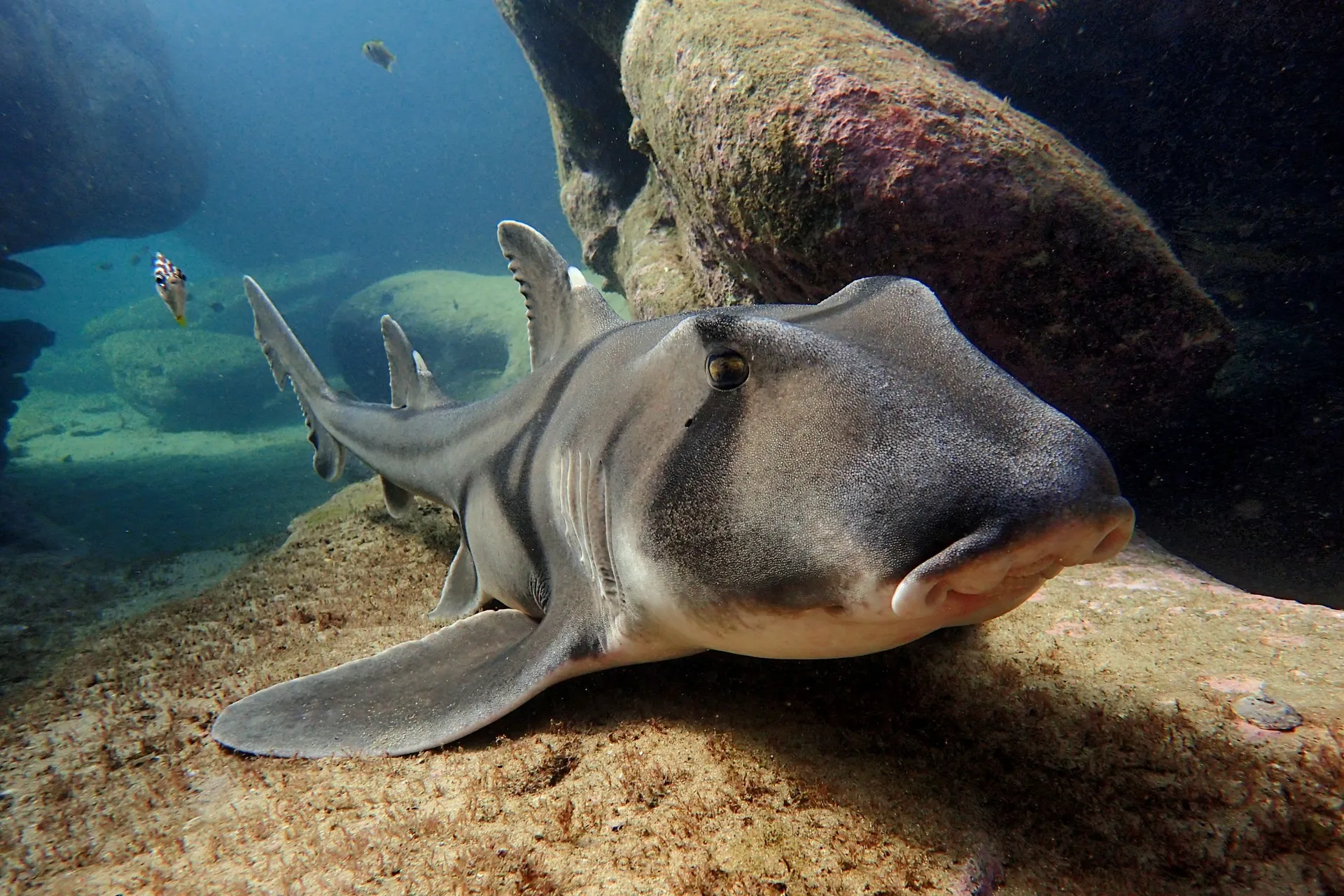
Sheltering on the reef
Go deeper
Size & biology
- Birth: 10–14cm.
- Matures: female 40cm; male 30cm.
- Max. TL: 100cm, usually to 60cm.
- Ovoviviparous, producing 5–32 pups after a 10 month gestation.
- Young are born with fully functioning electric organs.
- Ambush predator that uses its wings to engulf prey whilst emitting a series of electrical shocks.
- Feeds on small teleosts and benthic invertebrates.
Conservation status
IUCN Red List: Global: Data Deficient (2009) Europe: Least Concern (2015) Mediterranean: Least Concern (2016) Little is known about the population status of the Marbled Torpedo Ray in the Northeast Atlantic and minimal information is available on catch rates and population trends. The low commercial value, broad distribution and lack of evidence of declines suggest a stable population overall, however reports of demersal trawl bycatch should be monitored.
Management
No species-specific management in the Northeast Atlantic.
Commercial importance
Low commercial importance. This ray is sometimes a bycatch in demersal trawl fisheries but usually discarded.
References & further reading
Assessment: TTR/NEA/2020
- Ebert & Stehmann.
- Last et al.
- Notarbartolo di Sciara et al.
- Bester, C. n.d.
- Tserpes et al.