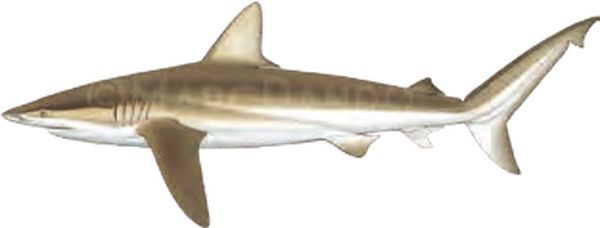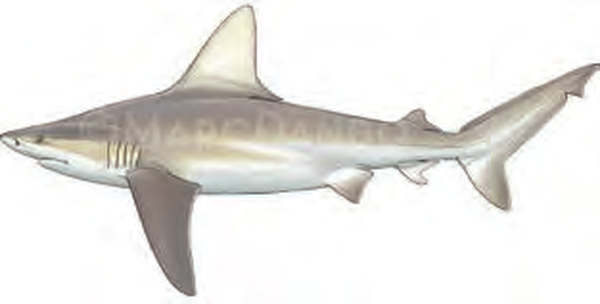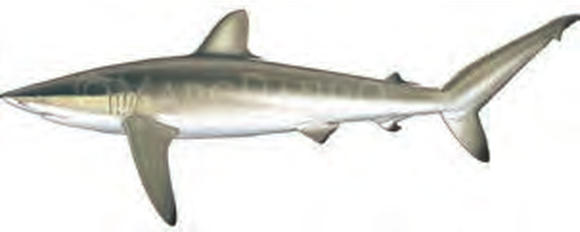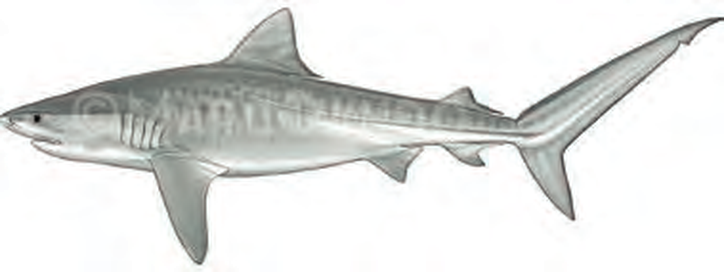
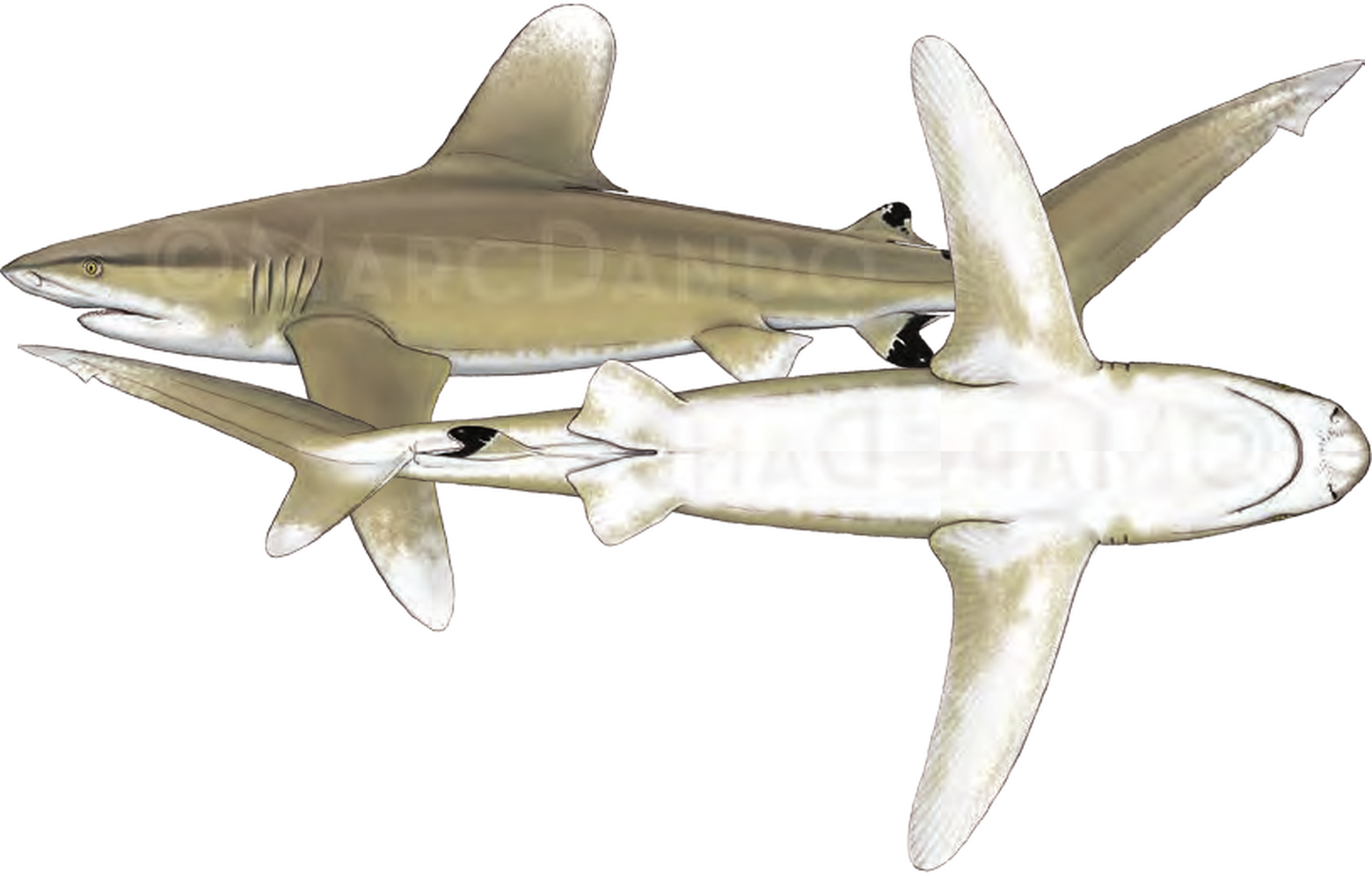
Oceanic Whitetip Shark
Carcharhinus longimanus (Poey, 1861)
Critically Endangered- Maximum length
- 3.95 m
- FAO code
- OCS
Meet the Oceanic Whitetip Shark
- Also known as
- OCEANIC WHITETIP SHARK, Whitetip Shark, Hochsee-Weißspitzenhai (DEU), Tiburón Oceanico (ESP), Requin Longimane (FRA), Squalo alalunga (ITA), Tubarão de Pontas Brancas (PRT).
How to identify
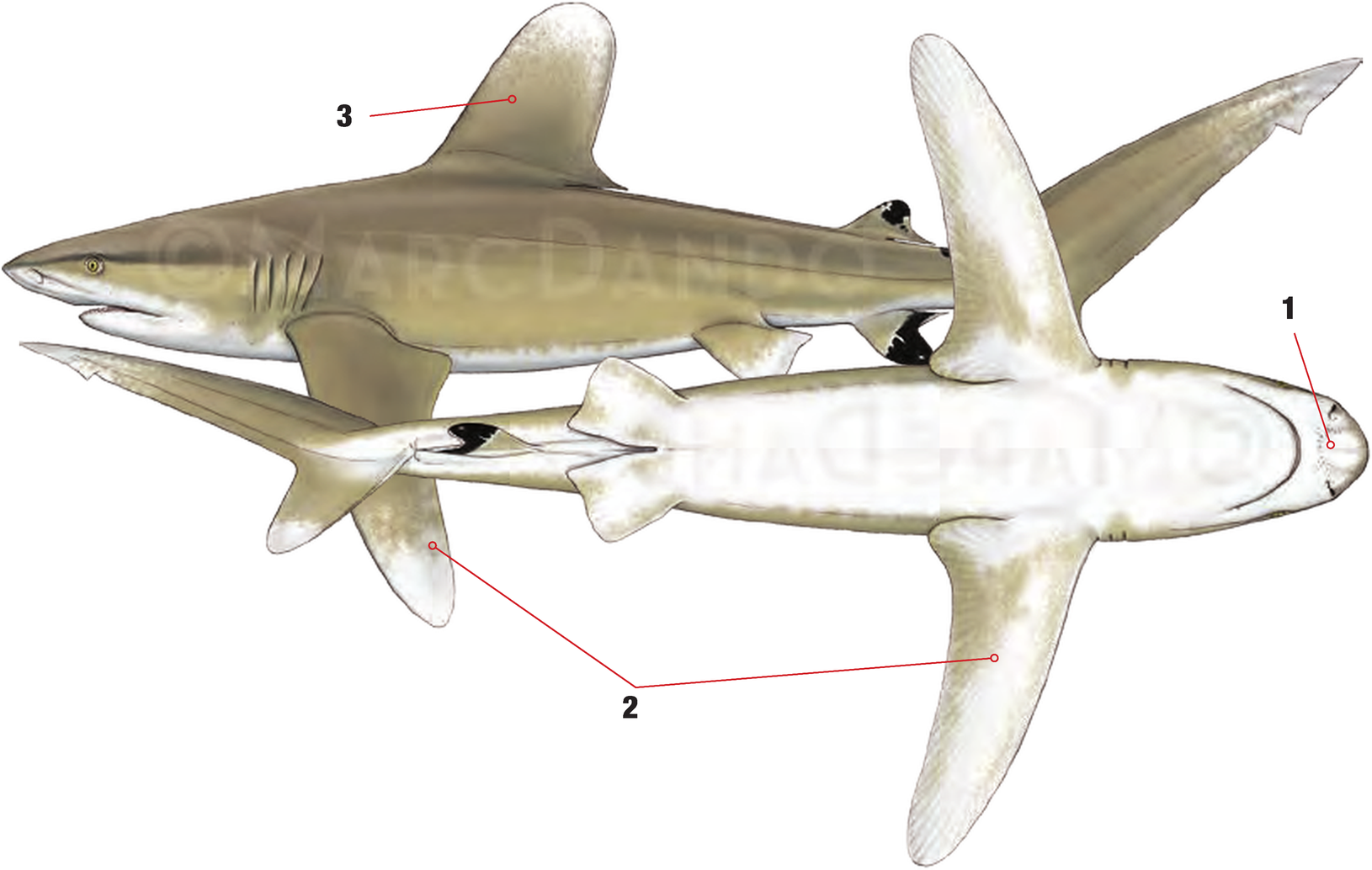
The numbers match the arrows on the illustration.
- Stocky with short, blunt snout.
- Long, broad, paddle-shaped pectoral fins.
- Large, first dorsal fin with broadly rounded tip.
Colouring & markings
- Grey bronze to brown dorsally.
- White ventrally.
- First dorsal, pectoral, pelvic and caudal fins with distinct white mottled tips.
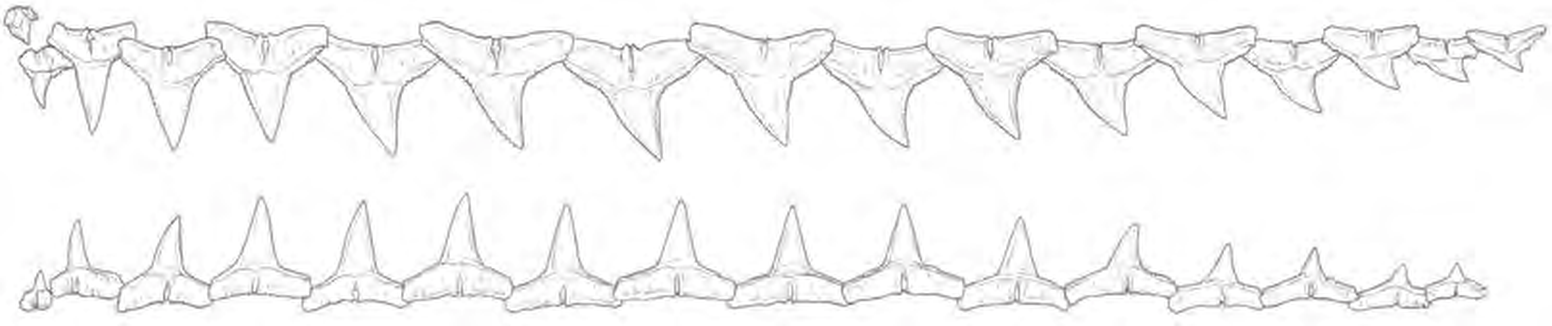
Teeth
Upper jaw: 27–32; broad, triangular, serrated teeth. Lower jaw: 27–33; pointed teeth, serrated near the tip.
How big do they get?
Where they live
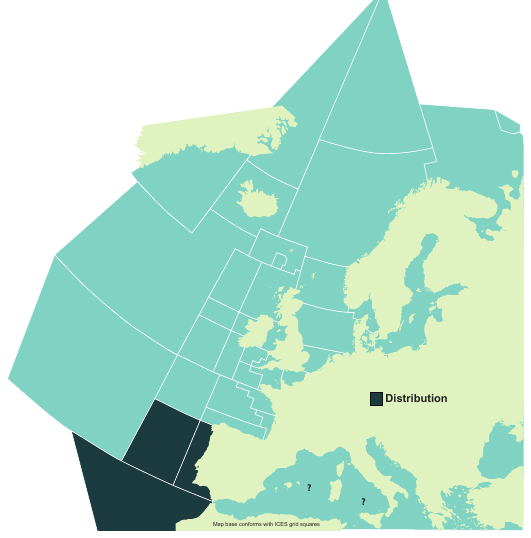
Distribution
Worldwide in tropical and warm temperate oceanic waters. Eastern Atlantic from Portugal to west coast of South Africa (unconfirmed in Mediterranean). Western Atlantic from Maine to Argentina.
Habitat
Oceanic, epipelagic and occasionally coastal shark usually found from surface waters to <200m; one individual recorded at 1,190m. Found far offshore, occasionally in shallow, inshore waters off oceanic islands and narrow continental shelves. Able to tolerate waters 15°–28°C; prefers >20°C. Highly migratory, forms seasonal aggregations and displays site-fidelity where abundant food sources are present.
In the wild
-

Recorded on a Shark Trust survey dive -
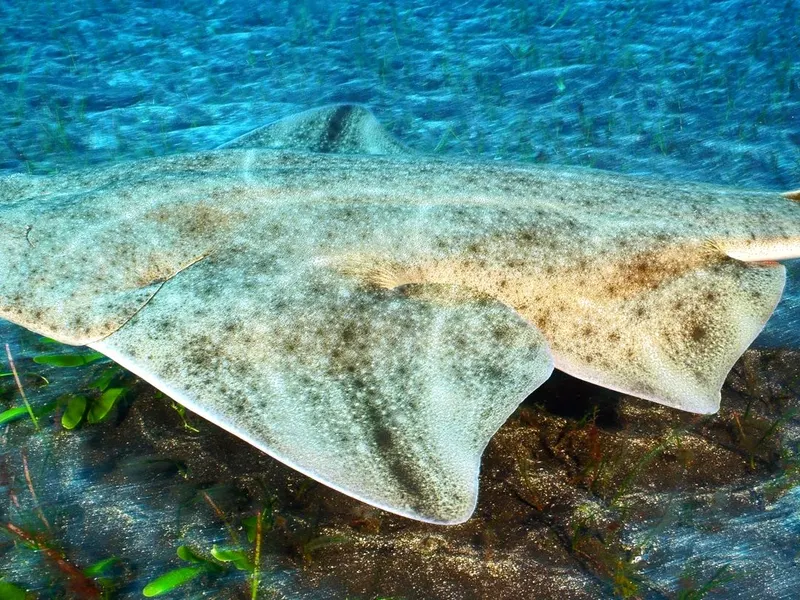
Resting on a sandy seabed -
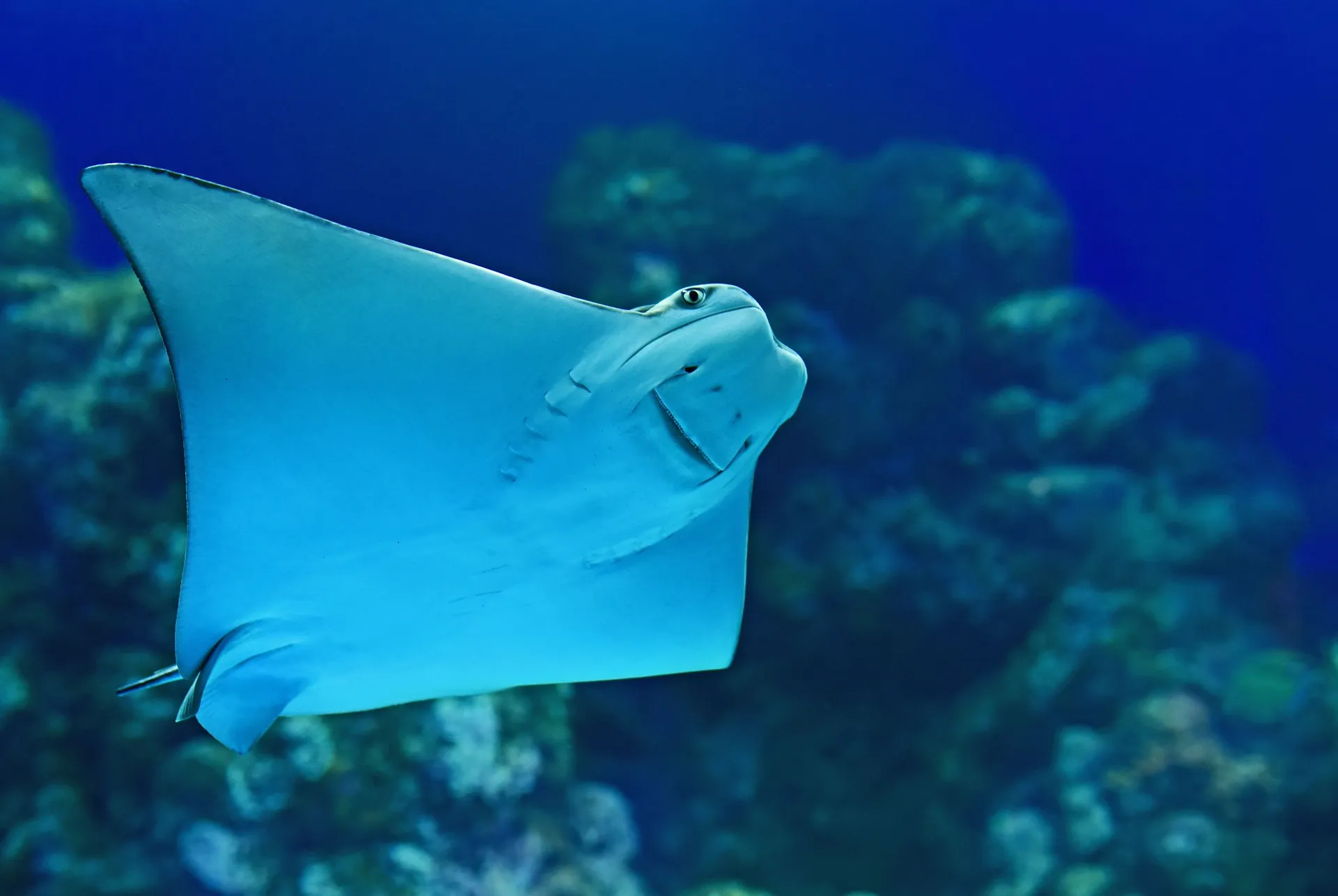
Cruising close to the sea floor -
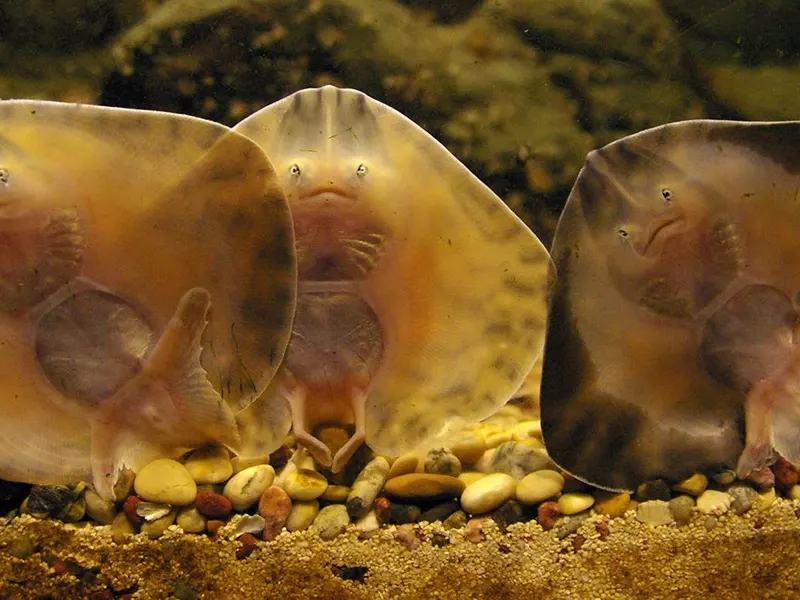
In the shallows at dusk -
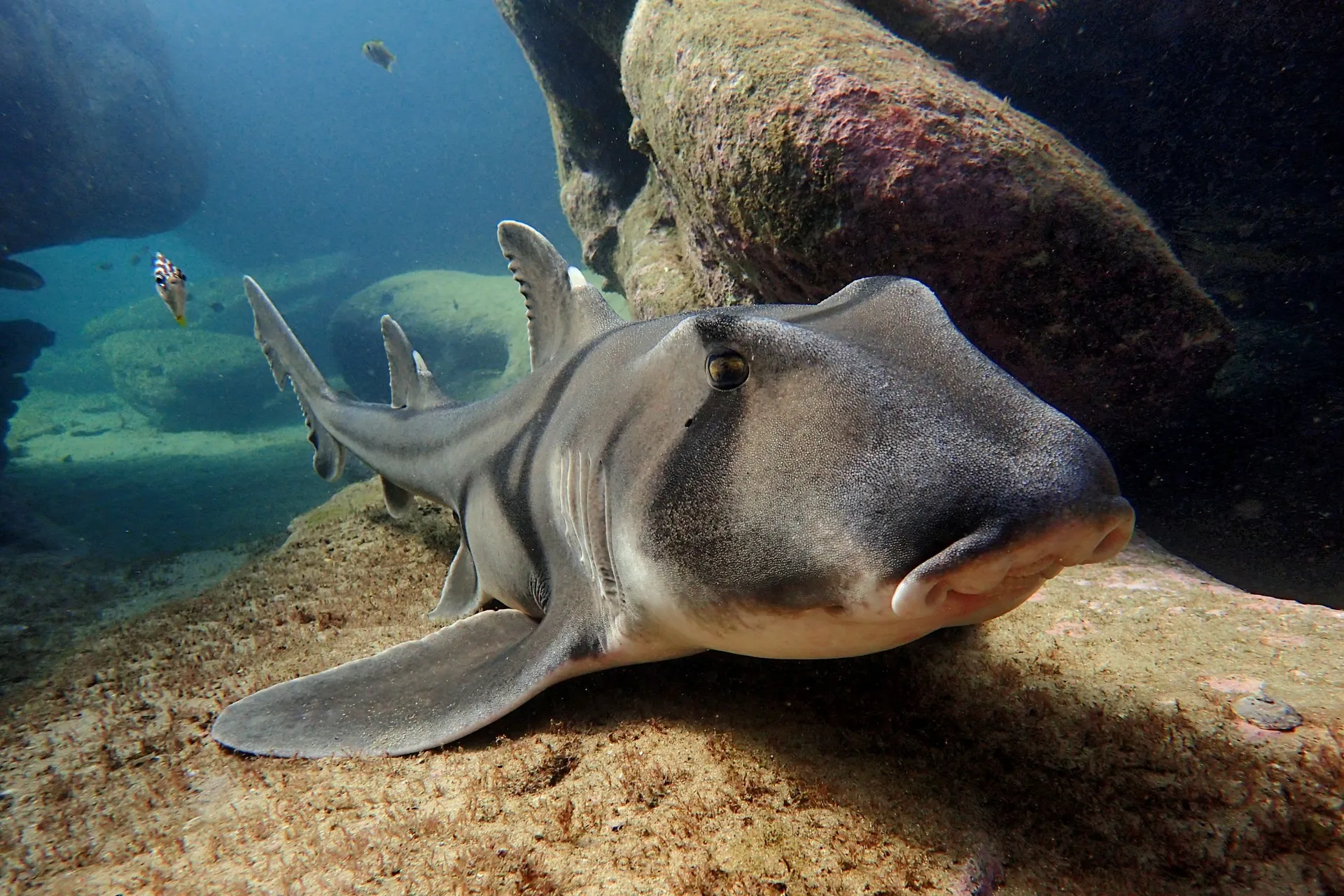
Sheltering on the reef
Go deeper
Size & biology
- Birth: 55–77cm.
- Matures: female 175–224cm; male 168–198cm.
- Max. TL: 350–395cm.
- Age at maturity (varies regionally): female 4.5–15.8 years. Max. recorded age (varies regionally): 11–24.9 years.
- Viviparous, litters of 1–15 pups (avg. 6) after a 9–12 month gestation period. Litter size increases with size of female.
- Inquisitive and persistent in investigating potential food. Diet consists of teleosts and cephalopods; occasionally crustaceans, stingrays, seabirds, turtles and marine mammal carrion.
Conservation status
IUCN Red List: Global: Critically Endangered (2019) Europe: Endangered (2015) Formerly widespread and abundant, significant declines have been observed with an estimated global population decline of >98% over three generations (61.2 years).
Management
Subject to prohibitions under the CFP, RFMO and FNA regulations. Additional international regulations apply.
Commercial importance
Primarily taken as bycatch in purse seine fisheries and pelagic longline fisheries targeting tuna and billfish. Utilised for human consumption and fishmeal. Their fins remain of value in the global fin trade due to their large size.
References & further reading
Assessment: OCS/NEA/2020
- Rigby et al.
- Ebert et al.
- Ebert & Stehmann.
- Walls et al.
- Seki et al.
- dos Santos Tambourgi et al.
- Madigan et al.
- Howey-Jordan et al.
- Howey et al.