Tiger Shark
Galeocerdo cuvier (Péron & Lesueur, 1822)
Near Threatened- Maximum length
- 5.5 m
- FAO code
- TIG
Meet the Tiger Shark
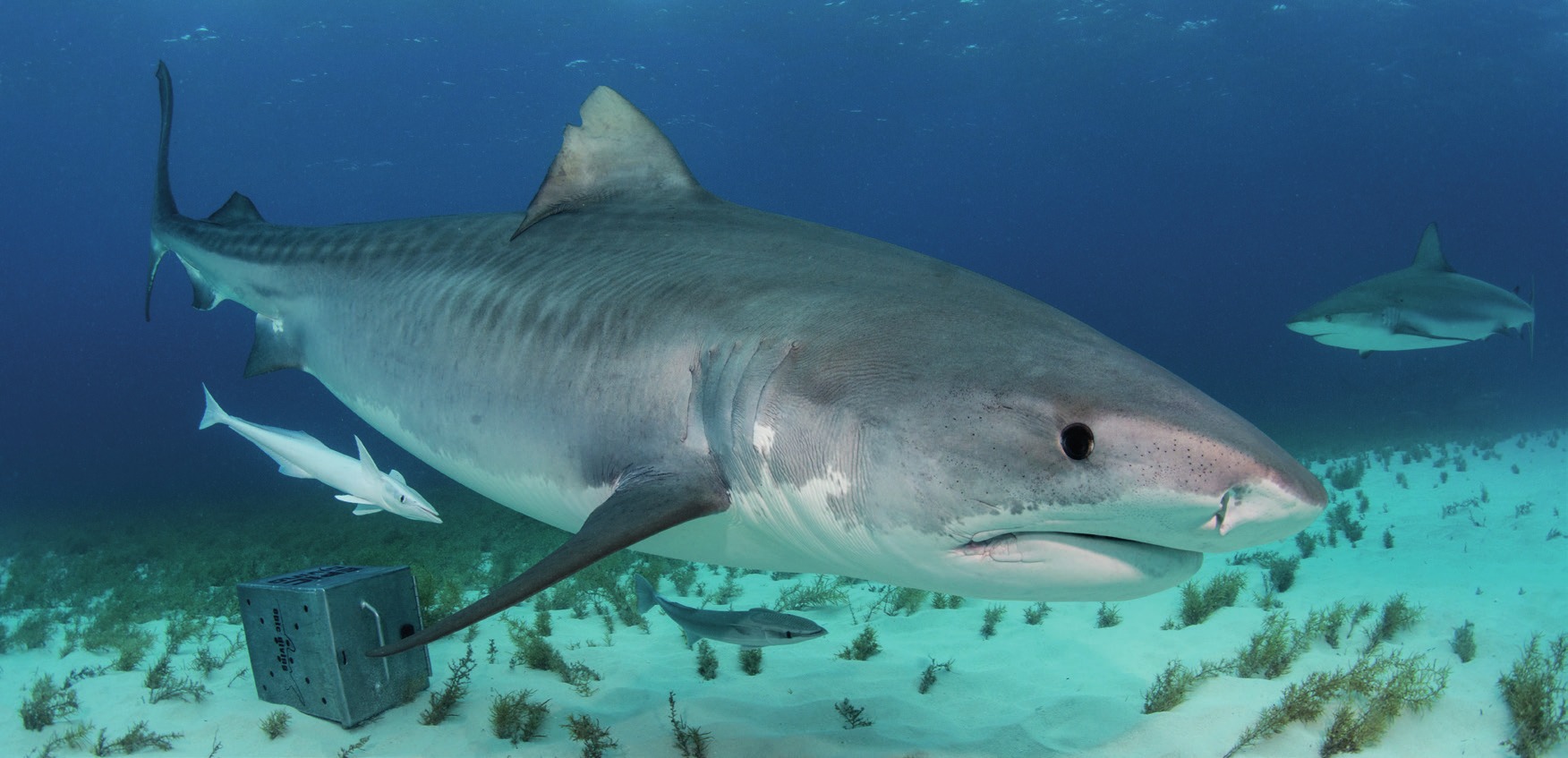
The Tiger Shark is a large species of ground shark, growing to over 5 m. With a reputation for being ‘garbage eaters’, these sharks are known to have the widest food spectrum of all sharks. sharks, and other man-made objects.
- What they eat
- Crustaceans, fish, seals, birds, squid, turtles, sea snakes, dolphns, other
- Also known as
- TIGER SHARK, Spotted Shark, Tigerhai (DEU), Tintorera (ESP), Requin Tigre Commun (FRA), Squalo tigre (ITA), Tubarão tigre (PRT).
How to identify
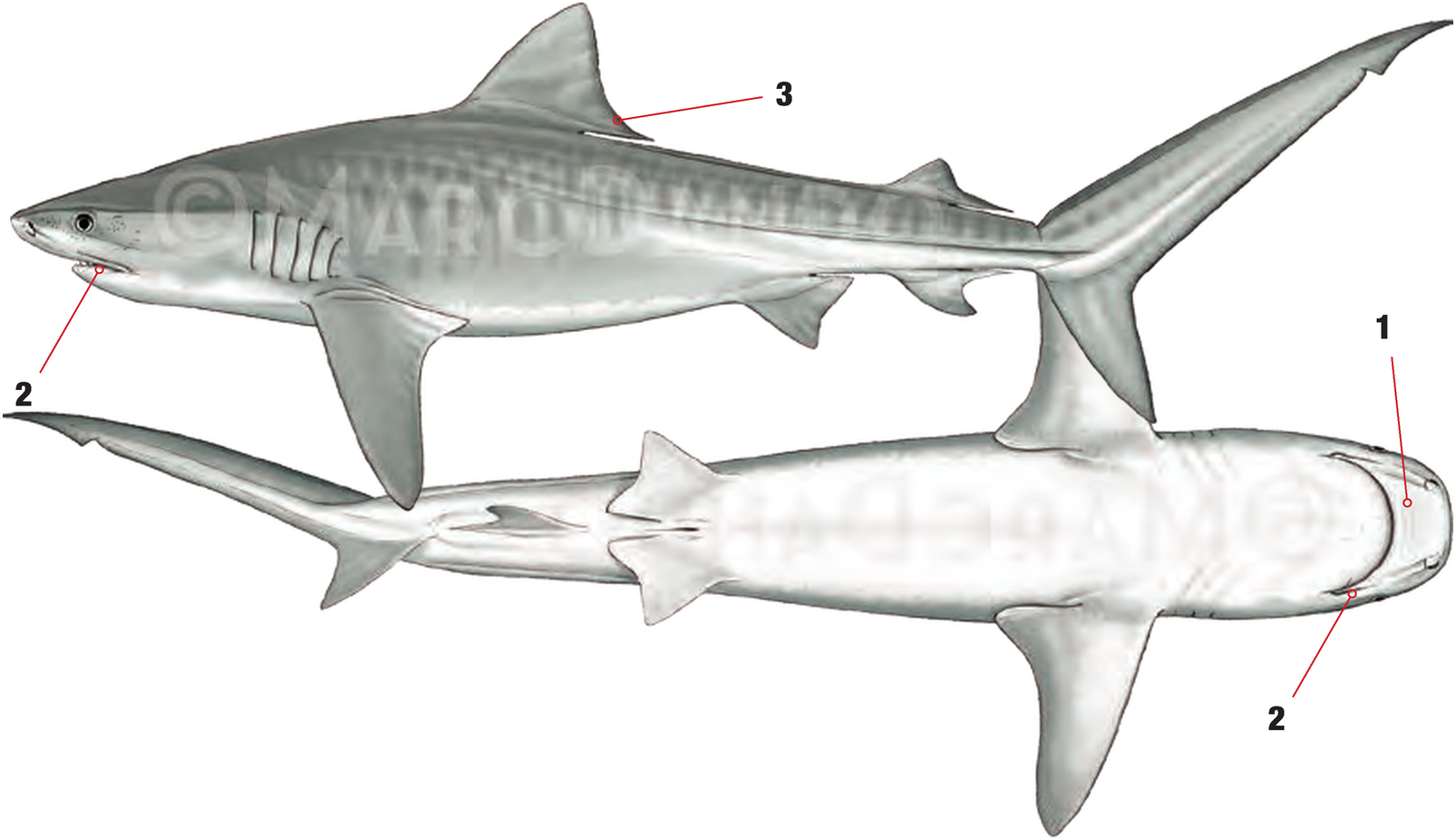
The numbers match the arrows on the illustration.
- Large shark with very short, bluntly rounded snout.
- Broad mouth and long upper labial furrows reaching towards eyes.
- Large first dorsal fin with noticeable free rear tip.
Colouring & markings
- Dorsal side deep blue to dark grey with black to dark-grey bars and spots. Markings are more prominent in young sharks but fade as they mature.
- Pale yellow to white ventrally.
Teeth
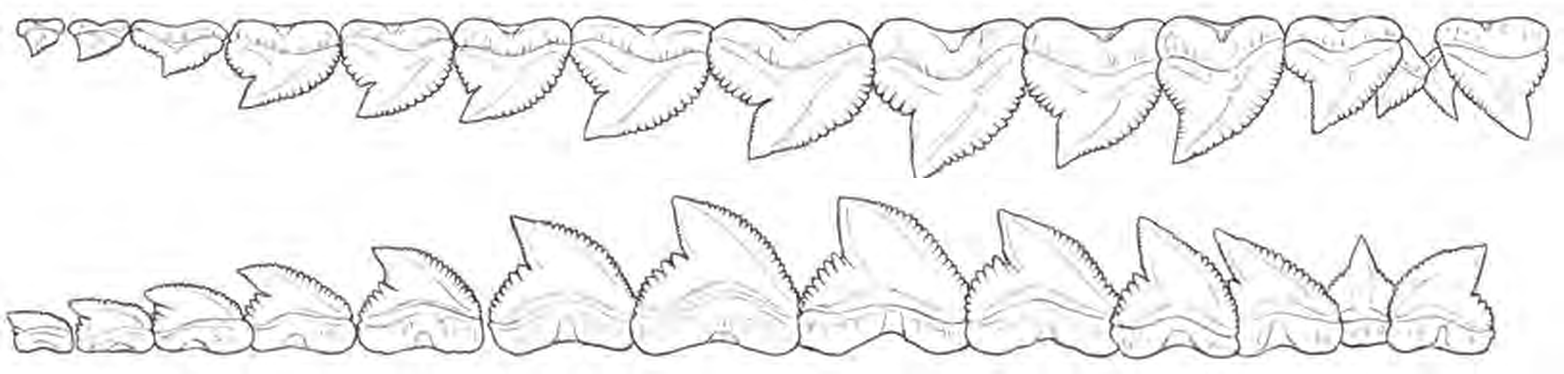
Curved cusps with finely serrated edges. Deep notch on outer margin of each tooth with numerous
How big do they get?
Where they live
Distribution
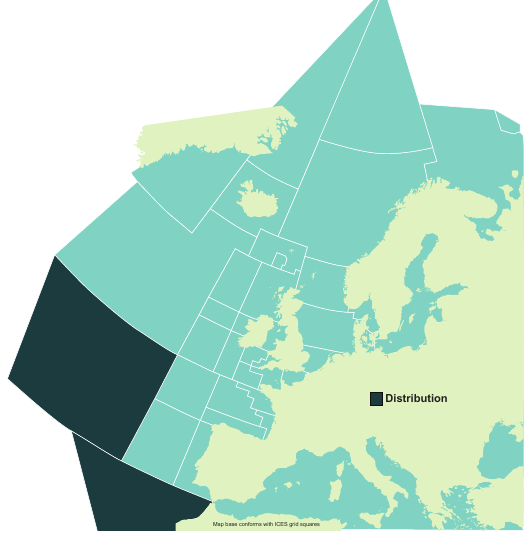
Circumglobal in warm temperate to tropical waters. Northeast Atlantic from Morocco to Angola, incl. the Azores and Canary Islands. Known in the Western Atlantic, Indo-Pacific and Pacific Ocean.
Habitat
Surface to 830m, predominantly <100m but dives to >200m are common. A demersal and pelagic shark that occurs from the coastal zone and continental shelf to oceanic waters. Found in turbid areas e.g. harbours/river estuaries, and clear waters of lagoons and coral atolls. Capable of long migrations in short periods with one individual travelling >5000km in six months. Abundance and type of prey are key factors in determining foraging locations.
In the wild
-

Recorded on a Shark Trust survey dive -
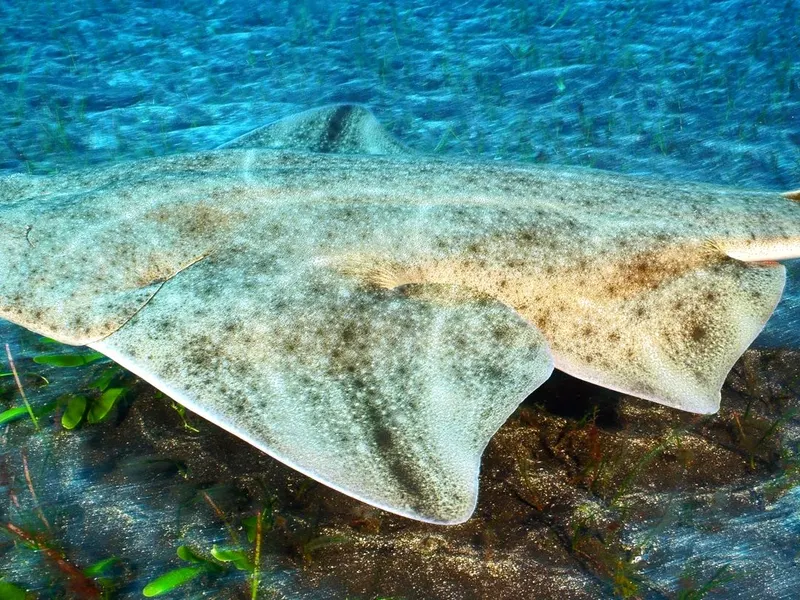
Resting on a sandy seabed -
Cruising close to the sea floor -
In the shallows at dusk -
Sheltering on the reef
Go deeper
Size & biology
- Birth: 46–89cm.
- Matures: female 250–350cm; male 226–292cm.
- Max. TL: female 550cm; male ≥ 370cm.
- Age at maturity: 4–13 years. Max. age est: 20–37 years.
- Litters born in spring/early summer with gestation lasting 12–16 months.
- Mating takes place in spring in the Northern Hemisphere.
- Highly varied diet, incl. teleosts, elasmobranchs, sea birds, marine reptiles and mammals, and invertebrates.
- Known to consume carrion and even rubbish.
Conservation status
IUCN Red List: Global: Near Threatened (2019) Europe: Data Deficient (2015) Relatively high reproductive rate compared with other sharks, and a wide distribution indicates a potentially higher resilience to overfishing. Further research required to establish population trends in Northeast Atlantic.
Management
No species-specific management in the Northeast Atlantic. Subject to FNA regulations.
Commercial importance
High commercial value. Taken as target and bycatch species in coastal and offshore fisheries using a range of gear including longlines, hook and line, and fixed bottom nets. Valued for its fins, meat, liver and skin. Popular big-game species with recreational anglers.
References & further reading
Assessment: TIG/NEA/2020
- Ebert et al.
- Ebert & Stehmann.
- Simpfendorfer et al.
- Ferreira & Simpfendorfer.
- Simpfendorfer, C.
- Holmes et al.
- Meyer et al.
- Vaudo et al.
- Meyer et al.