Blue Shark
Prionace glauca (Linnaeus, 1758)
Near Threatened- Maximum length
- 3.83 m
- Depth range
- From surface to 1,160m.
- FAO code
- BSH
Meet the Blue Shark
Blue Sharks are one of the most heavily fished shark on the planet. They are also the most migratory of any species - travelling over 9000 km during their yearly migration.
- What they eat
- Small fishes and carrion.
- Also known as
- BLUE SHARK, Blue Dog, Blue Whaler, Blauhai (DEU), Tiburón Azul, Tintoreta (ESP), Peau Bleue (FRA), Verdesca (ITA), Blauwe Haai (NLD), Tintureira (PRT).
How to identify
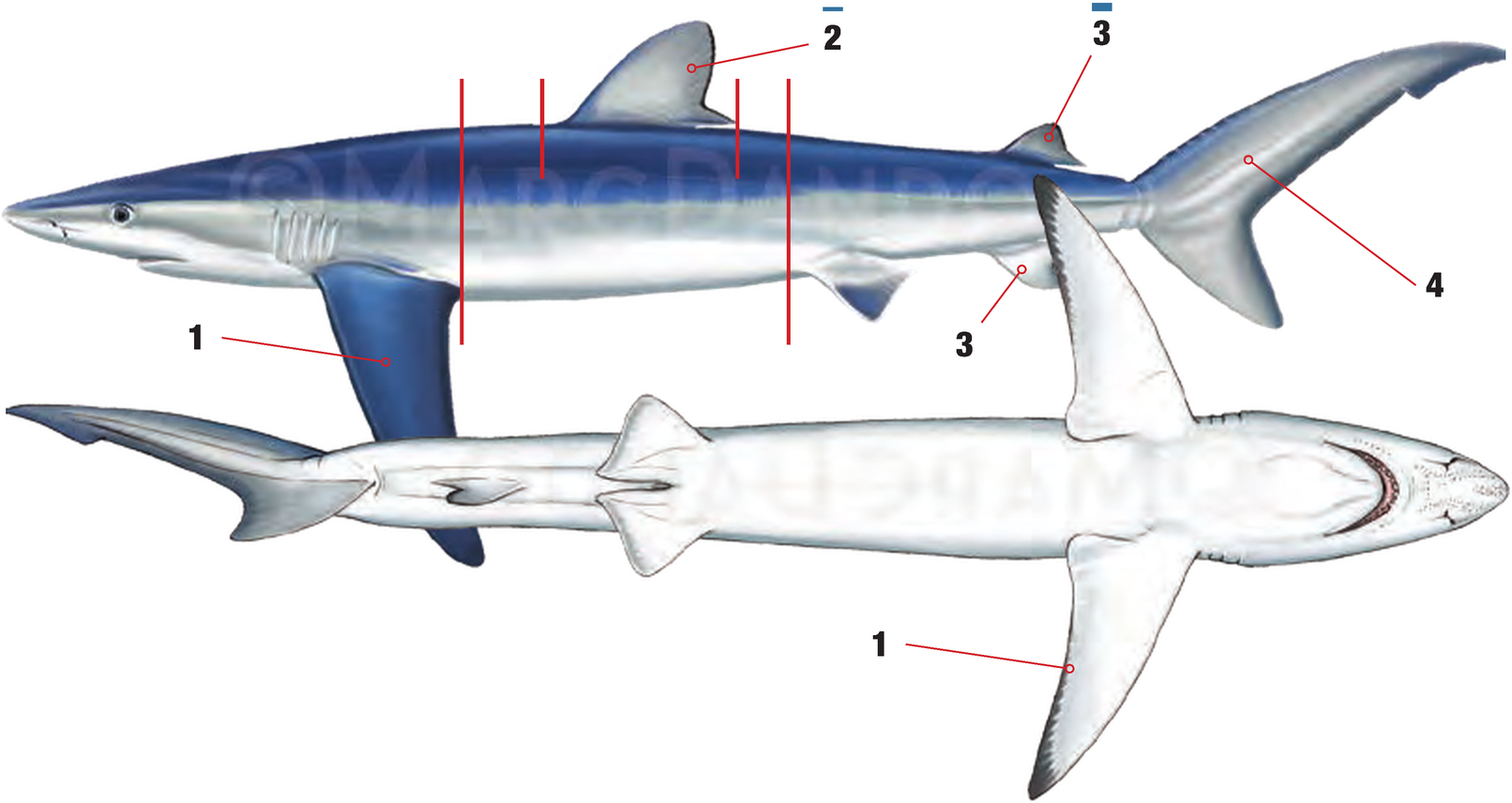
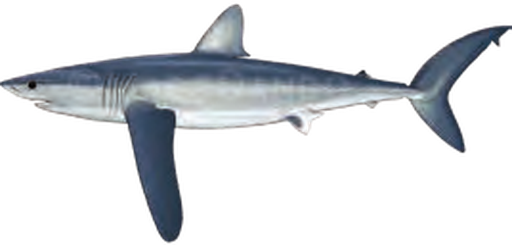
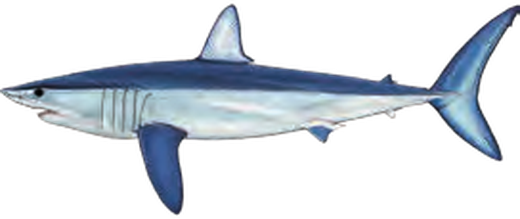
The numbers match the arrows on the illustration.
- Pectoral fins long and curved.
- First dorsal fin closer to pelvic fins than pectoral fins.
- Second dorsal fin equal in size to, and directly above, anal fin.
- Caudal fin asymmetrical with a large upper lobe.
Colouring & markings
- Dark blue dorsally.
- Metallic blue on flanks.
- White ventrally.
Teeth
Upper jaw: 24–31 (12–15 teeth either side a symphysial tooth). Teeth symmetrical, triangular and curved with serrated edges and overlapping bases. Lower jaw: 24–34 (12–16 teeth either side a symphysial tooth). Teeth nearly symmetrical with fine serrations. Lower teeth do not prominently protrude when mouth is closed.
How big do they get?
Where they live
Distribution
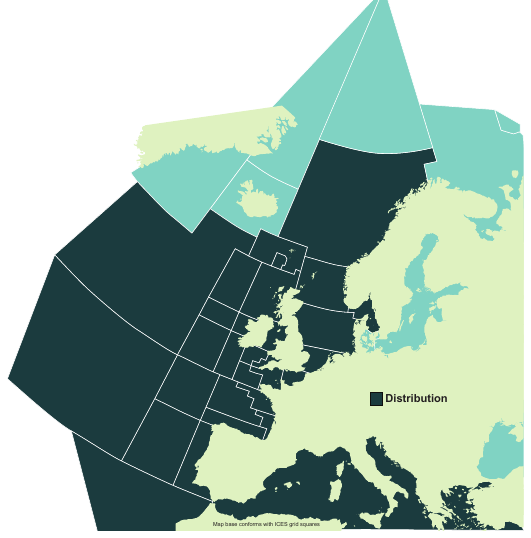
Circumglobal in temperate and tropical waters spanning latitudes of 60°N to 50°S. Eastern Atlantic from Norway to South Africa including the Mediterranean Sea.
Habitat
Oceanic and pelagic, surface to 1,160m. May venture inshore over narrow continental shelves or off oceanic islands. Exhibits diel vertical migration, spending the night in shallower water and diving deeper during the day. Prefers temperatures 12–20°C, can tolerate 4.8–27.2°C. Highly migratory, undertaking annual clockwise transatlantic migrations and occasional trans- equatorial movements. Segregates by size and sex: immature sharks recorded in temperate Northeast and central North Atlantic, large adults aggregate in tropical Northeast. Females significantly more abundant at higher latitudes. Evidence of nursery grounds off Iberian Peninsula; in the Bay of Biscay, and off the Azores.
In the wild
-
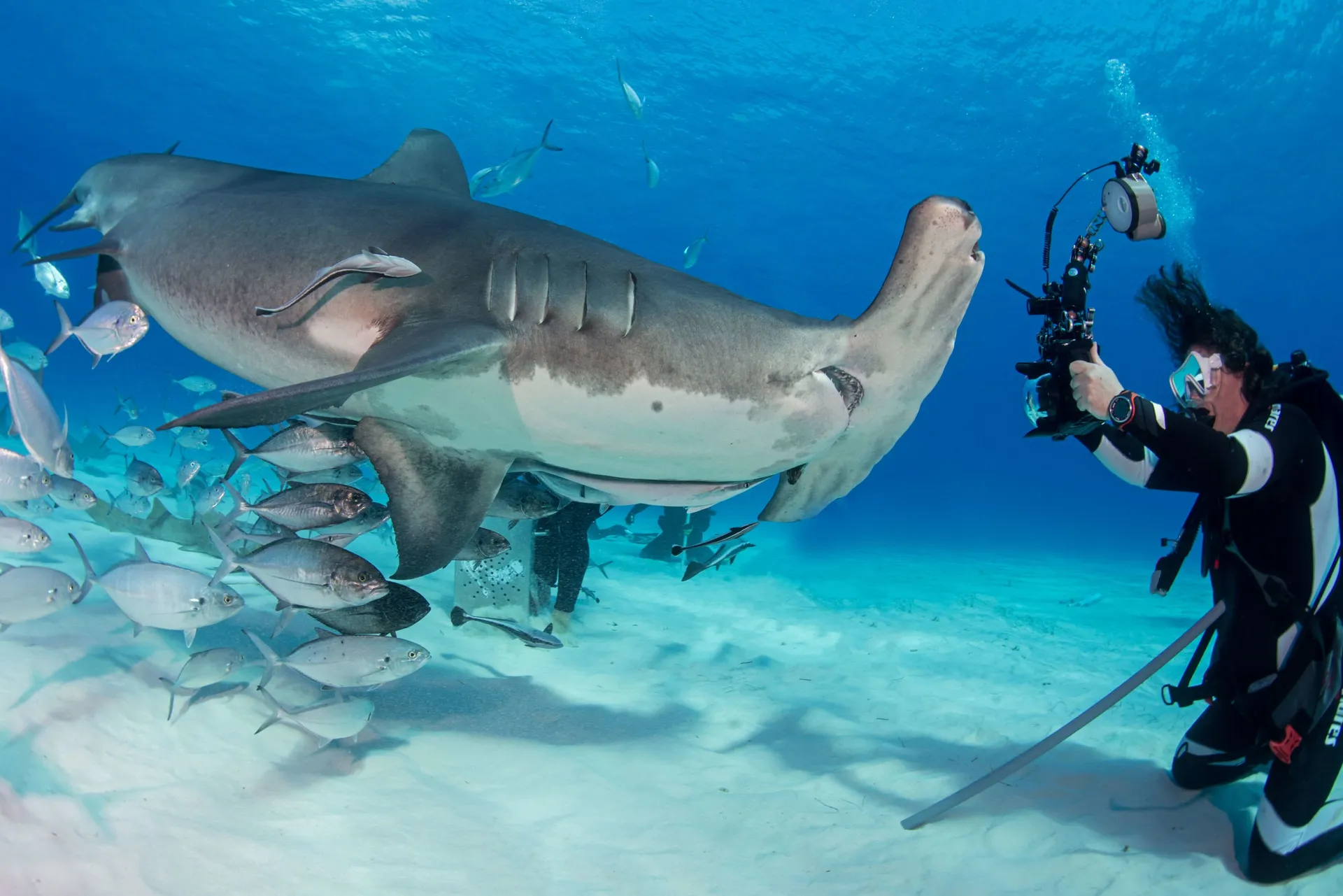
Recorded on a Shark Trust survey dive -
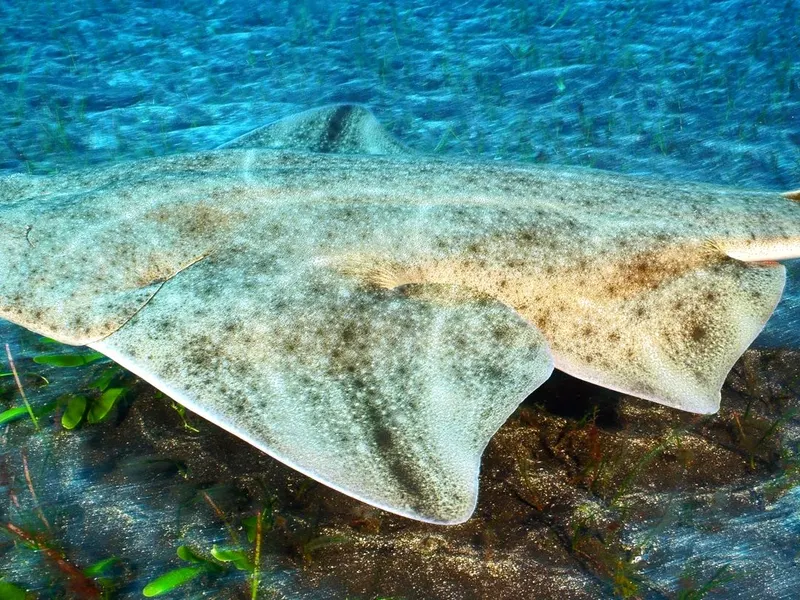
Resting on a sandy seabed -
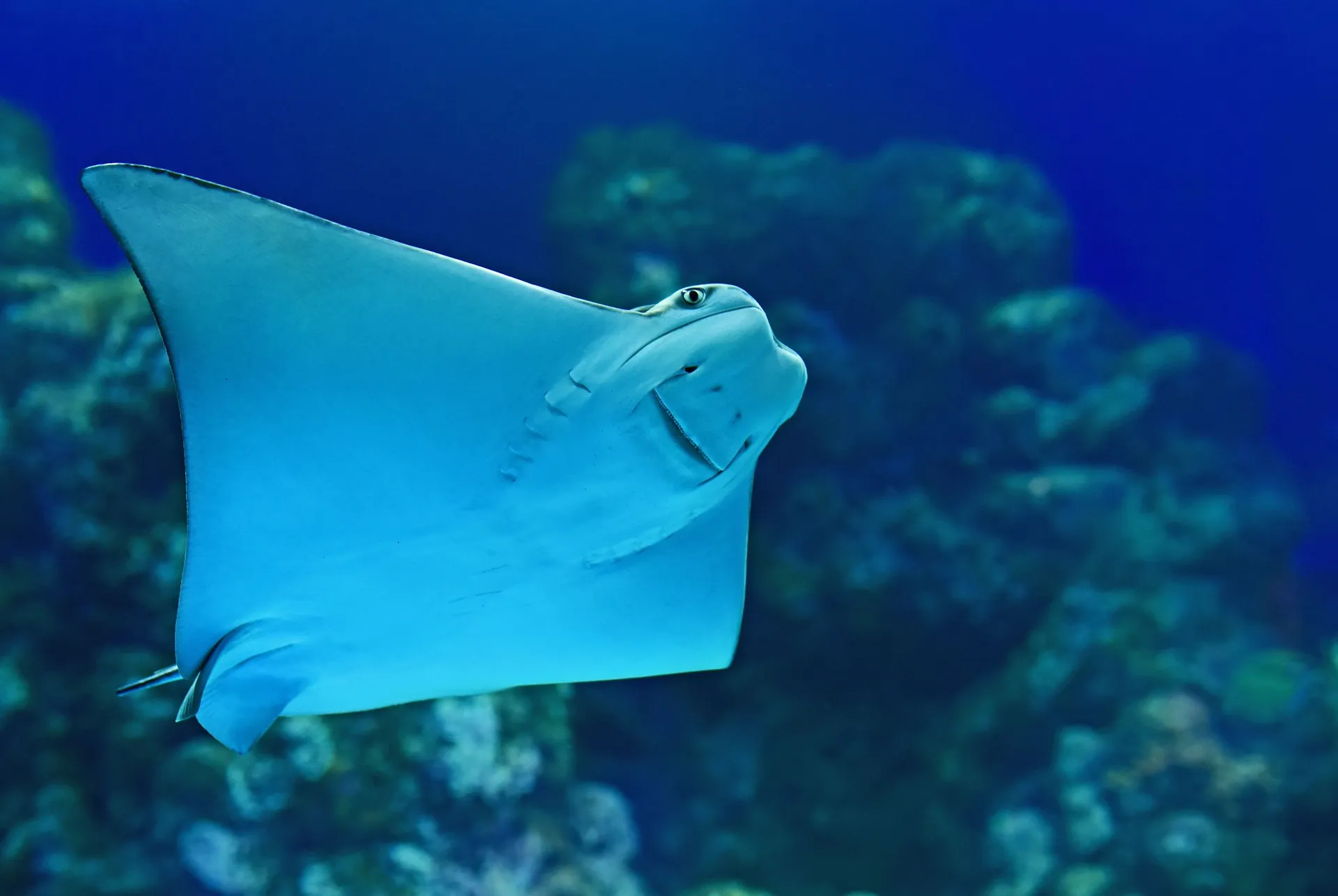
Cruising close to the sea floor -
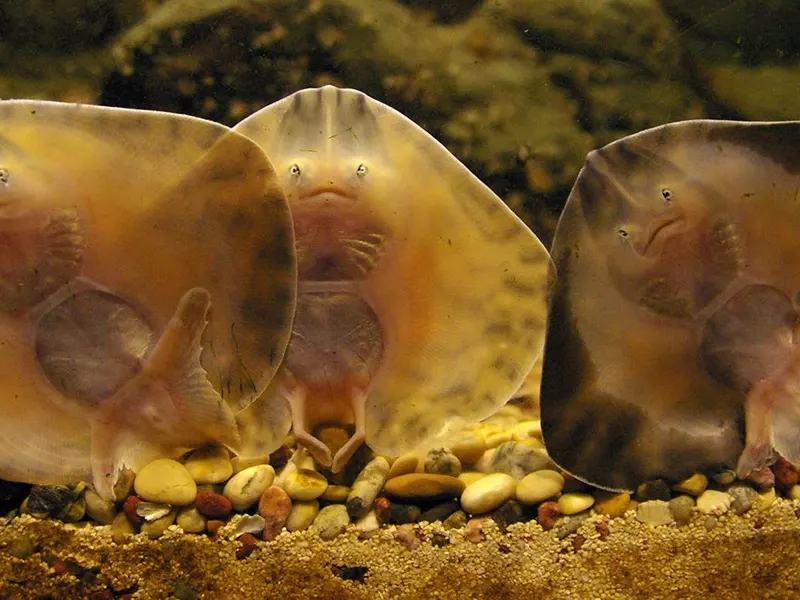
In the shallows at dusk -
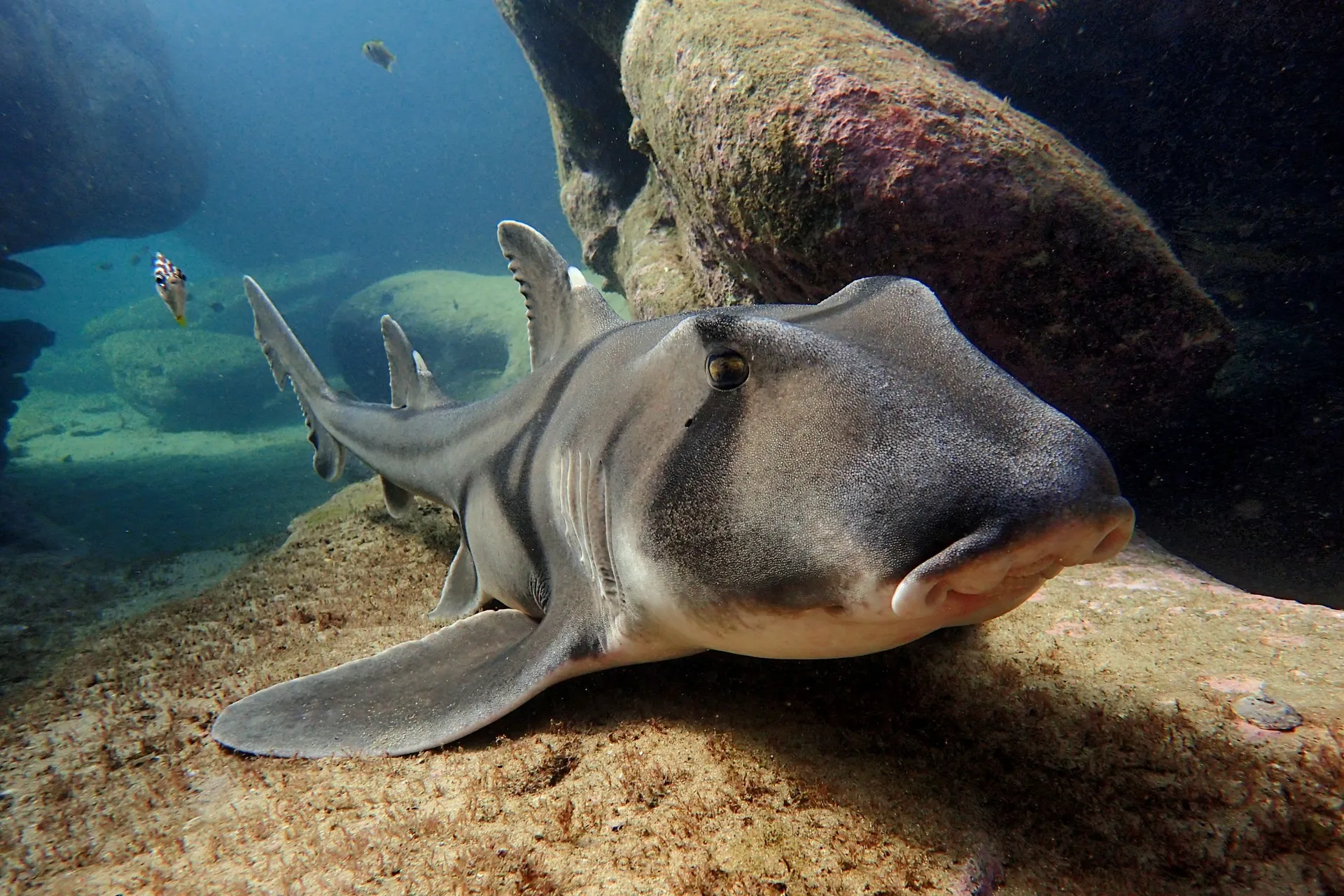
Sheltering on the reef
Go deeper
Size & biology
- Birth: 35-44cm.
- Matures: female 221cm; male 182–281cm.
- Max. TL: 383cm.
- Age at maturity: female 5–7 years; male 4–6 years. Max. age est.: 20 years.
- Viviparous, litters of 4–135 pups (avg. 35). Sex ratios in litters generally 1:1.
- Gestation period 9–12 months with young born in spring- early summer.
- Opportunist feeder: diet consists of small teleosts and cephalopods, small sharks, invertebrates, mammalian carrion and seabirds.
Conservation status
IUCN Red List: Global: Near Threatened (2019) Europe: Near Threatened (2015) Mediterranean: Critically Endangered (2016) Widespread with a relatively high reproductive rate. The Blue Shark’s high commercial value has led to estimated global population declines of 20–29% over three generations (~30 years).
Management
Subject to FNA regulations. Subject to RFMO catch limits in Atlantic and regulation under the CFP.
Commercial importance
Taken in substantial volume in high seas tuna and billfish fisheries as ‘wanted’ bycatch, especially by pelagic longliners in the EU fleet; retained for meat and fins. Taken in small numbers by recreational anglers.
References & further reading
Assessment: BSH/NEA/2020
- Ebert & Stehmann. Stevens et al.
- Ebert et al. Vandeperre et al.
- Rigby Campana et al. et al.
- Sims et al. Veríssimo et al.
- Nakano & Seki. Coelho et al.
- Queiroz et al.