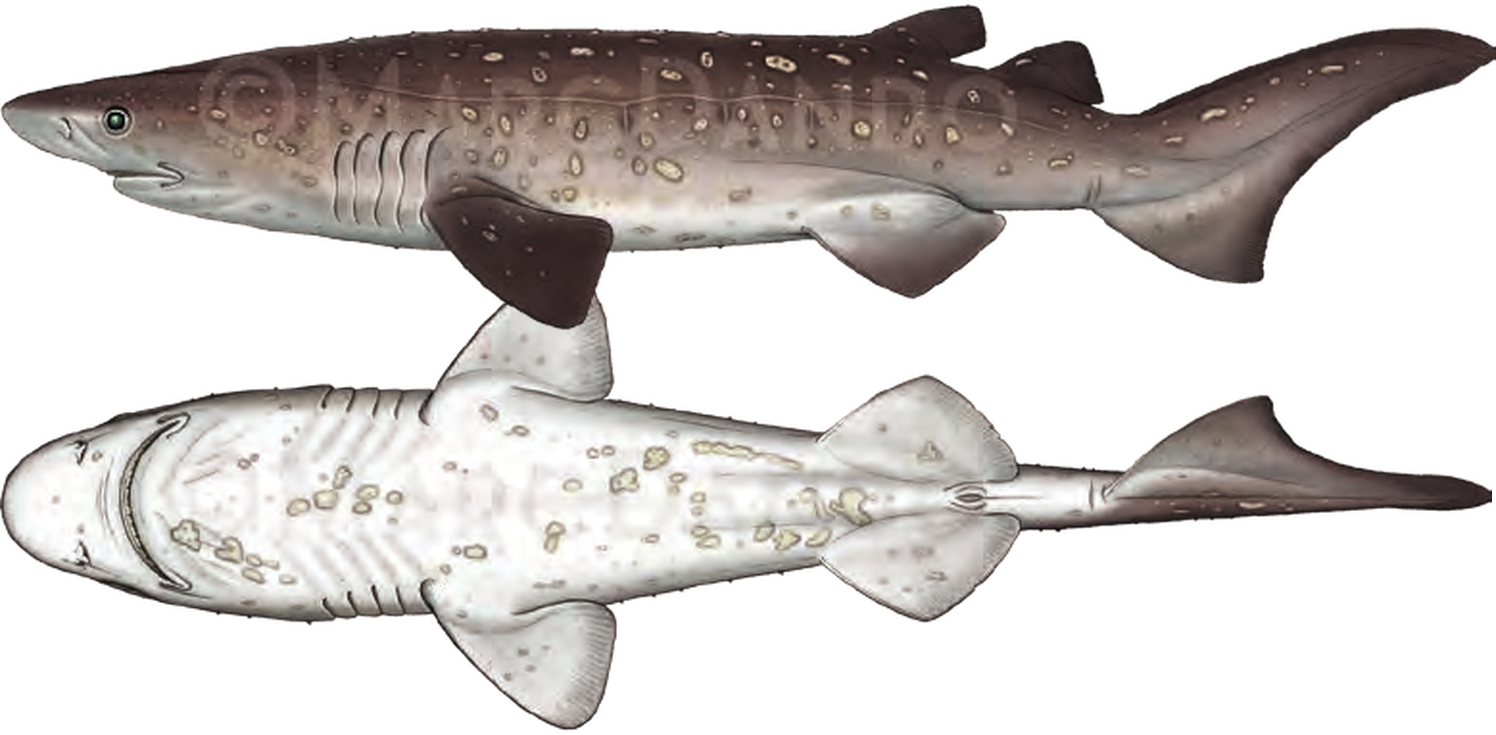
Bramble Shark
Echinorhinus brucus (Bonnaterre, 1788)
Endangered- Maximum length
- 3.1 m
- Depth range
- From 18 to 1,214m. Primarily 200 to 900m.
- FAO code
- SHB
Meet the Bramble Shark
- Also known as
- BRAMBLE SHARK, Spinous Shark, Spiny Shark, Nagelhai (DEU), Tiburón de Clavos (ESP), Squale Bouclé (FRA), Braamhaai (NLD), Tubarão-prego (PRT).
How to identify
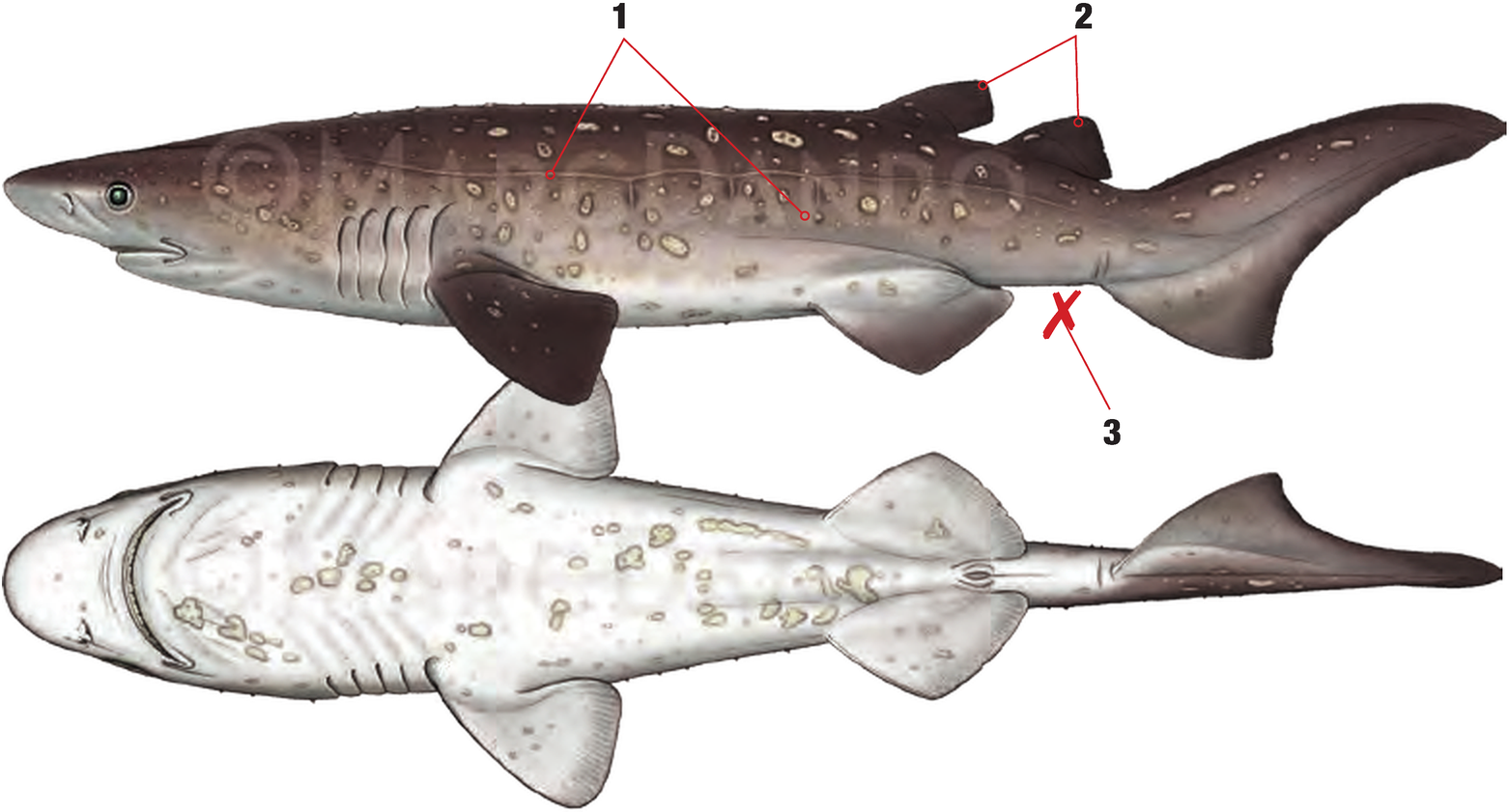
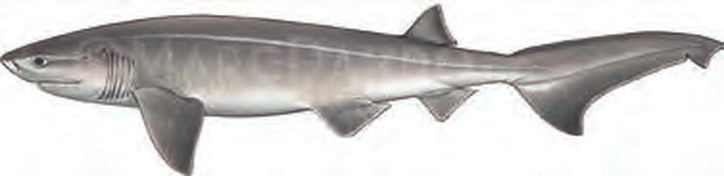
The numbers match the arrows on the illustration.
- Large pale, thorn-like denticles scattered across body.
- Close-set dorsal fins; set far back with no spines.
- No anal fin.
Colouring & markings
- Dorsally, from grey to brownish or blackish.
- Can have dark or red spots on the body.
- Usually lighter ventrally.
- Fin edges usually darker.

Teeth
Teeth similar in both jaws. Single oblique cusp with 1 to 3 lateral cusplets. Upper jaw: 20−26. Lower jaw: 21−26.
How big do they get?
Where they live
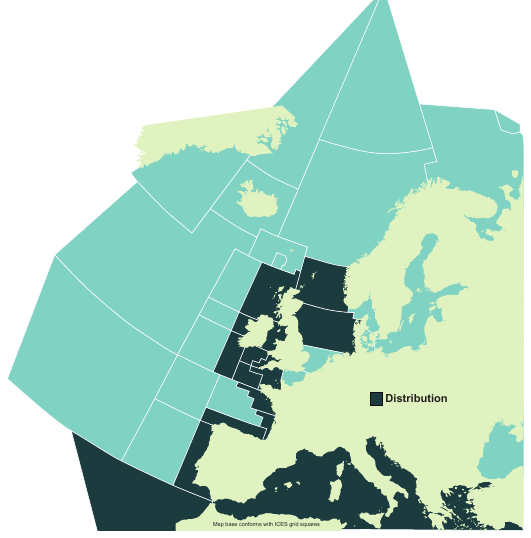
Distribution
Patchy worldwide distribution. Northeast Atlantic from Norway to Morocco, including the Mediterranean Sea and Sea of Marmara. Also known in the Northwest Atlantic from New England to North Carolina; Western Pacific and Western Indian Oceans.
Habitat
Demersal, primarily deepwater shark. From 18−1,214m; most common 200−900m. Found on continental and insular shelves and upper slope waters. Can occur in shallow water, inshore in cold temperate areas and in places with upwelling.
In the wild
-

Recorded on a Shark Trust survey dive -
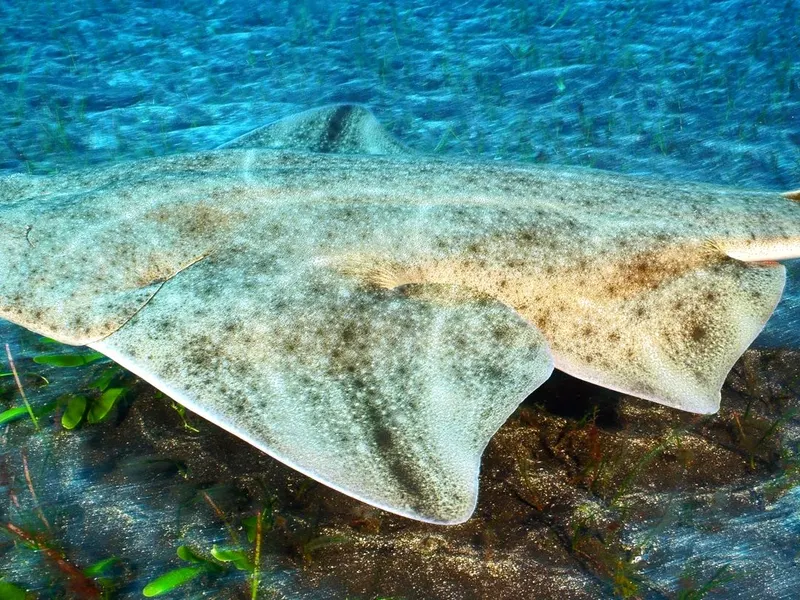
Resting on a sandy seabed -
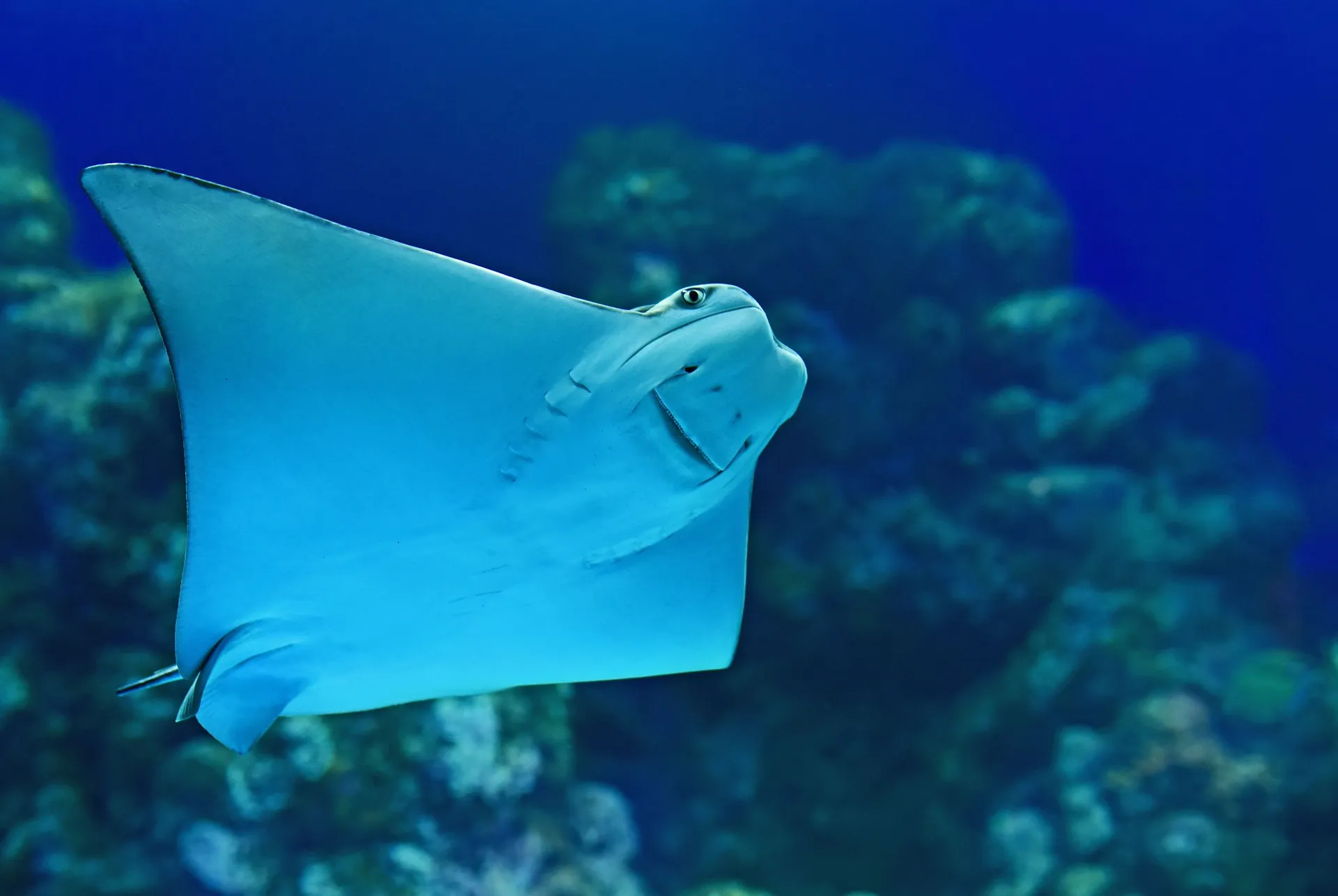
Cruising close to the sea floor -
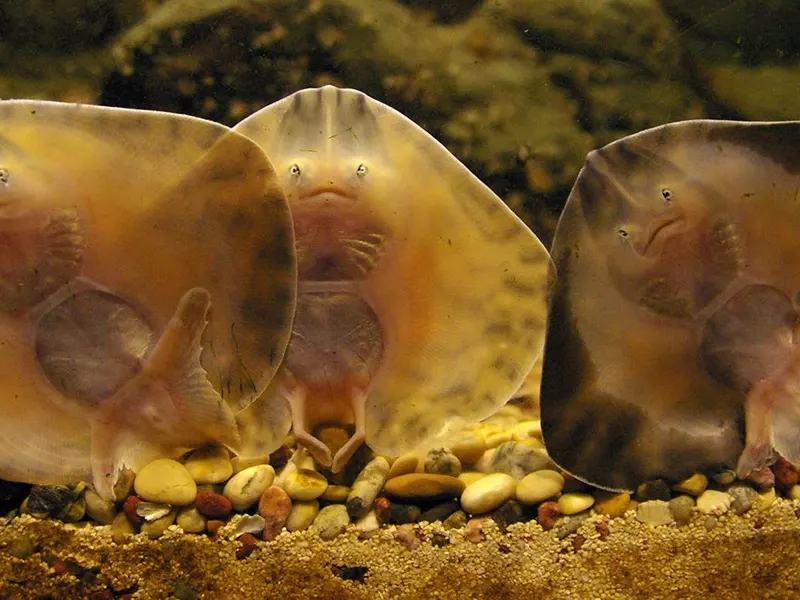
In the shallows at dusk -
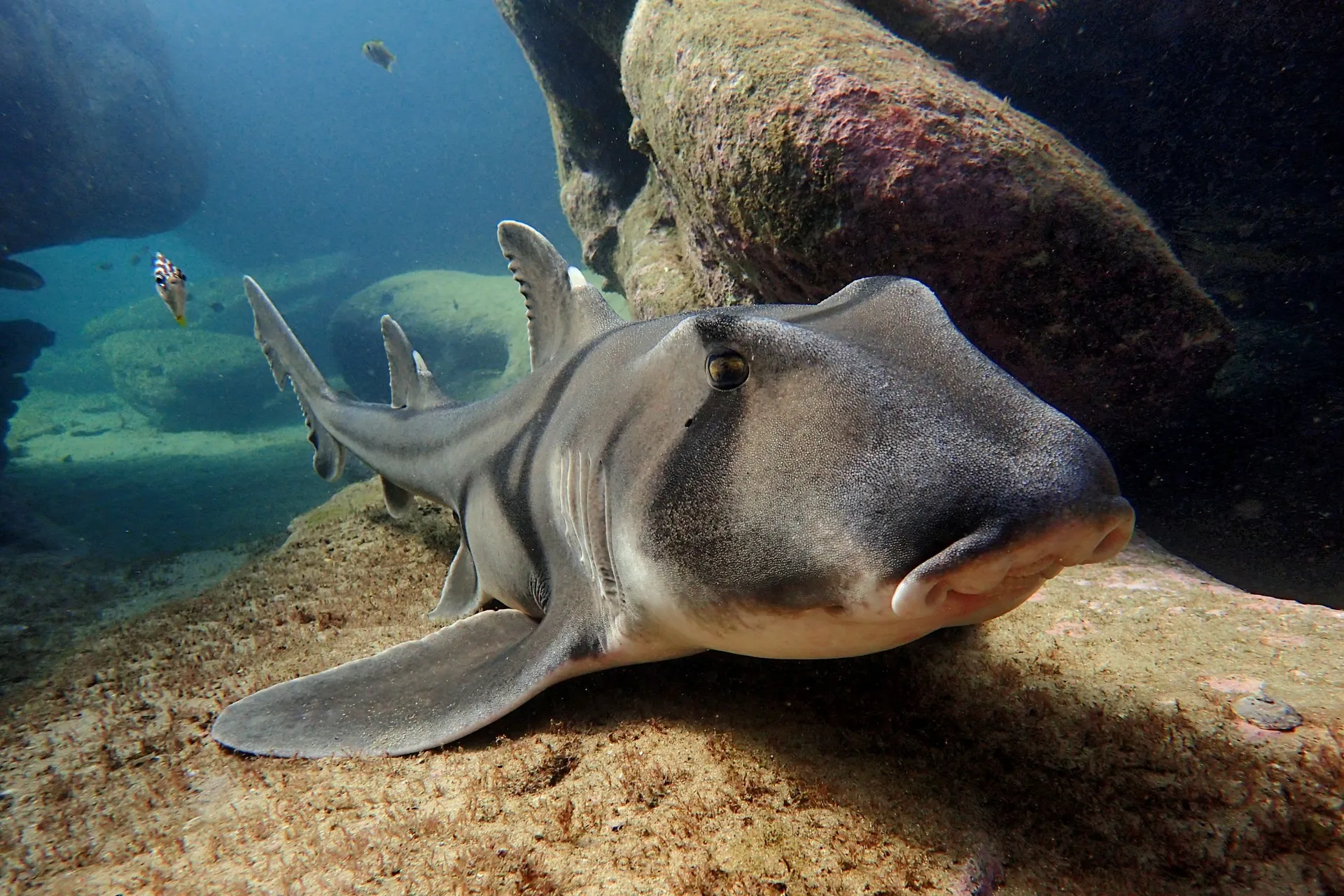
Sheltering on the reef
Go deeper
Size & biology
- Birth: 45–50cm.
- Matures: female 200–220cm; male 150–175cm.
- Max. TL: 310cm.
- Max. age: 30 years.
- Ovoviviparous; litters of 15−26 pups.
- Diet primarily benthic teleosts, crustaceans and small sharks.
- Thought to be a sedentary, slow moving shark; may be capable of short bursts of speed to capture prey.
Conservation status
IUCN Red List: Global: Data Deficient (2003) Europe: Endangered (2015) Mediterranean: Endangered (2016) The conservative life history of this rare deepwater shark suggests it is vulnerable to even low levels of fishing pressure. No catch data have been recorded across its range in the Northeast Atlantic in the last few decades; it has been estimated that its European population has declined by >50% in the last century. Some of its population may be found in deeper waters outside the range of current fishing operations.
Management
No species-specific management in the Northeast Atlantic. Subject to FNA regulations.
Commercial importance
Occasionally taken as bycatch in demersal fisheries, however no catch information is available. Historically the meat was used for human consumption and fishmeal.
References & further reading
Assessment: SHB/NEA/2020
- Ángel et al.
- Ebert & Stehmann.
- Ferretti. & Buscher.
- Ferretti & Buscher.
- Kabasakal et al.
- Ebert et al.