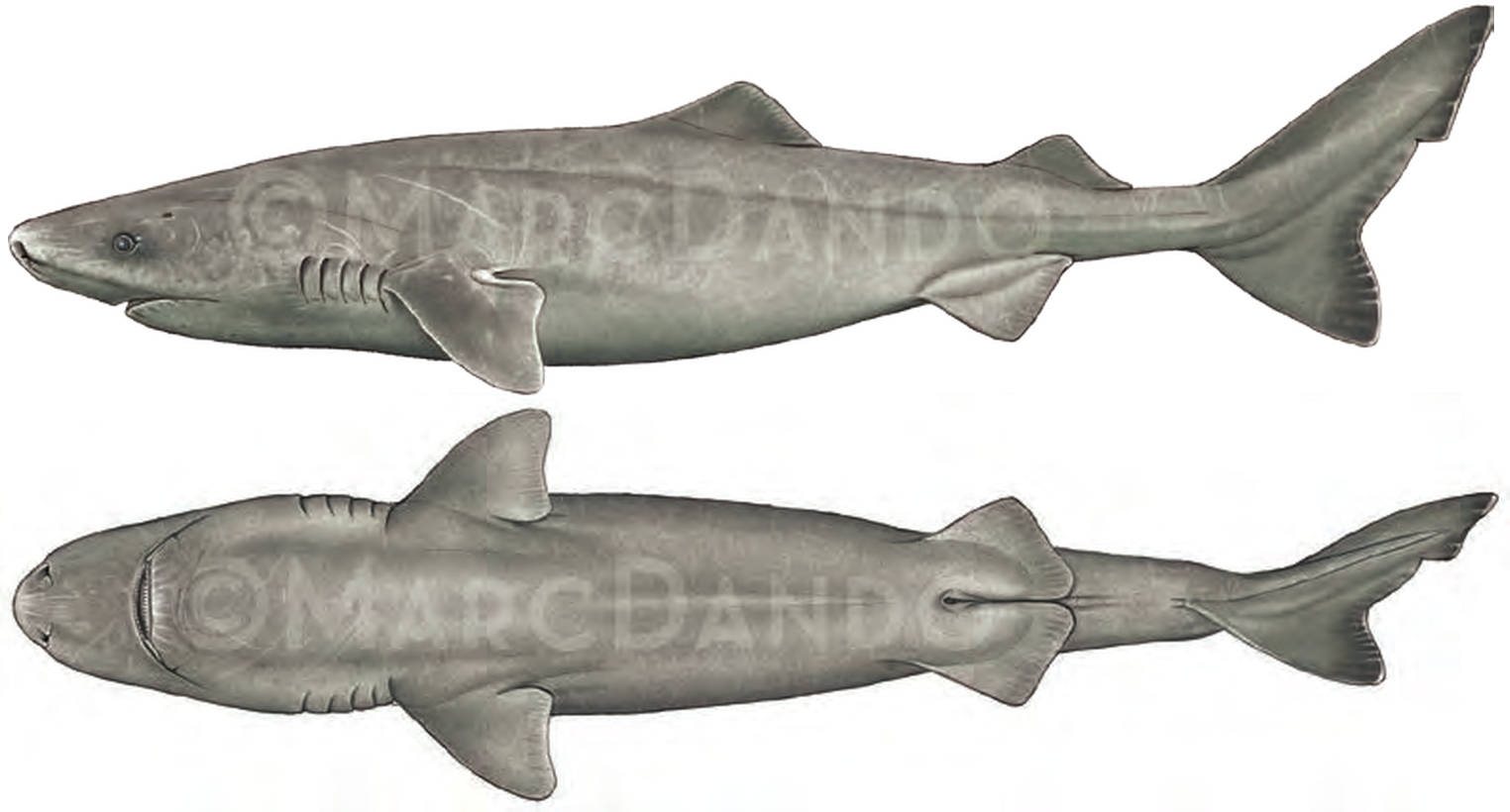
Greenland Shark
Somniosus microcephalus (Bloch & Schneider, 1801)
Vulnerable- Maximum length
- 6.4 m
- Depth range
- From surface to 1,400m, possibly to 2,647m.
- FAO code
- GSK
Meet the Greenland Shark
- Also known as
- GREENLAND SHARK, Sleeper Shark, Large Sleeper Shark, Ground Shark, Eishai (DEU), Tiburón Boreal (ESP), Laimargue du Groenland (FRA), Squalo di Groenlandia (ITA), Groenlandse Haai (NLD), Tubarão-da-gronelândia (PRT).
How to identify
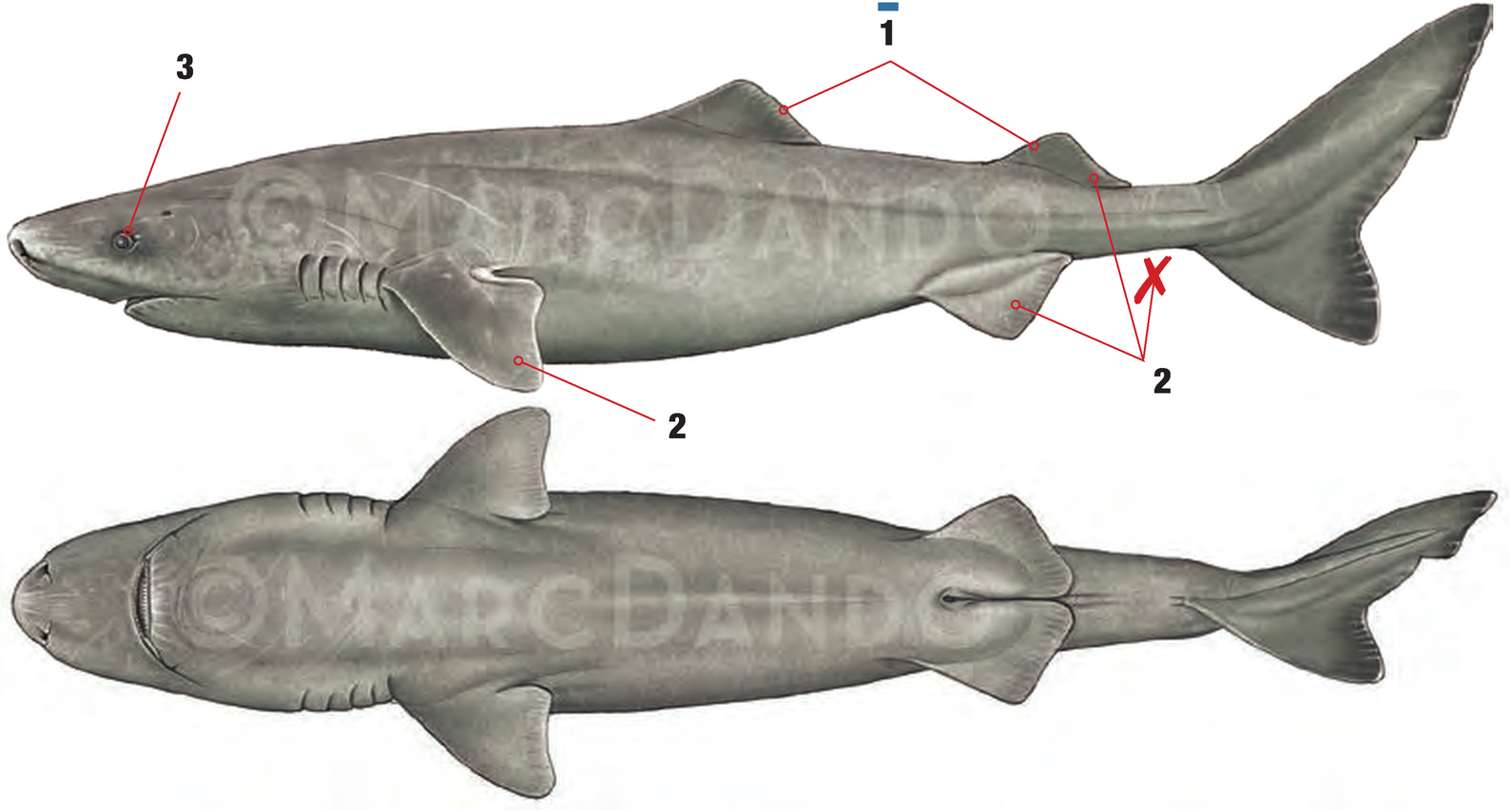
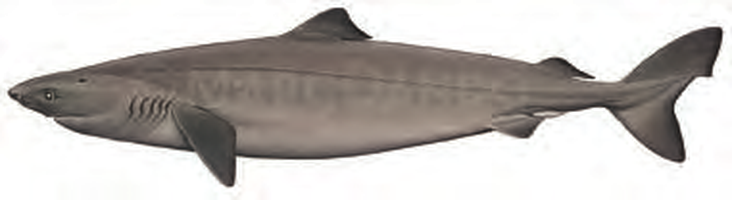
The numbers match the arrows on the illustration.
- Heavyset cylindrical body with two, spineless dorsal fins.
- All precaudal fins small, no anal fin.
- Small eyes, commonly with visible copepod attached.
Colouring & markings
- Uniform grey to medium brown.
- Sometimes with pattern of small dark and light spots/ blotches; transverse dark bands can also be visible.
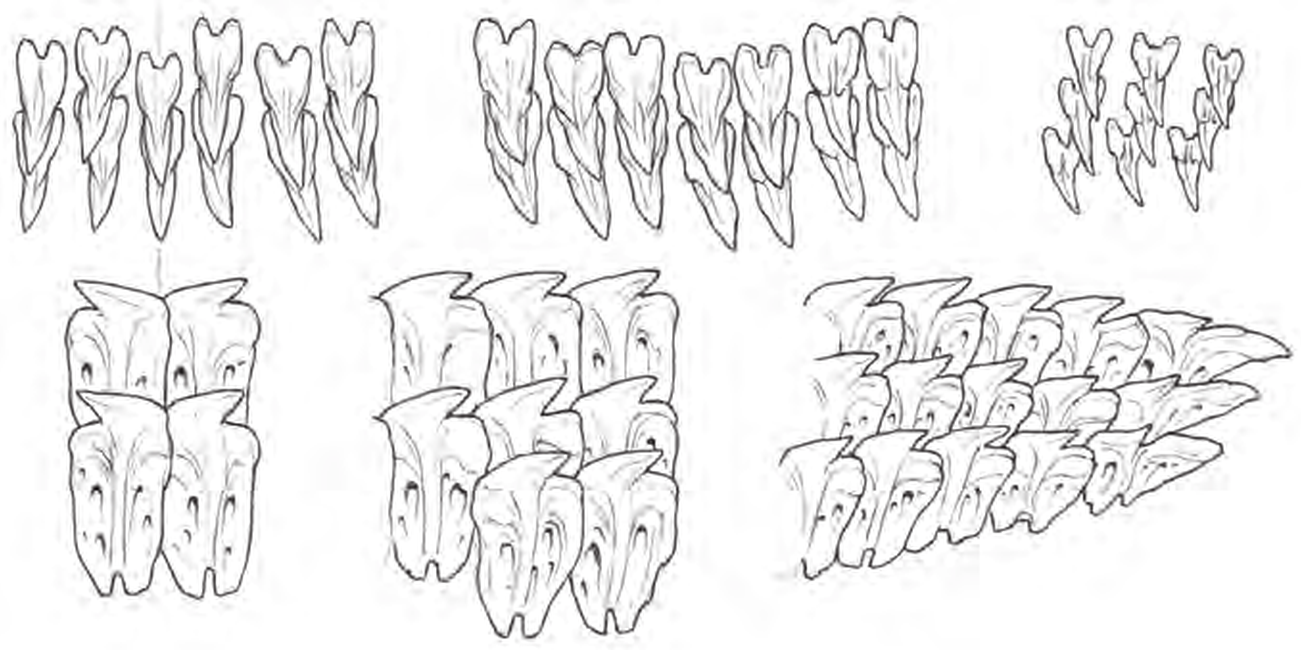
Teeth
Upper jaw: 35−39; thin, sharp and lacking serrations. Lower jaw: 45−57; interlocking, broad and square with short, smooth cusps.
How big do they get?
Where they live
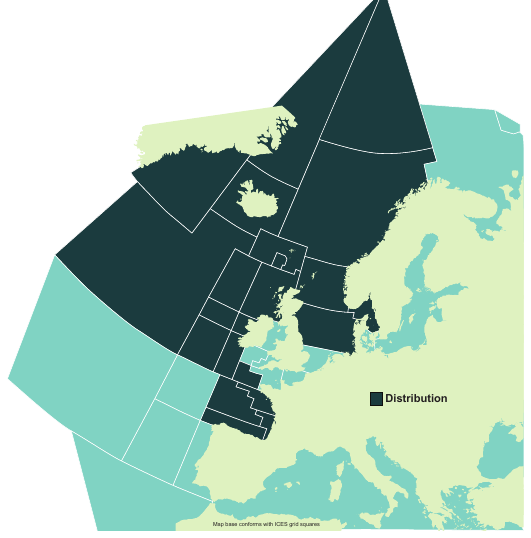
Distribution
Endemic to the North Atlantic and Arctic. Eastern Arctic and Atlantic from Russia and Norway to the North Sea and Ireland; occasionally recorded further south to Portugal.
Habitat
Demersal to pelagic on continental and insular shelves and upper slopes; shallows to 1,400m, possibly to 2,647m. Prefers water temperature 0.6–12°C; majority of records from waters <5°C. Known to make large-scale (100–1000km) movements throughout the year. Migrates inshore during colder months at high latitudes. This behaviour is reversed at lower latitudes.
In the wild
-
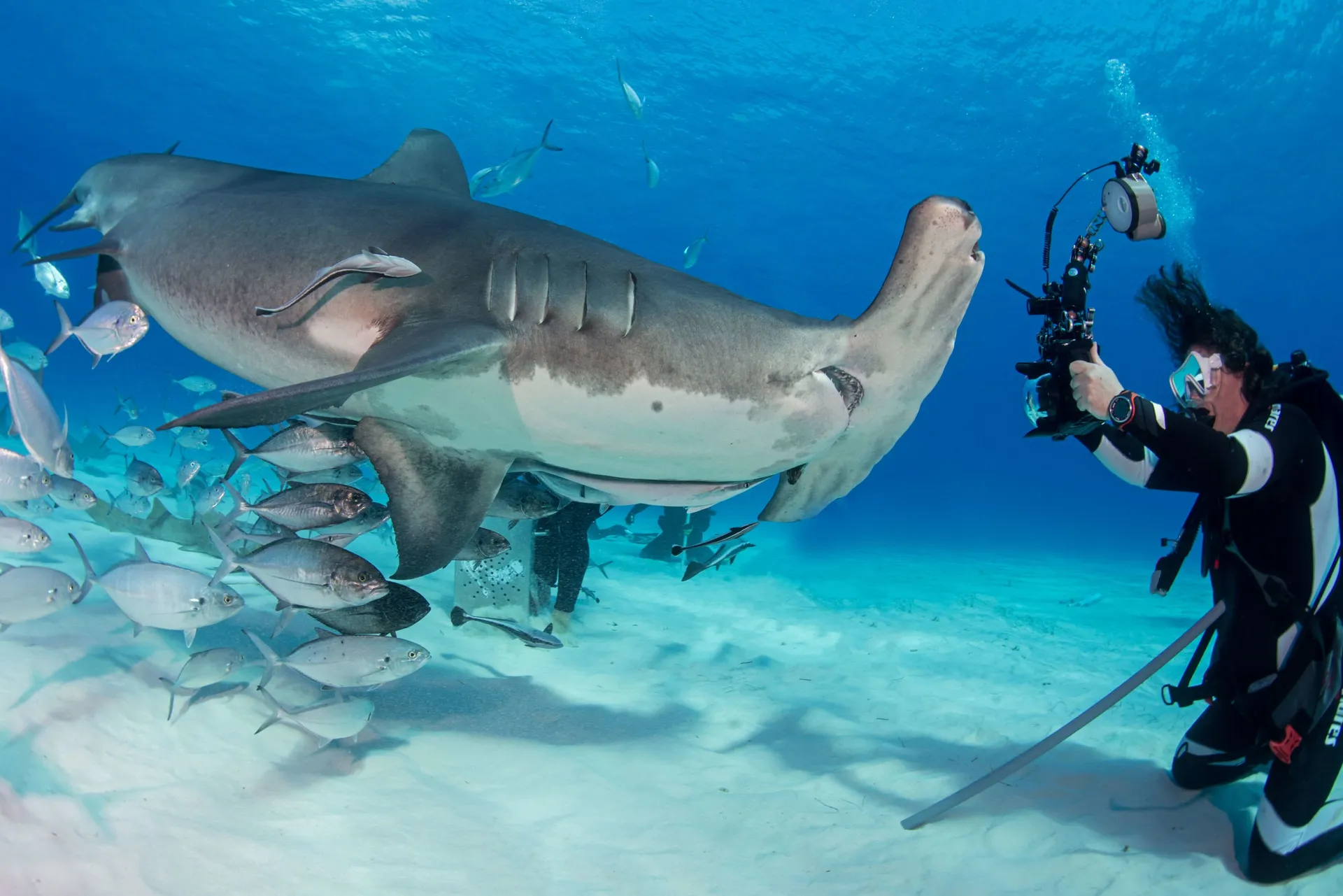
Recorded on a Shark Trust survey dive -
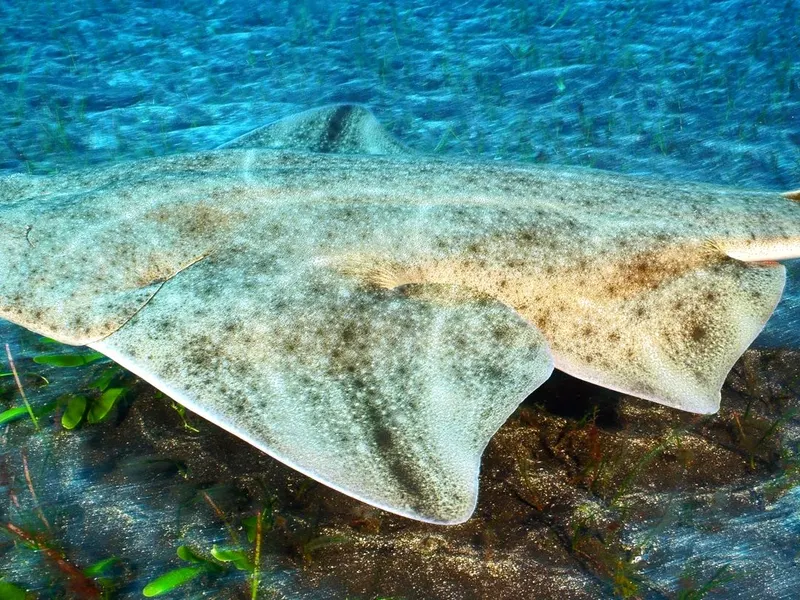
Resting on a sandy seabed -
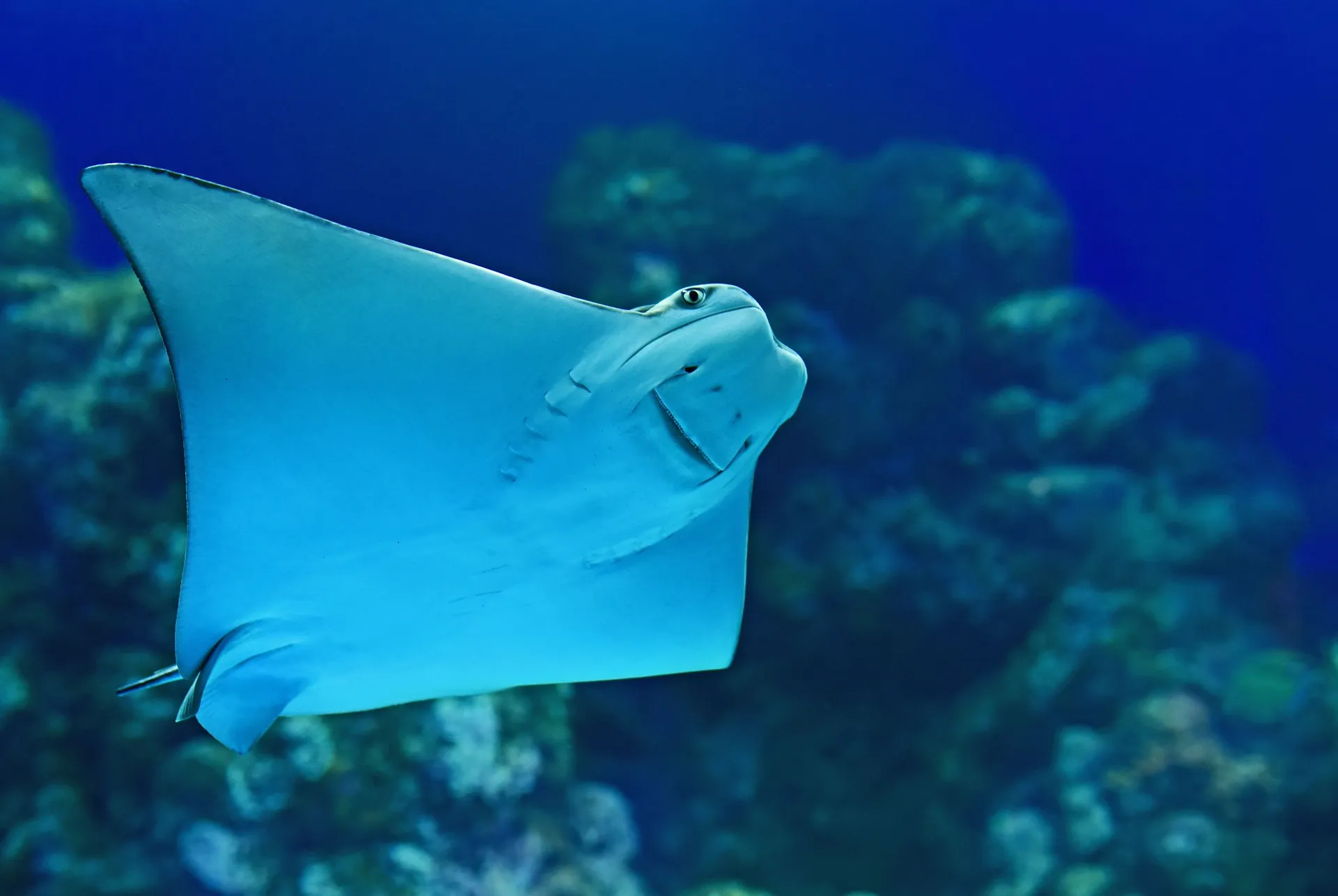
Cruising close to the sea floor -
In the shallows at dusk -
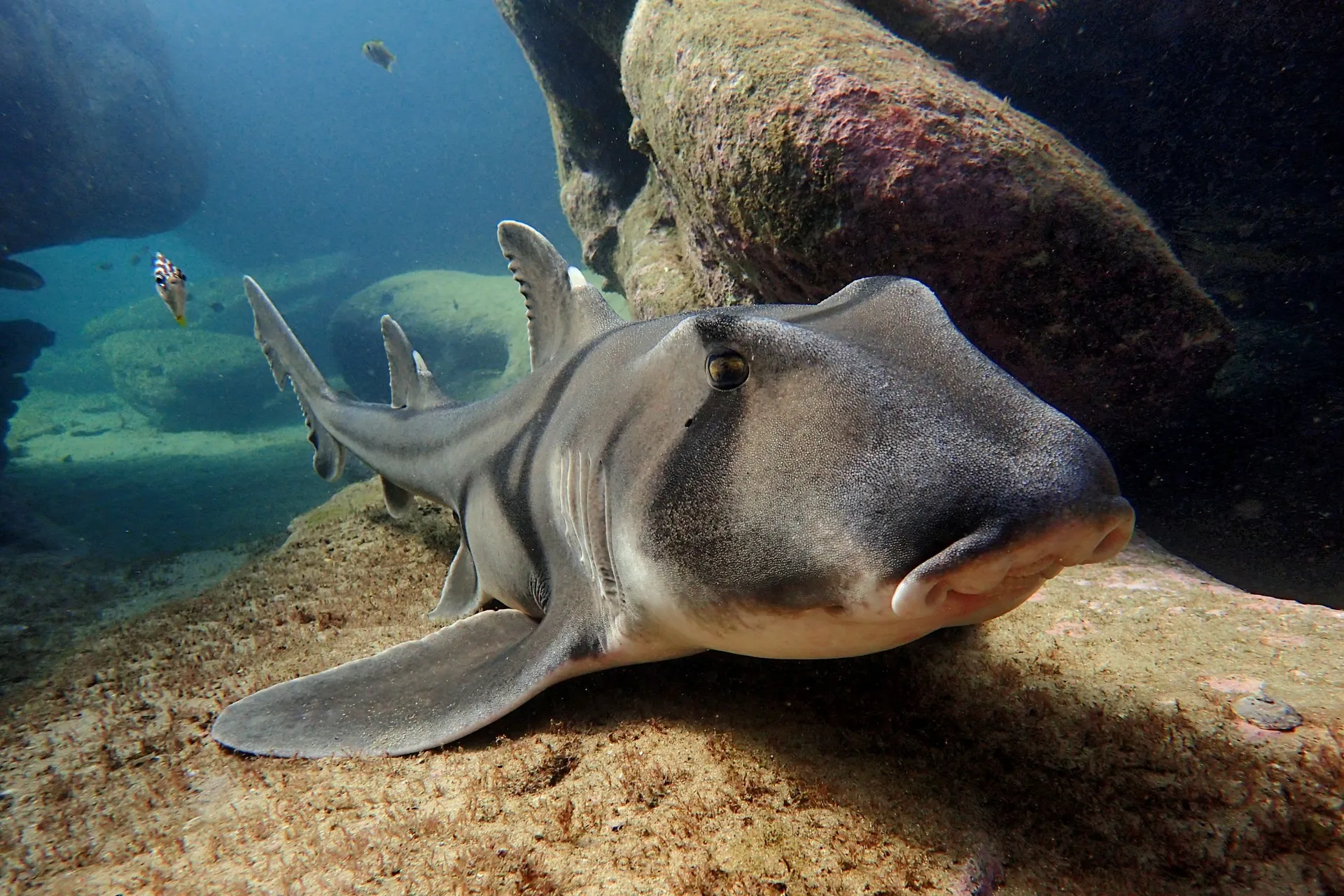
Sheltering on the reef
Go deeper
Size & biology
- Birth: 40−50cm.
- Matures: female 450cm; male 300cm.
- Max. TL: 640cm, possibly to 730cm.
- Age at maturity: est. ~150 years (female). Max. age: suggested to be ≤400 years. Very slow growing.
- Viviparous, avg. of 7−10 pups per litter.
- Generalist feeder, diet includes fishes, cephalopods and crustaceans. Marine mammals often taken; unclear whether these are scavenged or actively targeted.
- The copepod Ommatokoita elongata present on the cornea of most Greenland Sharks’ eyes causes serious damage to the eye (incl. blindness). It does not seem to affect movements or ability to locate prey.
Conservation status
IUCN Red List: Global: Near Threatened (2006) Europe: Near Threatened (2015) Life history and population structure remains poorly known. This shark’s longevity and exceptionally slow growth coupled with possible historic population decline make it vulnerable to fishing pressure.
Management
Subject to prohibitions under the CFP, RFMO and FNA regulations.
Commercial importance
Historically targeted for its liver oil by large- scale industrial fisheries in Norway, Iceland and Greenland. Occasional bycatch in longline, trawl and gillnet fisheries; usually discarded. Targeted by artisanal fishers in Iceland and Greenland who utilise the meat, skin and teeth. Meat is toxic when fresh but eaten in some countries after being washed and cured. Hákarl, made from fermented Greenland Shark meat, is a traditional dish in Iceland.
References & further reading
Assessment: GSK/NEA/2020
- Burgess et al. Ferrando et al.
- Ebert et al. Nielsen et al.
- Ebert & Stehmann. Campana et al.
- ICES WGEF Report. Davis et al.
- MacNeil et al.