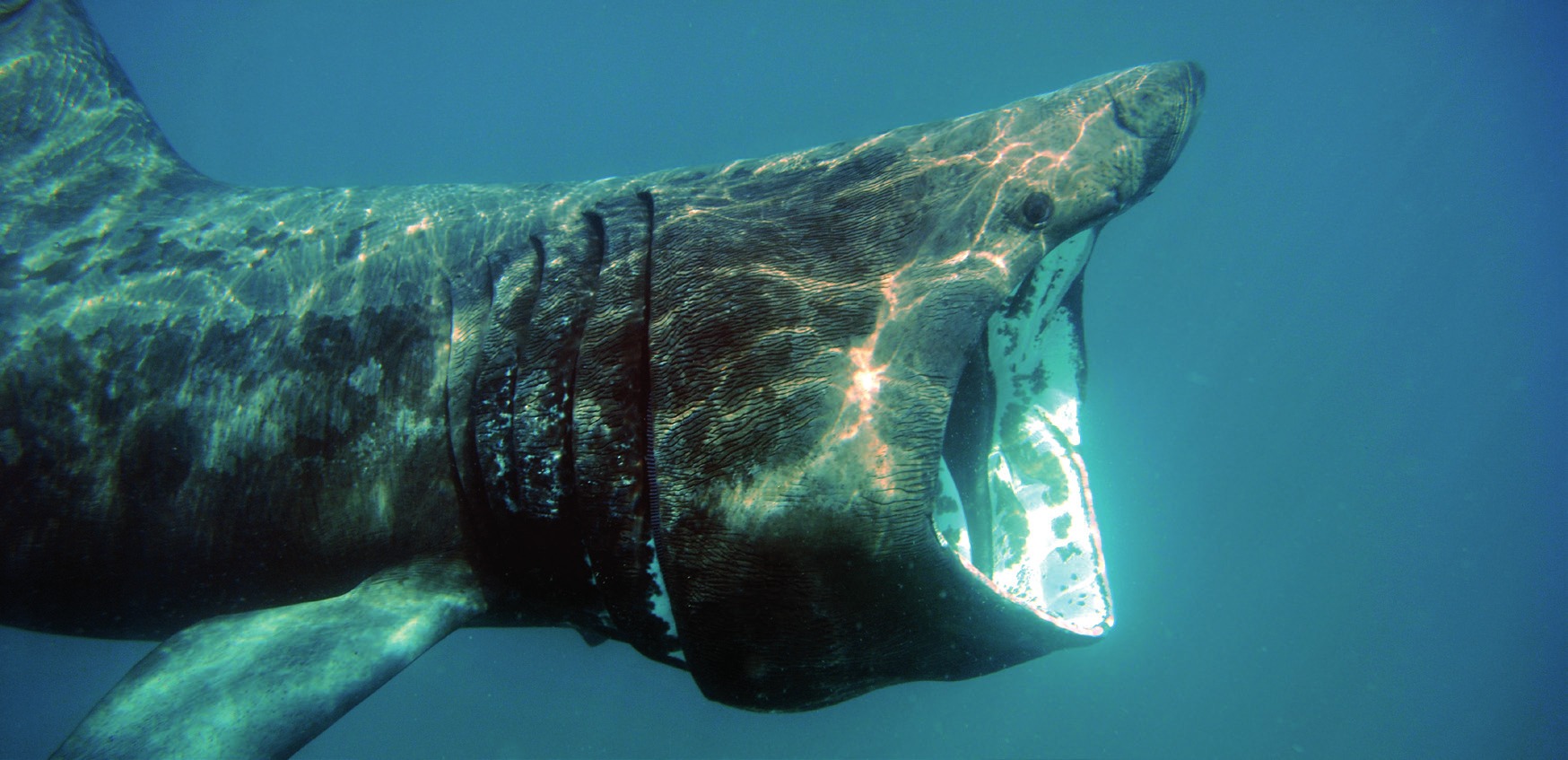
Basking Shark
Cetorhinus maximus (Gunnerus, 1765)
Endangered- Maximum length
- 12 m
- Depth range
- From surface to >1,200m.
- FAO code
- BSK
Meet the Basking Shark
Basking Sharks are the second largest fish (and shark) on the planet. These filter feeders can open their mouths up to a metre wide.
- What they eat
- Plankton
- Also known as
- BASKING SHARK, Bone Shark, Elephant Shark, Riesenhai (DEU), Peregrino (ESP), Pélerin (FRA), Squalo Elefante (ITA), Reuzenhaai (NLD), Tubarão-frade (PRT).
How to identify
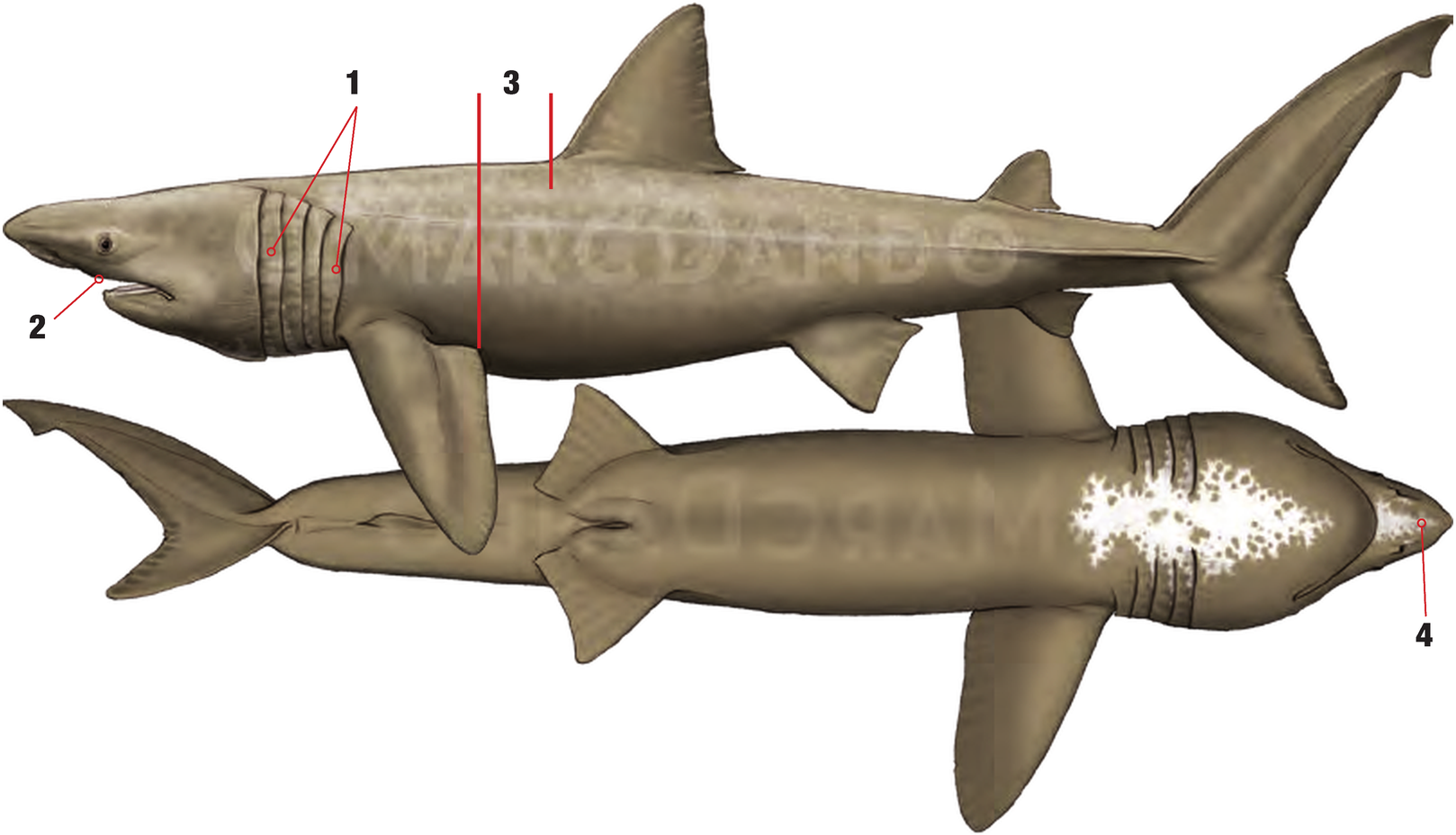
The numbers match the arrows on the illustration.
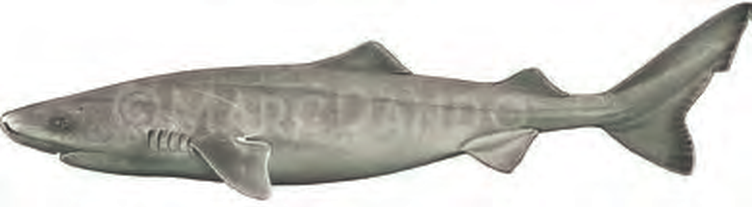
- Large gill slits almost encircle head.
- Huge subterminal mouth.
- Origin of first dorsal fin behind pectoral fin trailing edges.
- Pointed snout (juveniles with elongated, bulbous snouts).
Colouring & markings
- Grey, grey-brown, blue-grey to blackish dorsally. Flanks may have lighter linear striping and spots.
- Similar, sometimes lighter ventrally. Often irregular white blotches on underside of head and abdomen.
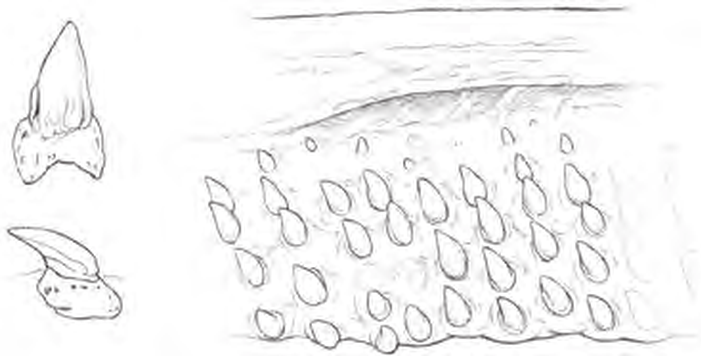
Teeth
Tiny, hooked and peg-like vestigial teeth, ~5mm in height. Upper jaw: 200+ rows. Lower jaw: 200+ rows.
How big do they get?
Where they live
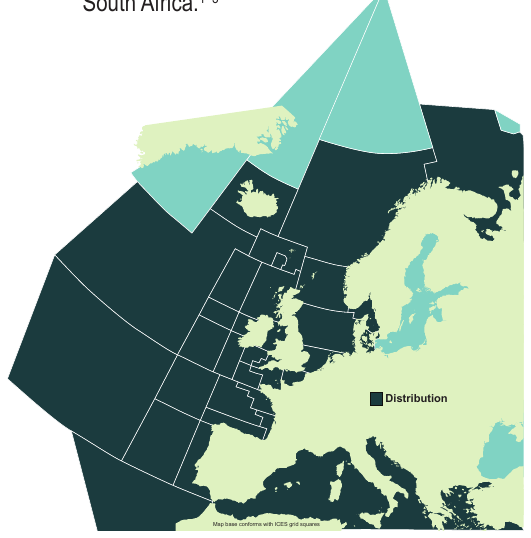
Distribution
Worldwide distribution in temperate and boreal oceans; also found in deep water below the thermocline in tropical and equatorial waters. Eastern Atlantic from Russia to Senegal, including Mediterranean Sea (reported as far east as Syrian waters), and from Namibia to South Africa.
Habitat
Coastal to pelagic, from the surface to >1,200m. Primarily found in water 5–21°C. Recorded in coastal waters and to the continental shelf edge and slope. Associated with oceanic and thermal fronts, headlands, islands and enclosed bays with strong tidal flow. Observed in inshore waters during the spring/summer. Known to undertake seasonal migrations, including transoceanic and transequatorial movements; frequency and function of these longer-distance movements are not yet fully known. Aggregates seasonally in temperate continental shelf waters where there is increased zooplankton abundance; also potentially for mating and to give birth.
In the wild
-
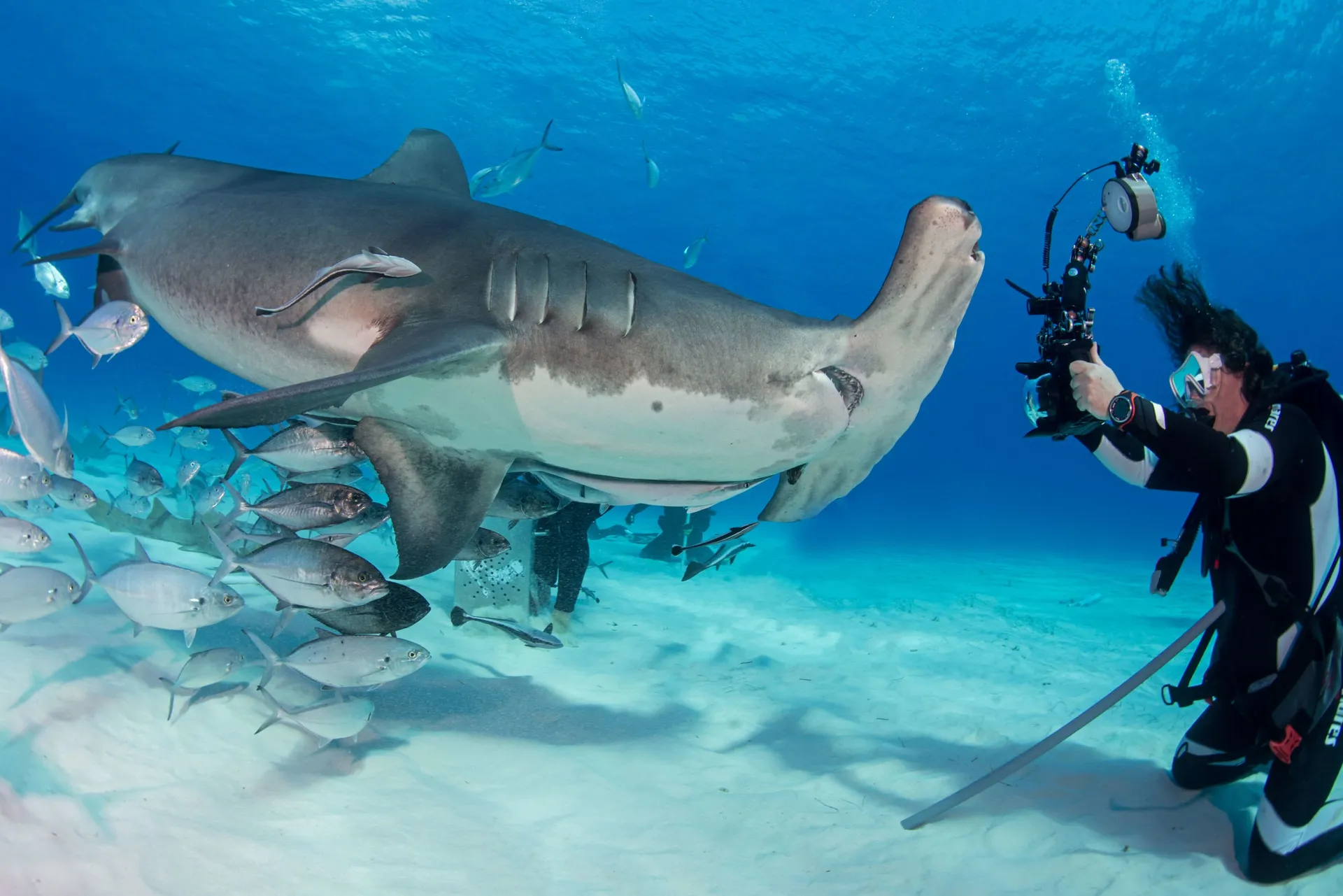
Recorded on a Shark Trust survey dive -
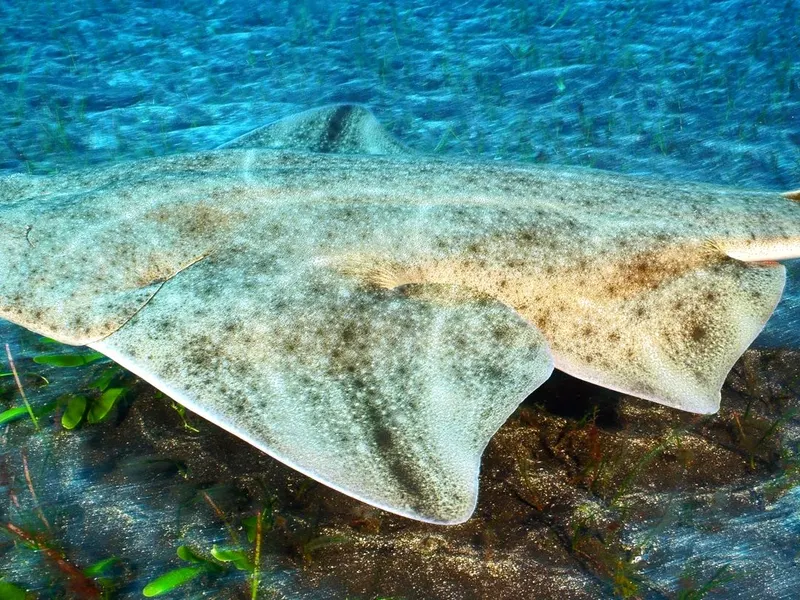
Resting on a sandy seabed -
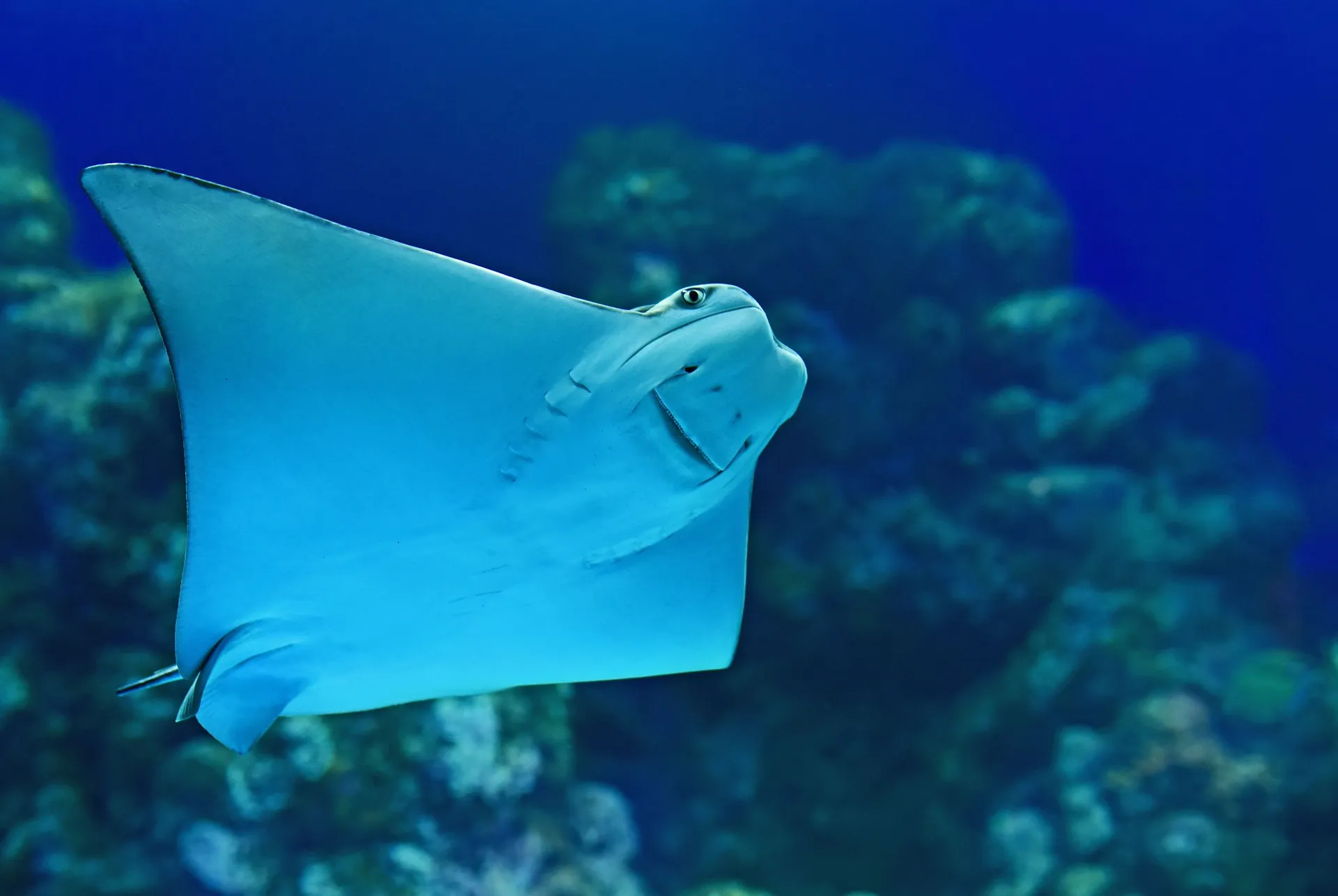
Cruising close to the sea floor -
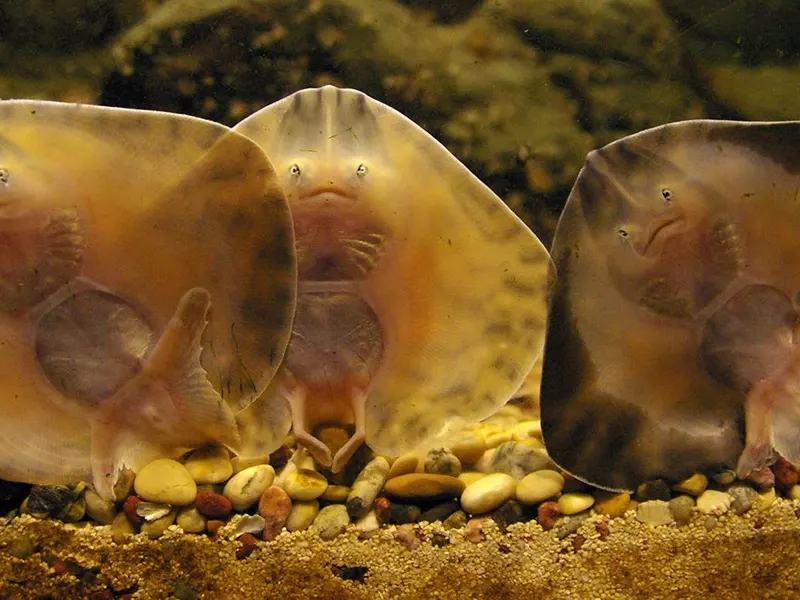
In the shallows at dusk -
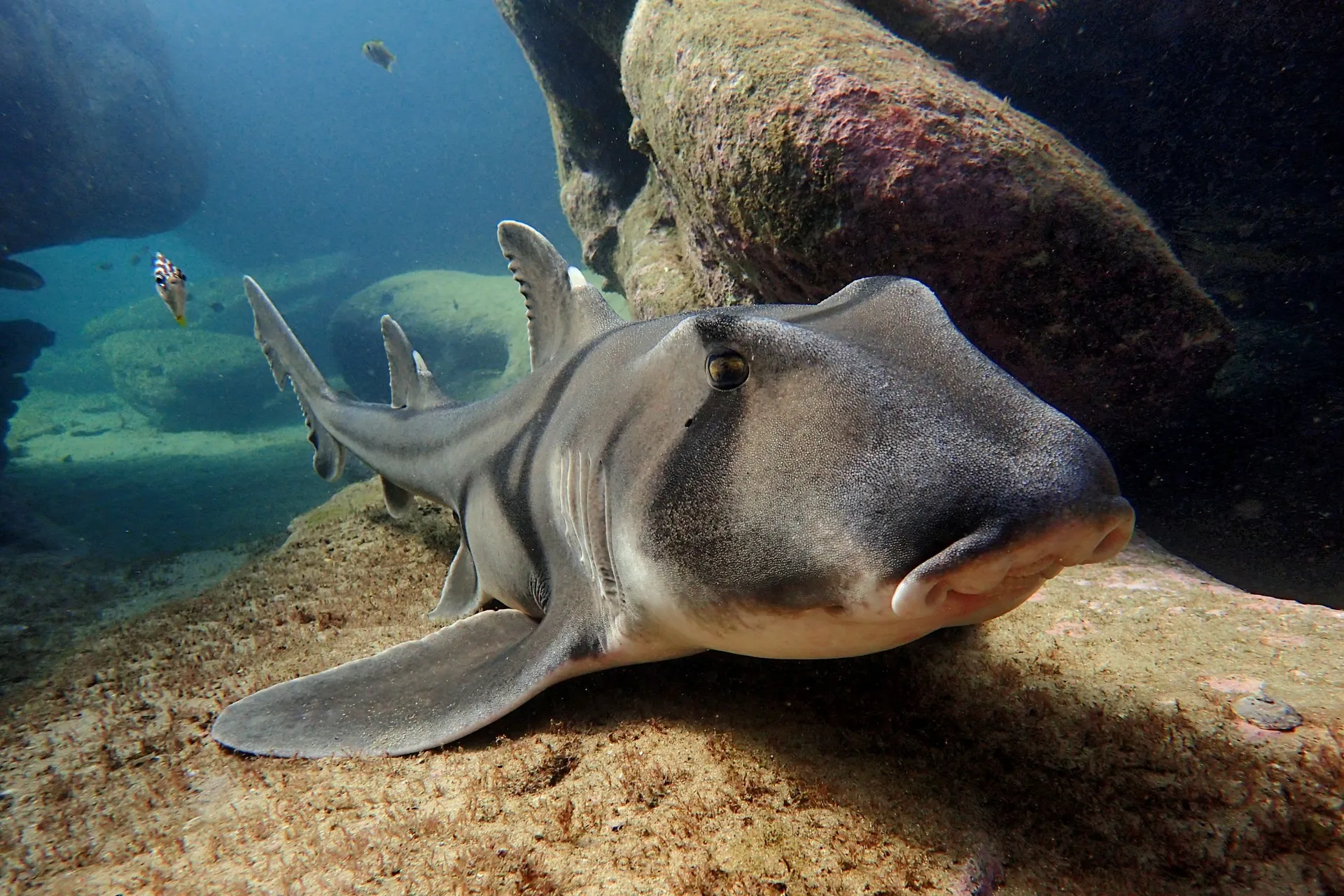
Sheltering on the reef
Go deeper
Size & biology
- Birth: 150–200cm.
- Matures: female 690–980cm; male 400–750cm.
- Max. TL: 1200cm.
- Age at maturity: female ~18 years; male 12–16 years. Max. age est. 50 years.
- Ovoviviparous reproduction; embryos feed on unfertilised eggs (oophagy).
- Gestation period est. 1–3.5 years; litter size 1–6 pups.
- Passive filter-feeder; feeds on zooplankton incl. copepods, crustacean larvae, fish eggs.
Conservation status
IUCN Red List: Global: Endangered (2019) Europe: Endangered (2015) Mediterranean: Endangered (2016) Whilst heavily protected, this shark’s global abundance is still below historic levels and population recovery is slow.
Management
Subject to prohibitions under the CFP, RFMO and FNA regulations. Additional international regulations apply.
Commercial importance
Historically targeted for liver oil, fins, skin, meat and cartilage; fins remain extremely valuable in global fin trade due to their large size and high quality.
References & further reading
Assessment: BSK/NEA/2020
- Ebert et al.
- Sims et al.
- Ebert, & Stehmann.
- Sims.
- Sims et al.
- Gore et al.
- Skomal et al.
- Miller et al.