Porbeagle
Lamna nasus (Bonnaterre, 1788)
Vulnerable- Maximum length
- 3.55 m
- Depth range
- From surface to 1,800m. Primarily to 200m.
- FAO code
- POR
Meet the Porbeagle
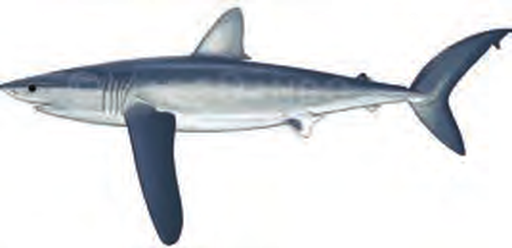
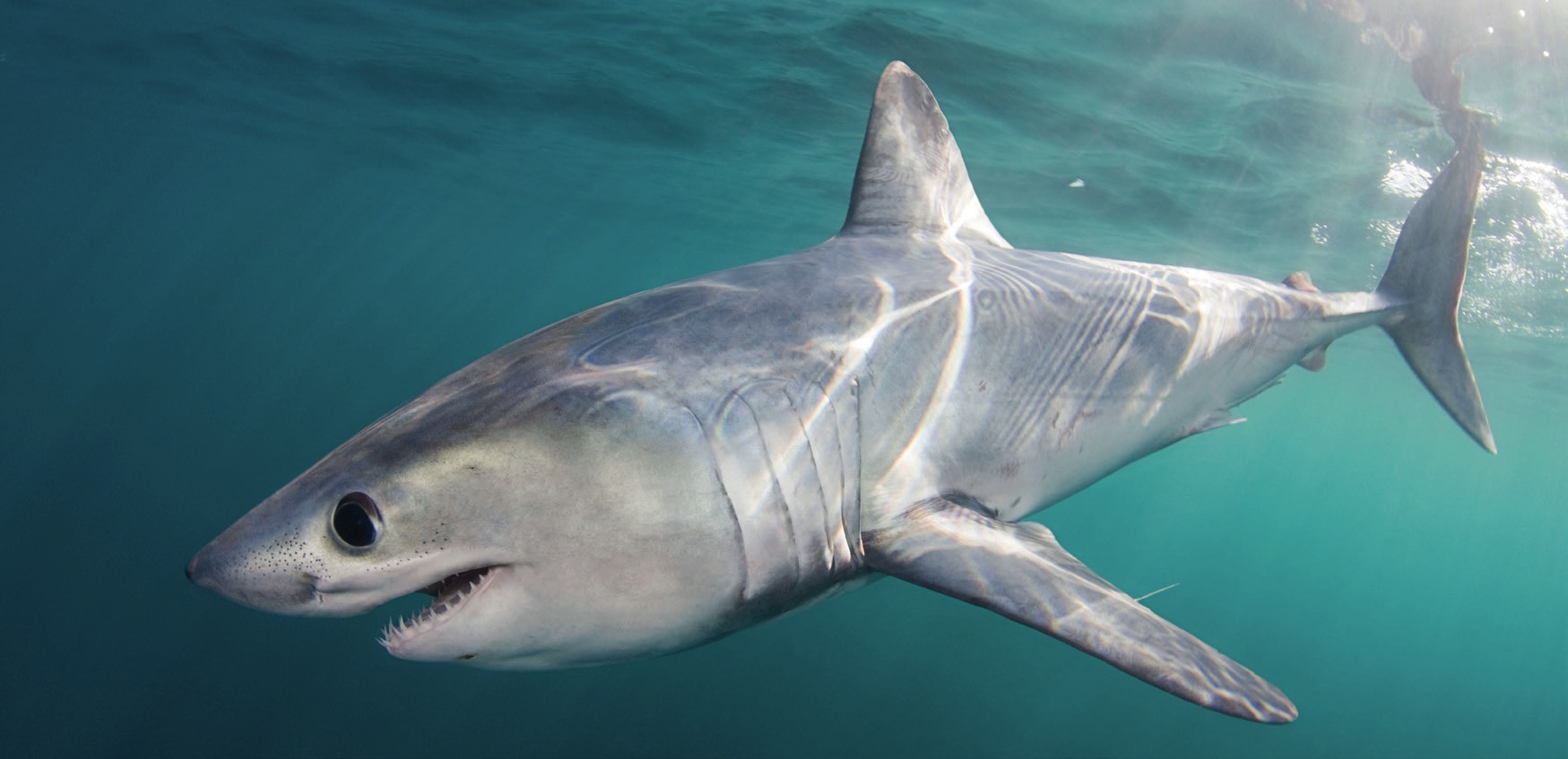
Porbeagles are a powerful shark species with distinctive conical snout, large first dorsal fin and a reputation as an agile predator of cold-temperate waters.
- What they eat
- Bony fish and cephalopods.
- Also known as
- PORBEAGLE SHARK, Atlantic Mackerel Shark, Heringshai (DEU), Marrajo Sardinero (ESP), Requin-Taupe Commun (FRA), Smeriglio (ITA), Haringhaai (NLD), Tubarão-sardo (PRT).
How to identify
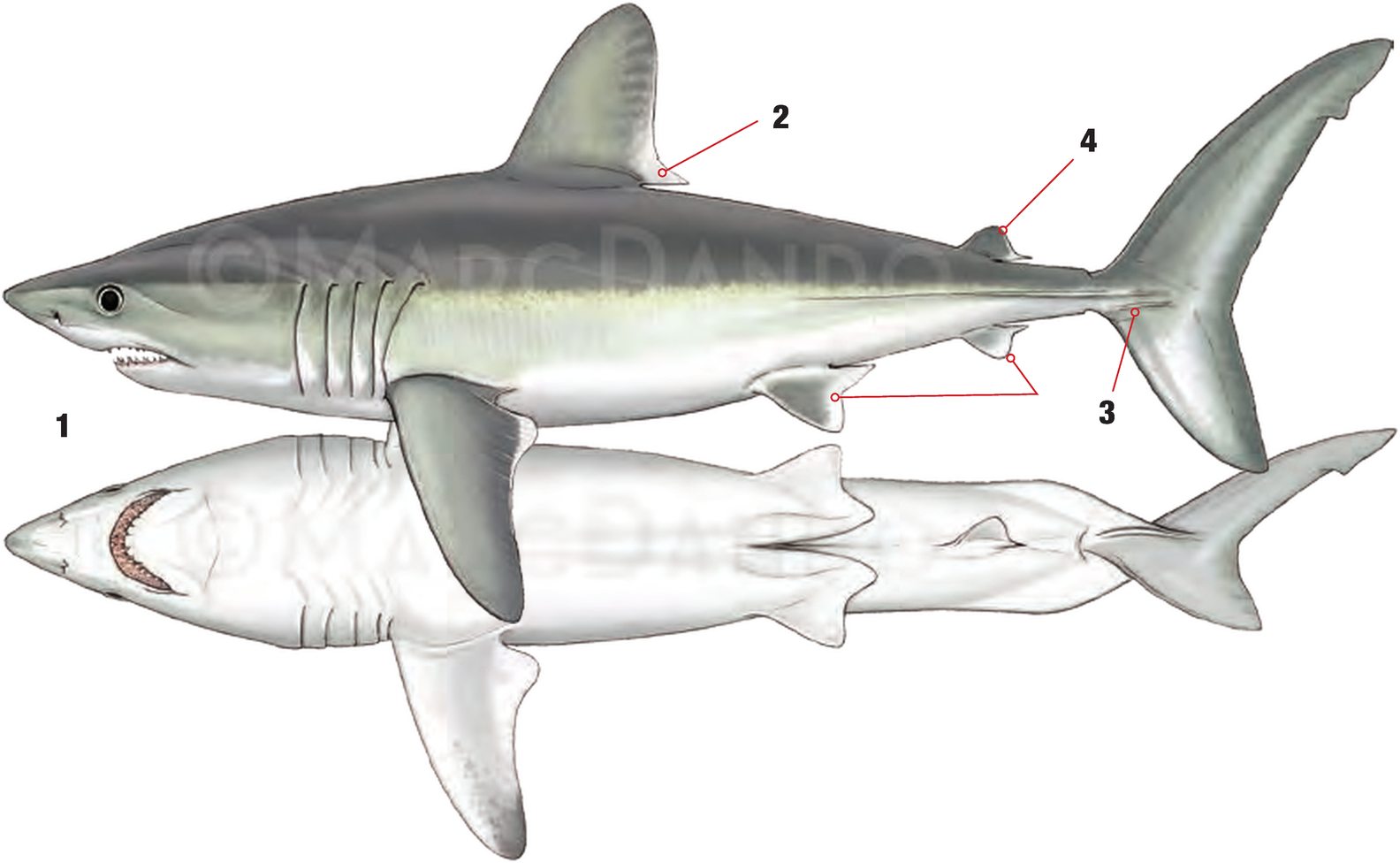
The numbers match the arrows on the illustration.
- Large, stocky fusiform-shaped body.
- Large first dorsal fin with white free rear tip.
- Secondary keel on caudal fin.
- Very small pelvic, anal and second dorsal fins.
Colouring & markings
- Dark blue to grey dorsally.
- Pale to white ventrally.
Teeth
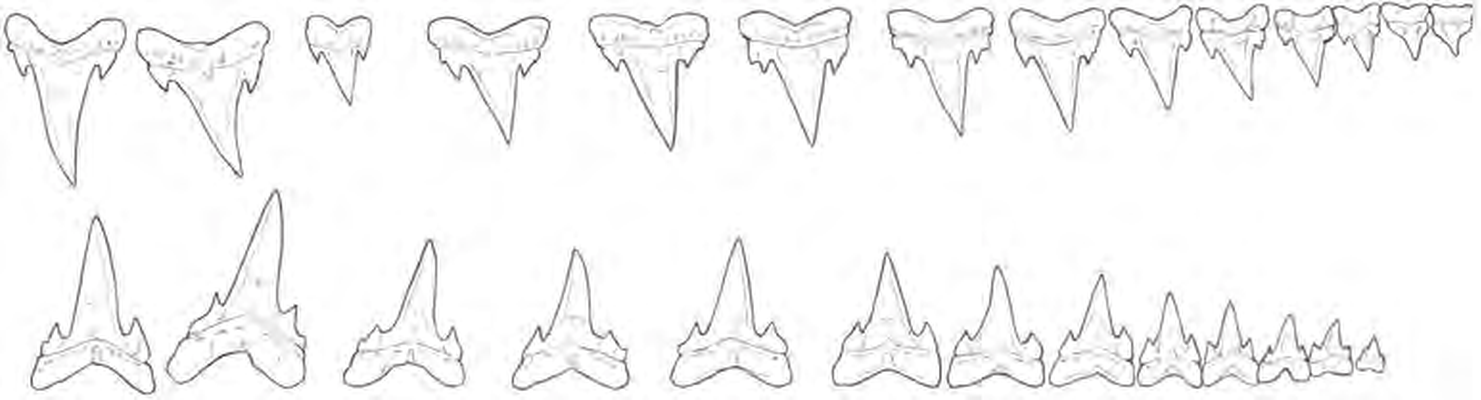
Moderately large, blade-like teeth with single lateral cusplet Upper jaw: 22–31. Lower jaw: 24–29.
How big do they get?
Where they live
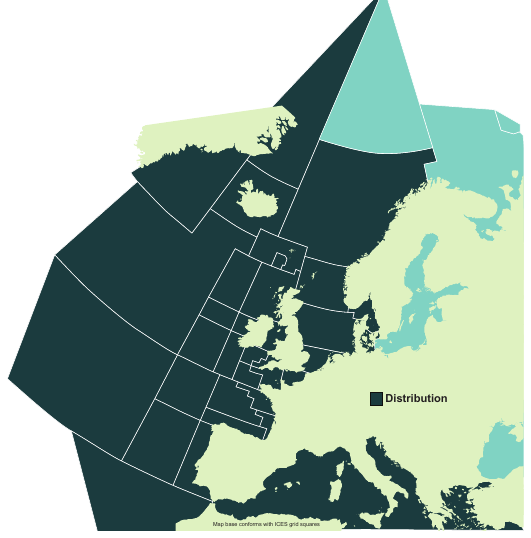
Distribution
Wide-ranging in temperate waters (excl. North Pacific). Particularly in Northwest and Northeast Atlantic and a circumglobal band in the Southern Hemisphere (approx. 30–55°S). Recorded in the Northeast Atlantic from Iceland and Russia to Morocco, incl. the Mediterranean Sea.
Habitat
Most common over continental shelves, shelf edges and offshore banks. Found in the open ocean to 1,800m. Prefers water temperatures <18°C; adults show preference for 5–10°C. Able to tolerate waters -1–23°C. Known to make long distance movements; single record of a 3,300 km straight-line transatlantic movement by female shark. Exhibits diel vertical migration, diving deeper during the day than night. Possible nursery grounds identified in St Georges Channel and along the western Celtic Sea shelf edge and Bay of Biscay shelf break.
In the wild
-
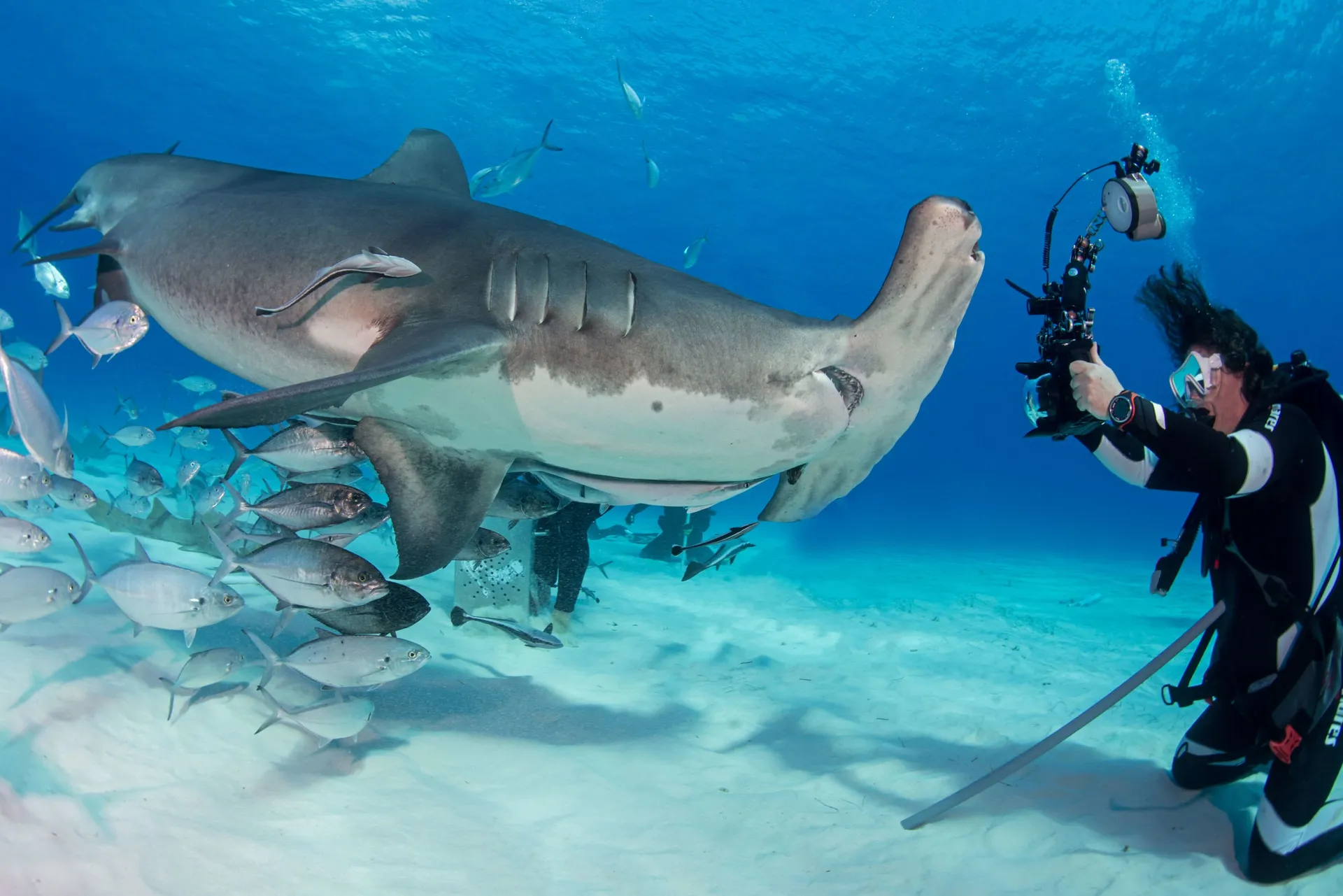
Recorded on a Shark Trust survey dive -
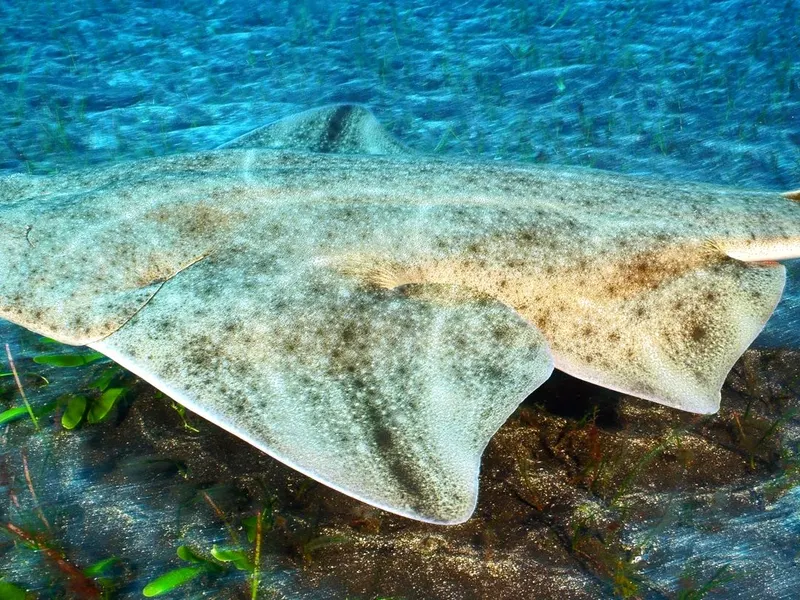
Resting on a sandy seabed -
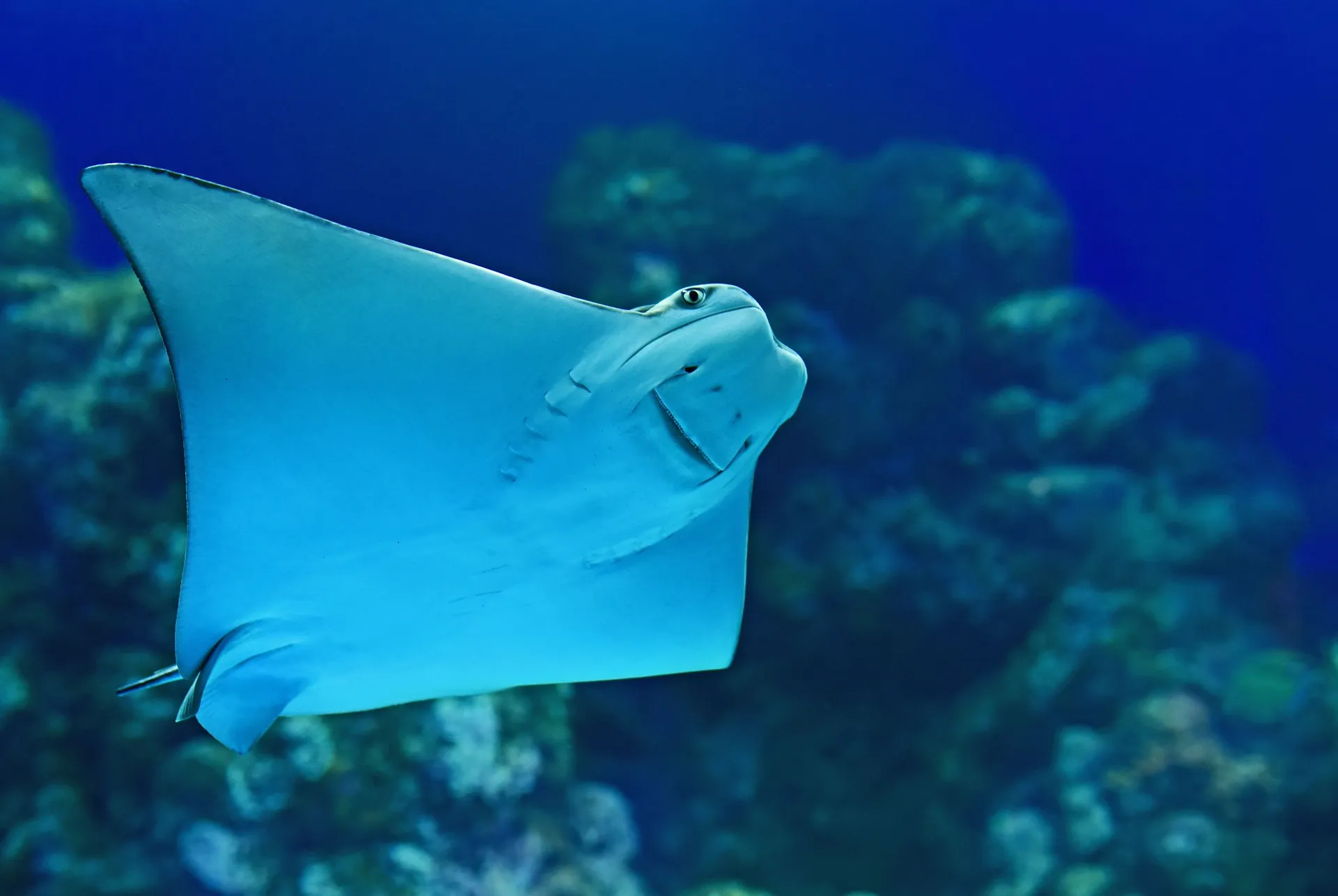
Cruising close to the sea floor -
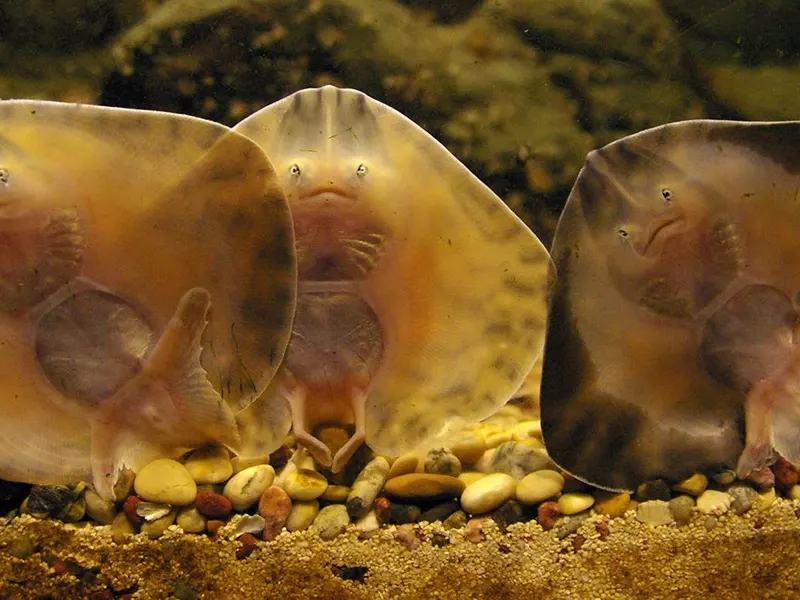
In the shallows at dusk -
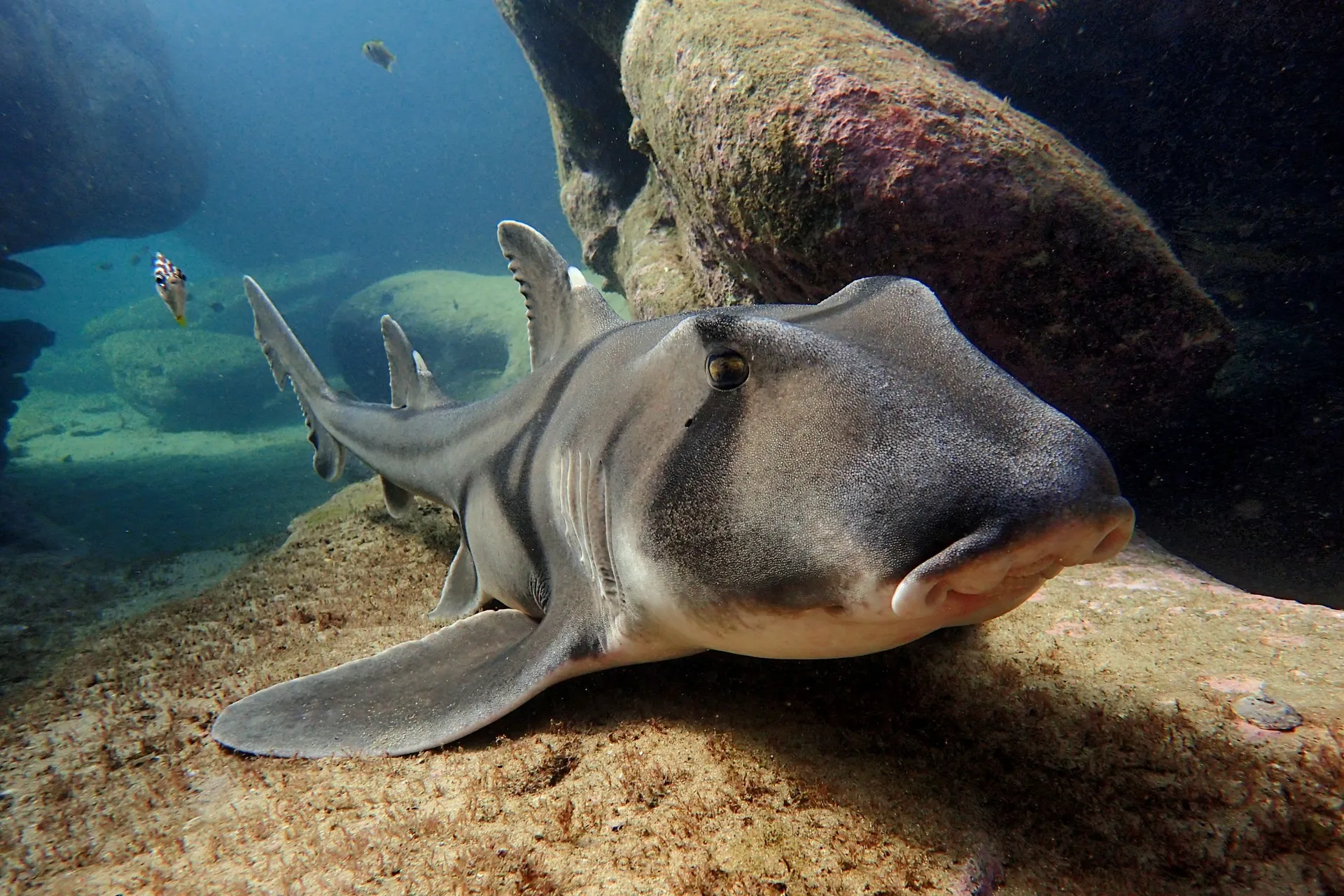
Sheltering on the reef
Go deeper
Size & biology
- Birth: 60–80cm.
- Matures (varies regionally): female 245cm (N Atl.); male 195cm (N Atl.).
- Max. TL: 355cm.
- Age at maturity (N Atl.): female: 12–16 years; male: 6–10 years. Max. age: 26 years, possibly to 46 years (N Atl.).
- Ovoviviparous, embryos feed on unfertilised eggs (oophagy). Birth occurs in spring/summer following 8–9 month gestation. 1–5 pups per litter (avg. 4).
- Endothermic; maintains body temperature above ambient water temperature.
- Feeds on pelagic and demersal teleosts, cephalopods and occasionally small sharks.
- Migratory, moving inshore in the summer, and to deeper offshore waters in winter. Segregates by size and sex.
Conservation status
IUCN Red List: Global: Vulnerable (2019) Europe: Critically Endangered (2015) Mediterranean: Critically Endangered (2016) The Porbeagle is highly vulnerable to overexploitation and population decline due to low reproductive capacity and high commercial value in certain regions. Declines of >80% across three generations (75 years) is suspected in European populations.
Management
Subject to prohibitions under the CFP, RFMO and FNA regulations, and additional international regulations.
Commercial importance
Historically an extremely valuable shark taken in trawl, line and gillnet fisheries; utilised primarily for human consumption, including fins and high value meat.
References & further reading
Assessment: POR/NEA/2020
- Ebert et al.
- Ebert & Stehmann.
- Ellis et al.
- FAO FishFinder. n.d.
- Biais et al.
- Cameron et al.
- ICES WGEF Report.
- ICES Stock Annex.
- ICES Advice.