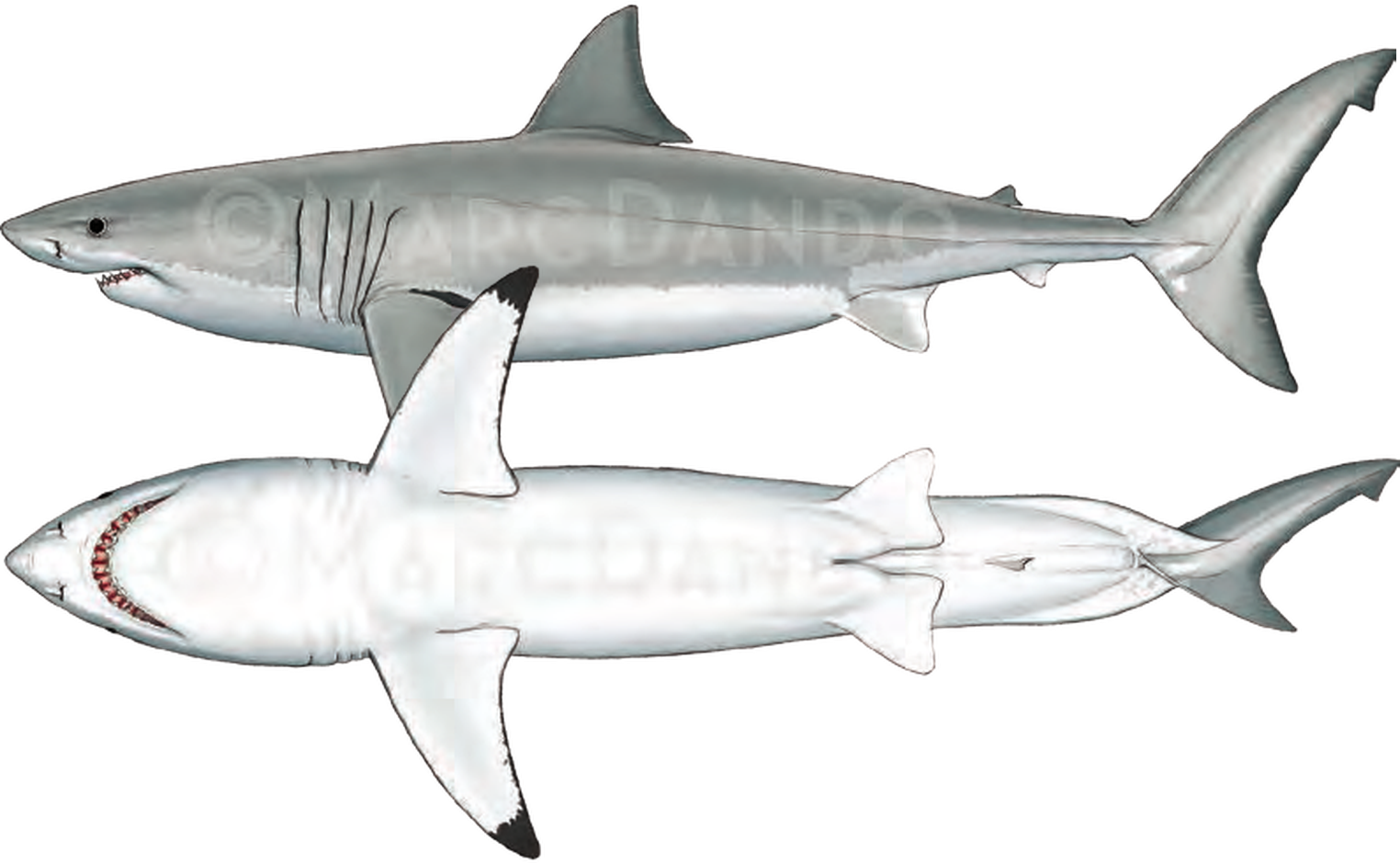
White Shark
Carcharodon carcharias (Linnaeus, 1758)
Vulnerable- Maximum length
- 6 m
- FAO code
- WSH
Meet the White Shark
- Also known as
- WHITE SHARK, Great White Shark, White Pointer, Weißer Hai (DEU), Jaquetón Blanco (ESP), Grand Requin Blanc (FRA), Squalo bianco (ITA), Tubarão-come-homens (PRT).
How to identify
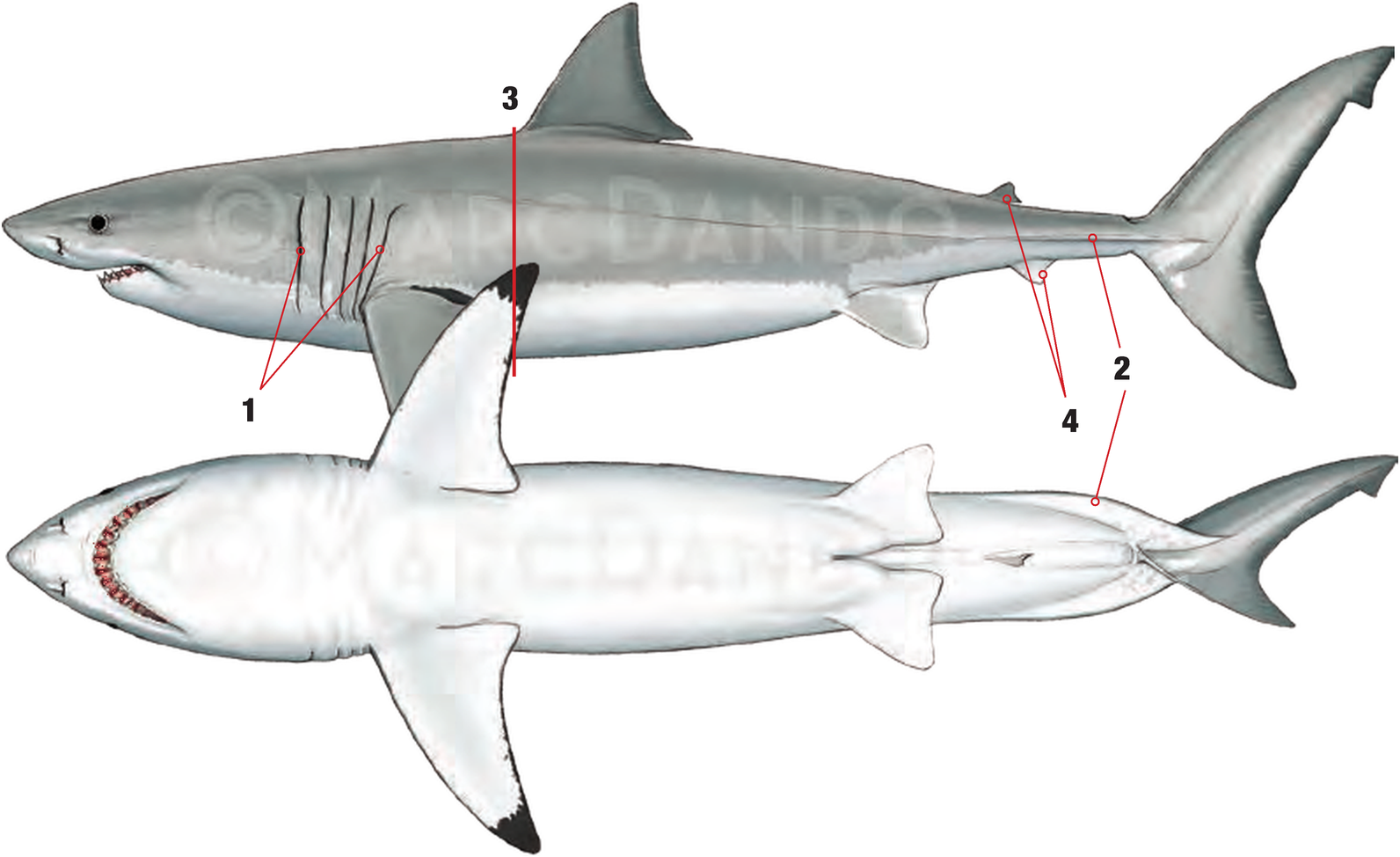
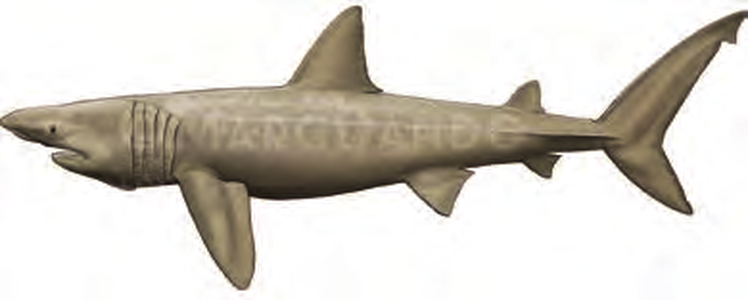
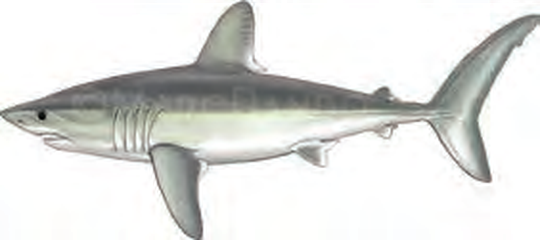
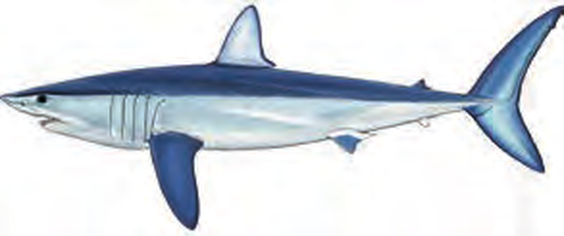
The numbers match the arrows on the illustration.
- Long gill slits.
- Pronounced, powerful caudal keel.
- Large first dorsal fin originates over pectoral inner margins.
- Very small second dorsal and anal fins.
Colouring & markings
- Greyish-brown to dark grey dorsally.
- White ventrally with clear demarcation on flanks.
- Ventral tip of pectoral fins dark.
- Dark spot at base of pectoral fins in some individuals.
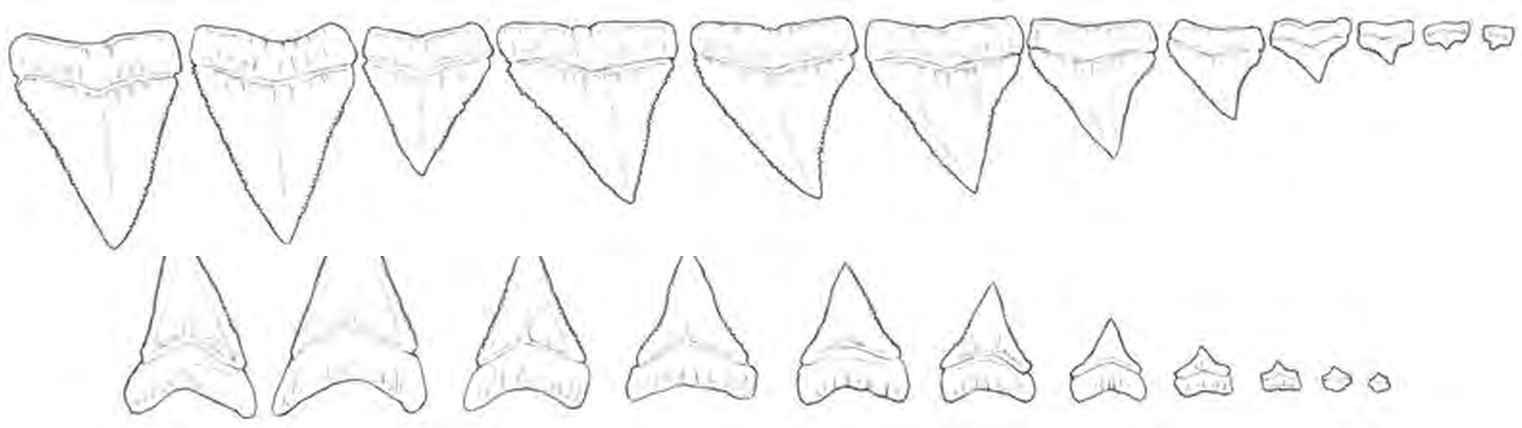
Teeth
Large, triangular and serrated teeth in both jaws. Upper jaw: 23–28. Lower jaw: 21–25.
How big do they get?
Where they live
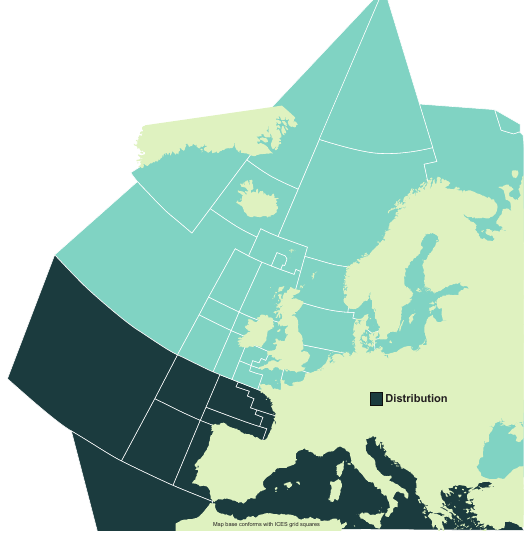
Distribution
Circumglobal in temperate waters. Eastern Atlantic from the Bay of Biscay to northwest Africa, incl. the Mediterranean Sea. Also found in the southeast Atlantic, where it is locally common in South African waters. Less frequent in tropical areas
Habitat
Coastal and oceanic, from surface to 1,300m. Found along the continental shelf, round oceanic islands and rocky reefs where pinniped colonies are present; known to enter bays and estuaries. Larger individuals can tolerate water temperatures from 5–25°C, juveniles prefer warmer waters. Highly migratory, known to travel great distances across ocean basins for seasonal migrations.
In the wild
-
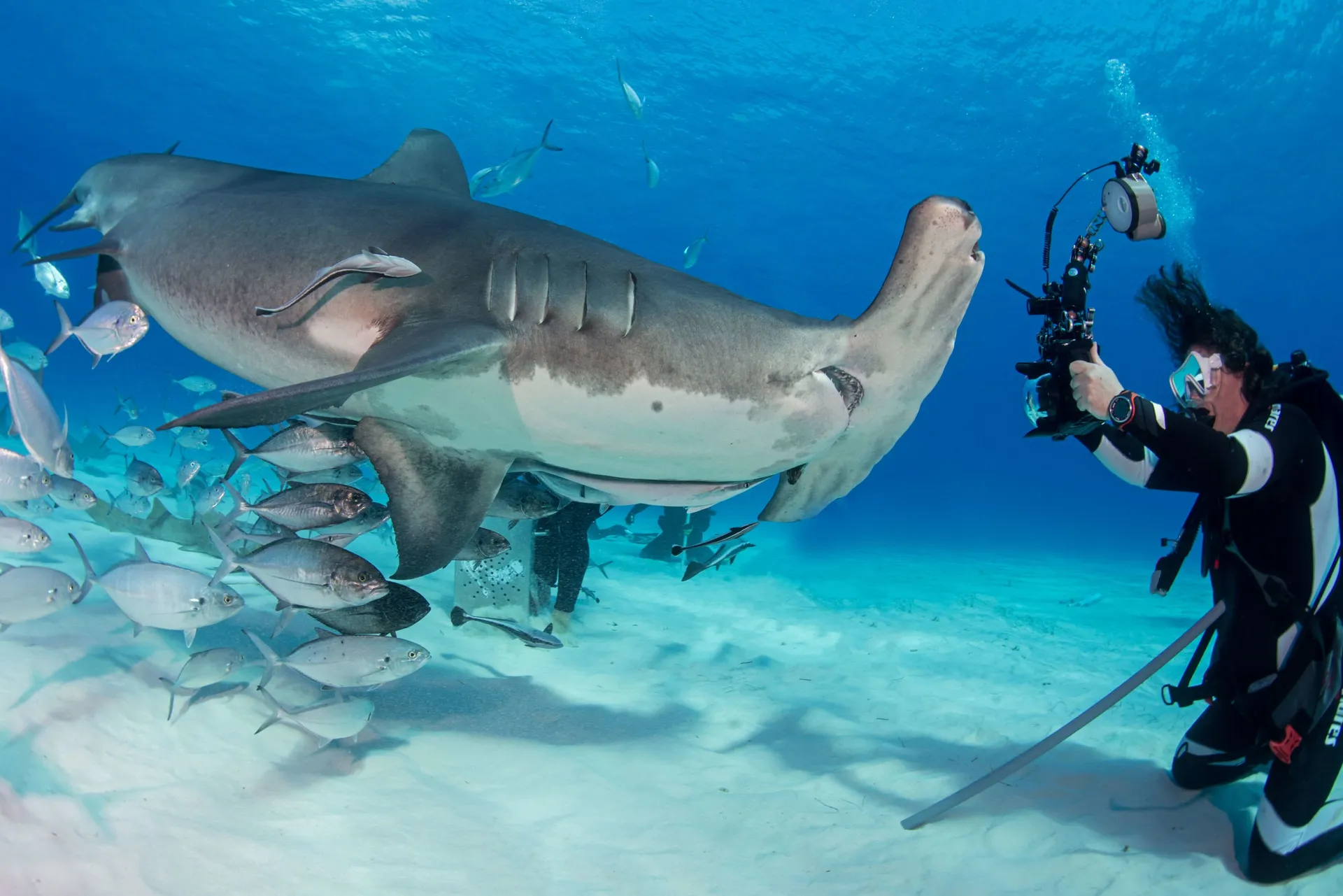
Recorded on a Shark Trust survey dive -
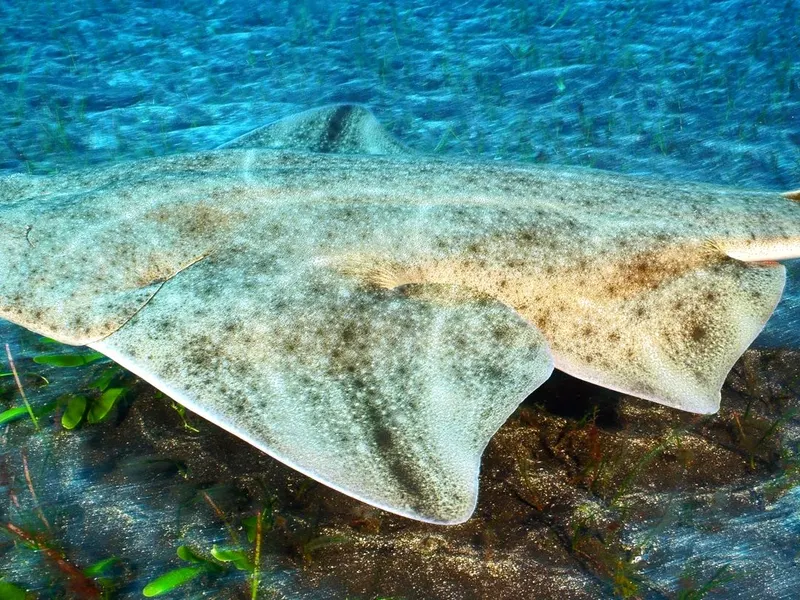
Resting on a sandy seabed -
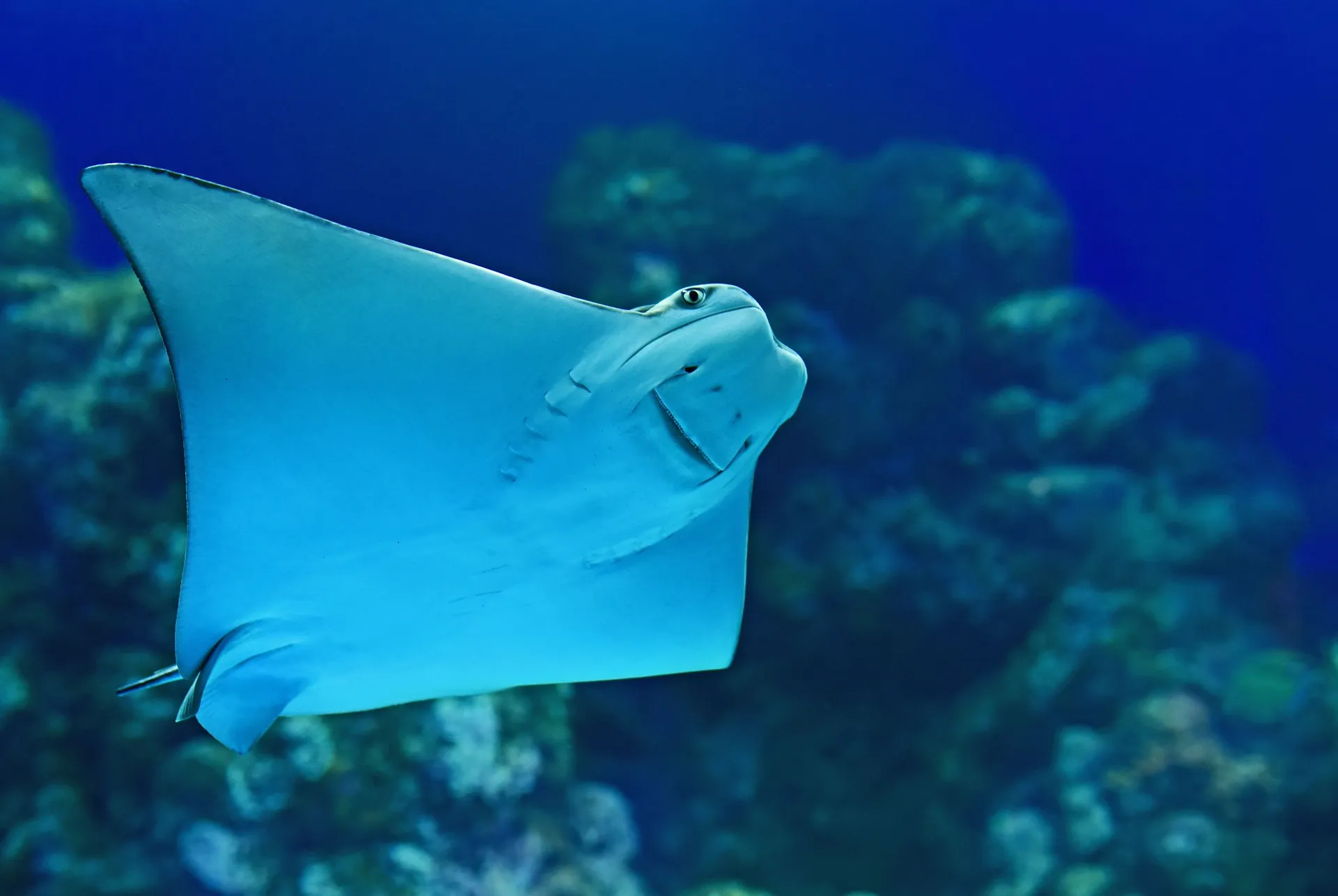
Cruising close to the sea floor -
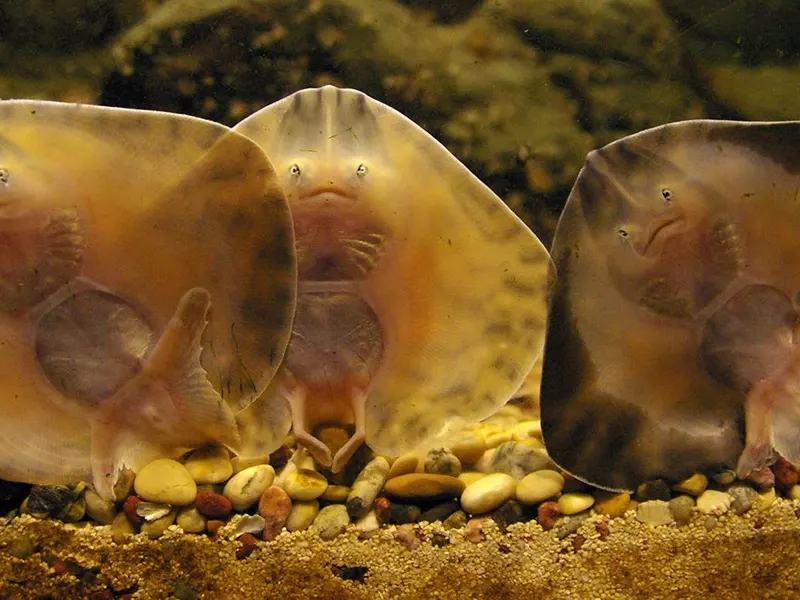
In the shallows at dusk -
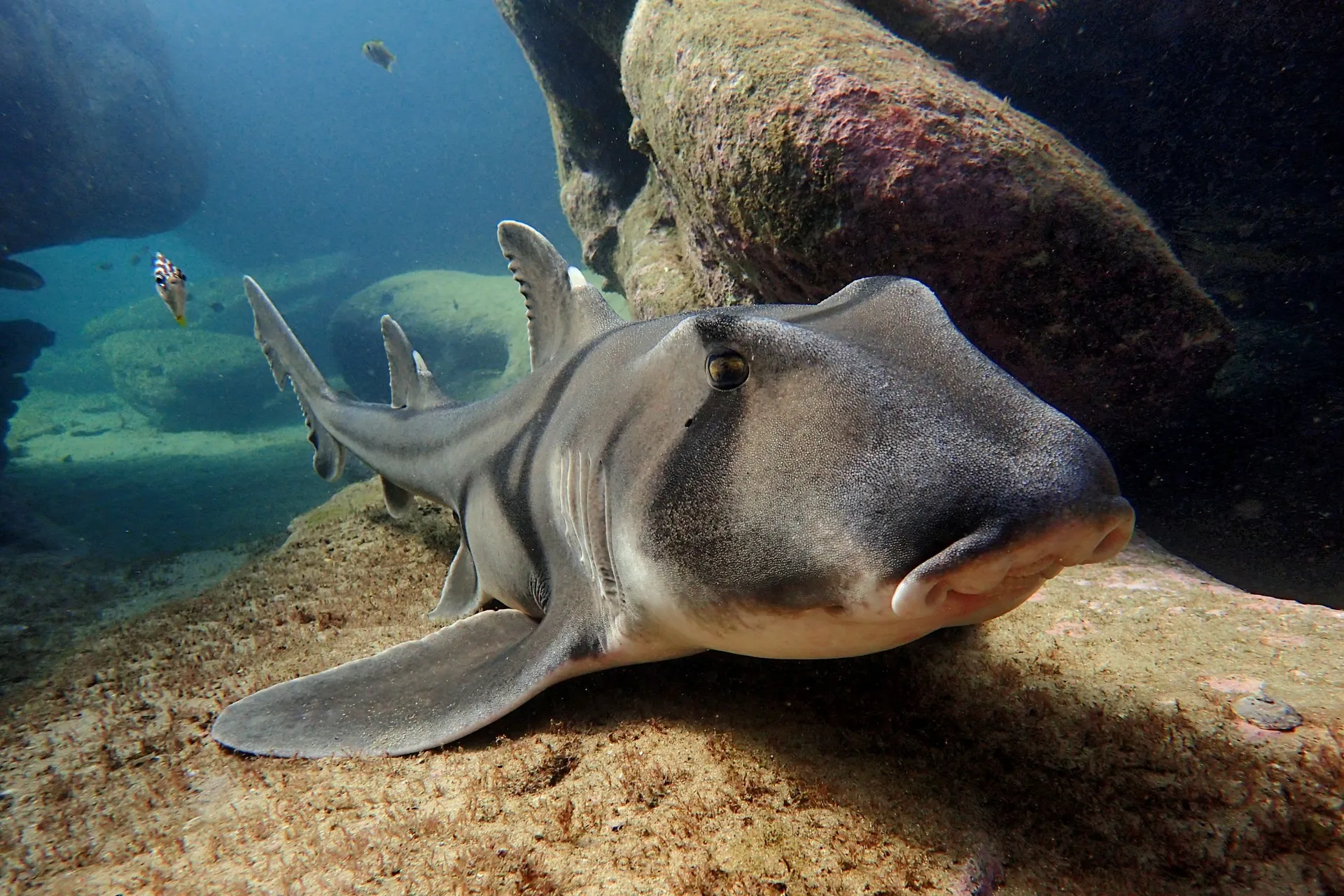
Sheltering on the reef
Go deeper
Size & biology
- Birth: 110–160cm.
- Matures: female 450–500cm; male 360–400cm.
- Max. TL: 600cm.
- Age at maturity: female 14 years; male 9–10 years. Max. age est.: 70 years.
- Ovoviviparous, litters of 2–14 pups after a 12 month gestation followed by a resting phase.
- Reproductive cycle thought to take 2–3 years. Embryos feed on unfertilised eggs (oophagy).
- Endothermic, able to maintain body temperature above water temperature.
- Generalist predator, feeds on teleosts, elasmobranchs and marine mammals. Prey preference changes with life stage.
Conservation status
IUCN Red List: Global: Vulnerable (2019) Europe: Critically Endangered (2015) Mediterranean: Critically Endangered (2016) Long lived and slower growing than previously thought, the White Shark’s life history characteristics and curious nature make it vulnerable to accidental capture from inshore fisheries.
Management
Subject to prohibitions under the CFP, RFMO and FNA regulations. Subject to additional international regulations.
Commercial importance
A popular species in shark ecotourism and sports fishing. Taken as bycatch in commercial fisheries. Meat and fins occasionally used for consumption and liver oil for vitamins. Jaws and teeth are used in the curio trade.
References & further reading
Assessment: WSH/NEA/2020
- Boldrocchi et al.
- Ebert & Stehmann.
- Ebert et al.
- Soldo et al.
- Skomal et al.
- Hamady et al.
- Natanson & Skomal.
- Sato et al.
- Hussey et al.