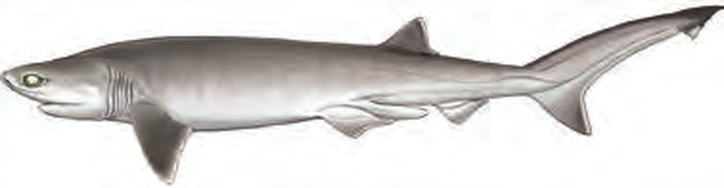
Bluntnose Sixgill Shark
Hexanchus griseus (Bonnaterre, 1788)
Near Threatened- Maximum length
- 4.82 m
- Depth range
- From 200 to 2,500m.
- FAO code
- SBL
Meet the Bluntnose Sixgill Shark
- Also known as
- BLUNTNOSE SIXGILL SHARK, Mud Shark, Cow Shark, Sixgill Shark, Grauhai (DEU), Cañabota Gris (ESP), Requin Griset (FRA), Squalo Capo Piatto (ITA), Stompsnuitzeskieuwshaa (NLD), Tubarão-albafar (PRT).
How to identify
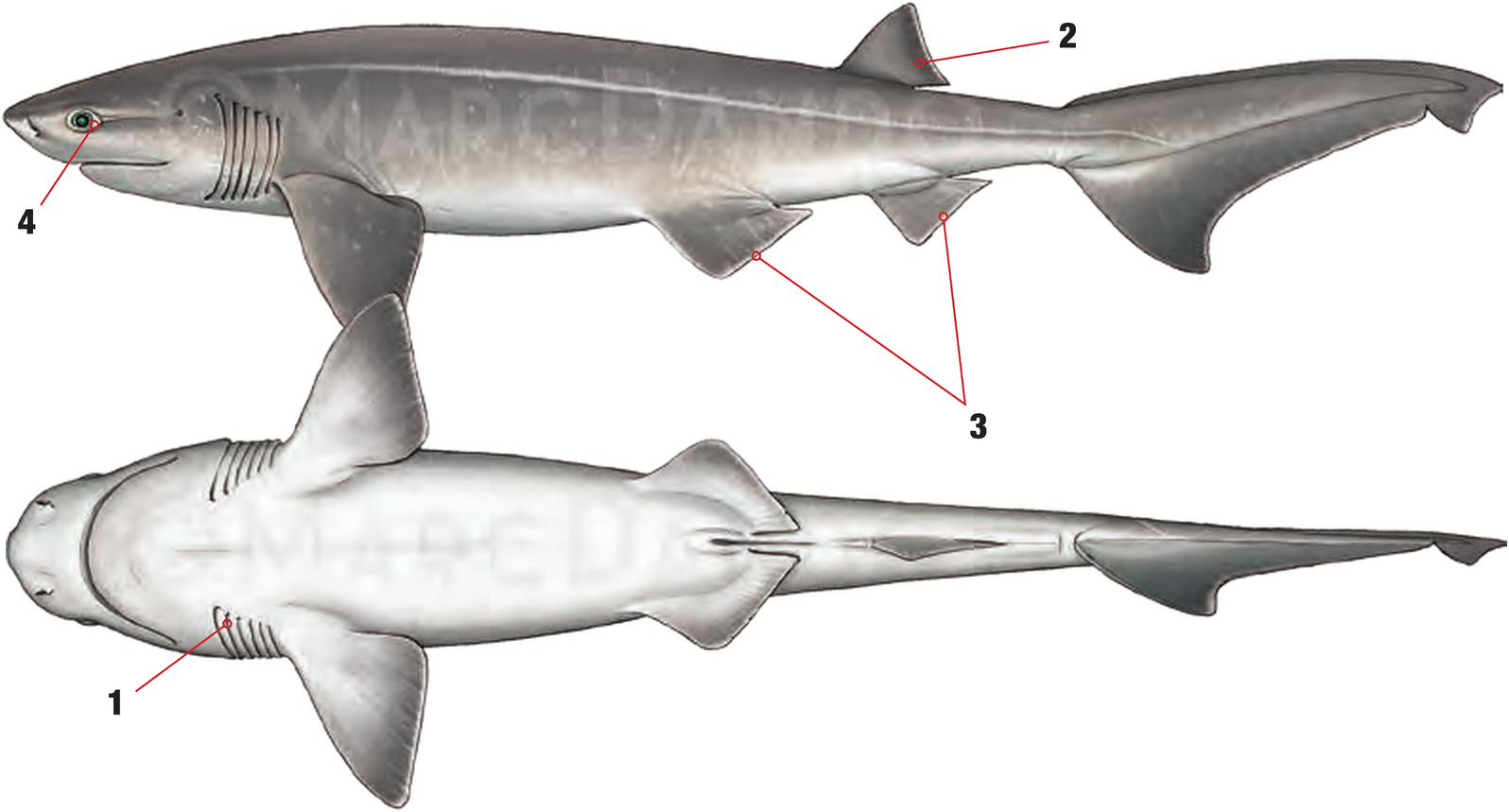
The numbers match the arrows on the illustration.
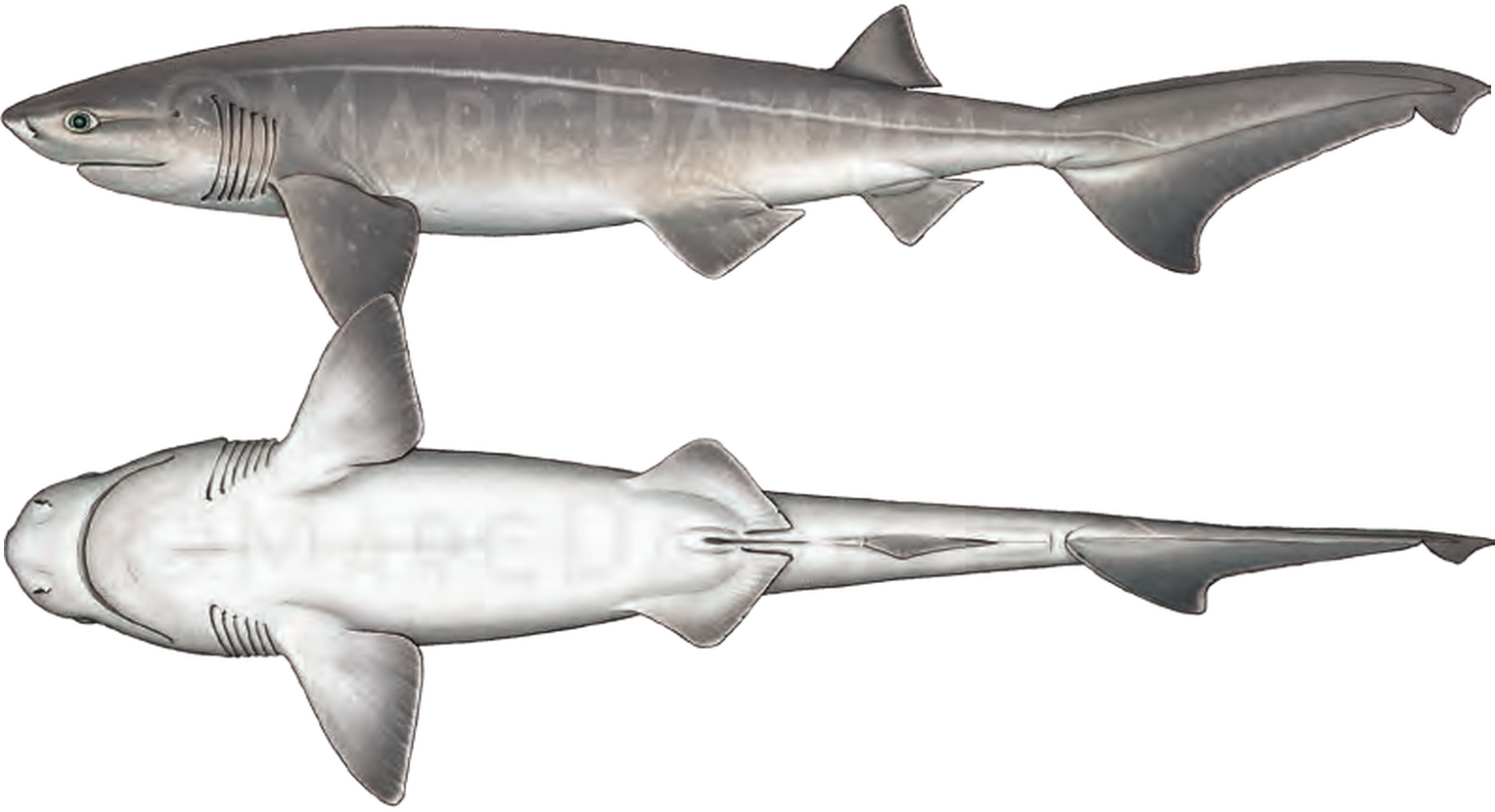
- Six pairs of gill slits.
- Single dorsal fin set back over anal fin.
- Large pelvic and anal fins.
- Fluorescent blue-green eyes in living specimens.
Colouring & markings
- Grey, olive or brown dorsally. Lighter lateral line along each flank.
- Pale ventrally. Fins may have pale margins.

Teeth
Upper jaw: 26–46; first two narrow cusped. Lower jaw: 19–38; in six rows of comb-like teeth either
How big do they get?
Where they live
Distribution
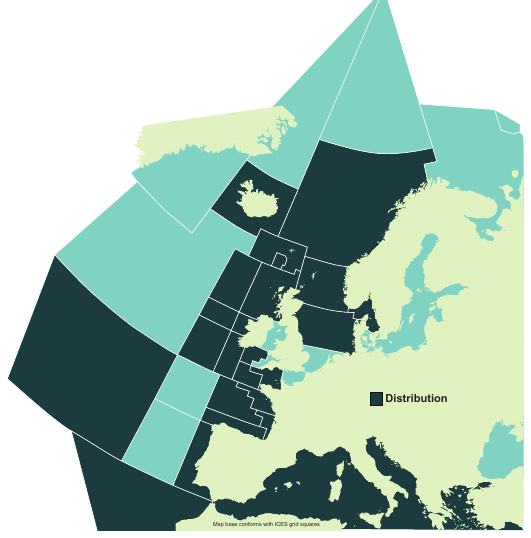
Patchy, circumglobal distribution in tropical, temperate and boreal seas. Eastern Atlantic from Iceland and Norway to South Africa including the Azores and along the Mid-Atlantic Ridge. Found in the Mediterranean Sea and Sea of Marmara.
Habitat
Demersal and pelagic shark. Found to 2,500m, commonly 200–1,100m over continental shelves, slopes, seamounts and ridges. Occasionally found inshore and inside bays and estuaries in cold water and where the continental shelf is narrow. Size segregation occurs by depth: juveniles often found inshore, with larger specimens moving into deeper water. May be capable of longer distance movements in the open ocean.
In the wild
-
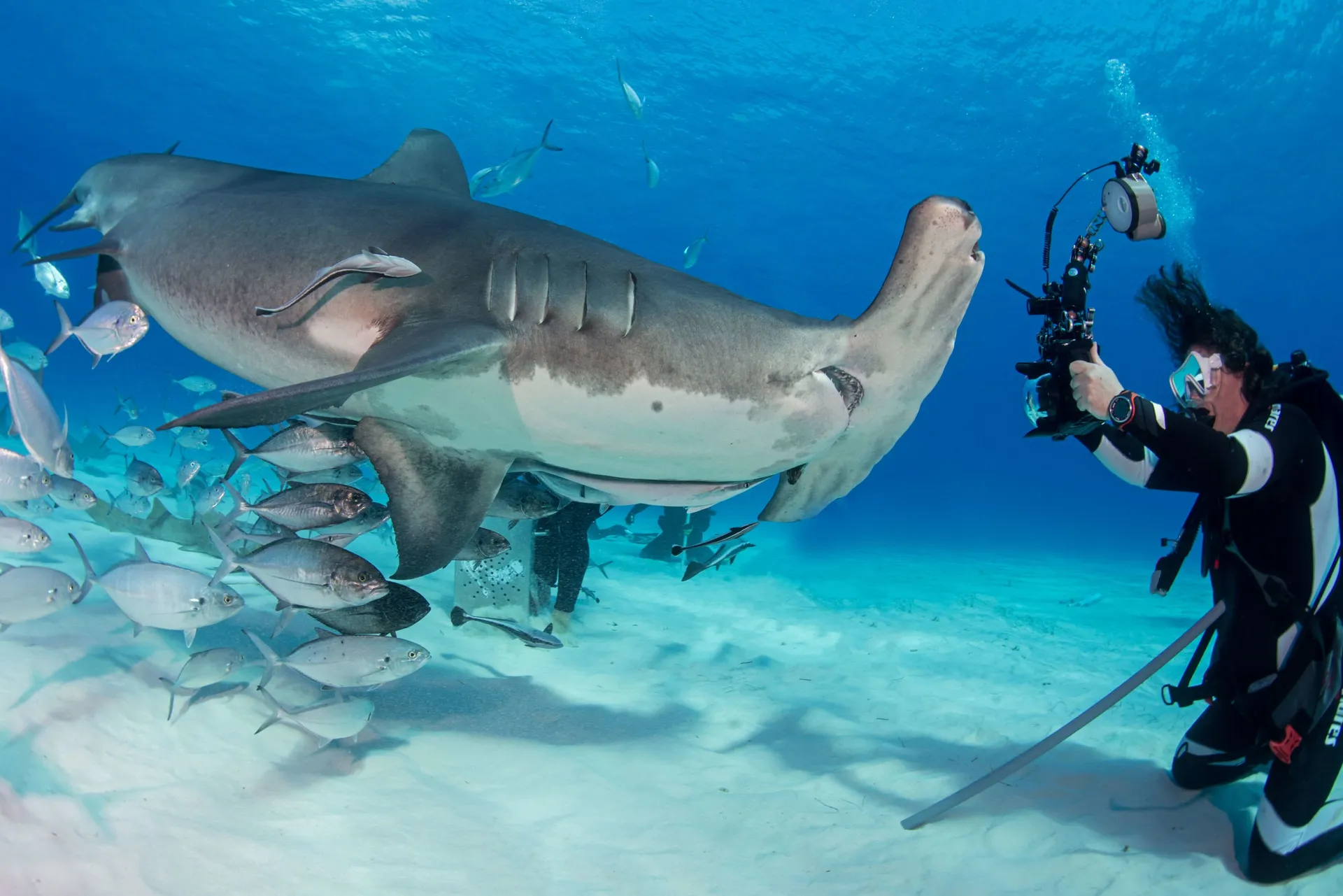
Recorded on a Shark Trust survey dive -
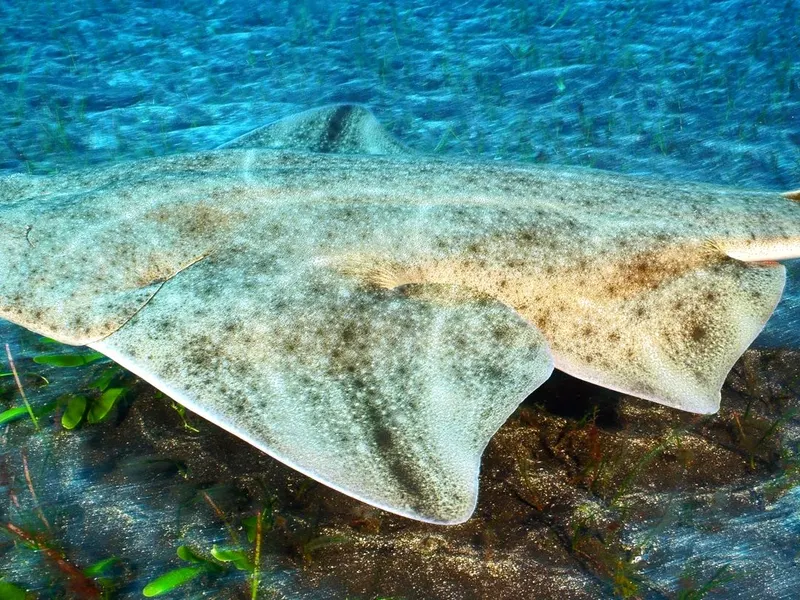
Resting on a sandy seabed -
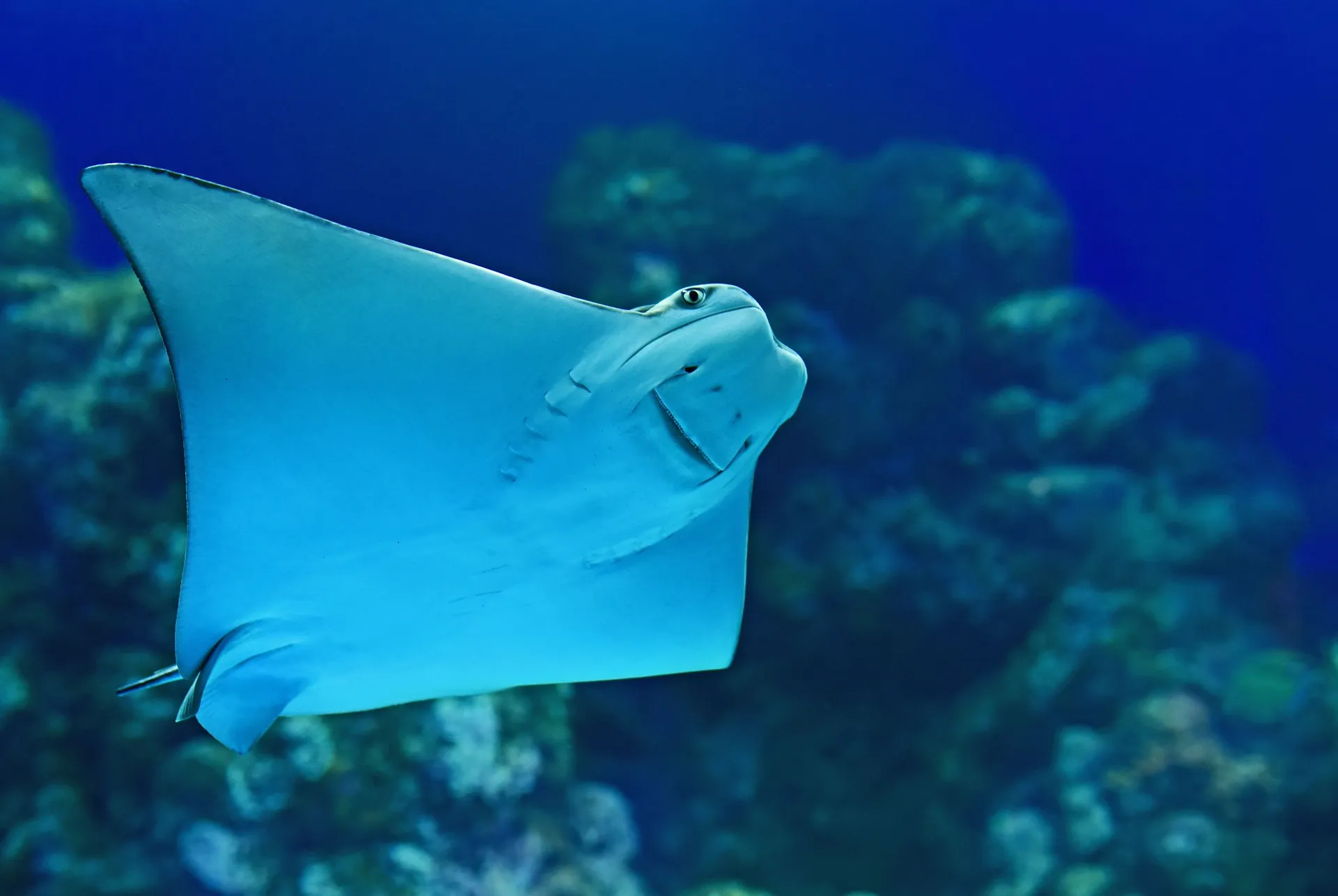
Cruising close to the sea floor -
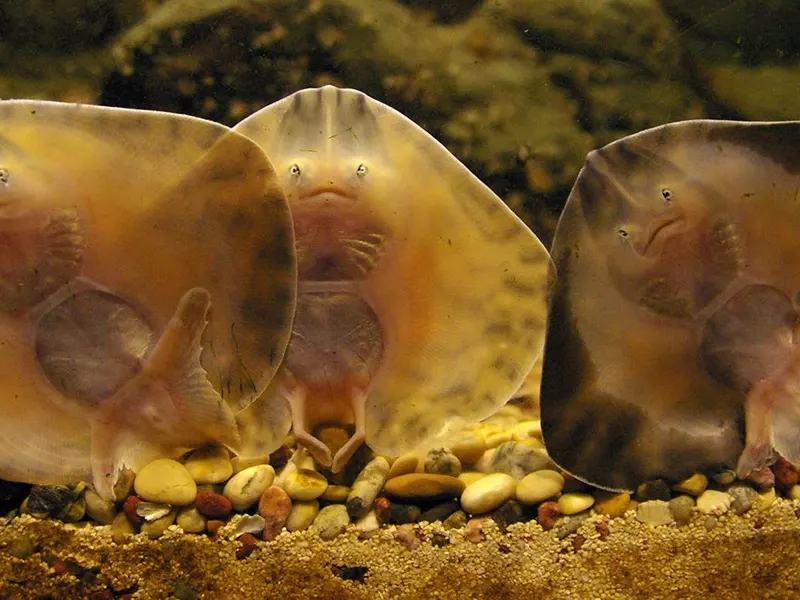
In the shallows at dusk -
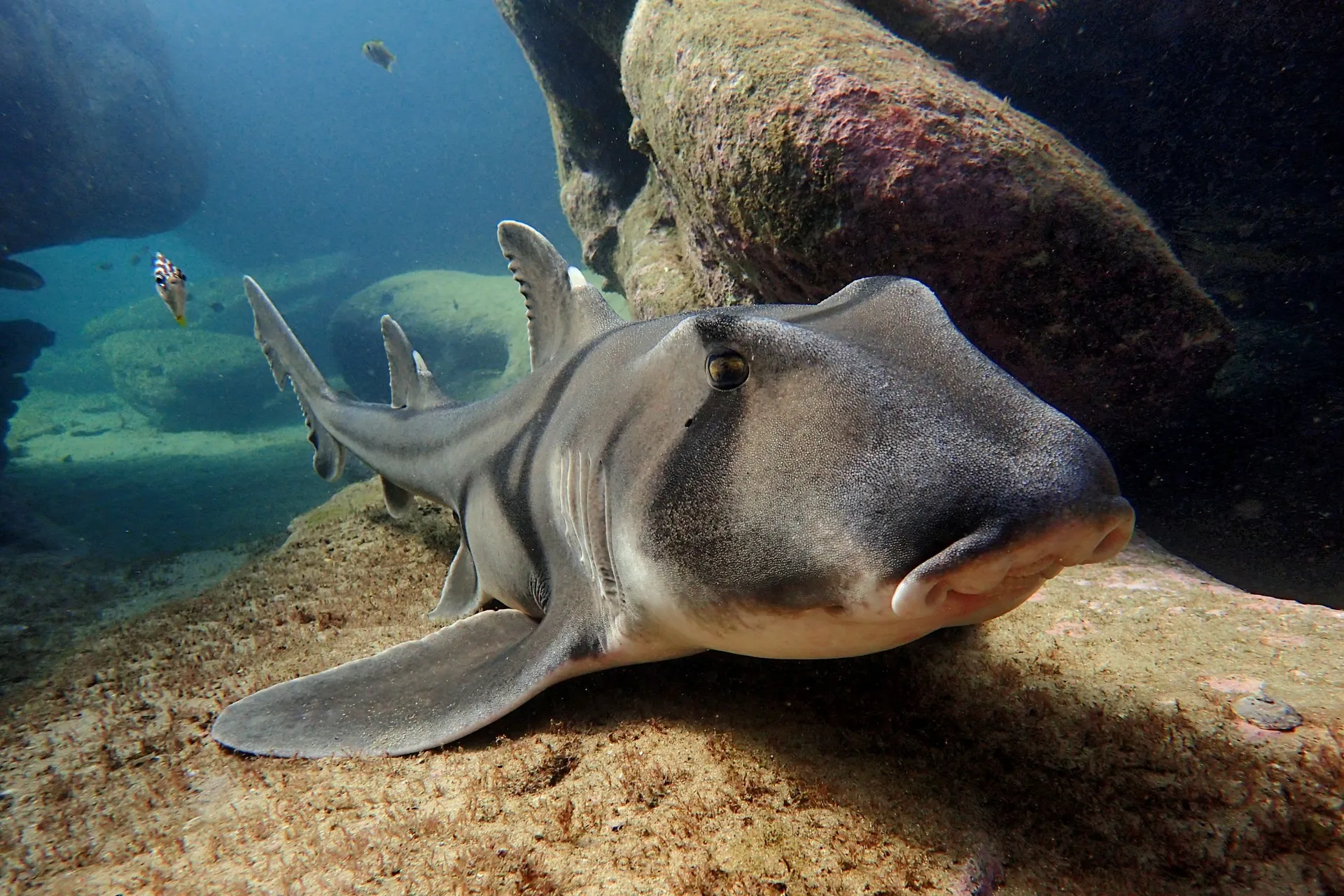
Sheltering on the reef
Go deeper
Size & biology
- Birth: 61–74cm.
- Matures: female 350–420cm; male 309–330cm.
- Max. TL: 482cm, probably 550cm.
- Ovoviviparous, 47-108 pups each litter.
- Females may have a biennial reproductive cycle, with a 12 month gestation followed by a 12 month resting phase.
- Nocturnal predator feeds on teleosts, elasmobranchs, marine mammals and cephalopods.
- Diet changes with growth with adults predating on larger prey.
Conservation status
IUCN Red List: Global: Near Threatened (2009) Europe: Least Concern (2015) Mediterranean: Least Concern (2016) Insufficient population and fisheries data exist for this species. No strong evidence of a historical decline in European waters, however slow life history characteristics make this shark vulnerable to fishing pressure. Improved monitoring is required.
Management
Subject to prohibitions under the CFP and FNA regulations.
Commercial importance
No target fisheries in North Atlantic; taken as bycatch across its range in line gear, trawls, gillnets and traps. Meat used for human consumption and processed into fishmeal; liver processed into oil. Economically important species for dive ecotourism operators in British Columbia, Canada.
References & further reading
Assessment: SBL/NEA/2020
- Ebert & Stehmann.
- Ebert et al.
- Kabasakal, H.
- Rafrafi-Nouira et al.
- Ebert et al.
- Walls et al.