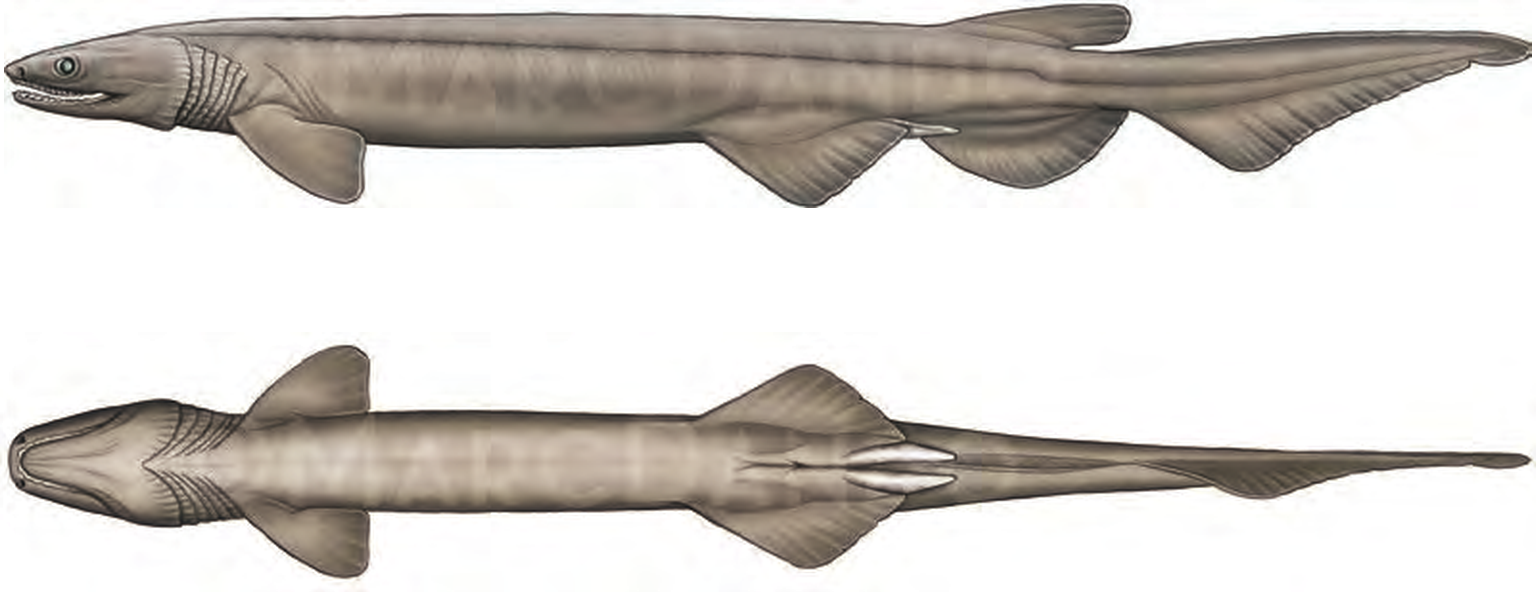
Frilled Shark
Chlamydoselachus anguineus Garman, 1884
Least Concern- Maximum length
- 1.96 m
- Depth range
- From 20 to 1,500m. Primarily 500 to 1,000m.
- FAO code
- HXC
Meet the Frilled Shark
- Also known as
- FRILLED SHARK, Frill-Gilled Shark, Lizard Shark, Scaffold Shark, Silk Shark, Kragenhai (DEU), Tiburón Lagarto (ESP), Requin Lézard (FRA), Squalo Serpente (ITA), Franjehaai (NLD), Tubarão-cobra (PRT).
How to identify
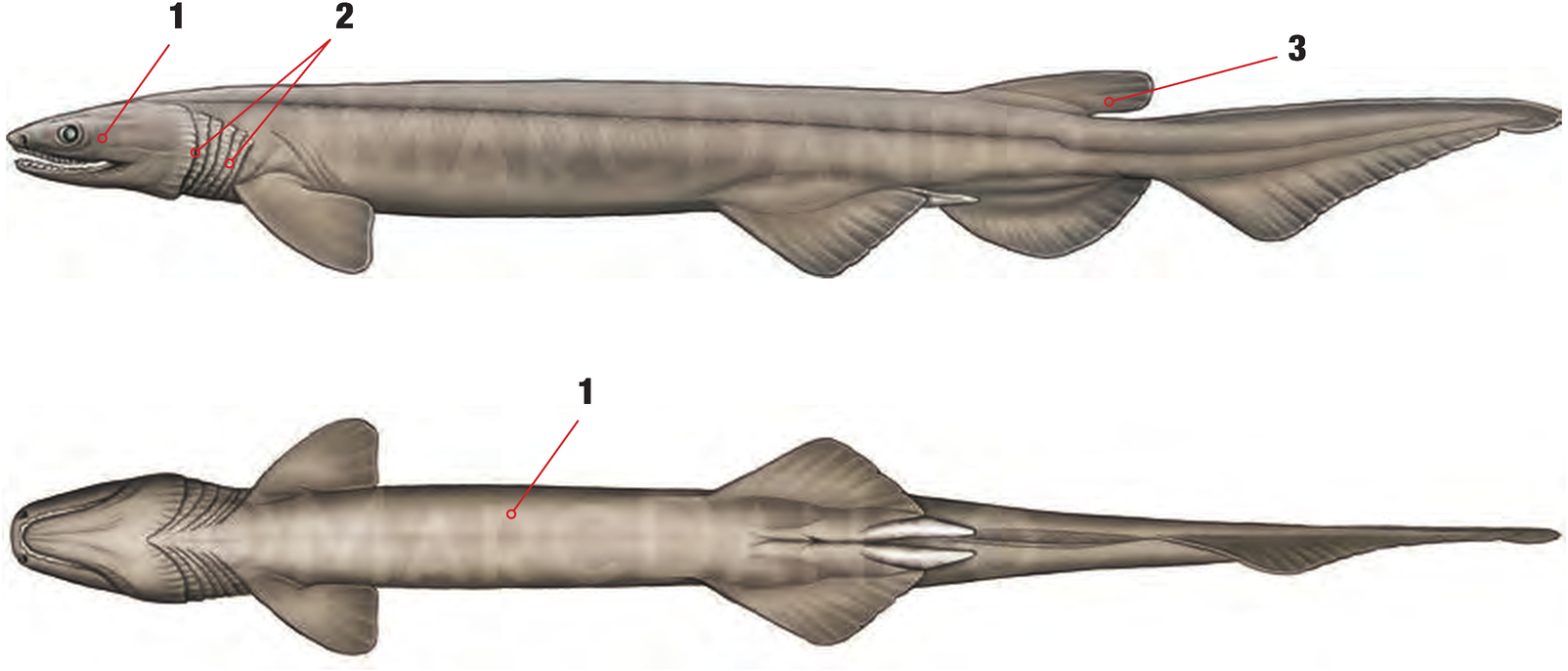
The numbers match the arrows on the illustration.
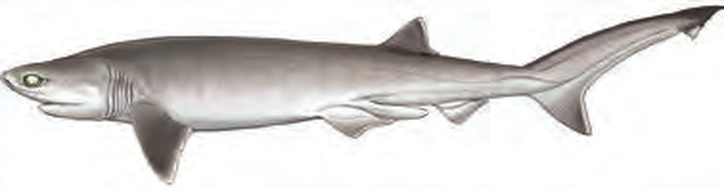
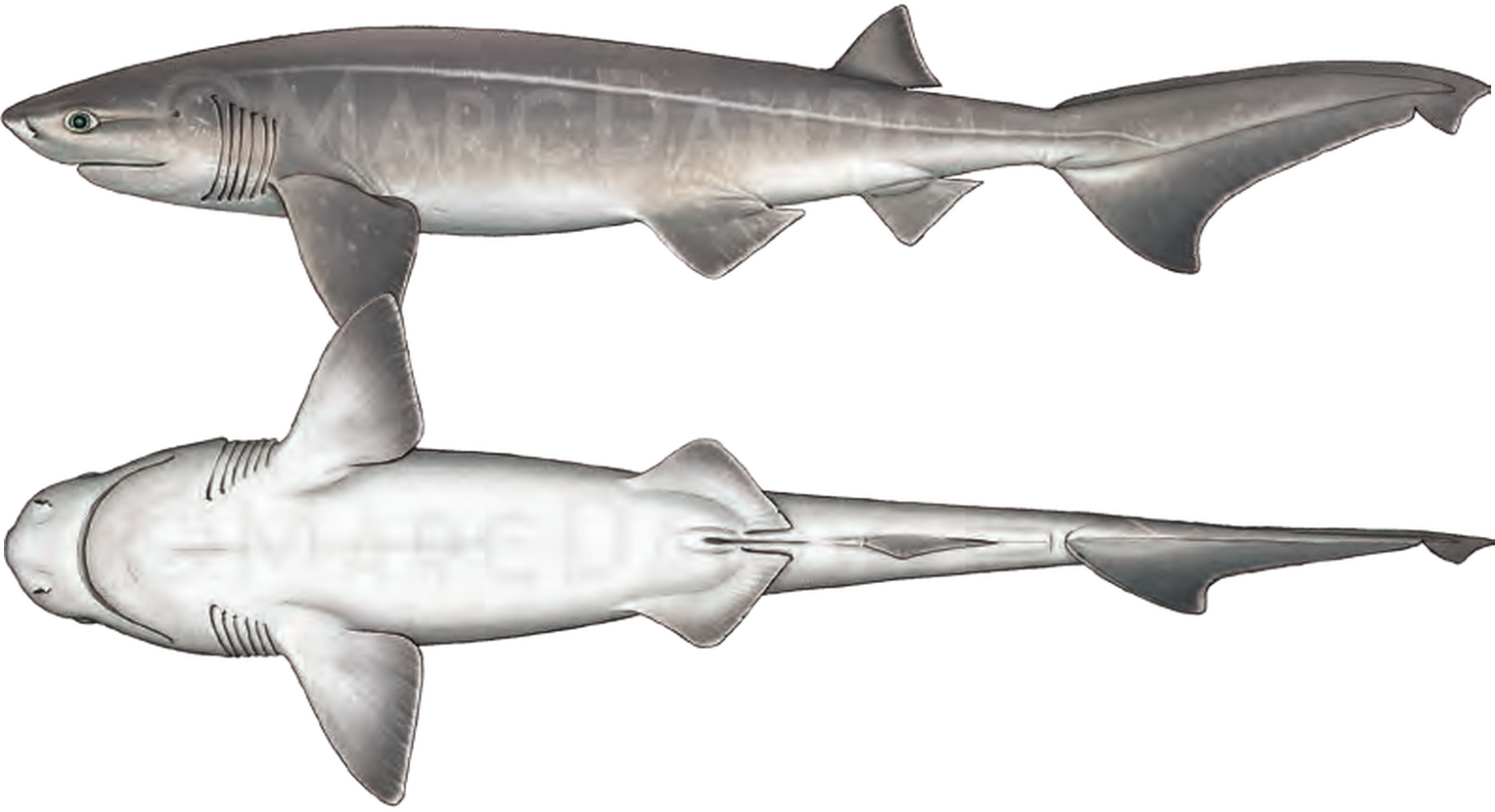
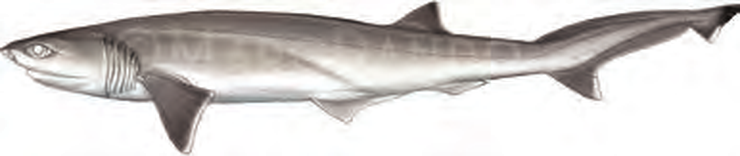
- Thin, eel-like body with flattened, snake-like head.
- Six pairs of large gill slits (1st pair joined ventrally) with frilled edges.
- Single dorsal fin set back on body, smaller than anal fin.
Colouring & markings
- Uniform deep brown to grey with lighter lateral line.
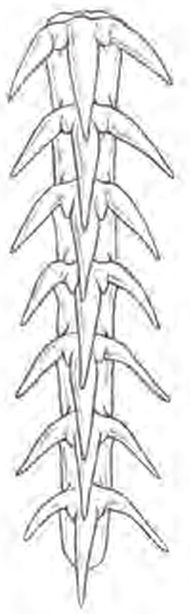
Teeth
Tricuspid, needle-sharp teeth in both jaws; small cusplet present between each cusp. Teeth on both jaws curved inwards. Upper jaw: 19–28. Lower jaw: 21–29.
How big do they get?
Where they live
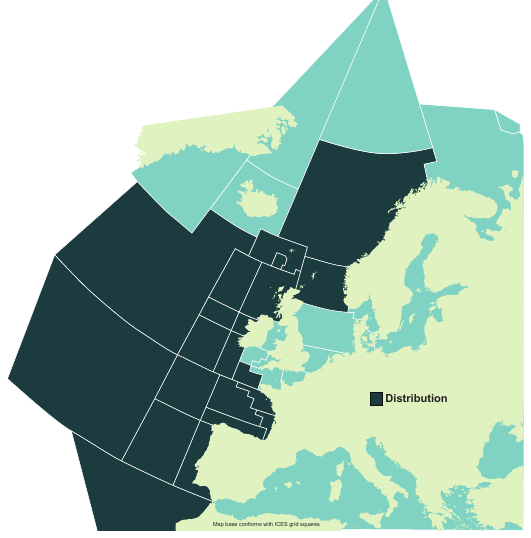
Distribution
Widespread but patchy distribution in Atlantic and Pacific Oceans. Eastern Atlantic from northern Norway, Atlantic slope off northern Scotland and western Ireland, Iberian Peninsula and North Africa; also along the Mid- Atlantic Ridge north of the Azores.
Habitat
Deepwater demersal and occasionally epipelagic shark found from 20–1,500m, most commonly 500–1,000m. Found over offshore continental and insular shelves, seamounts and mid-ocean ridges. Also reported as pelagic over upper and middle continental slopes.
In the wild
-
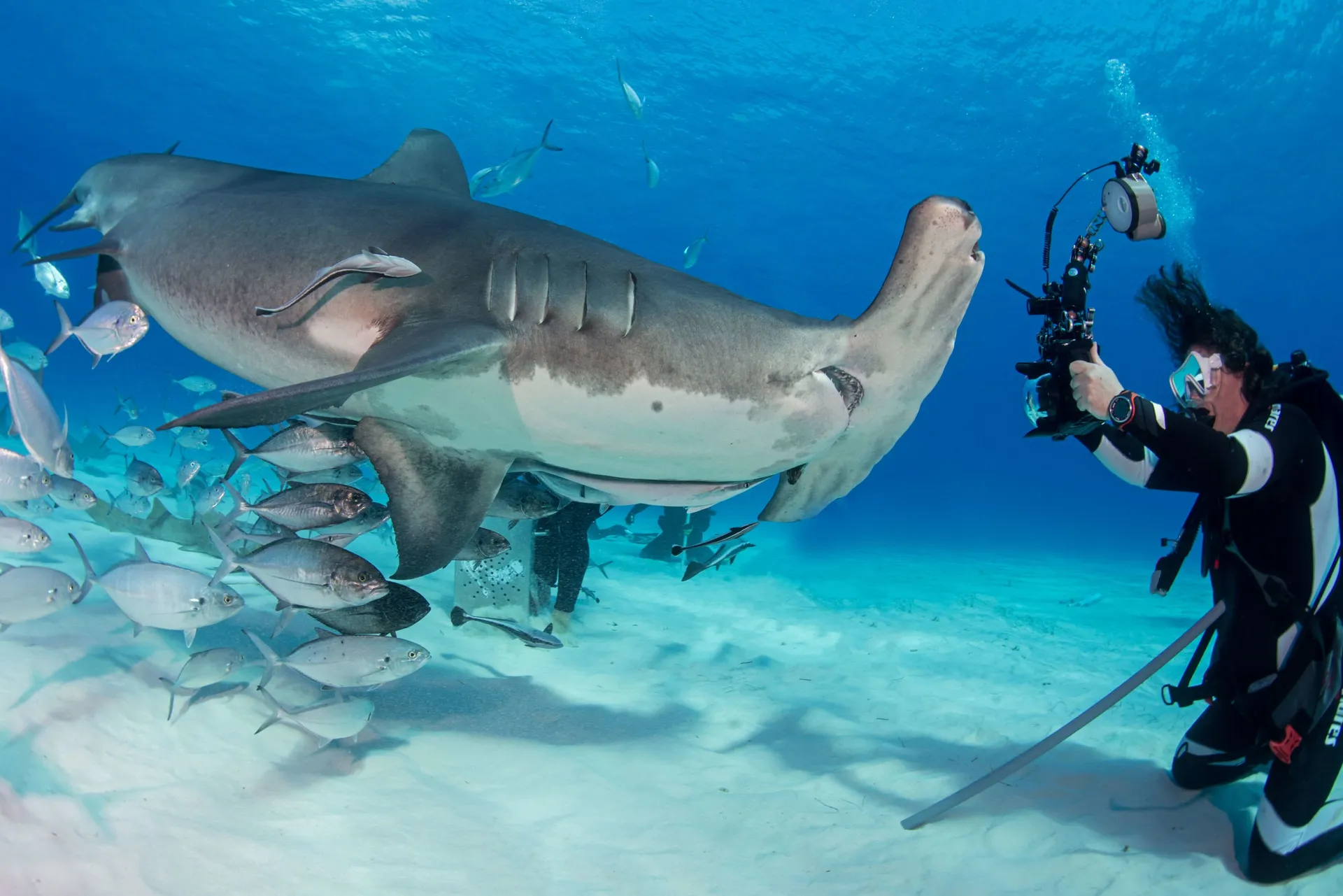
Recorded on a Shark Trust survey dive -
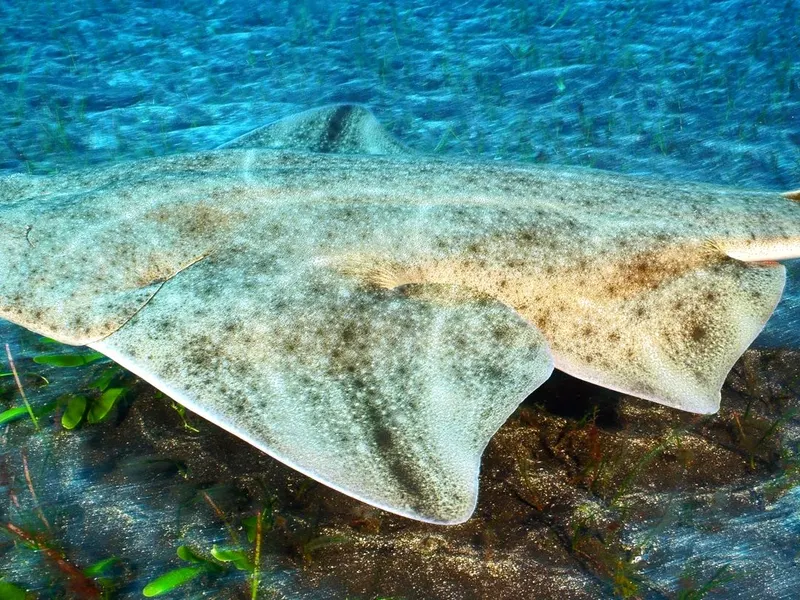
Resting on a sandy seabed -
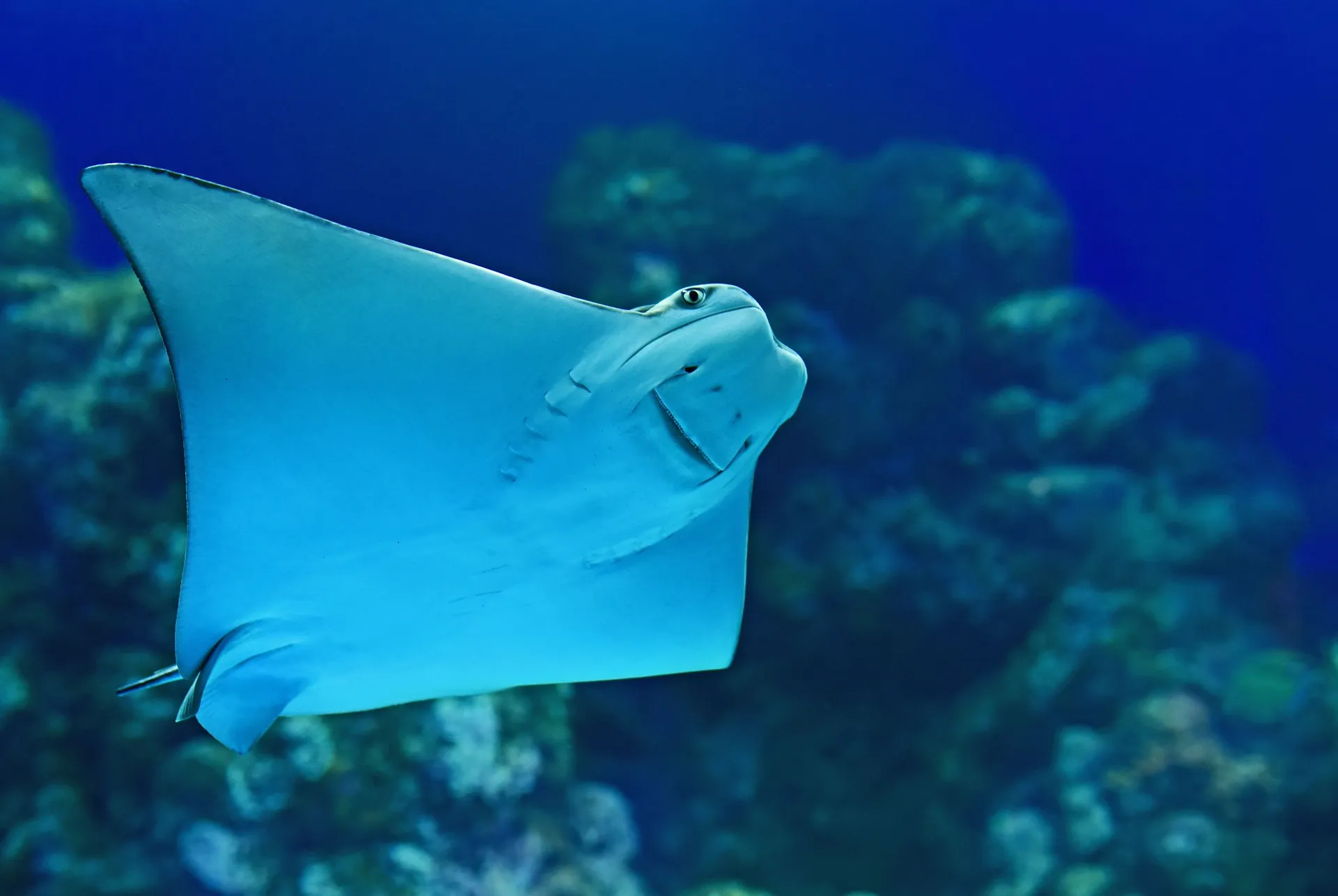
Cruising close to the sea floor -
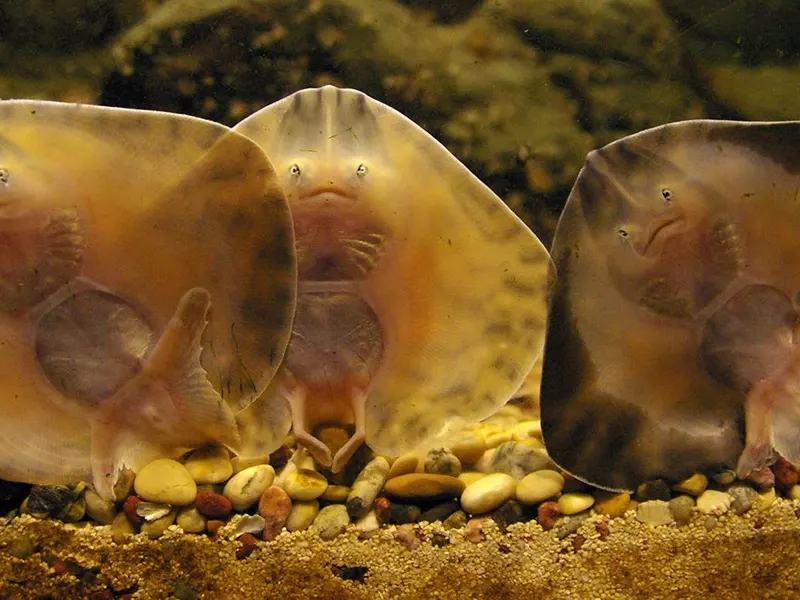
In the shallows at dusk -
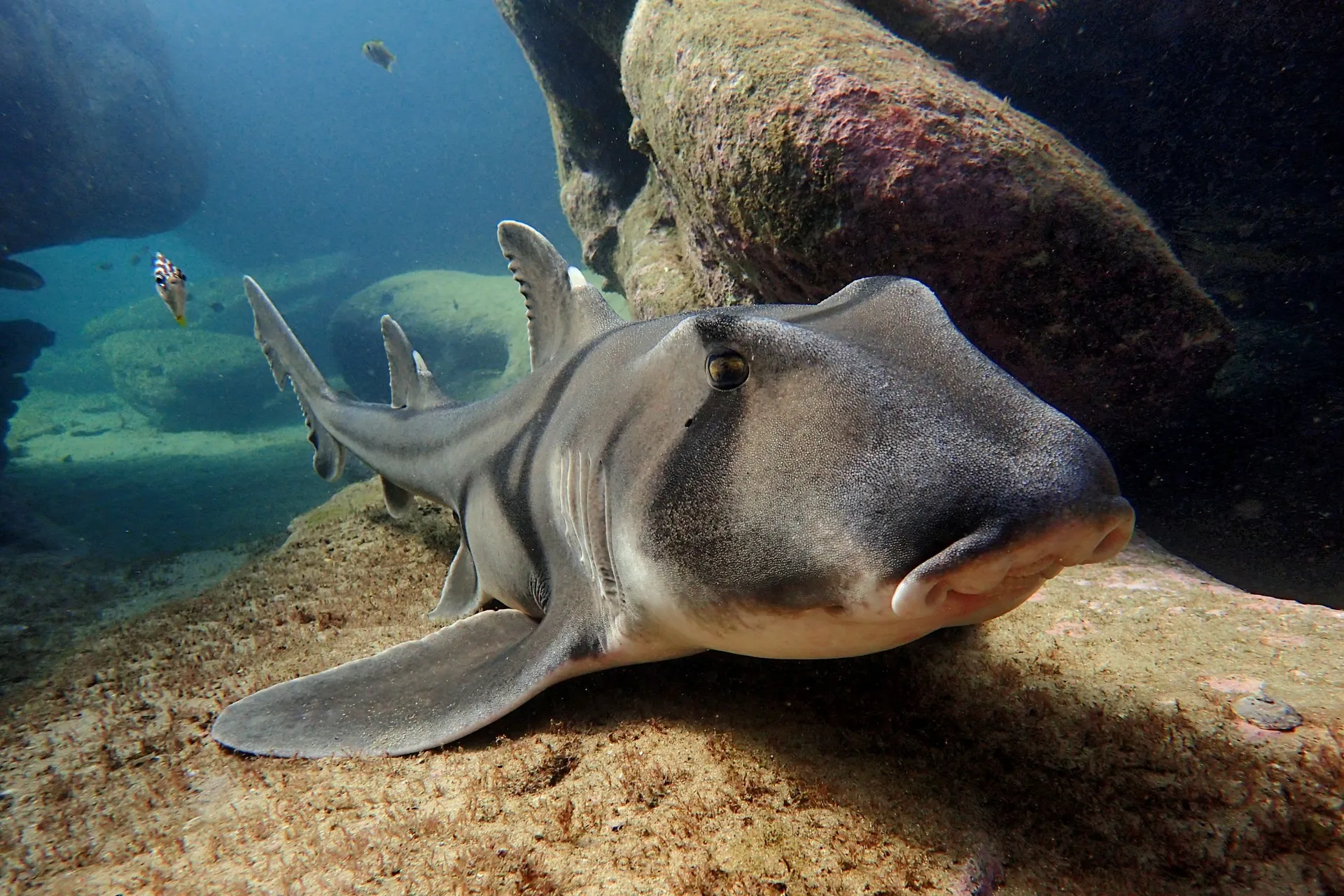
Sheltering on the reef
Go deeper
Size & biology
- Birth: 39–50cm.
- Matures: female 130–150cm; male 118–163cm.
- Max. TL: 196cm.
- Ovoviviparous, litters of 2–15 pups (avg. 6) nourished by large uterine eggs; gestation thought to be 1–2 years. 2-4
- Diet consists of deepwater fishes, cephalopods and small sharks.
- Morphology suggests this species can approach faster- swimming epipelagic prey before making a sudden snakelike lunge.
Conservation status
IUCN Red List: Global: Least Concern (2016) Europe: Least Concern (2015) Although not targeted, this shark’s life history characteristics make it highly vulnerable to overexploitation.
Management
Subject to prohibitions under the CFP and FNA regulations.
Commercial importance
Low commercial importance in Atlantic fisheries; taken occasionally as bycatch in deepwater trawl, longline and gillnet fisheries. In some countries meat is retained for human consumption, also processed into fishmeal.
References & further reading
Assessment: HXC/NEA/2020
- Smart et al.
- Ebert et al.
- Ebert & Stehmann.
- Barnett et al. 2012.