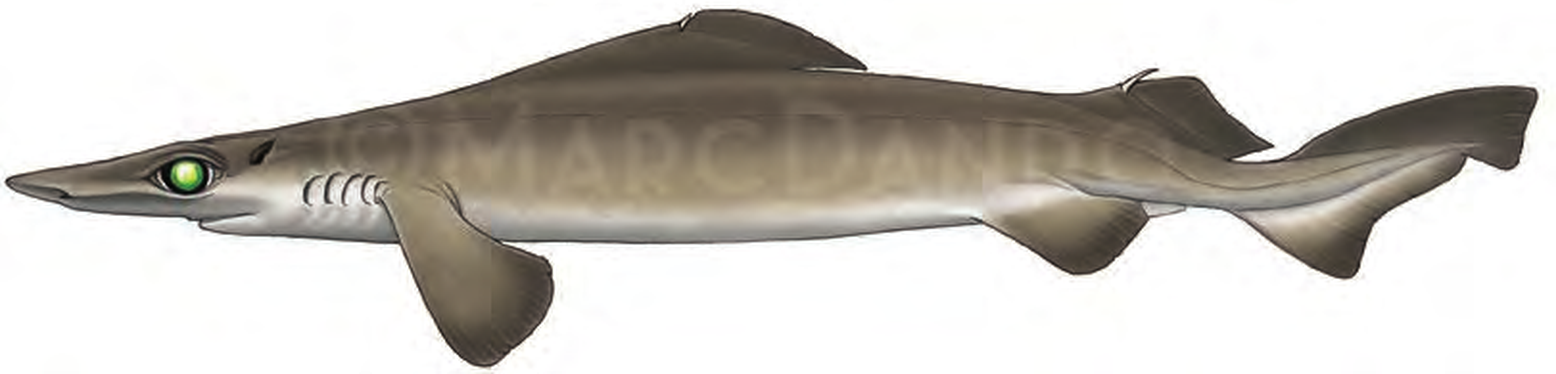
Rough Longnose Dogfish
Deania hystricosa (Garman, 1906)
Data Deficient- Maximum length
- 1.11 m
- FAO code
- SDH
Meet the Rough Longnose Dogfish
- Also known as
- ROUGH LONGNOSE DOGFISH, Rauher Schnabeldornhai (DEU), Tollo Raspa (ESP), Squale-savate Rude (FRA), Ruwe Langsnuitsnavelhaai (NLD).
How to identify
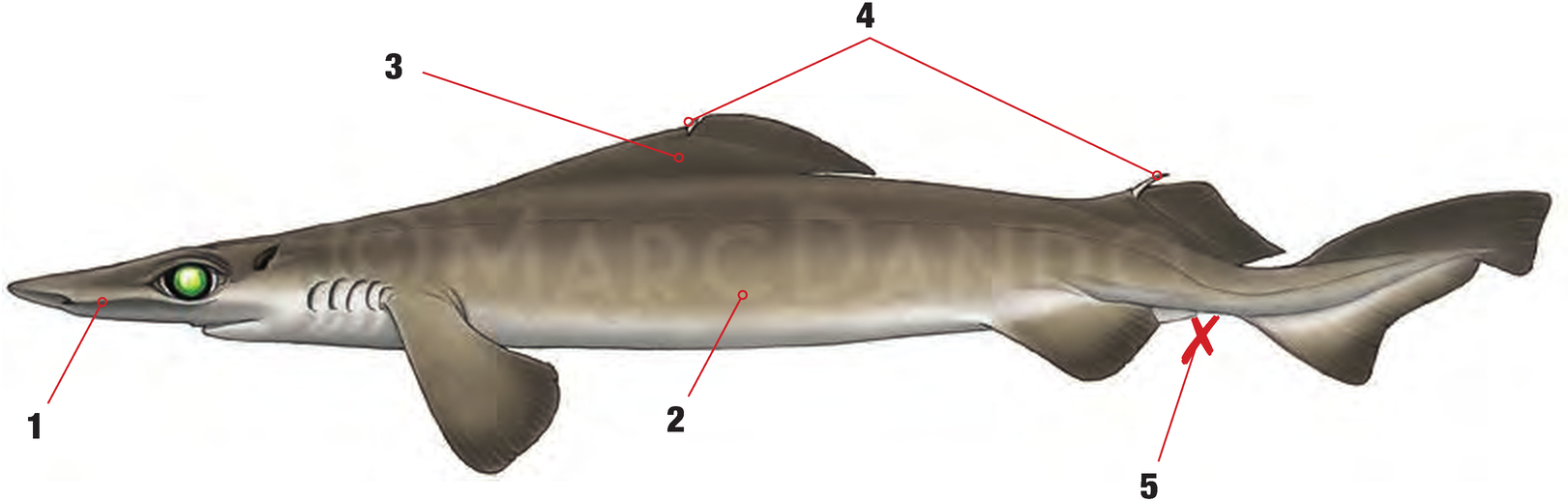
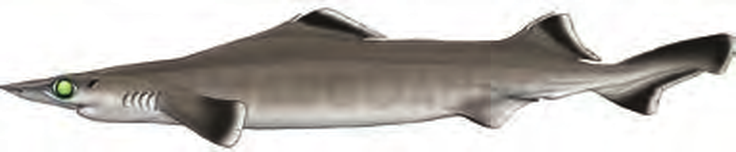
The numbers match the arrows on the illustration.
- Extremely long, flat snout.
- Rough skin with large pitchfork-shaped denticles.
- First dorsal fin very low and elongated.
- Grooved dorsal spines on both dorsal fins; spine on second fin being longer than the first.
- No anal fin.
Colouring & markings
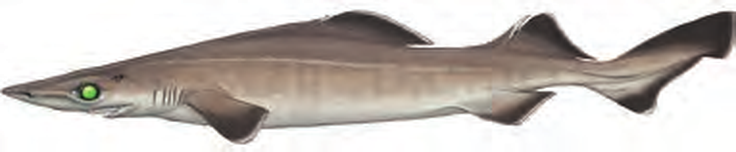
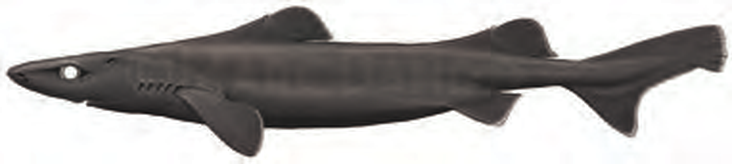
- Blackish-brown to grey-brown.
Teeth
Compressed cutting teeth in both jaws. Tooth counts unknown.
How big do they get?
Where they live
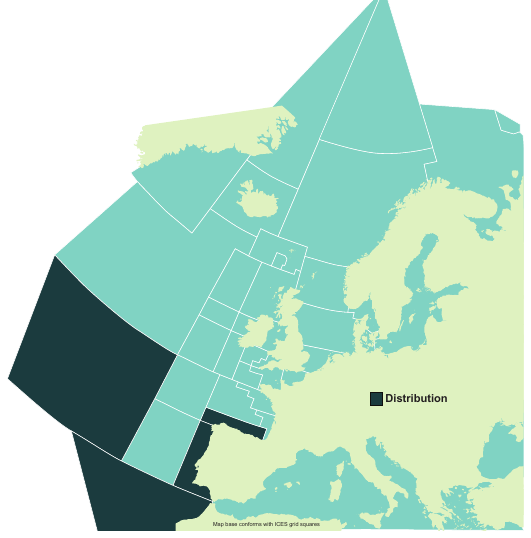
Distribution
Patchy distribution. Eastern Atlantic records from Azores, Madeira and Canary Islands and Galicia Bank (NW Spain). Range may extend northwards to the southwest British Isles. Possibly off Namibia and South Africa. Recorded in the Northwest Pacific off Japan and New Zealand. 1-4
Habitat
Demersal deepwater shark of upper and middle continental and insular slopes and seamounts; from 471−1,394m.
In the wild
-

Recorded on a Shark Trust survey dive -
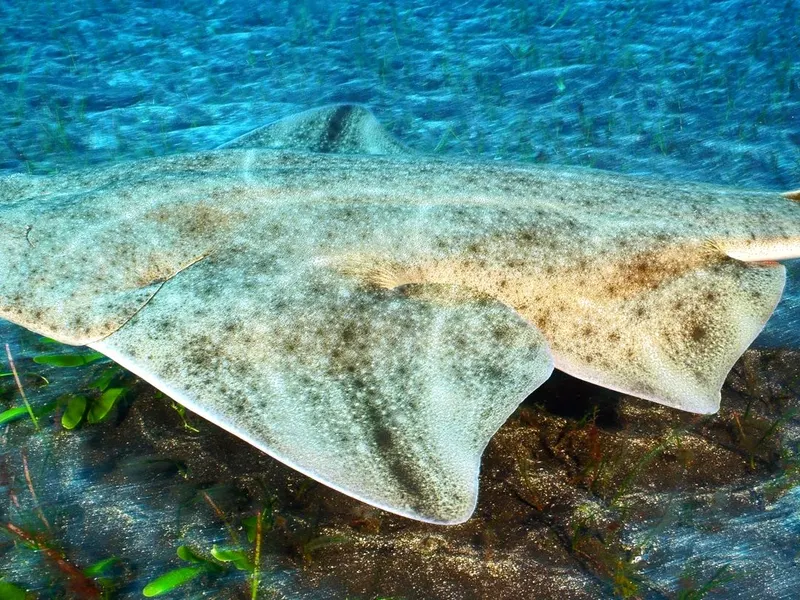
Resting on a sandy seabed -
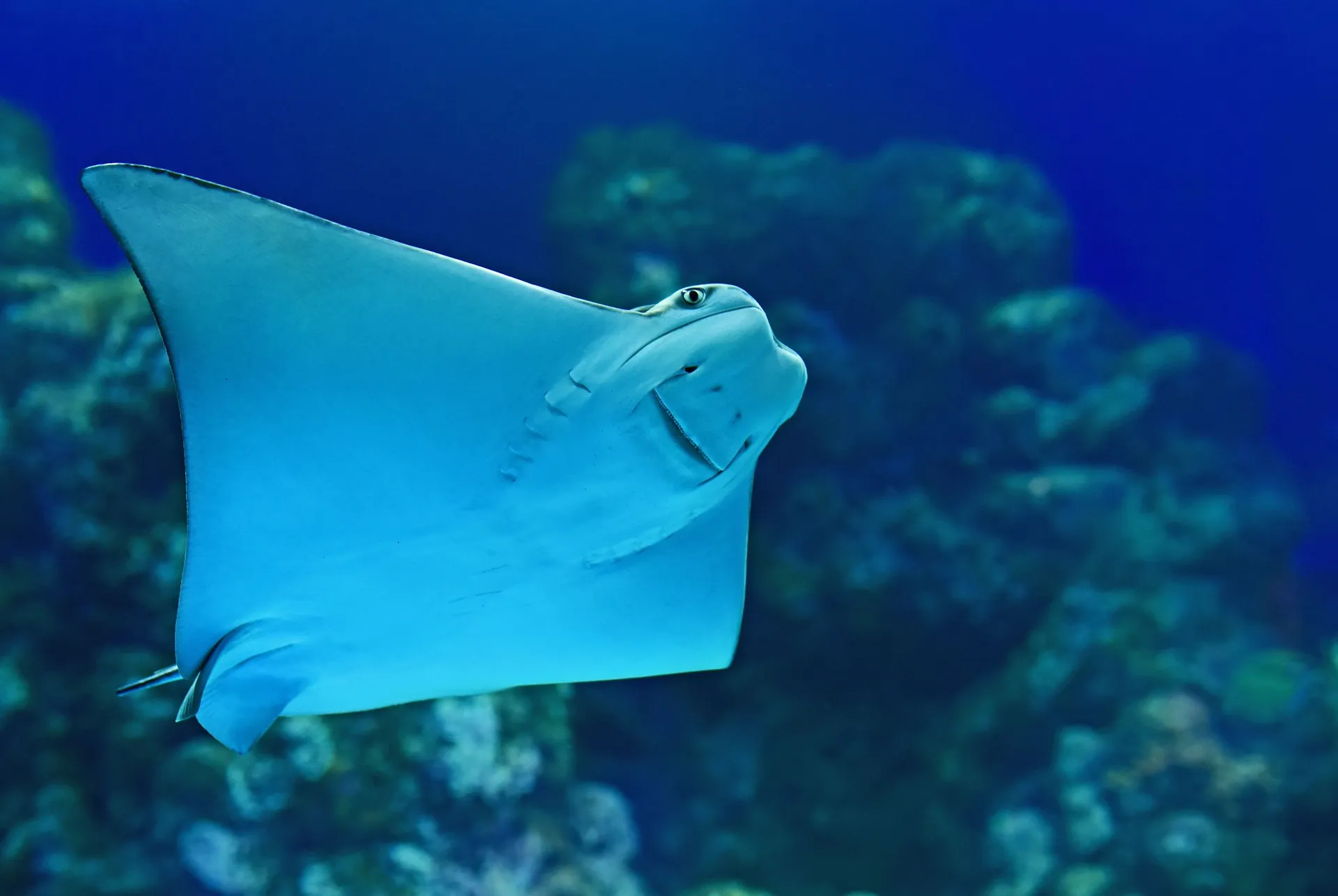
Cruising close to the sea floor -
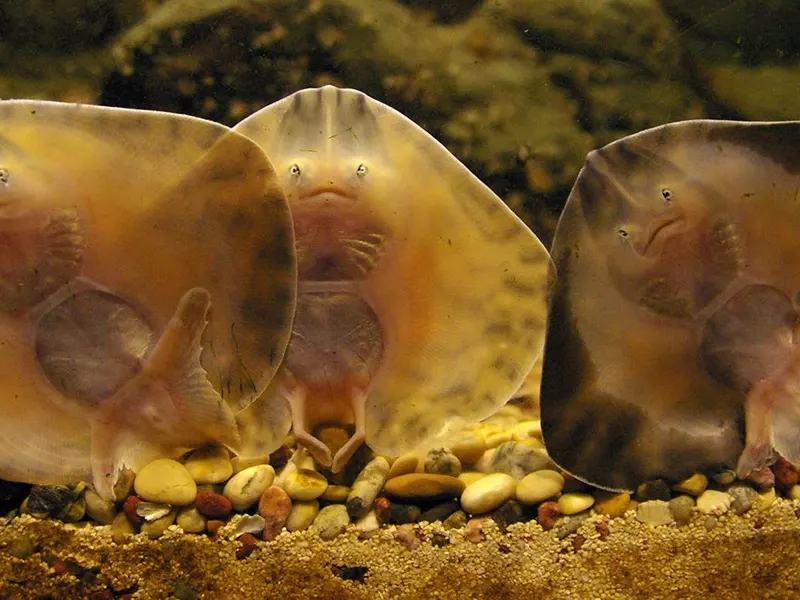
In the shallows at dusk -
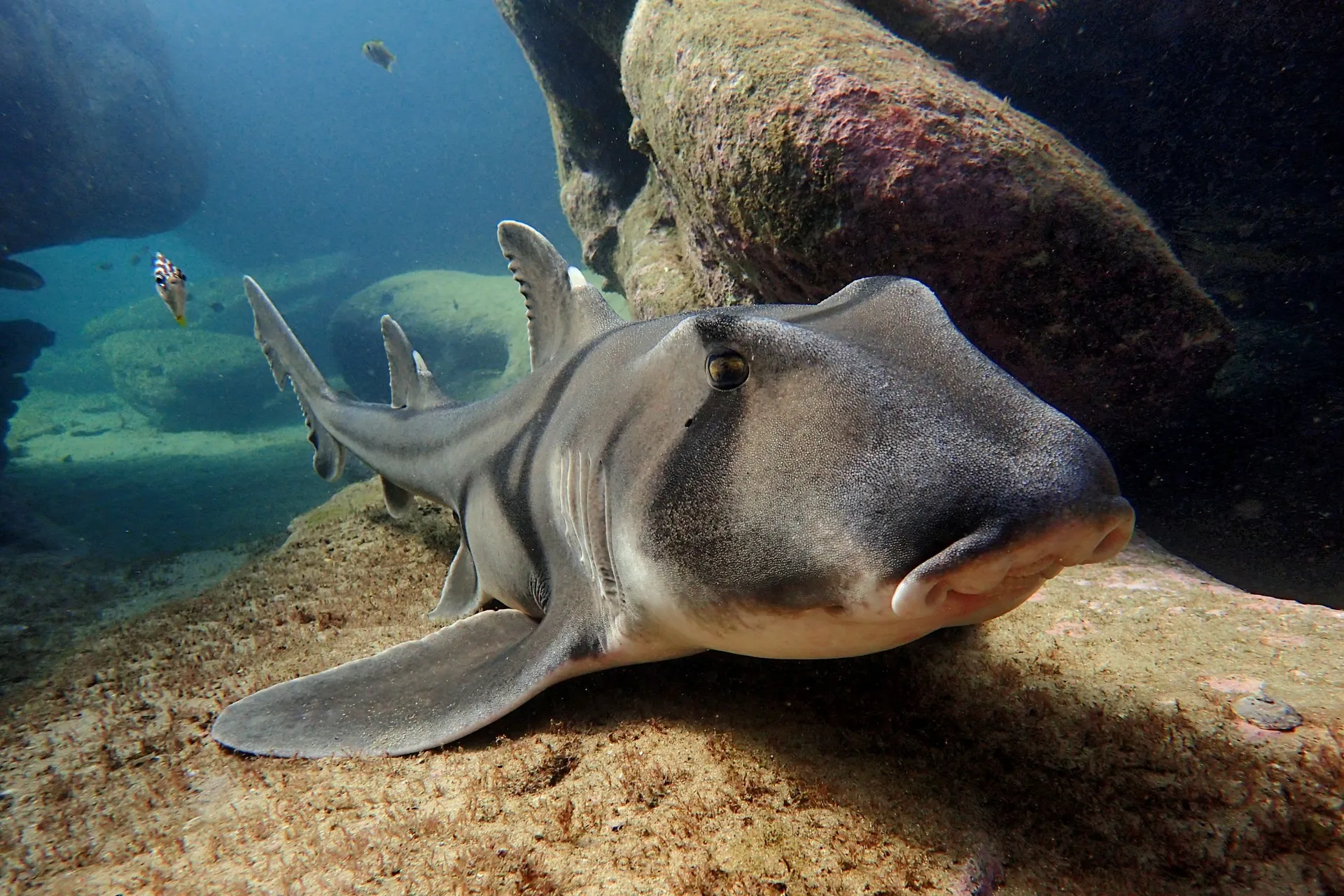
Sheltering on the reef
Go deeper
Size & biology
- Matures: female 92−106cm; male 81−84cm.
- Max. TL: 111cm.
- Viviparous, litter size unknown, one female found with 12 large ovarian eggs.
- Diet unknown.
Conservation status
IUCN Red List: Global: Data Deficient (2009) Europe: Data Deficient (2015) No data available to infer population trends for this shark. Like other deepwater sharks, this species may be vulnerable to overexploitation.
Management
No species-specific management in the Northeast Atlantic. Subject to FNA regulations.
Commercial importance
Minimal commercial importance. Taken in deepwater longline fisheries off Madeira and the Canary Isands targeting Black Scabbardfish, where it is utilised for meat and liver oil. Likely taken as bycatch in deepwater fisheries elsewhere.
References & further reading
Assessment: SDH/NEA/2020
- Ebert & Stehmann.
- Ebert et al.
- Ebert et al.
- Ebert et al.
- Pajuelo et al.