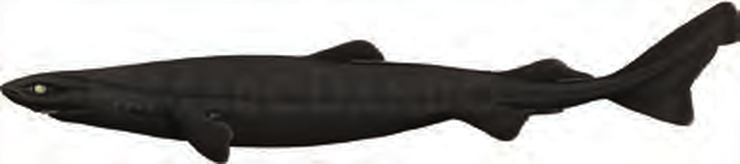
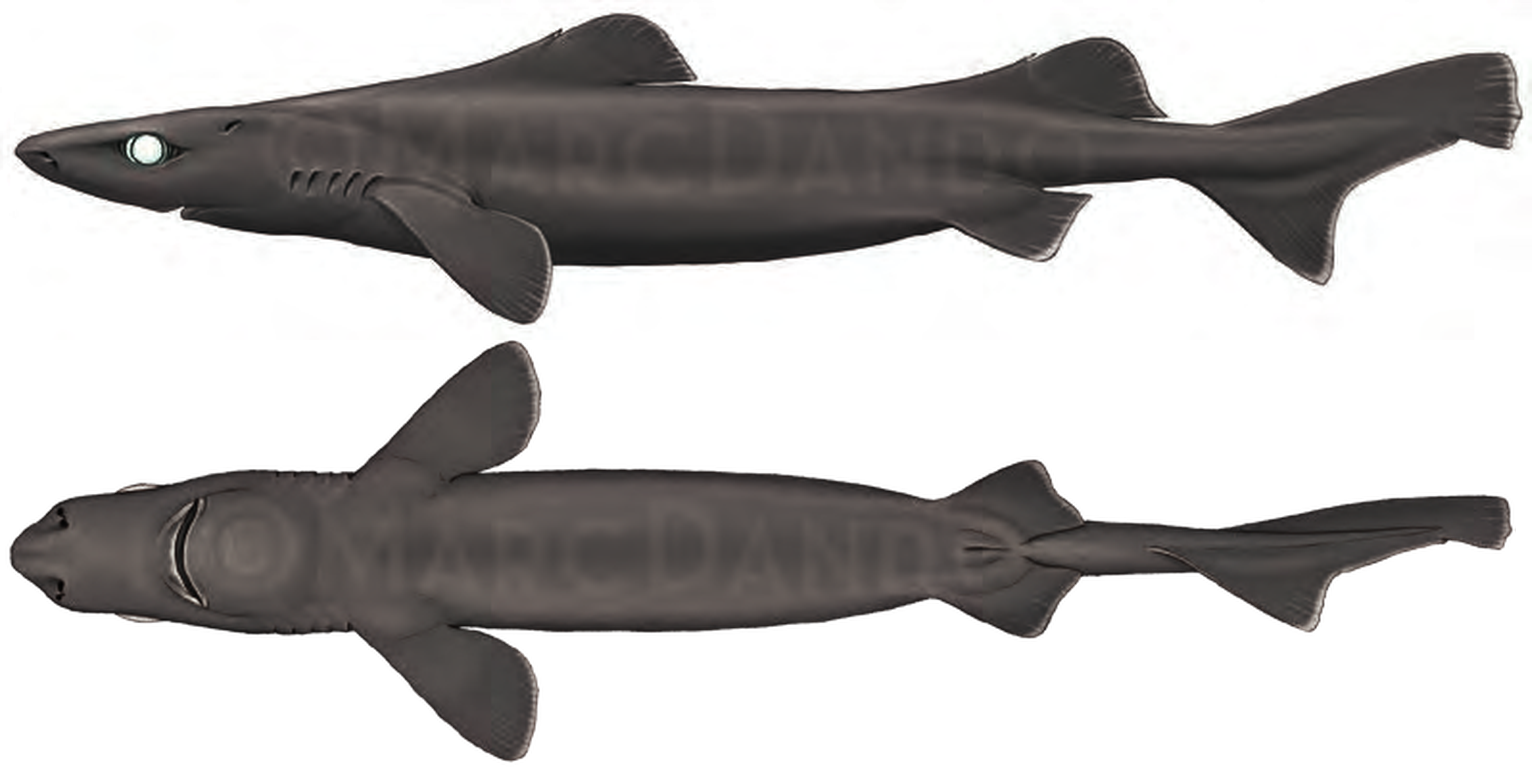
Longnose Velvet Dogfish
Centroselachus crepidater (Barbosa du Bocage & de Brito Capello, 1864)
Near Threatened- Maximum length
- 1.05 m
- Depth range
- From 200 to 2,080m.
- FAO code
- CYP
Meet the Longnose Velvet Dogfish
- Also known as
- LONGNOSE VELVET DOGFISH, Deepwater Dogfish, Golden Dogfish, Roughskin Dogfish, Samtiger Langnasen-Dornhai (DEU), Sapata Negra (ESP), Pailona à Long Nez (FRA), Squalo Musolungo (ITA), Langsnuitijshaai (NLD), Sapata-preta (PRT).
How to identify
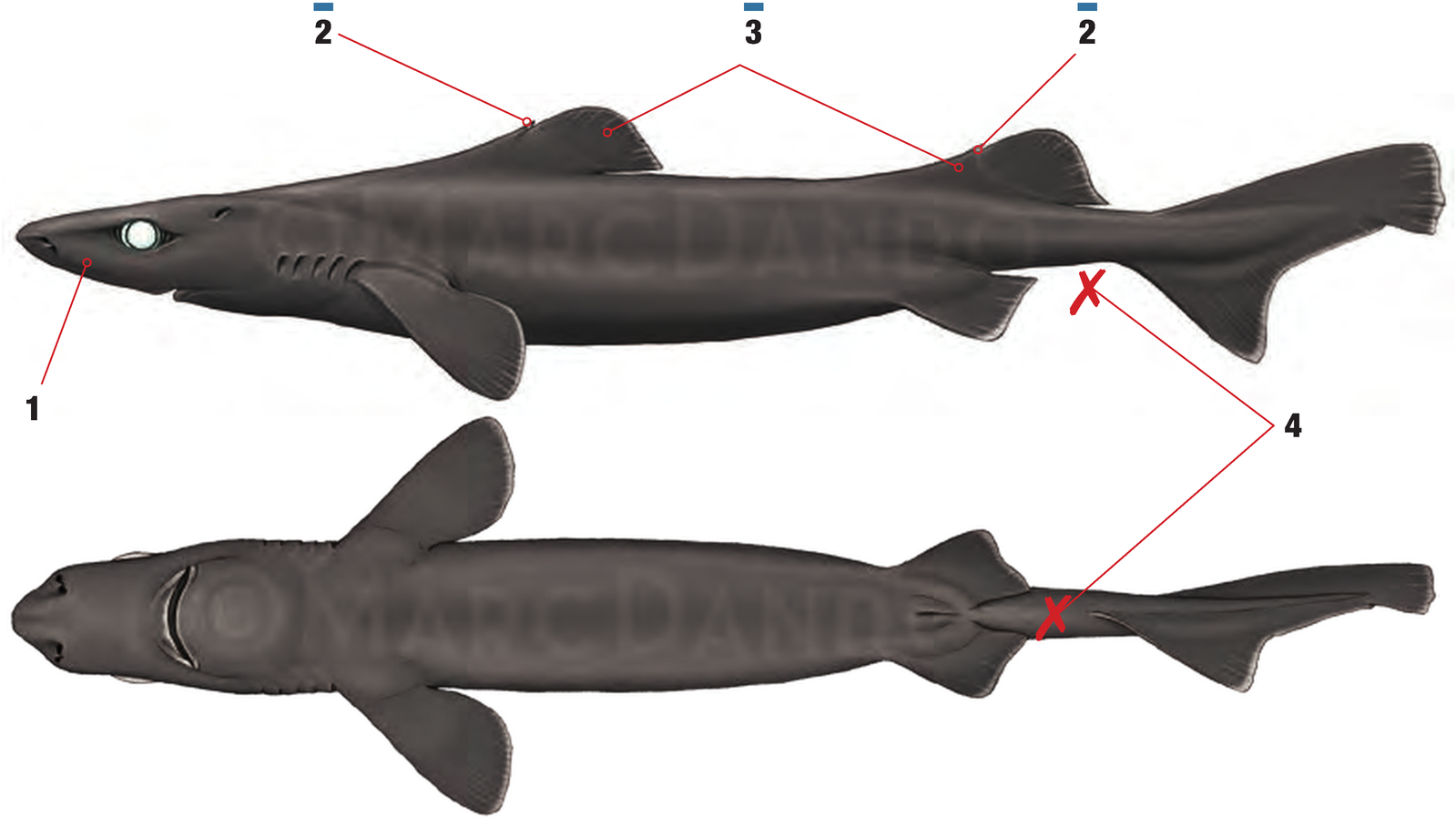
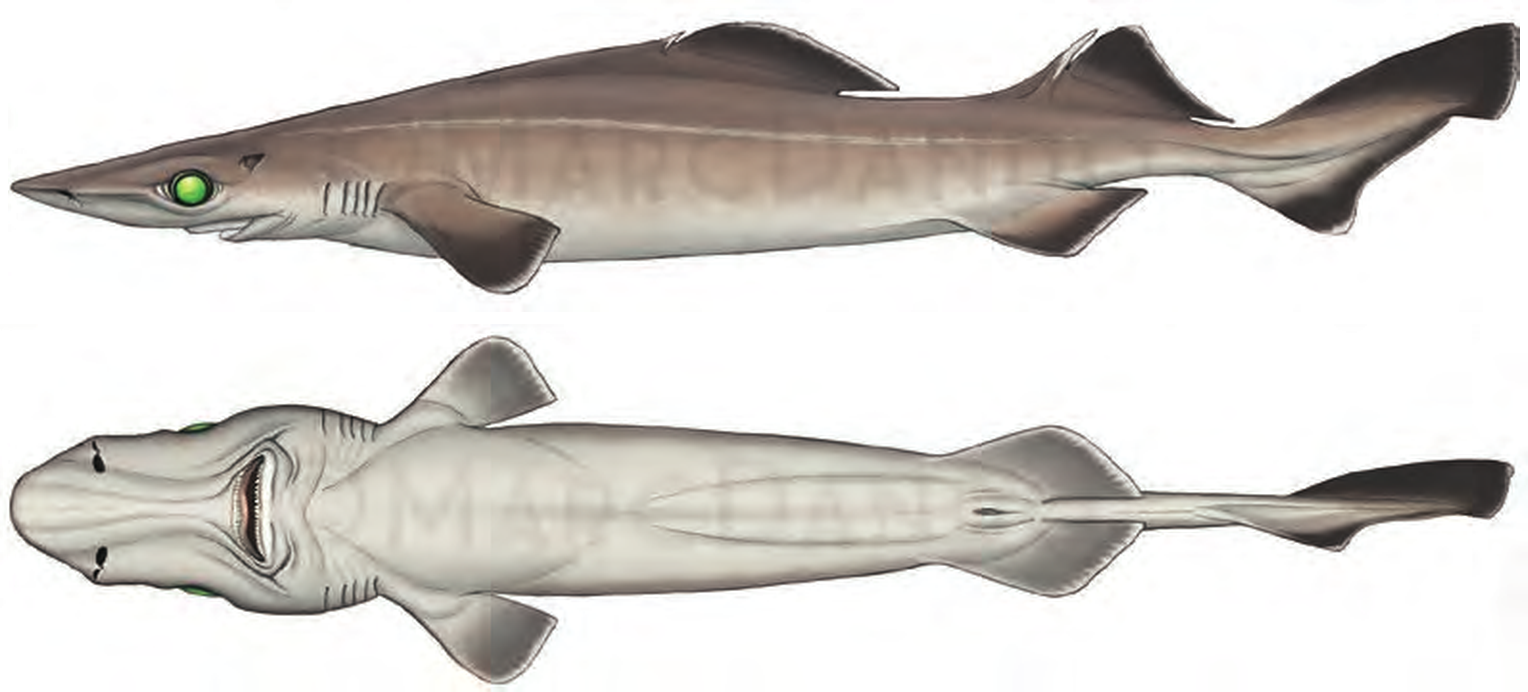
The numbers match the arrows on the illustration.
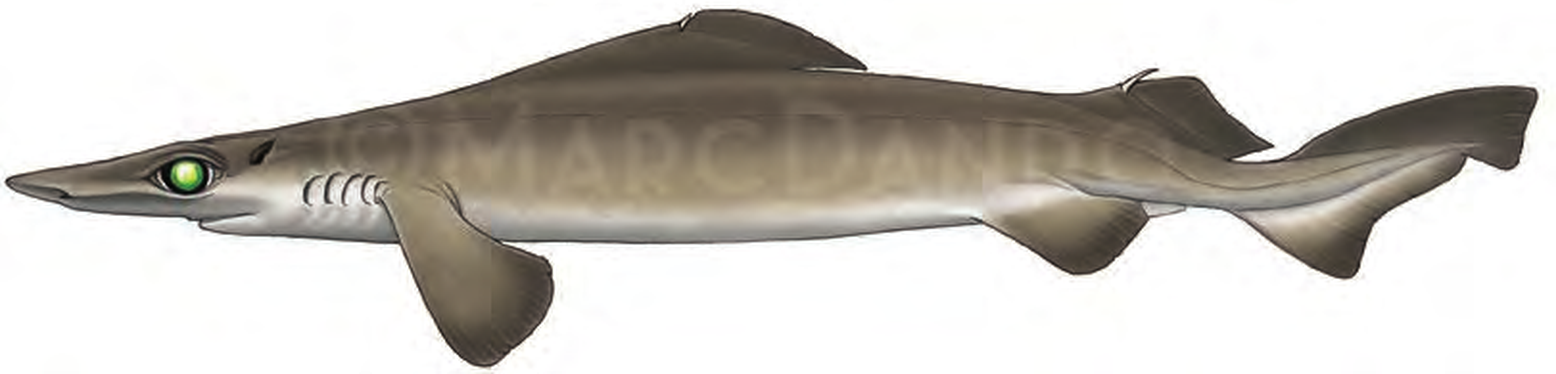
- Elongated snout.
- Tiny dorsal spines.
- Dorsal fins about equal in size and height; free rear tip of second dorsal almost reaches origin of upper caudal fin.
- No anal fin.
Colouring & markings
- Uniform dark brown to blackish body.
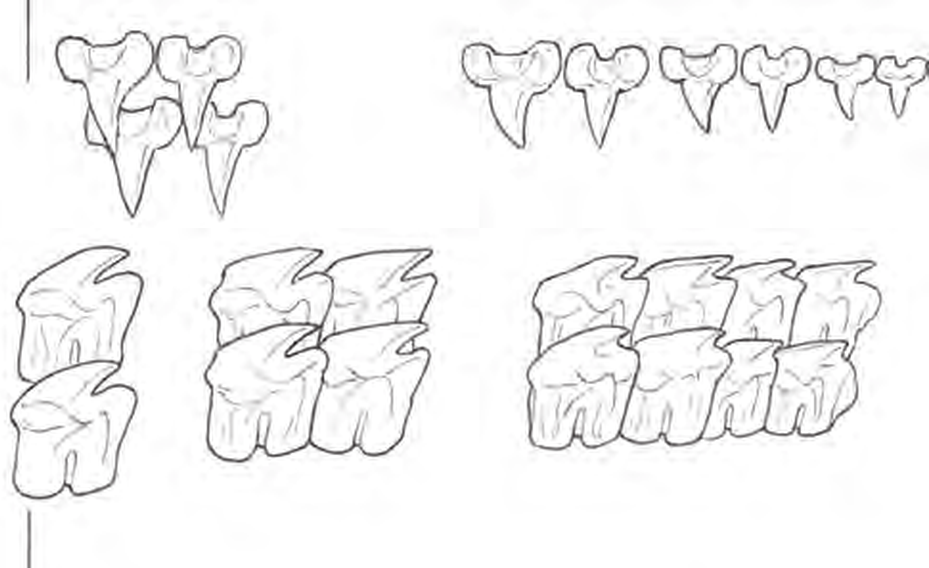
Teeth
Upper jaw: 36–51; lanceolate teeth. Lower jaw: 30–36; blade-like teeth with long oblique
How big do they get?
Where they live
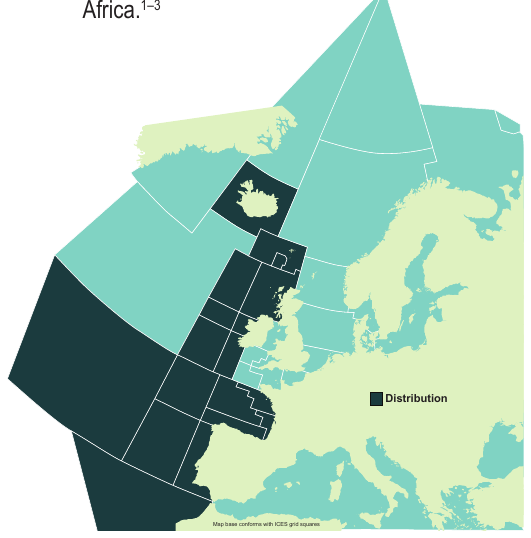
Distribution
Patchy worldwide distribution. Eastern Atlantic from Iceland and Faroe Islands along the Atlantic slope, Rockall Trough and Porcupine Seabight to Morocco including Madeira and Azores. Also along west coast of South Africa.
Habitat
Demersal on upper continental and insular slopes from 200–2,080m; usually deeper than 500m.
In the wild
-

Recorded on a Shark Trust survey dive -

Resting on a sandy seabed -

Cruising close to the sea floor -
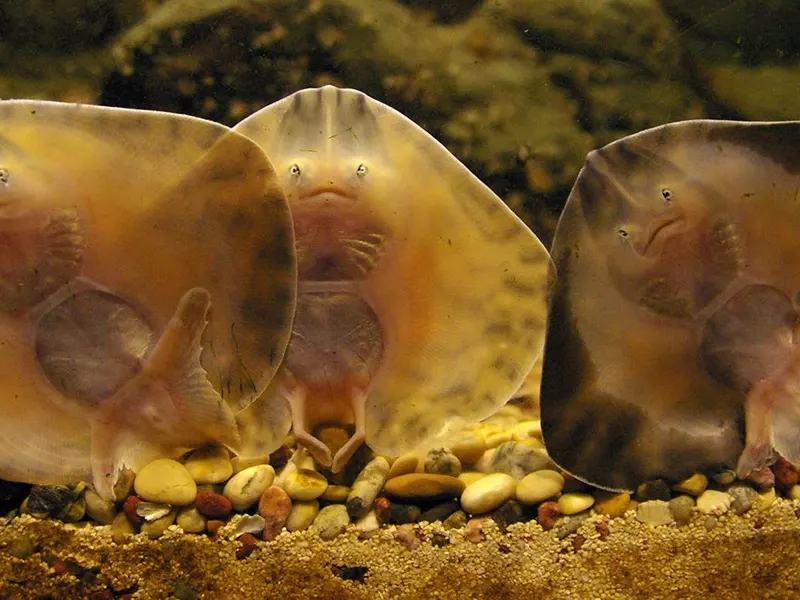
In the shallows at dusk -
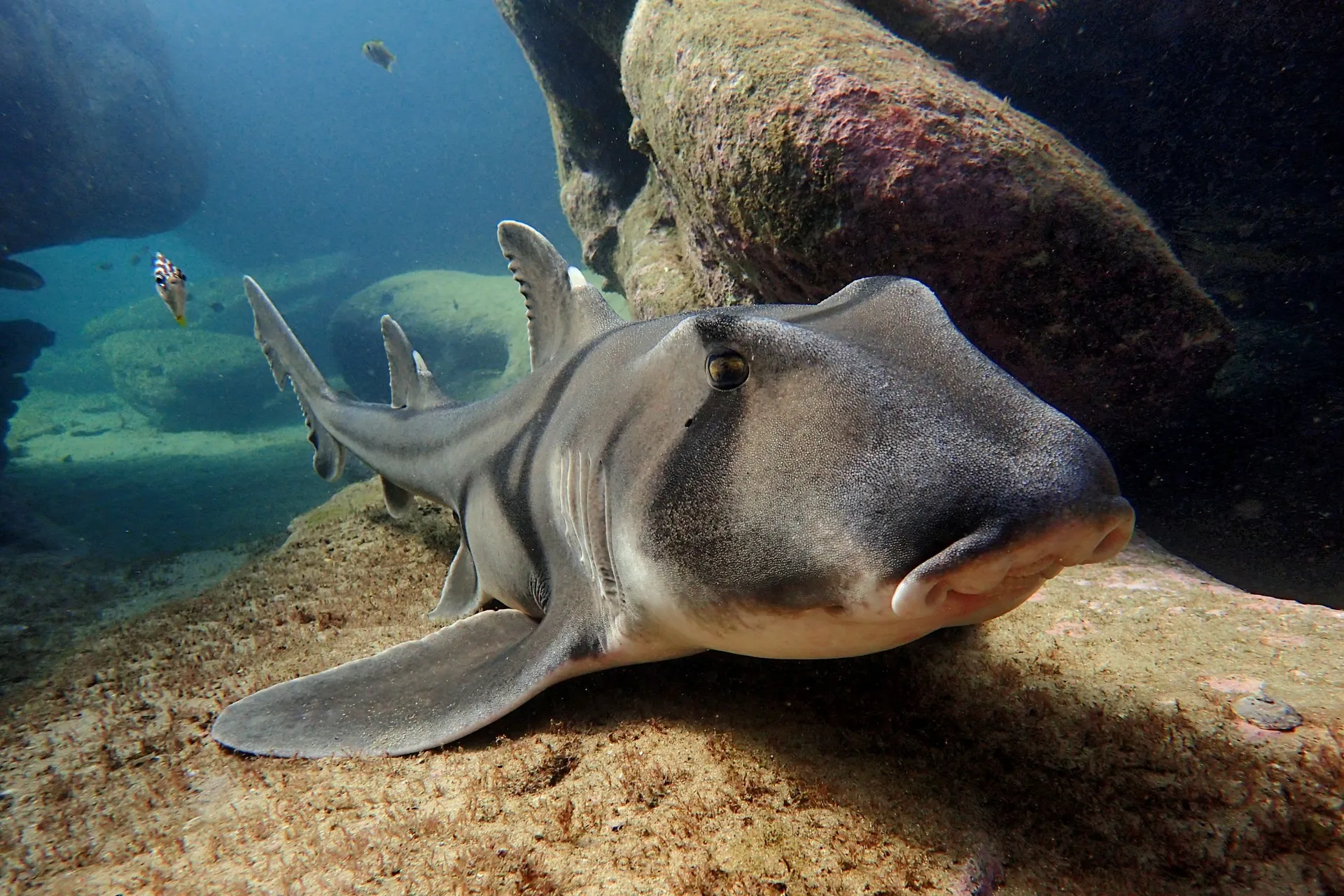
Sheltering on the reef
Go deeper
Size & biology
- Birth: 28–35cm.
- Matures: female 77−88cm; male 60–68cm.
- Max. TL: 105cm.
- Age at maturity: female 20 years; male 9 years. Max. recorded age: female 54 years; male 34 years.
- Viviparous, 1–9 pups per litter (avg. 6). Females capable of breeding year-round.
- Primarily feeds on teleost fishes and cephalopods.
Conservation status
IUCN Red List: Global: Least Concern (2003) Europe: Least Concern (2015) Although exhibiting conservative life history characteristics, stable population trends in European waters currently places species as Least Concern.
Management
Subject to prohibitions under the CFP, RFMO and FNA regulations.
Commercial importance
Of little commercial importance. Historically targeted for meat and liver oil.
References & further reading
Assessment: CYP/NEA/2020
- Blasdale et al.
- Ebert et al.
- Ebert & Stehmann.
- Dunn et al.
- Stevens, J.