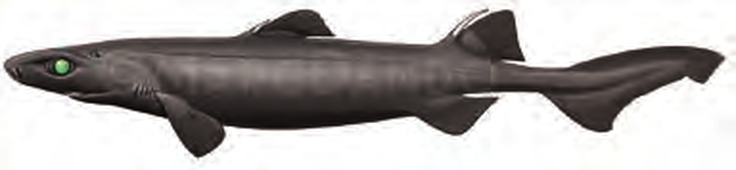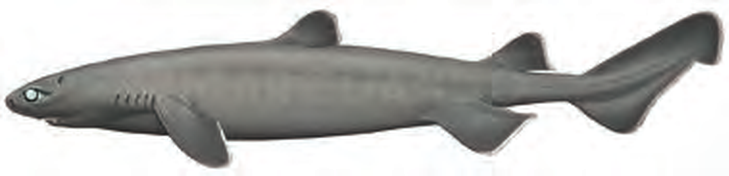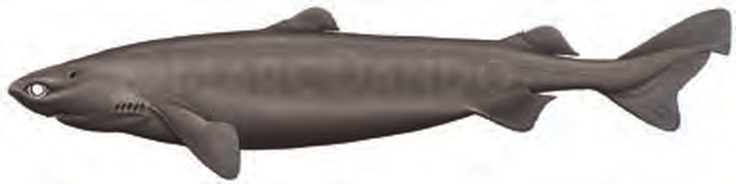
Knifetooth Dogfish
Scymnodon ringens Barbosa du Bocage & de Brito Capello, 1864
Vulnerable- Maximum length
- 1.1 m
- Depth range
- From 200 to 1,600m.
- FAO code
- SYR
Meet the Knifetooth Dogfish
- Also known as
- KNIFETOOTH DOGFISH, Messerzahnhai (DEU), Bruja (ESP), Squale-grogneur Commun (FRA), Cagnolo Atlantico (ITA), Mestandijshaai (NLD), Arreganhada (PRT).
How to identify
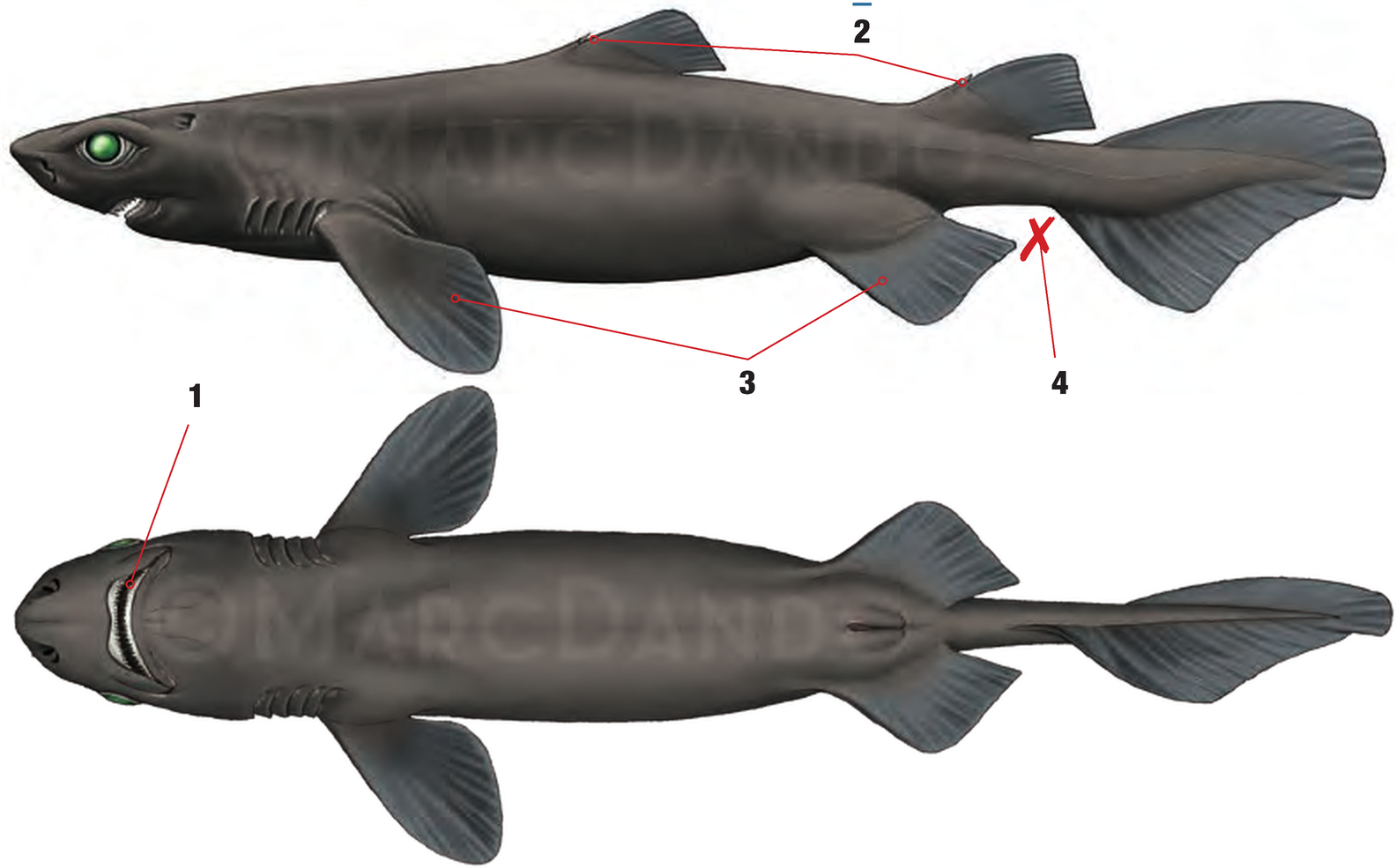
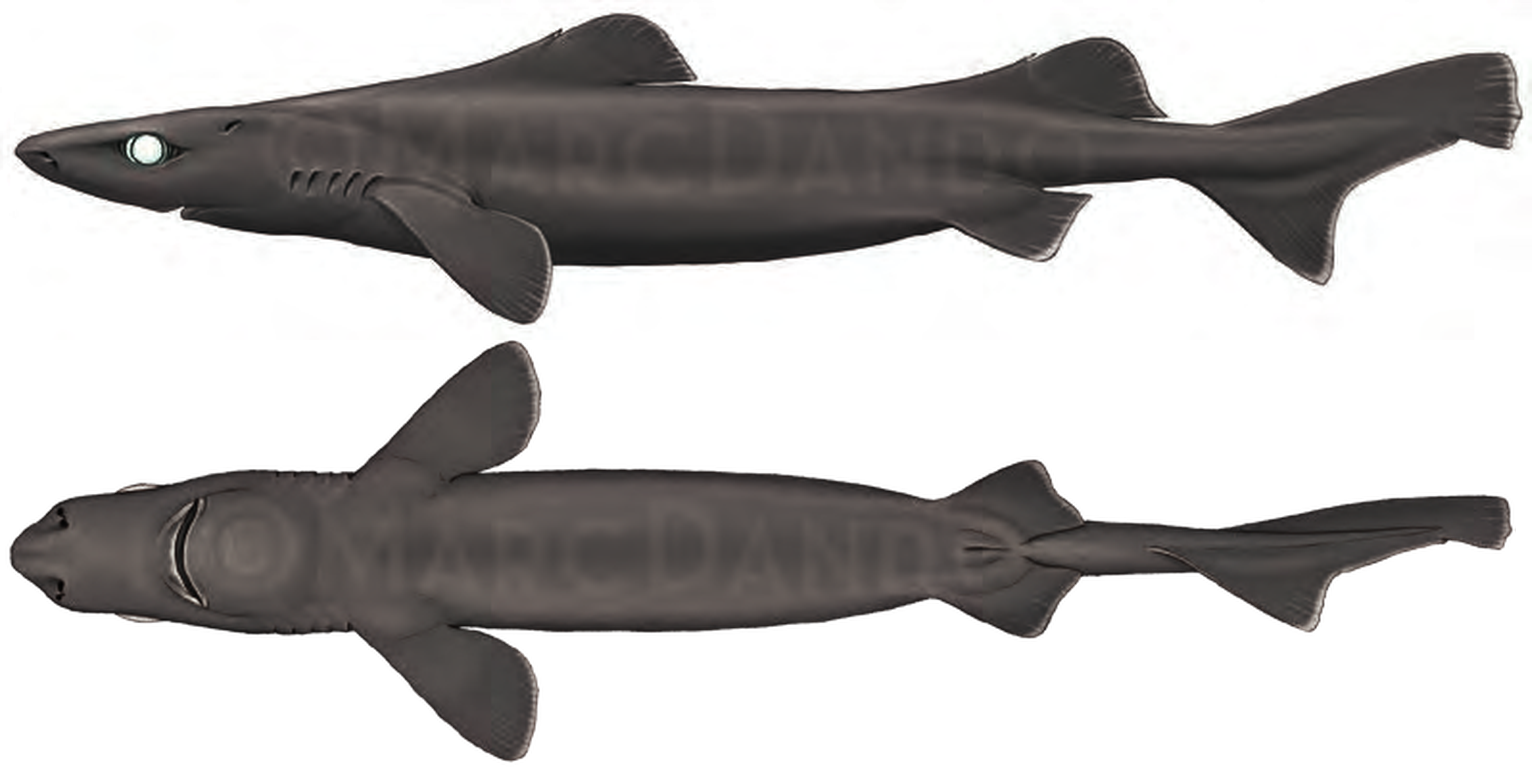
The numbers match the arrows on the illustration.
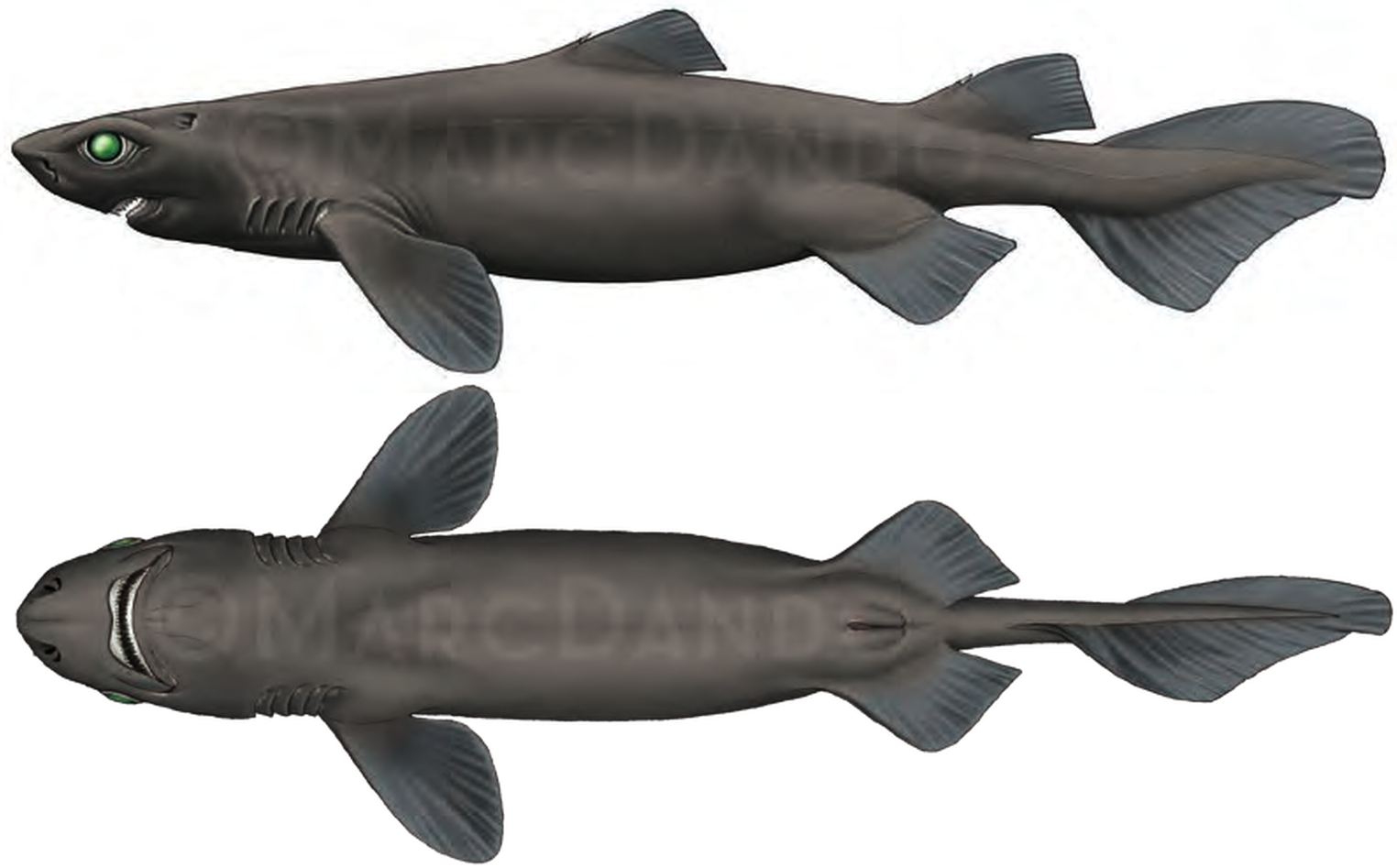
- Mouth very wide and broadly arched.
- Second dorsal fin longer and taller than first; each with small dorsal spines.
- Large pectoral and pelvic fins.
- Do anal fin.
Colouring & markings
- Uniform chocolate brown to black in colour.
Teeth
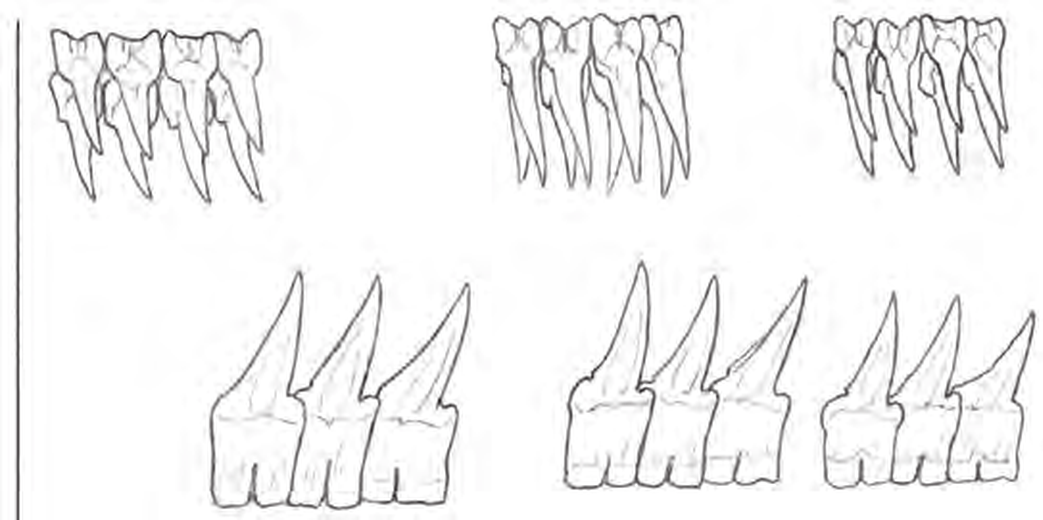
Upper jaw: 50; small, lanceolate teeth without cusplets. Lower jaw: 29, large, triangular, blade-like cutting teeth.
How big do they get?
Where they live
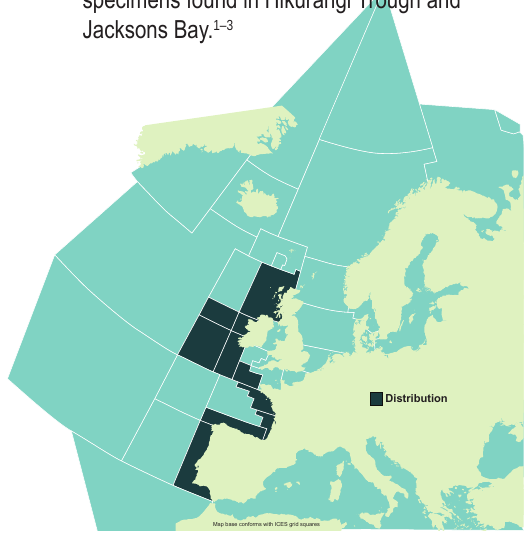
Distribution
Eastern Atlantic slope from Scotland to Portugal, and off Mauritania and Senegal. Reported in New Zealand from three specimens found in Hikurangi Trough and Jacksons Bay.
Habitat
Deepwater demersal shark; continental slopes from 200–1,600m in temperate and subtropical waters.
In the wild
-

Recorded on a Shark Trust survey dive -
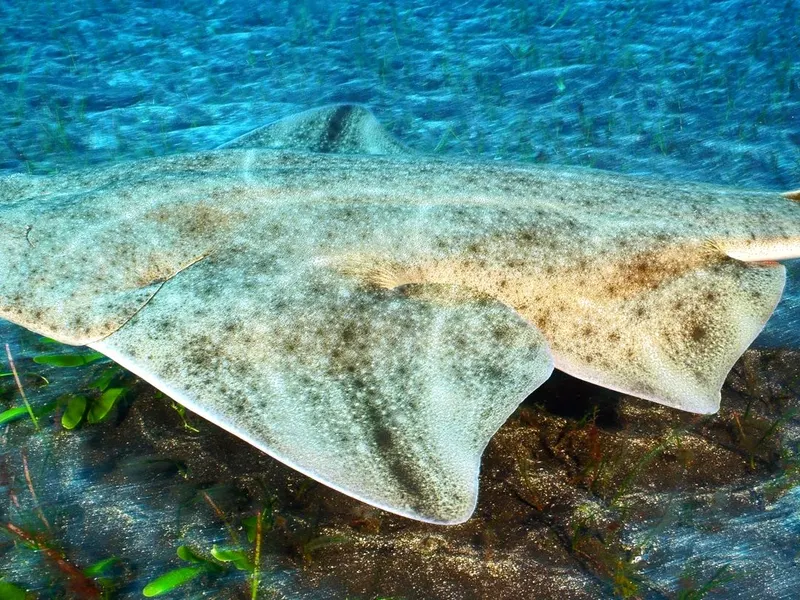
Resting on a sandy seabed -
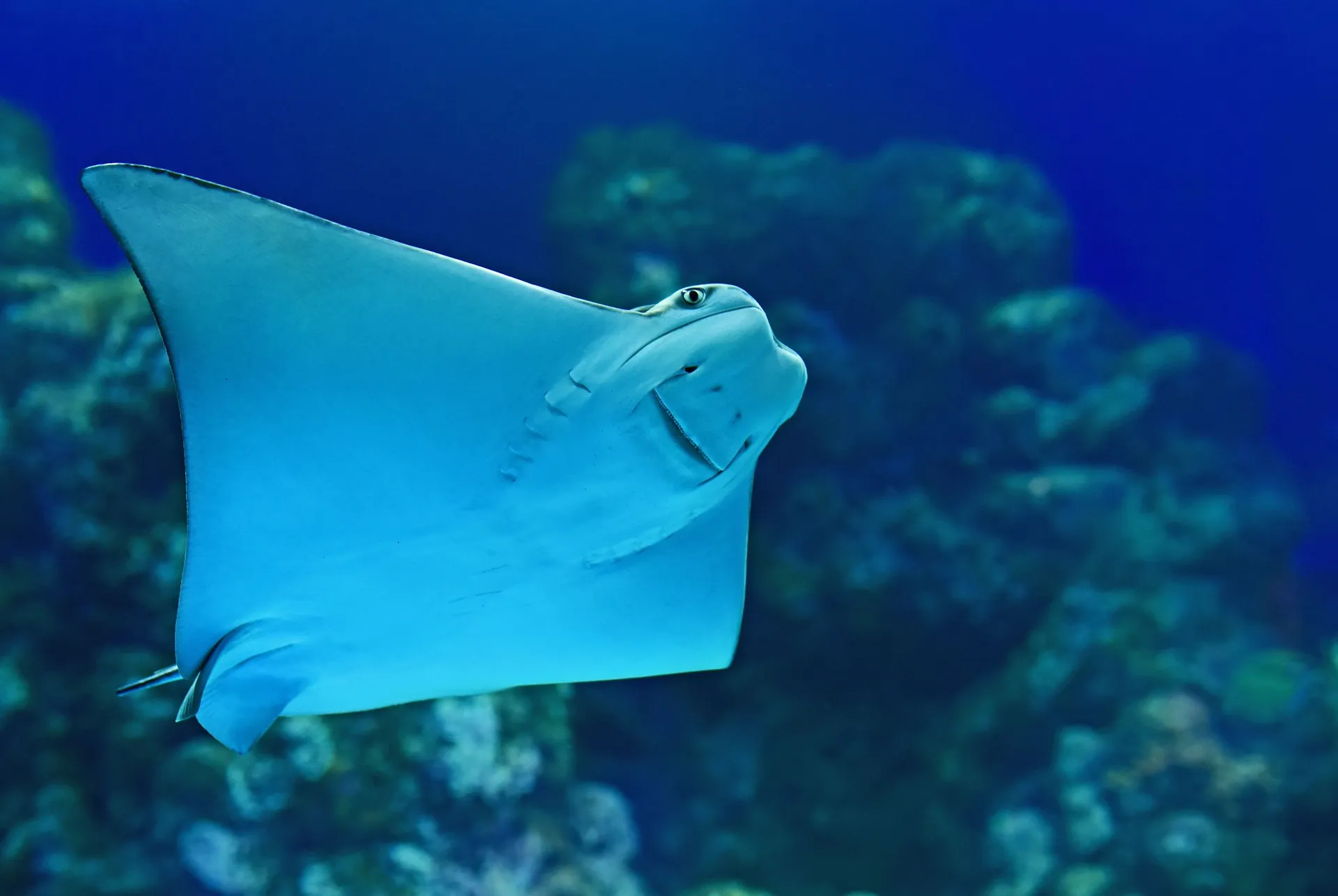
Cruising close to the sea floor -
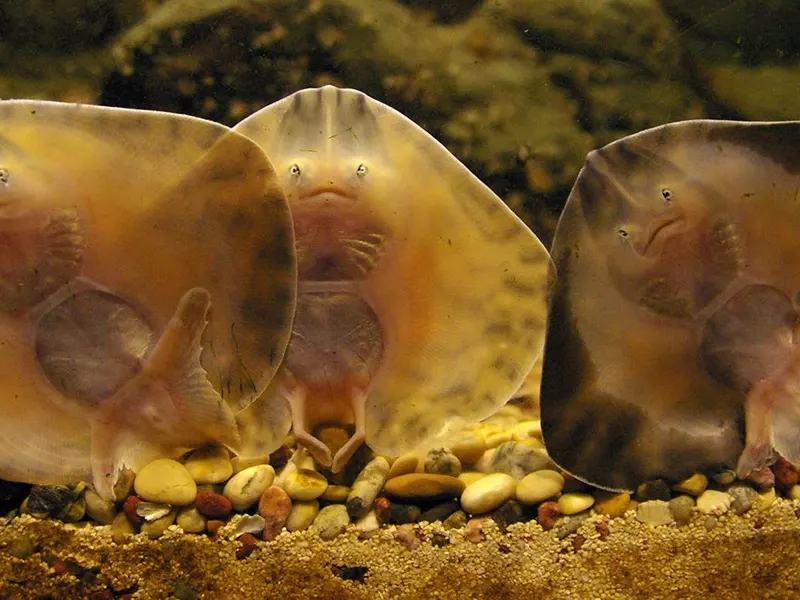
In the shallows at dusk -
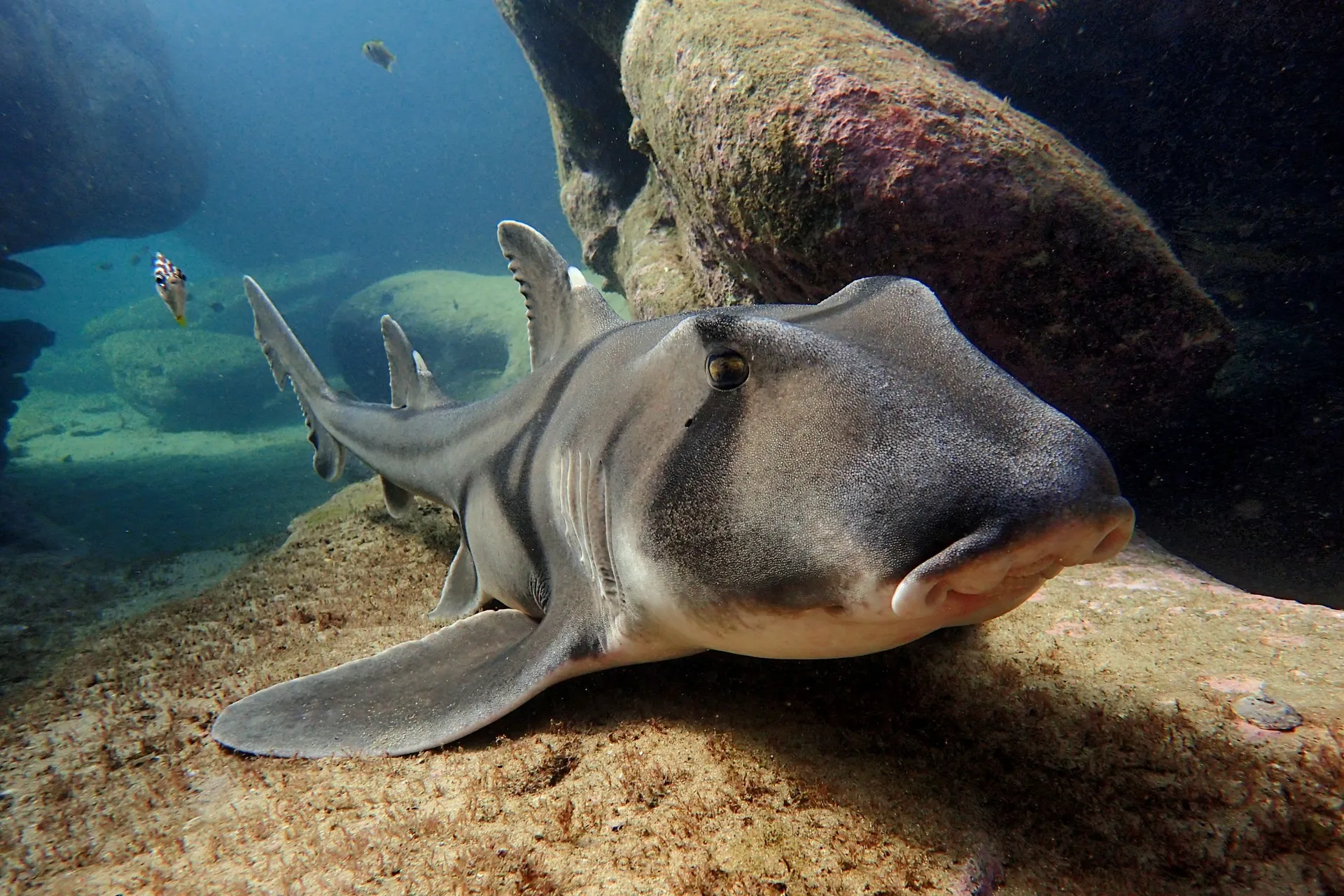
Sheltering on the reef
Go deeper
Size & biology
- Max. TL: 110cm.
- Reproduction and life history of this shark is poorly known. Thought to be ovoviviparous.
- Dentition suggests the ability to attack and dismember relatively large prey.
Conservation status
IUCN Red List: Global: Data Deficient (2009) Europe: Least Concern (2015) A little known deepwater shark. Its depth range may afford it some protection from current fisheries. Surveys carried out in the Porcupine Bank from 2001–2012 estimated that abundance and biomass for this shark was stable or increasing.
Management
Subject to prohibitions under the CFP, RFMO and FNA regulations.
Commercial importance
No targeted fisheries exist for the Knifetooth Dogfish. Taken as bycatch in deepwater trawls, line gear and fixed bottom net fisheries. Where retained, this shark is used for human consumption and processed for fish meal.
References & further reading
Assessment: SYR/NEA/2020
- Ebert et al.
- Ebert & Stehmann.
- Roberts et al.
- Blasdale & Valenti.
- Valenti et al.