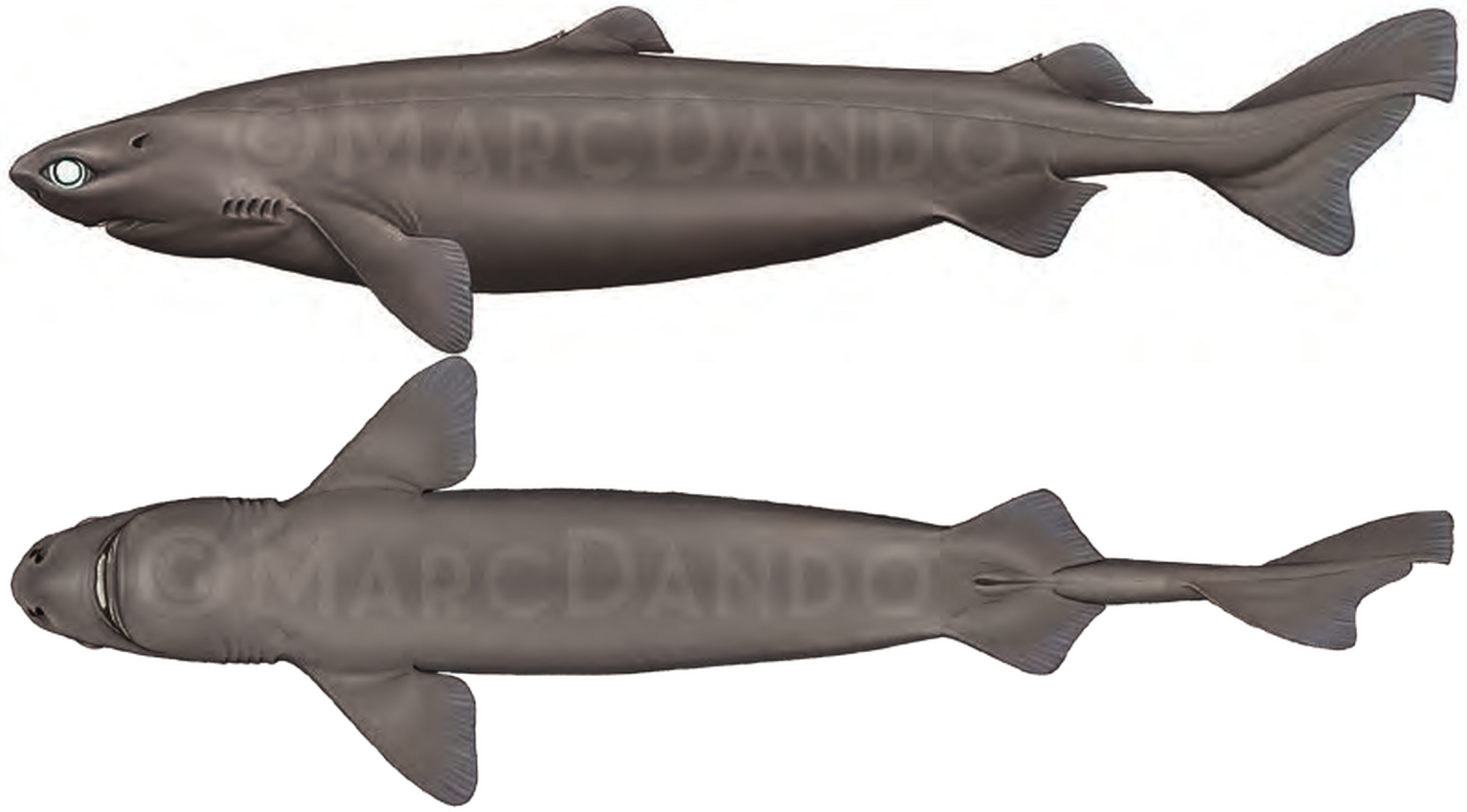
Portuguese Dogfish
Centroscymnus coelolepis Barbosa du Bocage & de Brito Capello, 1864
Near Threatened- Maximum length
- 1.22 m
- Depth range
- From 128 to 3,657m.
- FAO code
- CYO
Meet the Portuguese Dogfish
- Also known as
- PORTUGUESE DOGFISH, Siki Shark, Portugiesenhai (DEU), Pailona (ESP), Pailona Commun (FRA), Squalo Portoghese (ITA), Portugese Ijshaai (NLD), Carocho (PRT).
How to identify
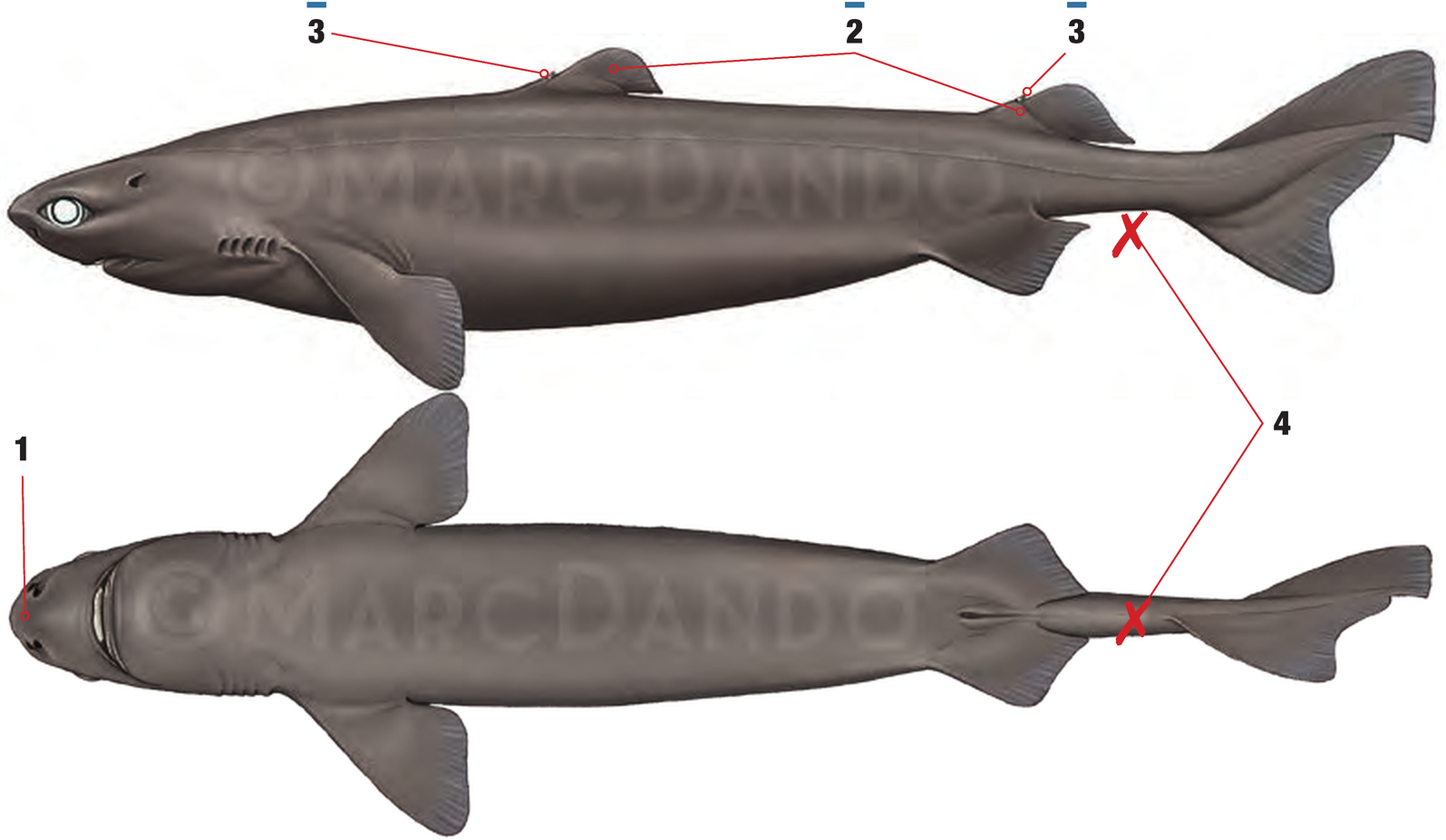
The numbers match the arrows on the illustration.
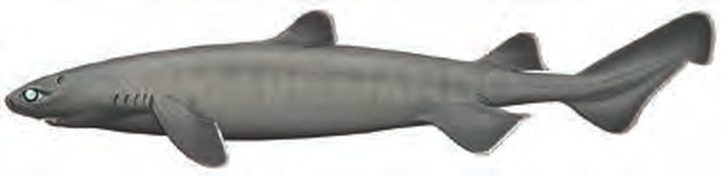
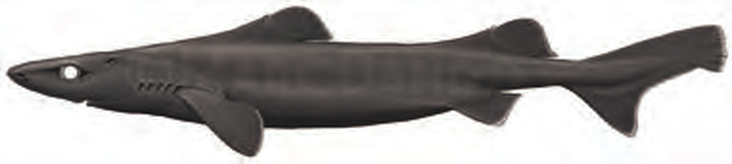
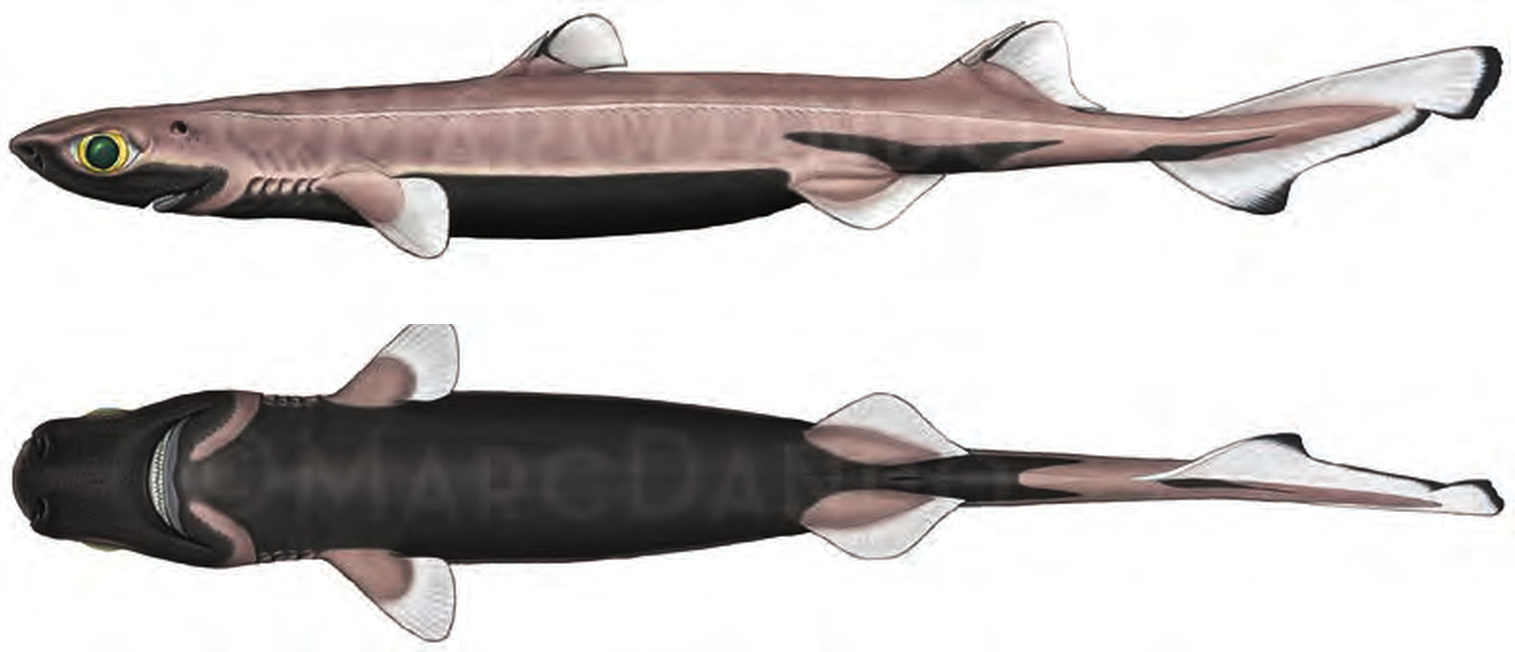
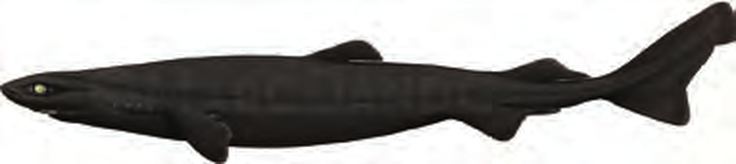
- Stocky body with short snout.
- Small, equal-sized dorsal fins, second close to caudal fin.
- Very small spine present on each dorsal fin, spines sometimes not obviously visible.
- No anal fin.
Colouring & markings
- Uniform black/brown to golden brown.
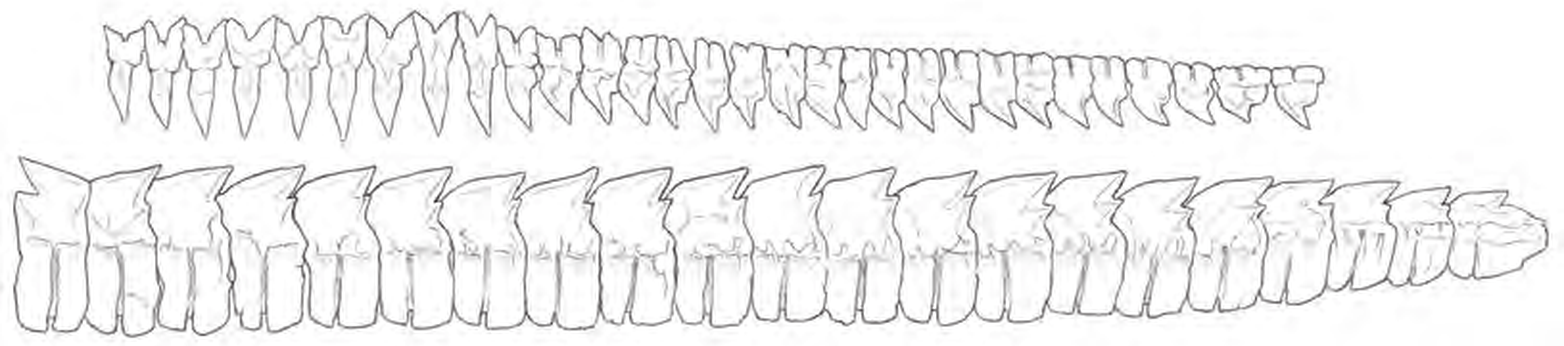
Teeth
Upper jaw: 43−68; slender, lanceolate teeth. Lower jaw: 29−42; short teeth with oblique cusps.
How big do they get?
Where they live
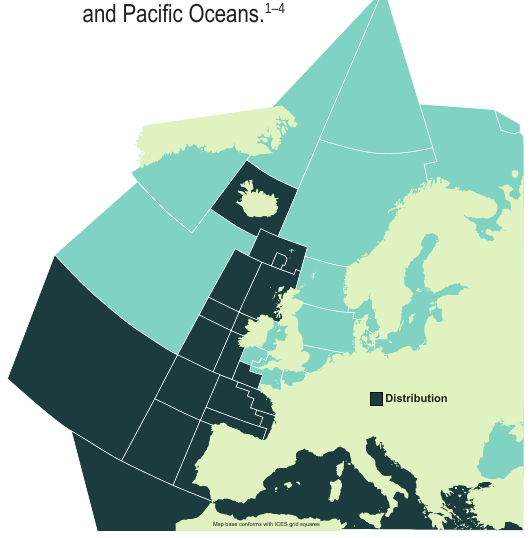
Distribution
Patchy worldwide distribution. Eastern Atlantic from Iceland to Sierra Leone, including Azores, Madeira, Canary Islands and western Mediterranean Sea. Recorded off Namibia and west coast of South Africa. Also found in Indian and Pacific Oceans.
Habitat
Deepwater demersal shark on continental slopes and upper and middle abyssal rises; from 128−3,675m, mostly deeper than 400m. Recorded at temperatures ranging from 5−13°C. Segregates by size and sex with depth; pregnant females inhabit shallower waters, smaller individuals in deeper water.
In the wild
-

Recorded on a Shark Trust survey dive -
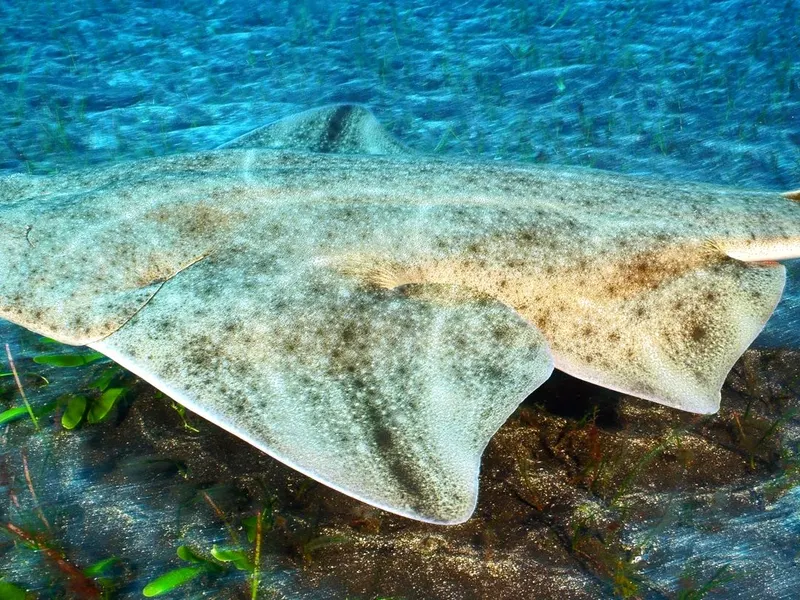
Resting on a sandy seabed -
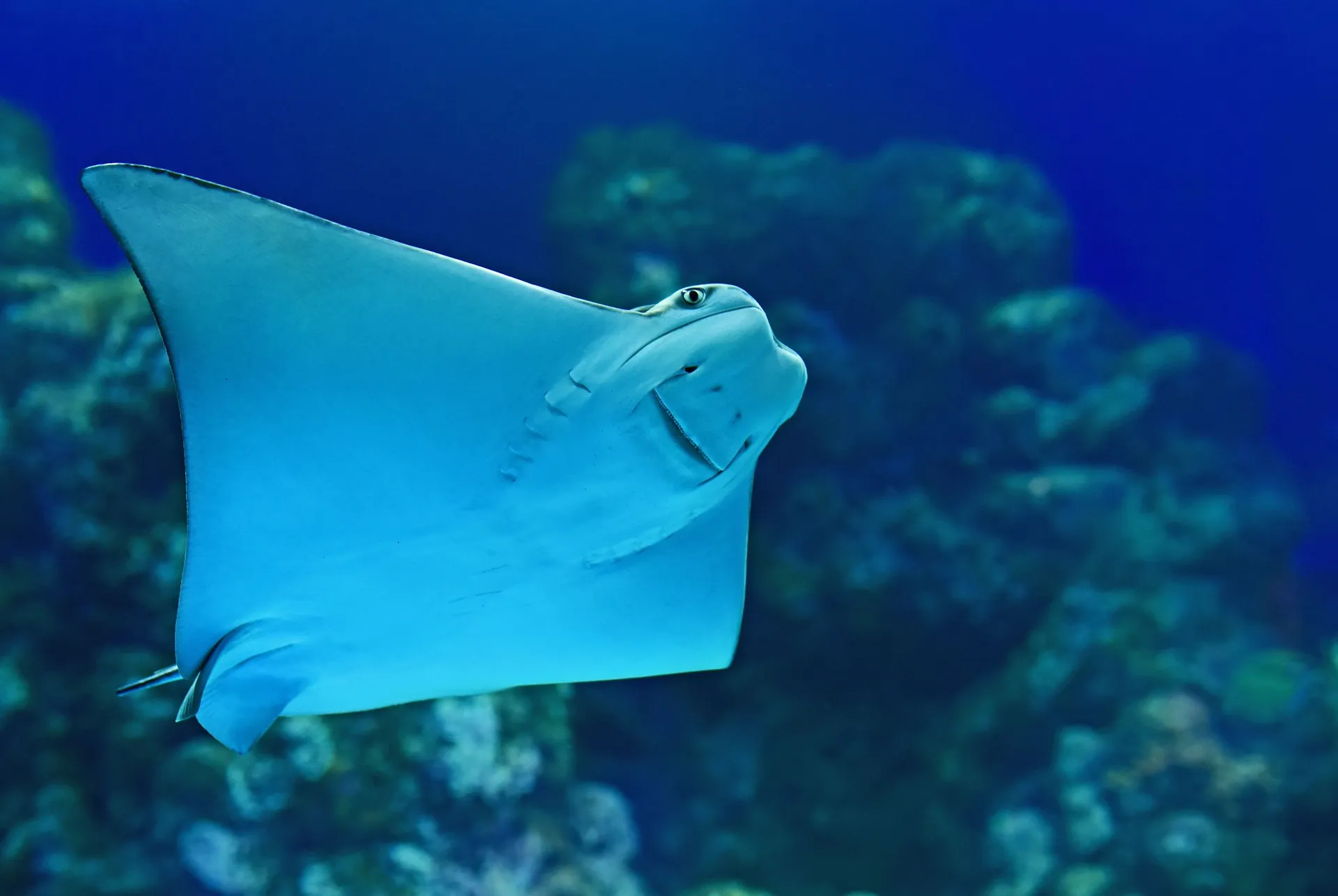
Cruising close to the sea floor -
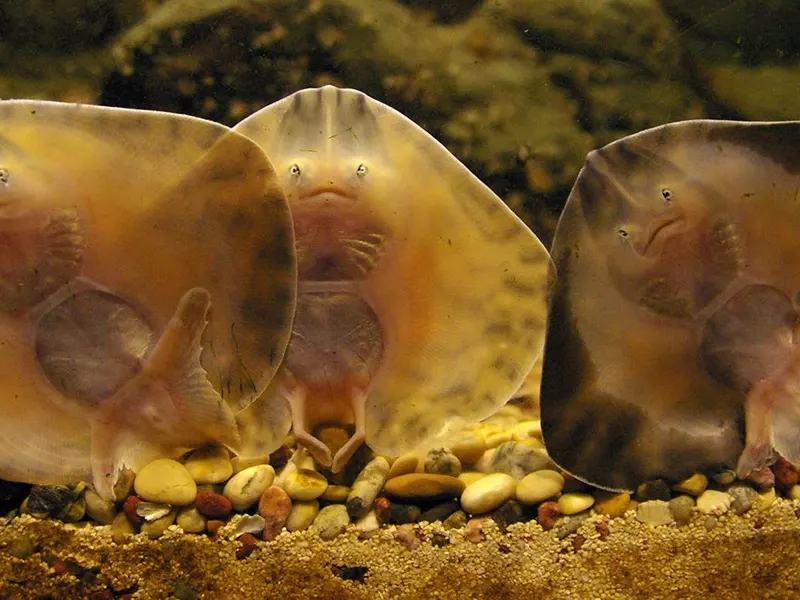
In the shallows at dusk -
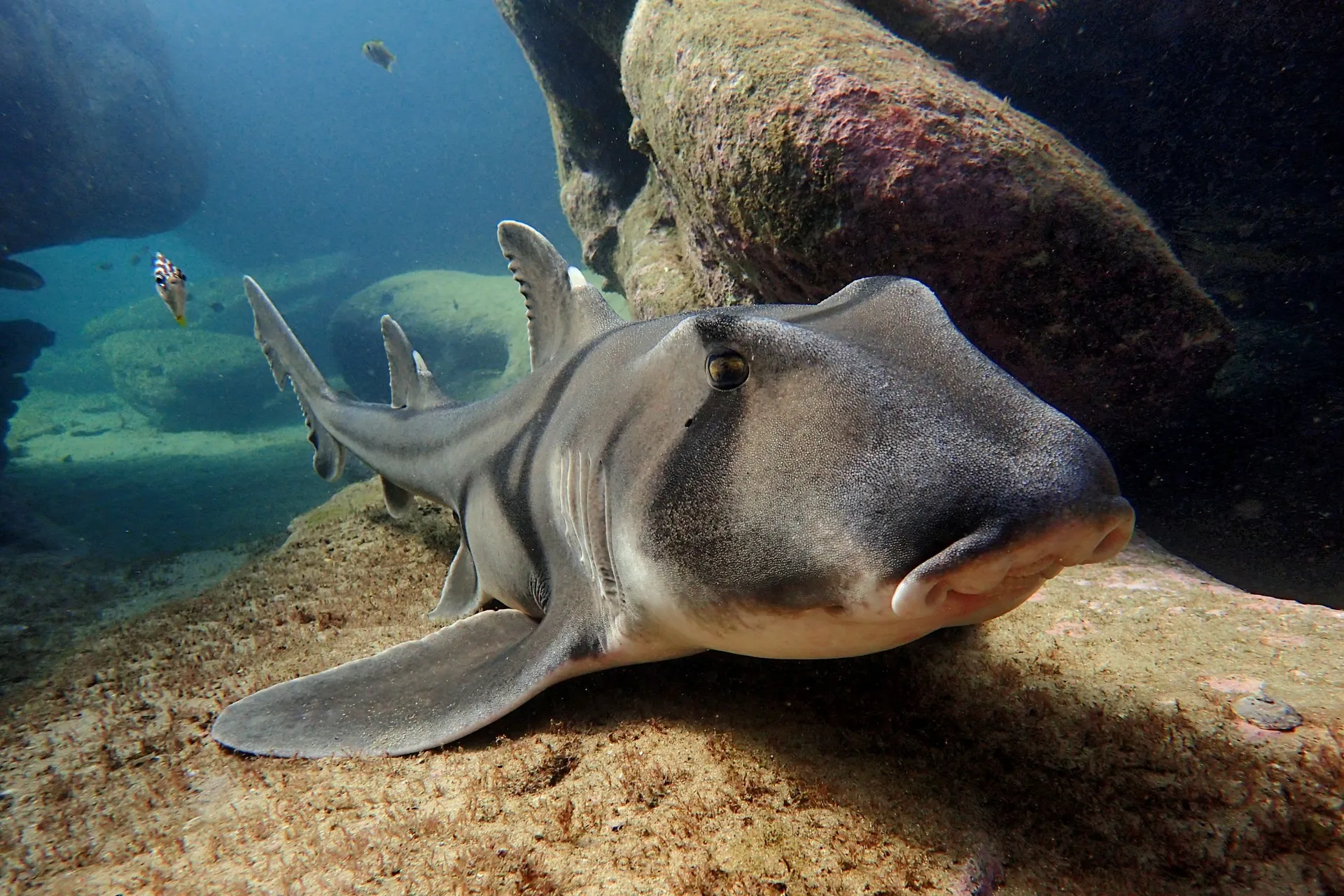
Sheltering on the reef
Go deeper
Size & biology
- Birth: 23−35cm.
- Matures: female 95−110cm; male 85−100cm.
- Max. TL: 122cm.
- Age at maturity est.: 15 years. Max. age est. 60 years.
- Viviparous, females give birth year-round; litters of 1−29 pups (avg. 12−14).
- Feeds on teleosts, cephalopods, other sharks, gastropods and crabs. Known to take plugs of flesh from live cetaceans and pinnipeds.
Conservation status
IUCN Red List: Global: Near Threatened (2003) Europe: Endangered (2015) Mediterranean: Least Concern (2016) Continued bycatch in multispecies fisheries has resulted in an estimated >80% decline of the Northeast Atlantic population over the past 100 years. This shark exhibits low fecundity and discard survival is likely to be low.
Management
Subject to prohibitions under the CFP, RFMO and FNA regulations.
Commercial importance
Historically targeted in trawl and line fisheries for human consumption, squalene-rich liver oil and fishmeal. Continues to be taken as bycatch in deepwater fisheries targeting other demersal species.
References & further reading
Assessment: CYO/NEA/2020
- Dureuil & Jung.
- Dureuil & Jung.
- Ebert et al.
- Ebert & Stehmann.
- Moura et al.