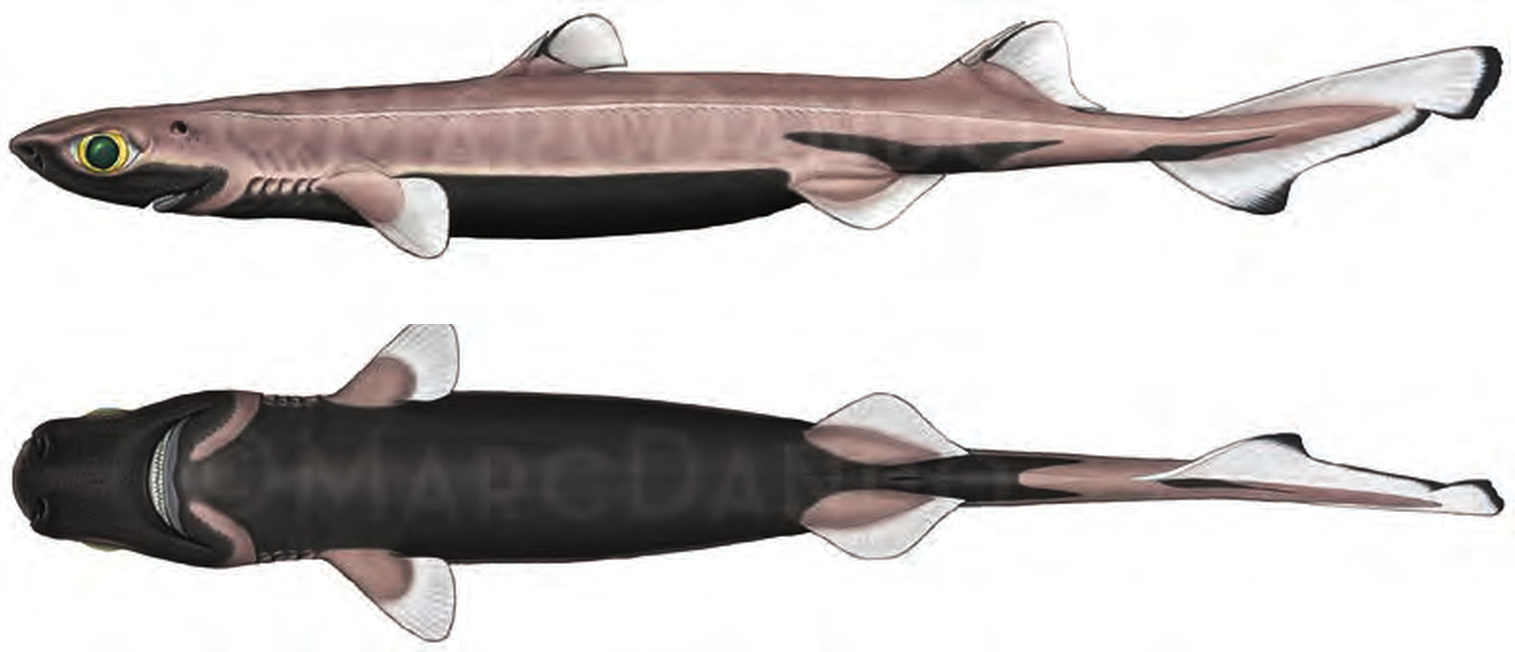
Velvet Belly Lanternshark
Etmopterus spinax (Linnaeus, 1758)
Vulnerable- Maximum length
- 41 cm
- Depth range
- From 70 to 2,500m. Primarily 200 to 500m.
- FAO code
- ETX
Meet the Velvet Belly Lanternshark
- Also known as
- VELVET BELLY LANTERNSHARK, Black Centrina, Kleiner Schwarzer Dornhai (DEU), Negrito (ESP), Sagre Commun (FRA).
How to identify
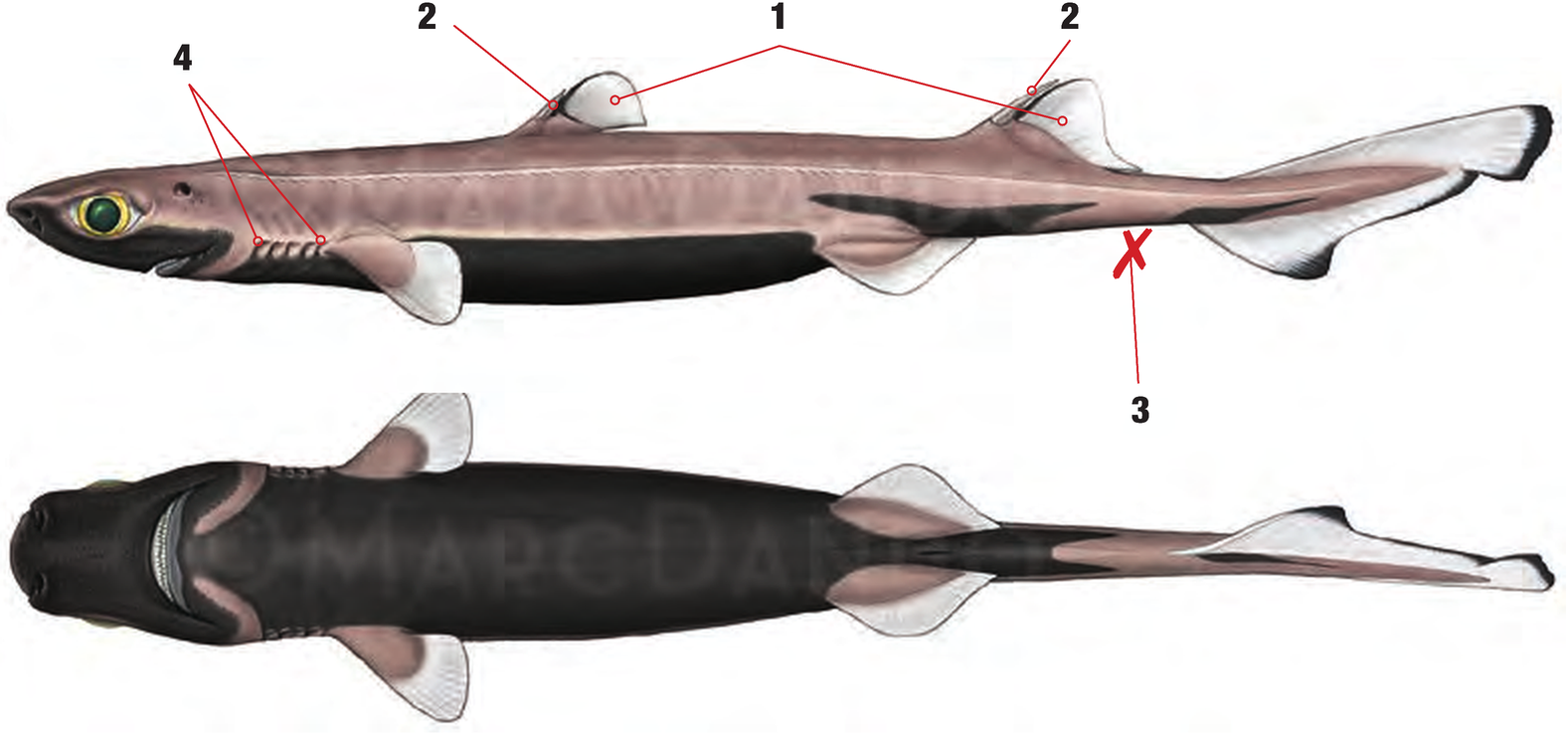
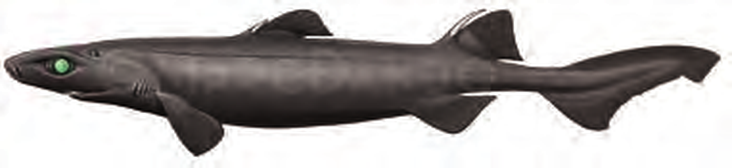
The numbers match the arrows on the illustration.
- Second dorsal fin twice the size of first.
- Large dorsal spines.
- No anal fin.
- Five pairs of very small gill slits.
Colouring & markings
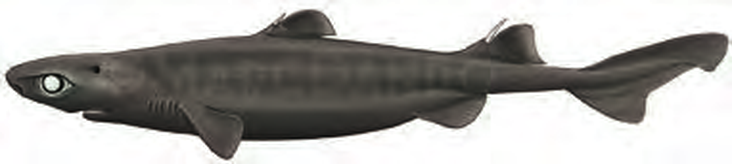
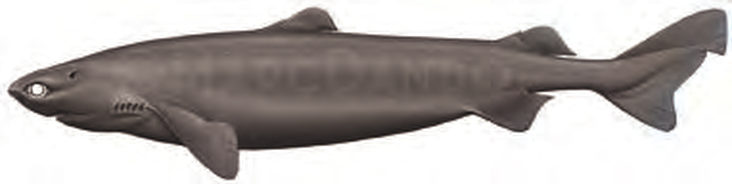
- Brown dorsally.
- Black ventrally.
- Prominent black markings on fin edges and around pelvic fins.
Teeth
Upper jaw: 22−32; teeth have cusps and three or fewer Lower jaw: 26−40; blade-like and unicuspidate.
How big do they get?
Where they live
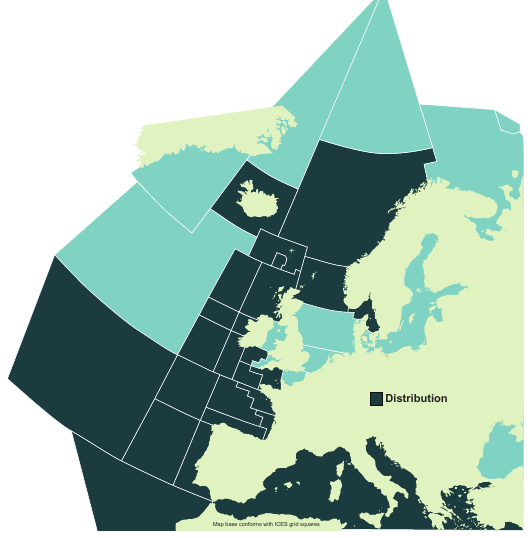
Distribution
Eastern Atlantic from Iceland and Norway to Gabon incl. the Azores, Cape Verde and the Western Mediterranean Sea.
Habitat
Found on outer continental shelves and upper slopes at depths of 70–2,500m, primarily between 200–500m. Known to segregate by size across different depths with larger, mature specimens found at greater depths. Gravid females migrate from deeper water to shallower nursery grounds.
In the wild
-
Recorded on a Shark Trust survey dive -
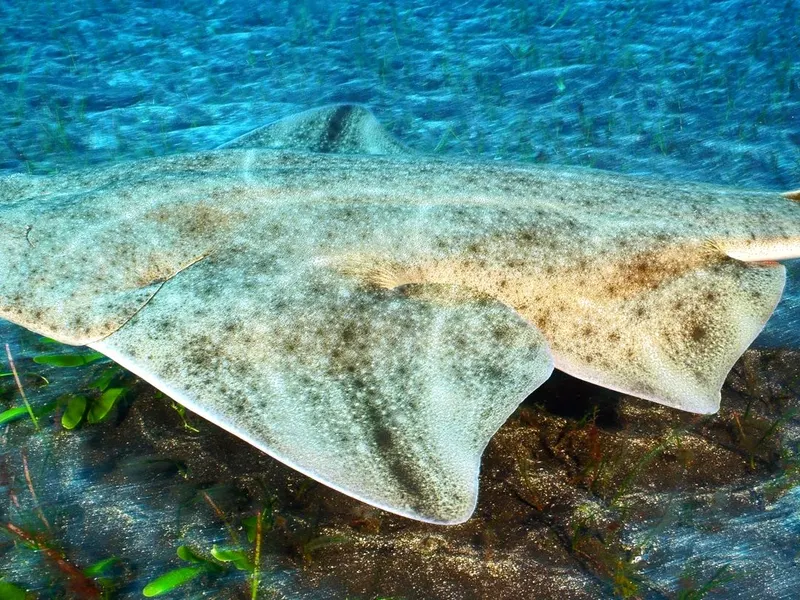
Resting on a sandy seabed -
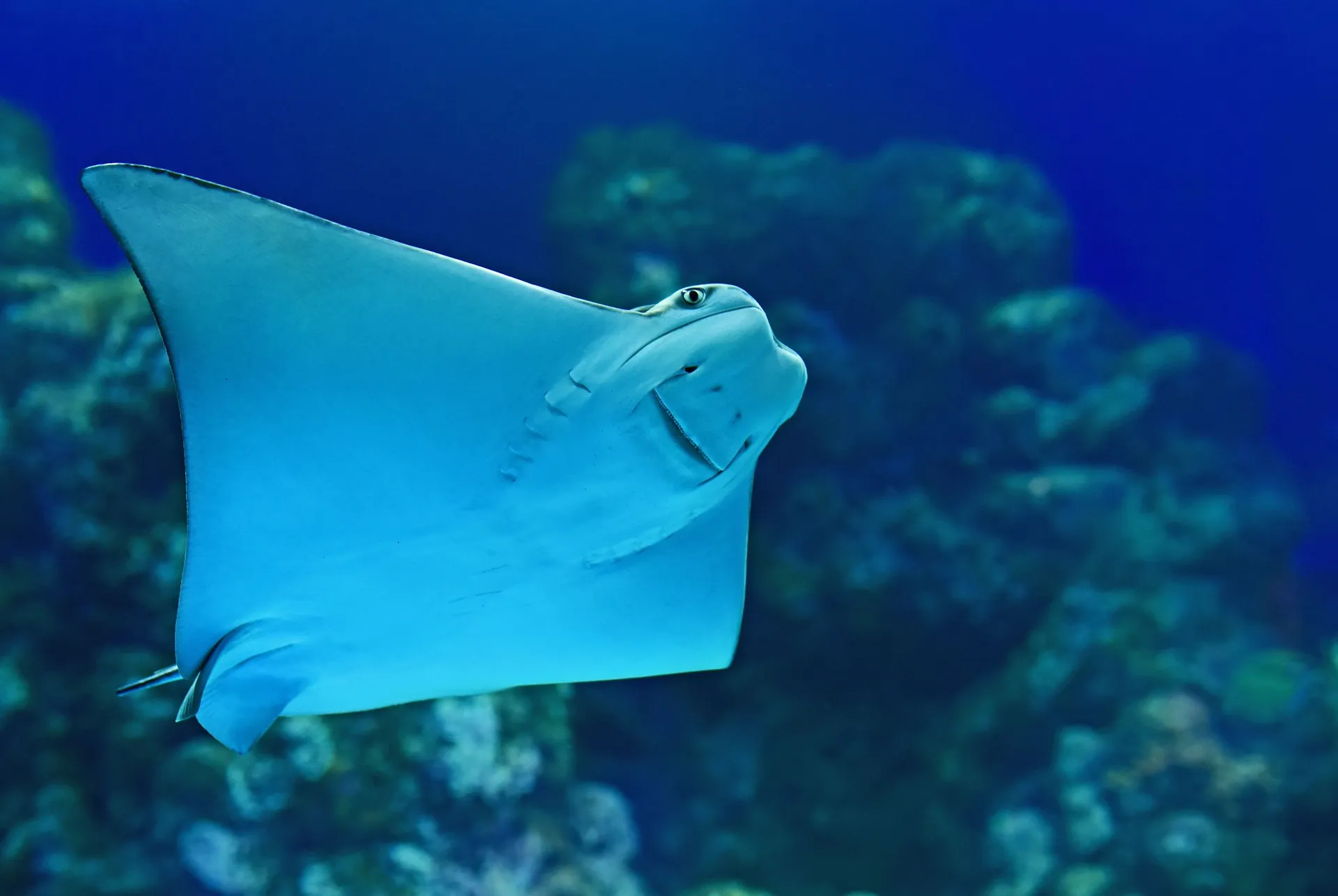
Cruising close to the sea floor -
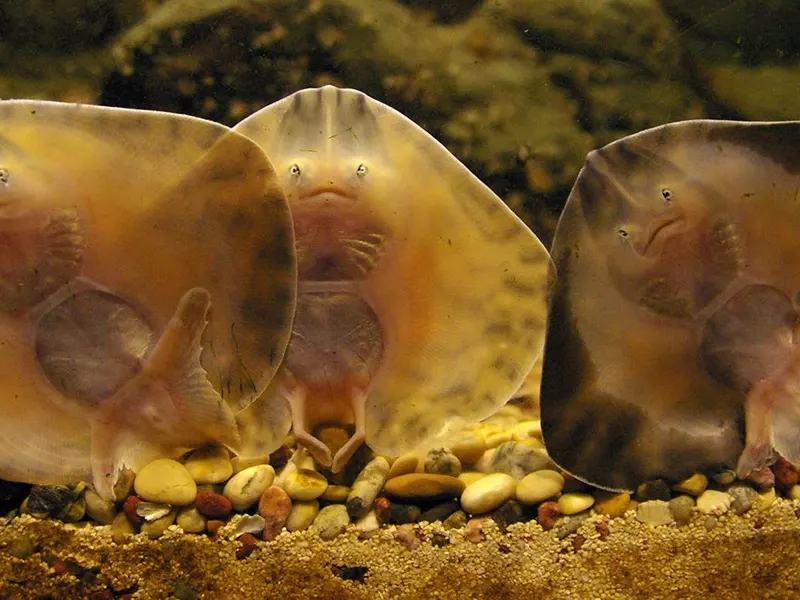
In the shallows at dusk -
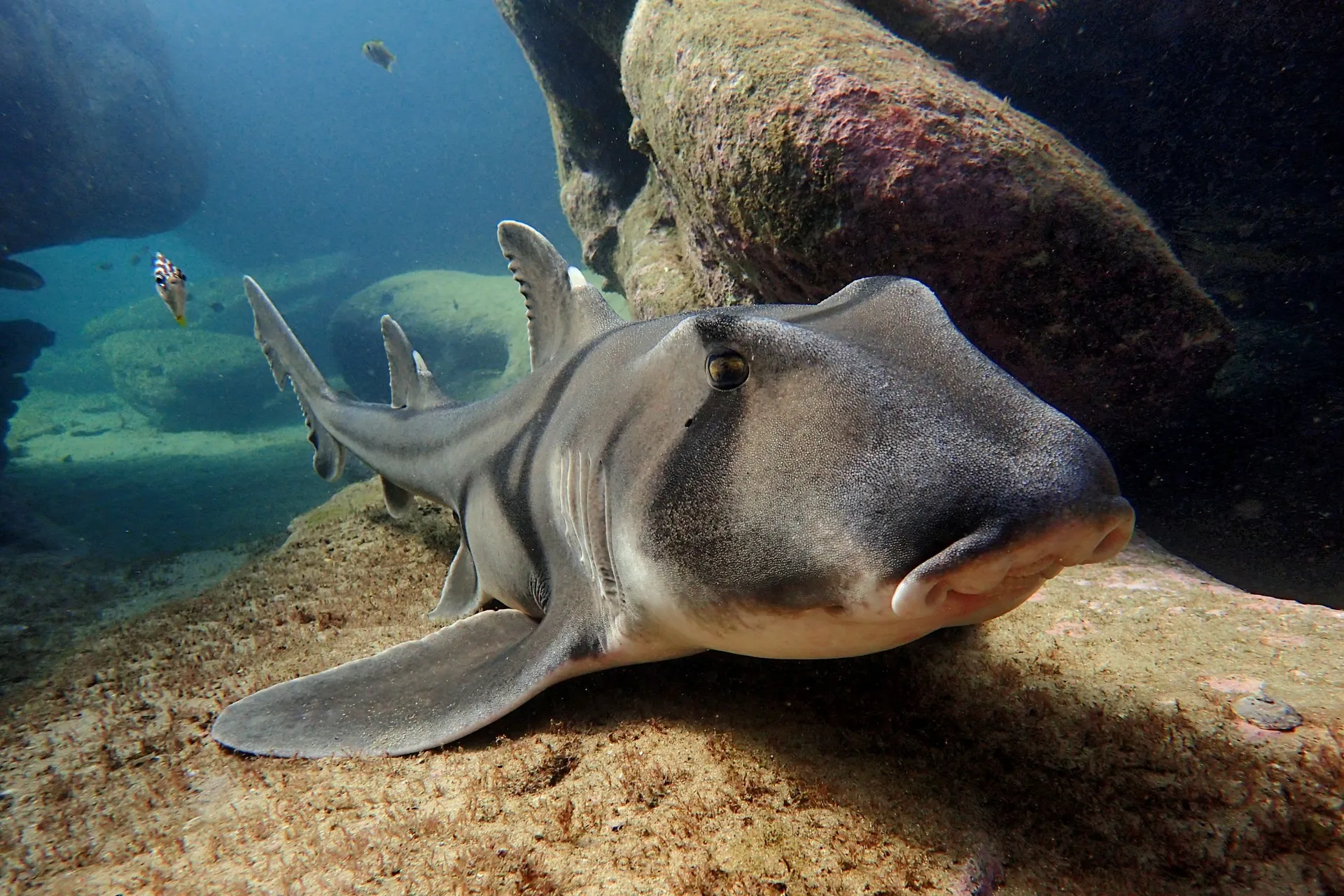
Sheltering on the reef
Go deeper
Size & biology
- Birth: 9−14cm.
- Matures: female 30−41cm; male 24−34cm.
- Max. TL: 41cm, unconfirmed to 60cm.
- Age at maturity: 4−4.7 years. Max. age est.: female 9−11 years; male 7−8 years.
- Viviparous, litters of 1−21 pups. Litter size increases with size of female.
- Gestation lasts 12 months followed by a resting phase. Reproductive cycle of 2−3 years is possible.
- Primarily feeds on teleosts, cephalopods, crustaceans and krill. Diet varies with size of shark with smaller individuals favouring crustaceans and larger sharks consuming larger fishes and cephalopods.
Conservation status
IUCN Red List: Global: Least Concern (2009) Europe: Near Threatened (2015) Mediterranean: Least Concern (2016) Slow life history characteristics make it vulnerable to unregulated fishing. Often recorded in the aggregated category for deepwater sharks.
Management
Subject to prohibitions under the CFP, RFMO and FNA regulations.
Commercial importance
Of little commercial importance. Bycatch species in bottom and pelagic trawl fisheries and generally discarded. Where retained it is occasionally utilised for fishmeal or dried/salted for human consumption.
References & further reading
Assessment: ETX/NEA/2020
- Coelho et al.
- Ebert et al.
- Ebert & Stehmann.
- Guallart et al.
- Coelho & Erzini.
- Neiva et al.
- Coelho & Erzini.