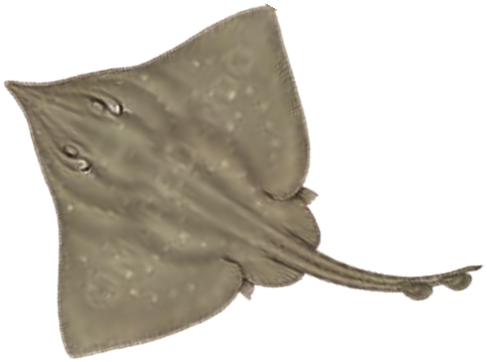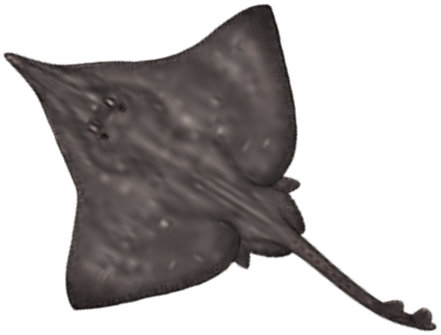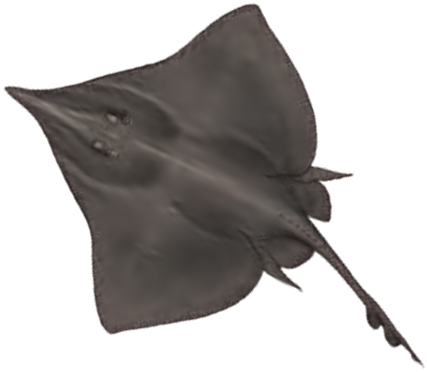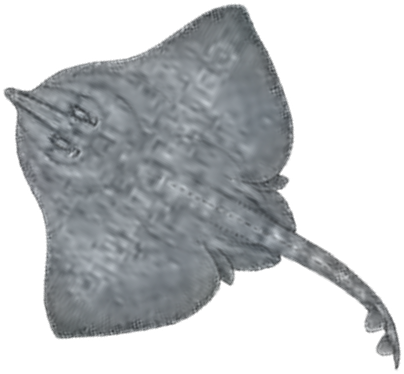
Blue Skate
Dipturus batis (Linnaeus, 1758)
Critically Endangered- Maximum length
- 1.5 m
- Depth range
- 600m, most commonly ~100m.
- FAO code
- RJB
Meet the Blue Skate
- Also known as
- BLUE SKATE, Common Skate, Grey Skate, Glattrochen (DEU), Noriega (ESP), Pocheteau Gris (FRA), Vleet (NLD).
How to identify
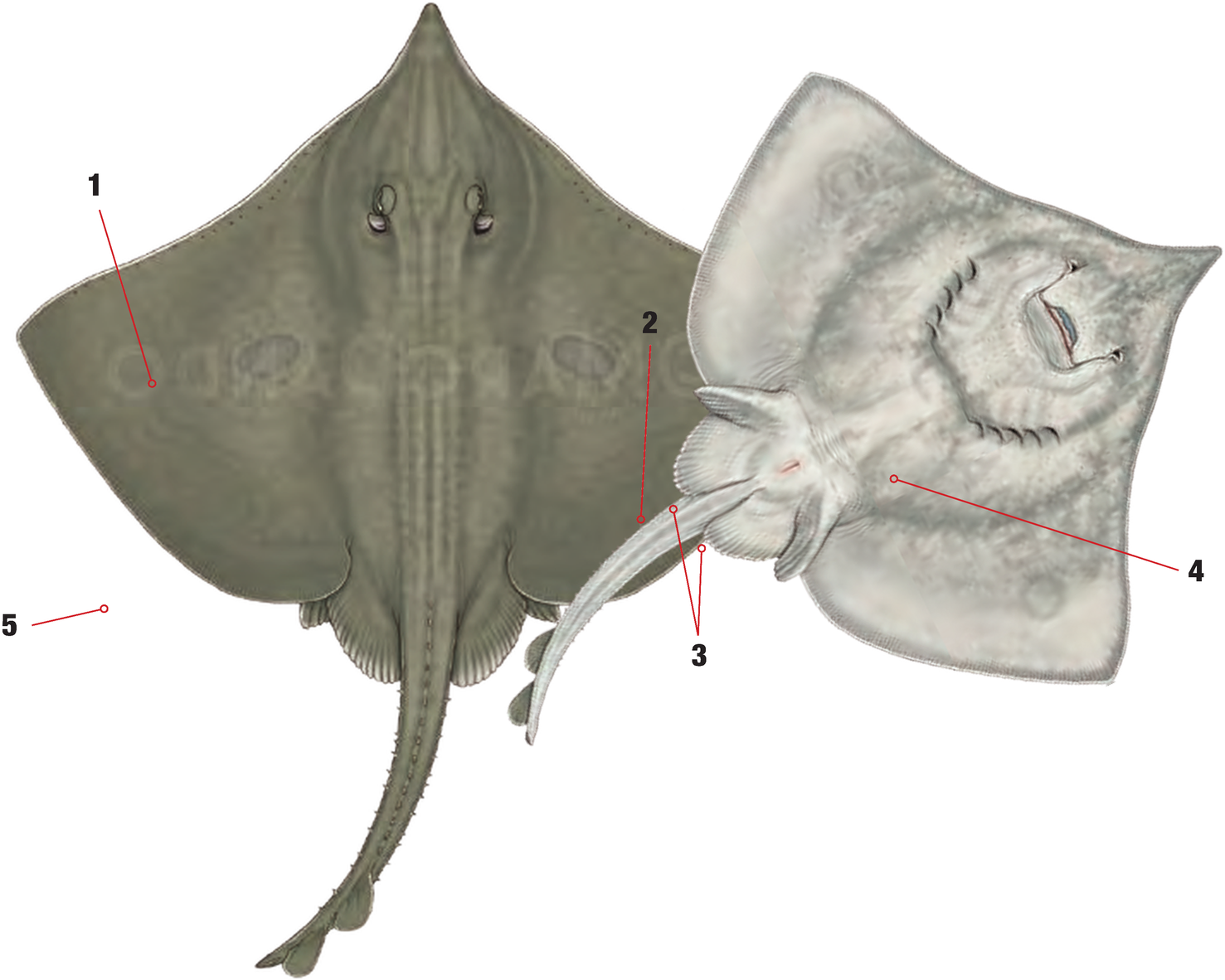
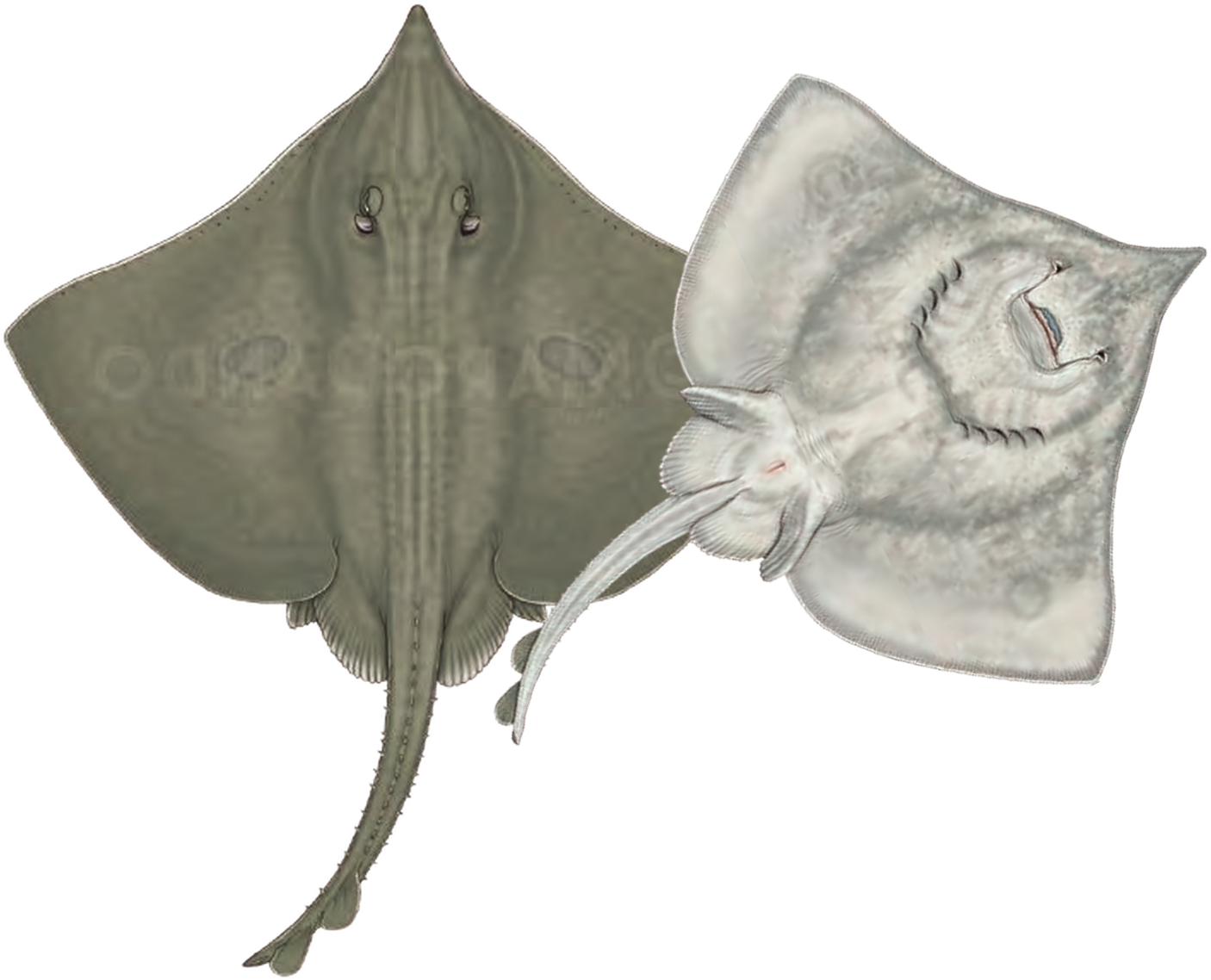
The numbers match the arrows on the illustration.
- Iris of eye pale yellow.
- Median row of 12–31 thorns along tail.
- Adults with lateral thorns along lower edge of tail, tips pointing at right angles.
- Two small dorsal fins with short interdorsal space.
- Broad disc, wider than it is long with anterior edge of disc mildly concave.
Colouring & markings
- Dorsally brownish, often with pale spots and streaks.
- Oval eyespot on inner wings with a yellowish outer margin and darker centre.
- Ventrally dark greyish, becoming lighter with growth.
- Black sensory pores visible on dorsal and ventral surface.
Teeth
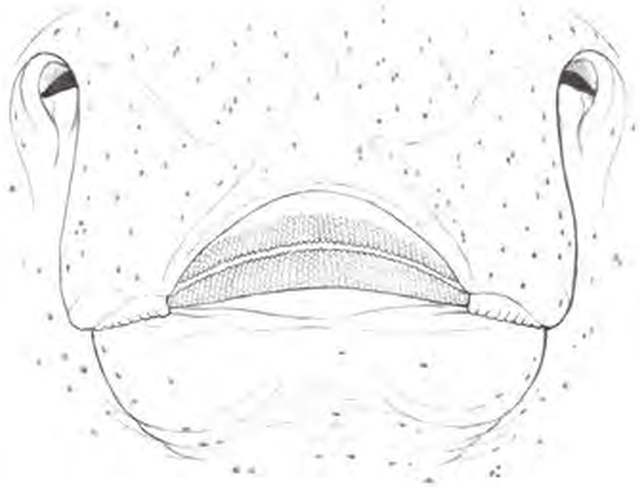
Narrow, rounded bases with pointed cusps. Cusps are longer in adult males. Upper jaw: 40–45 in juveniles; 40–56 in adults.
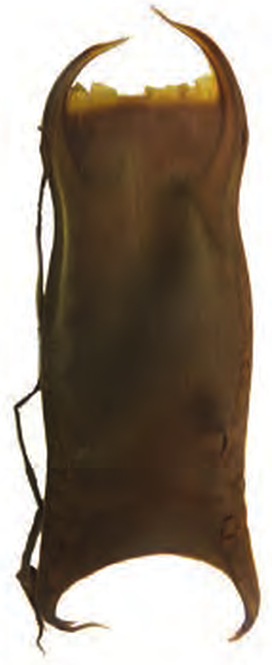
Eggcase
68–80mm wide. 129–150mm long (excl. horns). Pale brown to golden in colour with dense fibrous giving a bark-like appearance. Large, smooth capsules with short, stocky posterior horns.
How big do they get?
Where they live
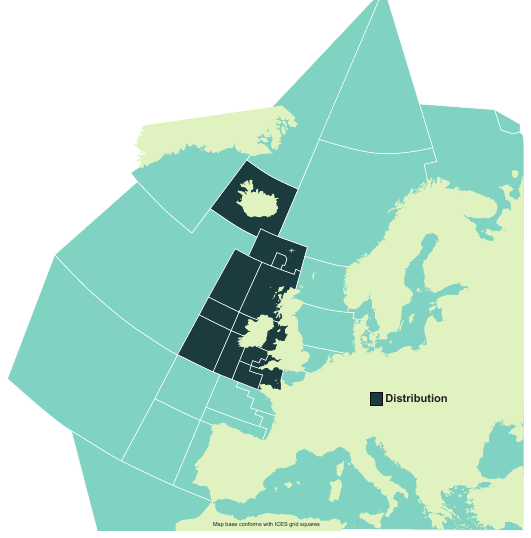
Distribution
Northeast Atlantic around Iceland to the British Isles from Rockall and Scotland to the Celtic Sea and northern Bay of Biscay. Southern limits uncertain. Distribution remains unclear due to historic taxonomic confusion with D. intermedius.
Habitat
Demersal to ~600m, most commonly ~100m in coastal waters and over continental slopes. Primarily found on soft substrates but occasionally on hard, gravelly bottoms.
In the wild
-
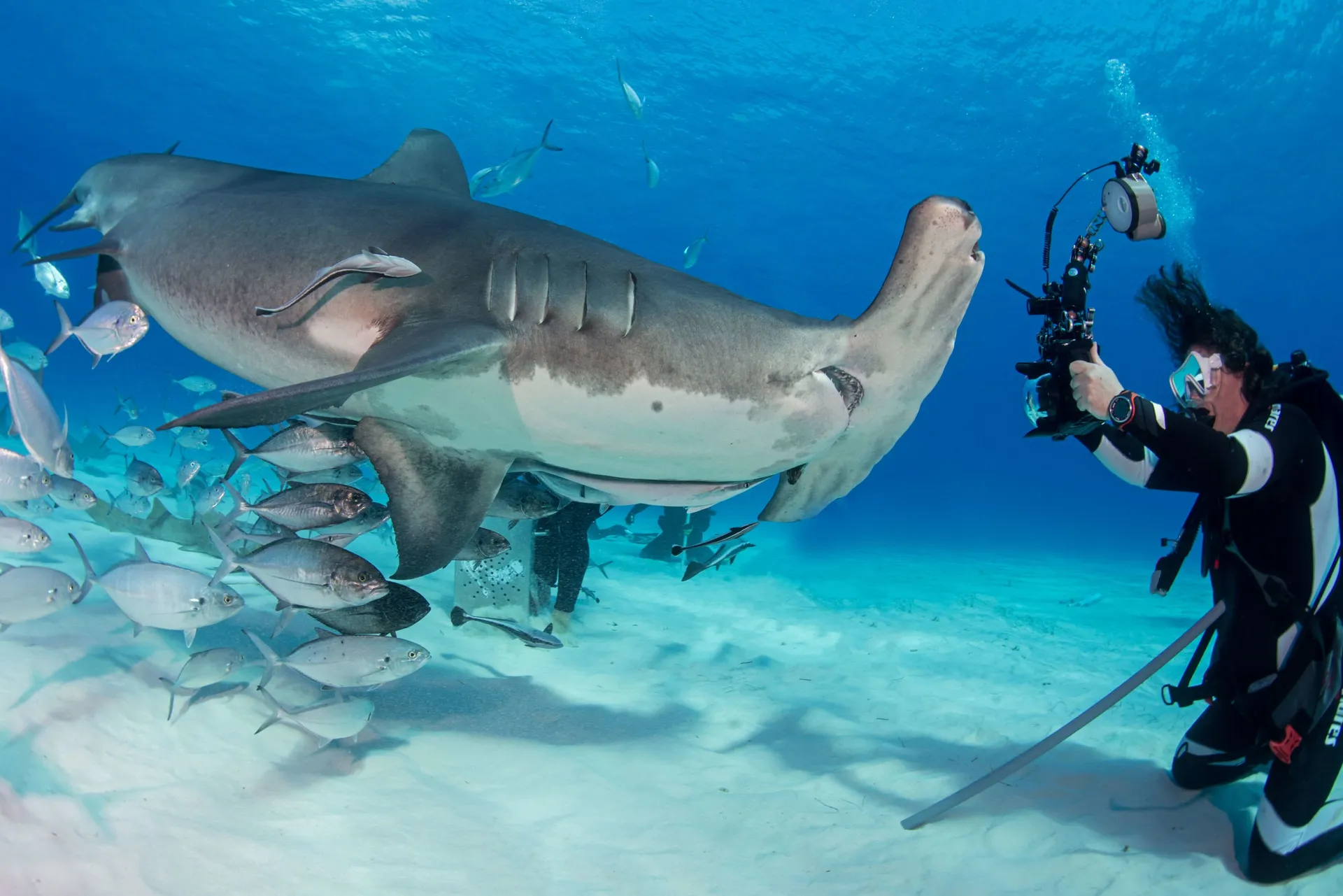
Recorded on a Shark Trust survey dive -
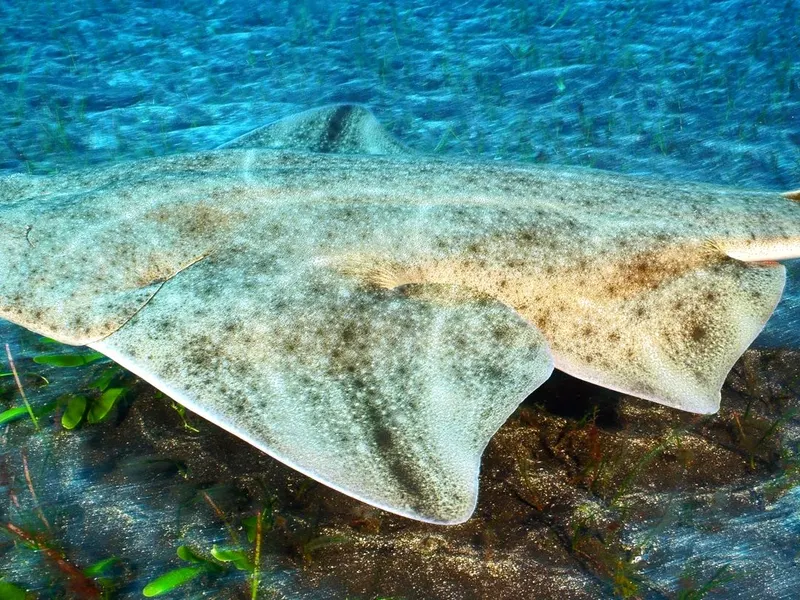
Resting on a sandy seabed -
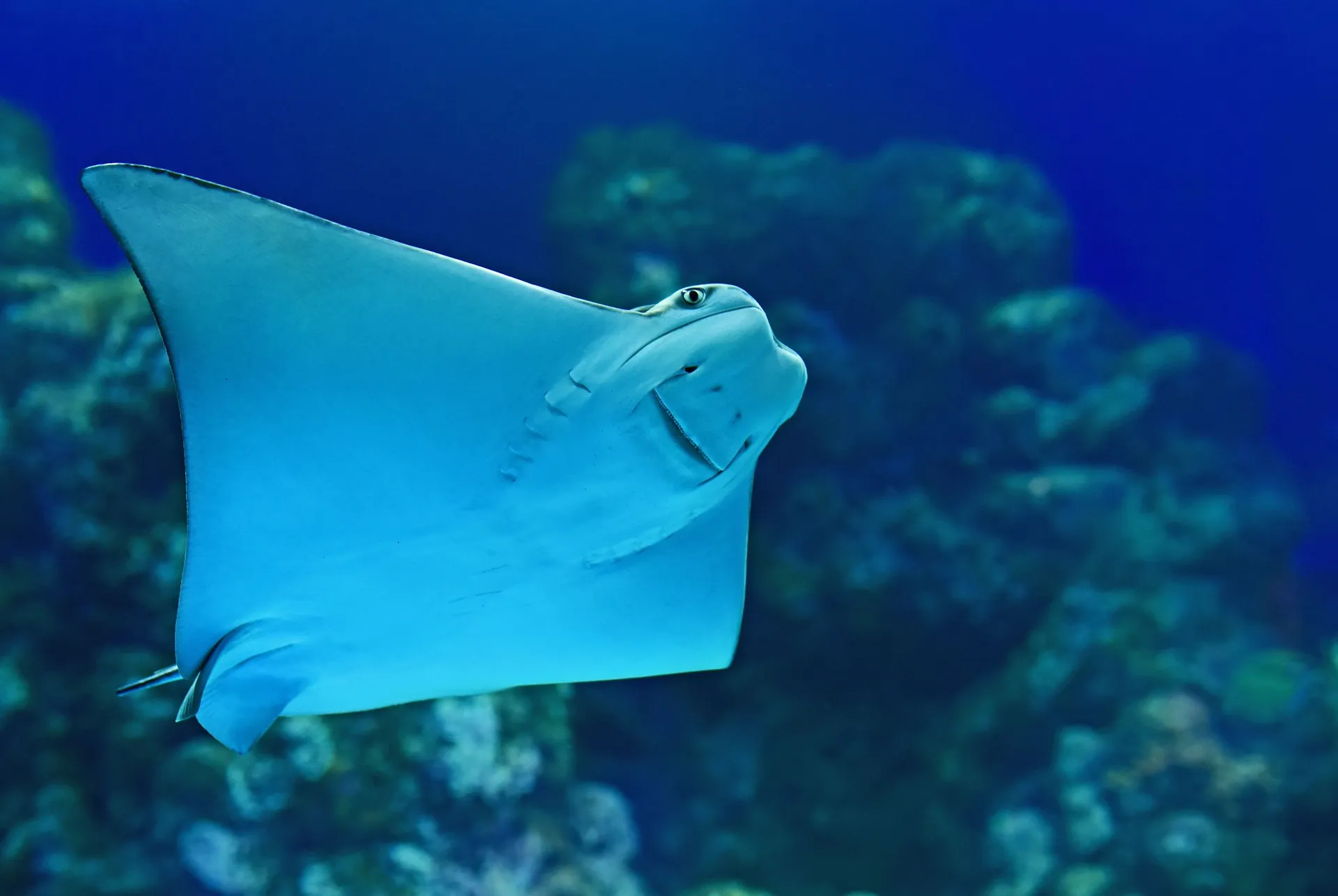
Cruising close to the sea floor -
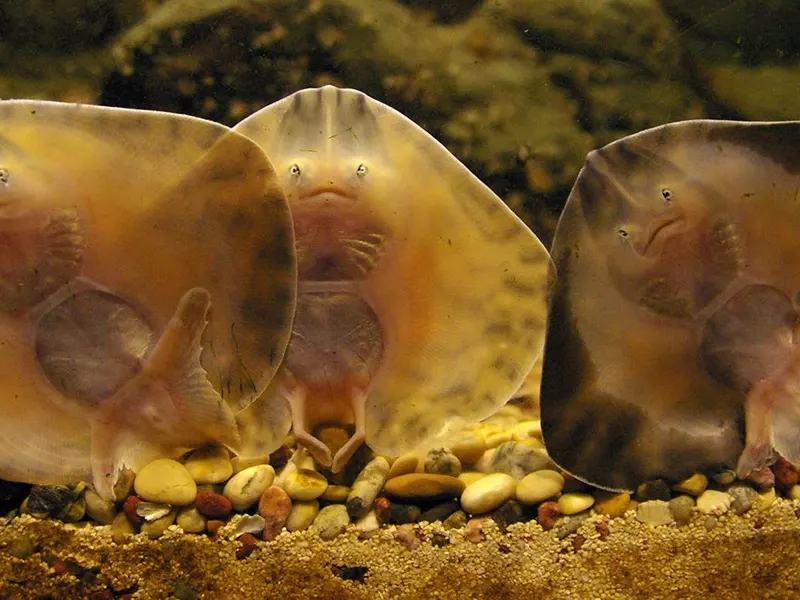
In the shallows at dusk -
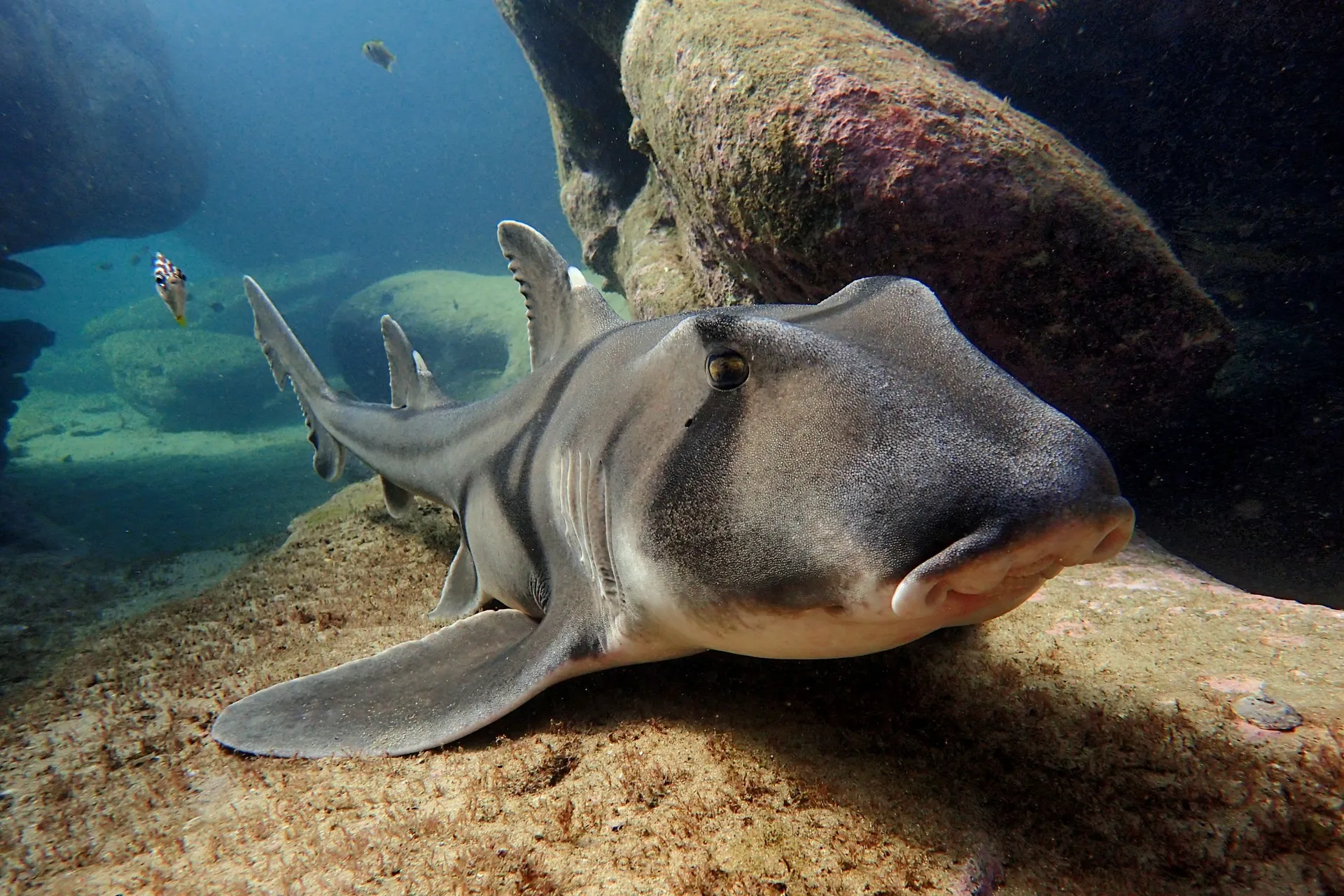
Sheltering on the reef
Go deeper
Size & biology
- Birth: 21cm.
- Matures: female 123cm; male 115cm.
- Max. TL: 150cm.
- Oviparous, eggcases laid in spring/summer.
- Embryonic development is long, lasting many months and possibly >1 year in higher latitudes.
- Little is known about the biology of this skate due to previous taxonomic confusion with the Flapper Skate D. intermedius.
- Diet consists of benthic invertebrates and fishes including other skates.
Conservation status
IUCN Red List: Global: Critically Endangered (2006) Europe: Critically Endangered (2015) Mediterranean: Critically Endangered (2016) Current IUCN Red List statuses refer to the Common Skate Dipturus batis species complex following historic taxonomic confusion of the Blue Skate with the Flapper Skate, D. intermedius. The size and depth distribution of the Blue Skate make it particularly vulnerable to demersal fisheries across its range. This skate is late maturing permitting little ability to withstand exploitation. Drastic declines in population size have been recorded. The full extent of the decline in geographic range is difficult to determine, due to confusion with the Flapper Skate. The longer-term population depletion is also unknown.
Management
Subject to prohibitions under the CFP and RFMO.
Commercial importance
Historically targeted and taken as bycatch across its range by multispecies trawl, line and tanglenet fisheries.
References & further reading
Assessment: RJB/NEA/2020
- Ebert & Stehmann. Lynghammar, A.
- Last Gordon et al. et al.
- ICES Advice. Dulvy et al.
- ICES Advice. Iglésias et al.