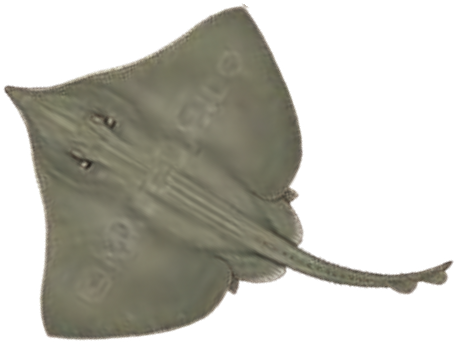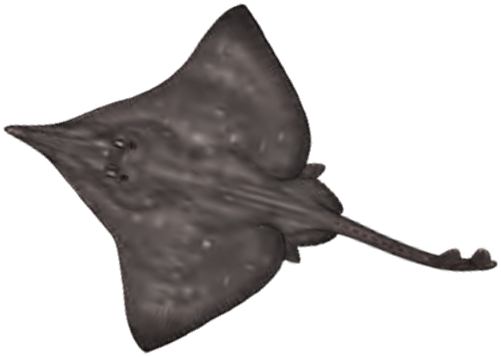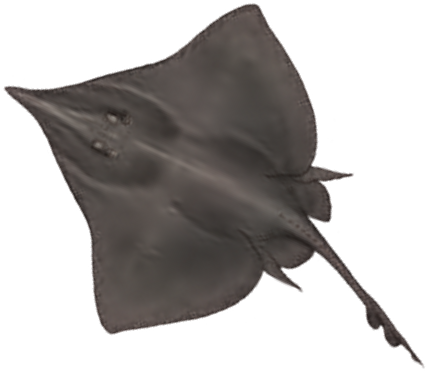
White Skate
Rostroraja alba (Lacepède, 1803)
Endangered- Maximum length
- 2.4 m
- Depth range
- From shallows to 400m.
- FAO code
- RJA
Meet the White Skate
- Also known as
- WHITE SKATE, Bordered Skate, Bottlenosed Skate, Burton Skate, Spearnose Skate, White-bellied Skate, Bandroche (DEU), Raya Bramante (ESP), Raie Blanche (FRA), Razza Bianca (ITA), Witte Rog (NLD), Raia Tairoga (PRT).
How to identify
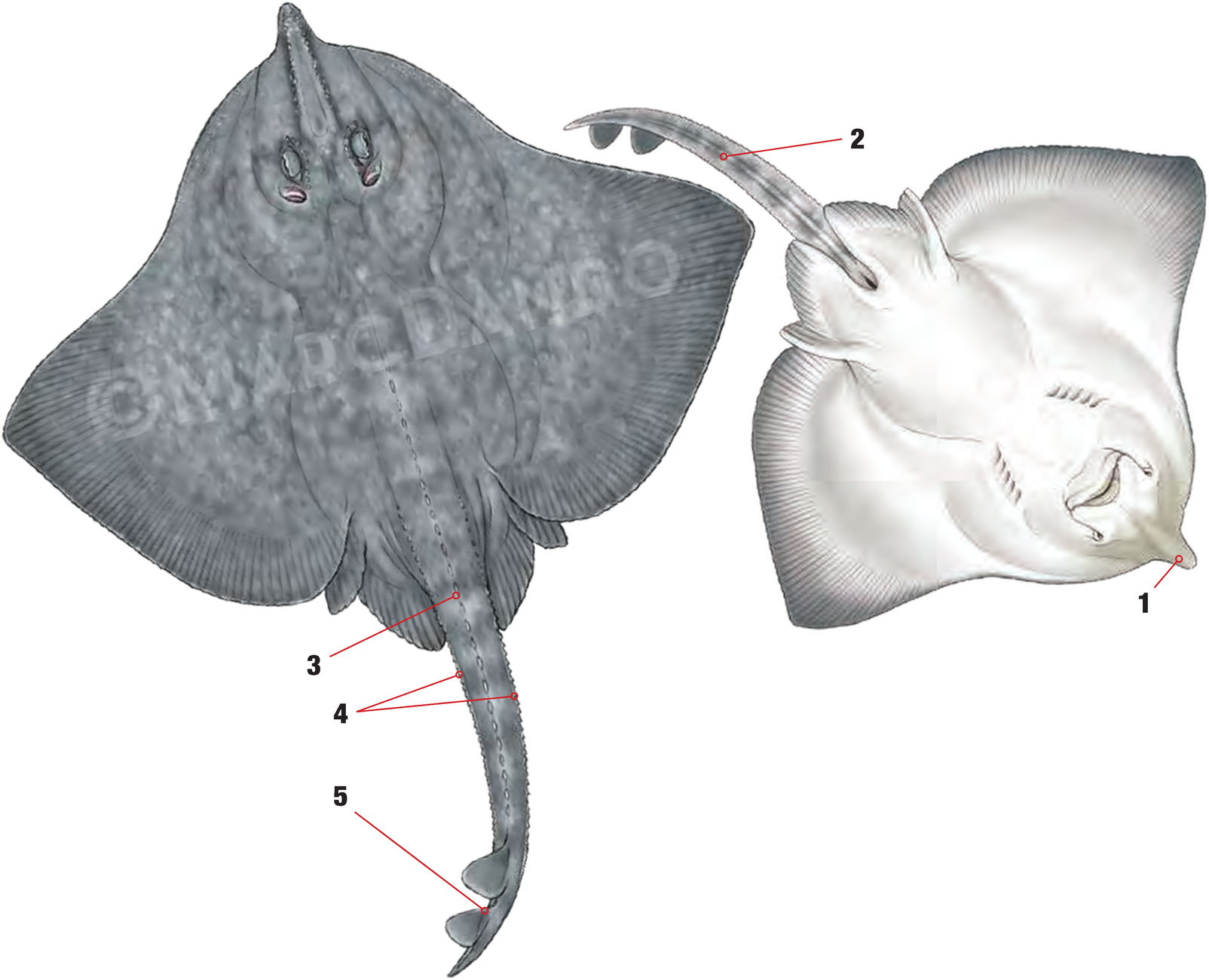
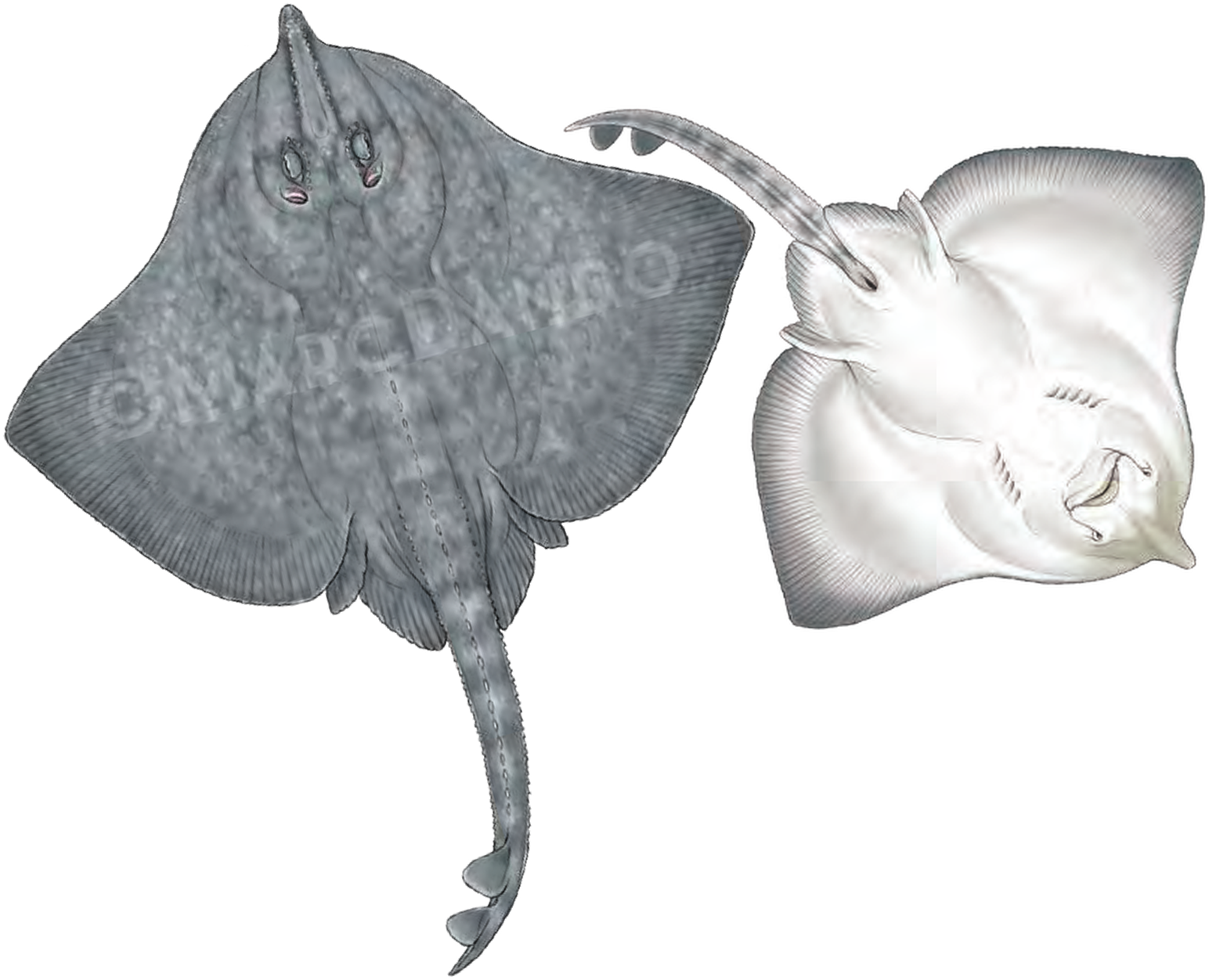
The numbers match the arrows on the illustration.
- Long narrow snout.
- Tail slightly shorter than body.
- Median row of 10–30 large thorns along tail to first dorsal fin. Number of thorns increases with age.
- Strong row of thorns either side of lower edges of tail.
- 0–2 interdorsal thorns.
Colouring & markings
- Dorsal surface grey-blue in adults, red-brown in juveniles.
- Pattern of numerous light and dark spots and blotches.
- Ventral surface white with darker margins.

Teeth
Middle series of teeth are elongated with pointed cusps. Upper jaw: 40–48.
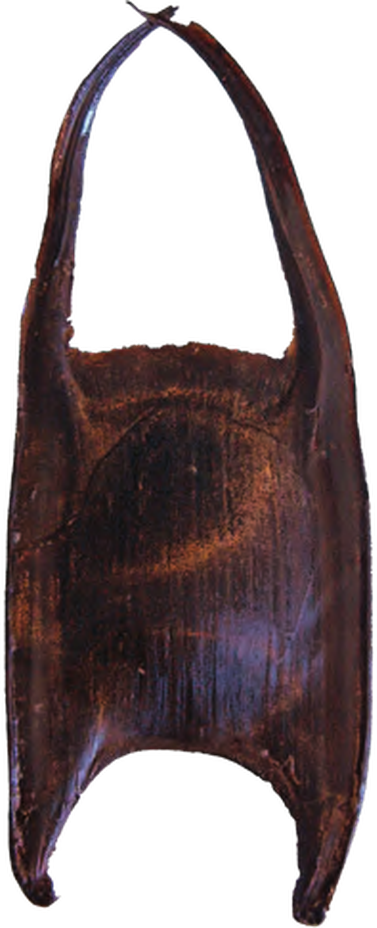
Eggcase
104–145mm wide. 128–190mm long (excl. horns). Very square capsule, almost as wide as it is long. Four long horns and strong ridges running longitudinally. Similar eggcase to Blonde Ray, Raja brachyura.
How big do they get?
Where they live
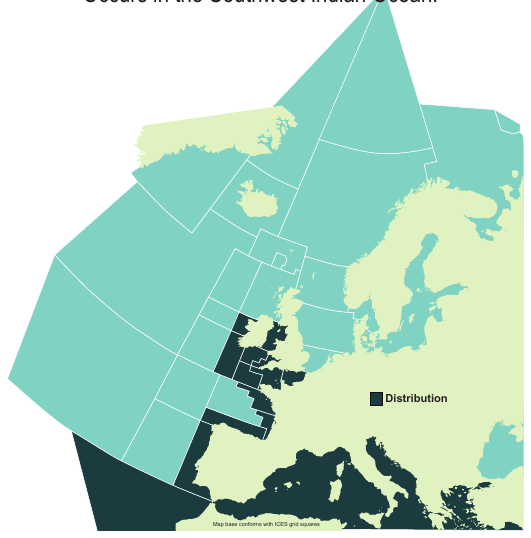
Distribution
Northeast Atlantic from the southern part of the British Isles to South Africa, including the Western and Central Mediterranean Sea. Occurs in the Southwest Indian Ocean.
Habitat
Demersal, shallows to 400m, possibly to 500m. Found on continental shelf and upper slope on sandy and rocky substrates.
In the wild
-

Recorded on a Shark Trust survey dive -
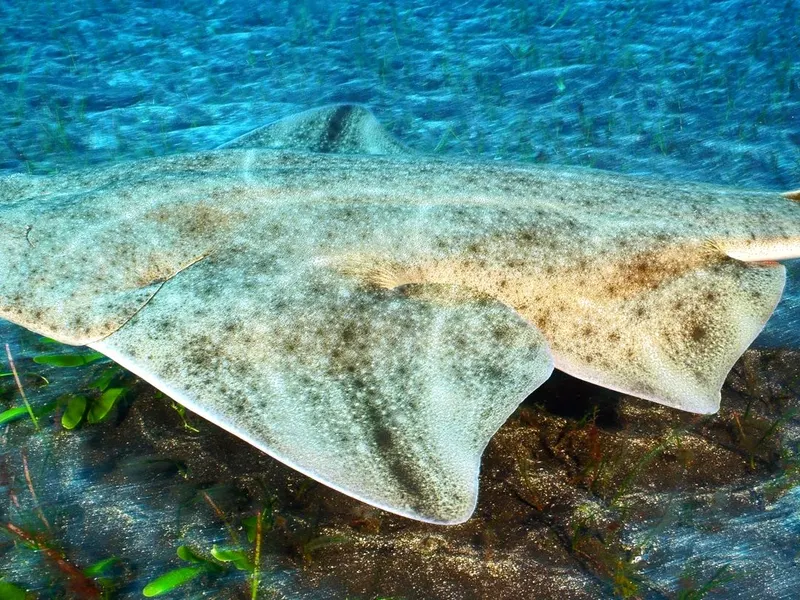
Resting on a sandy seabed -
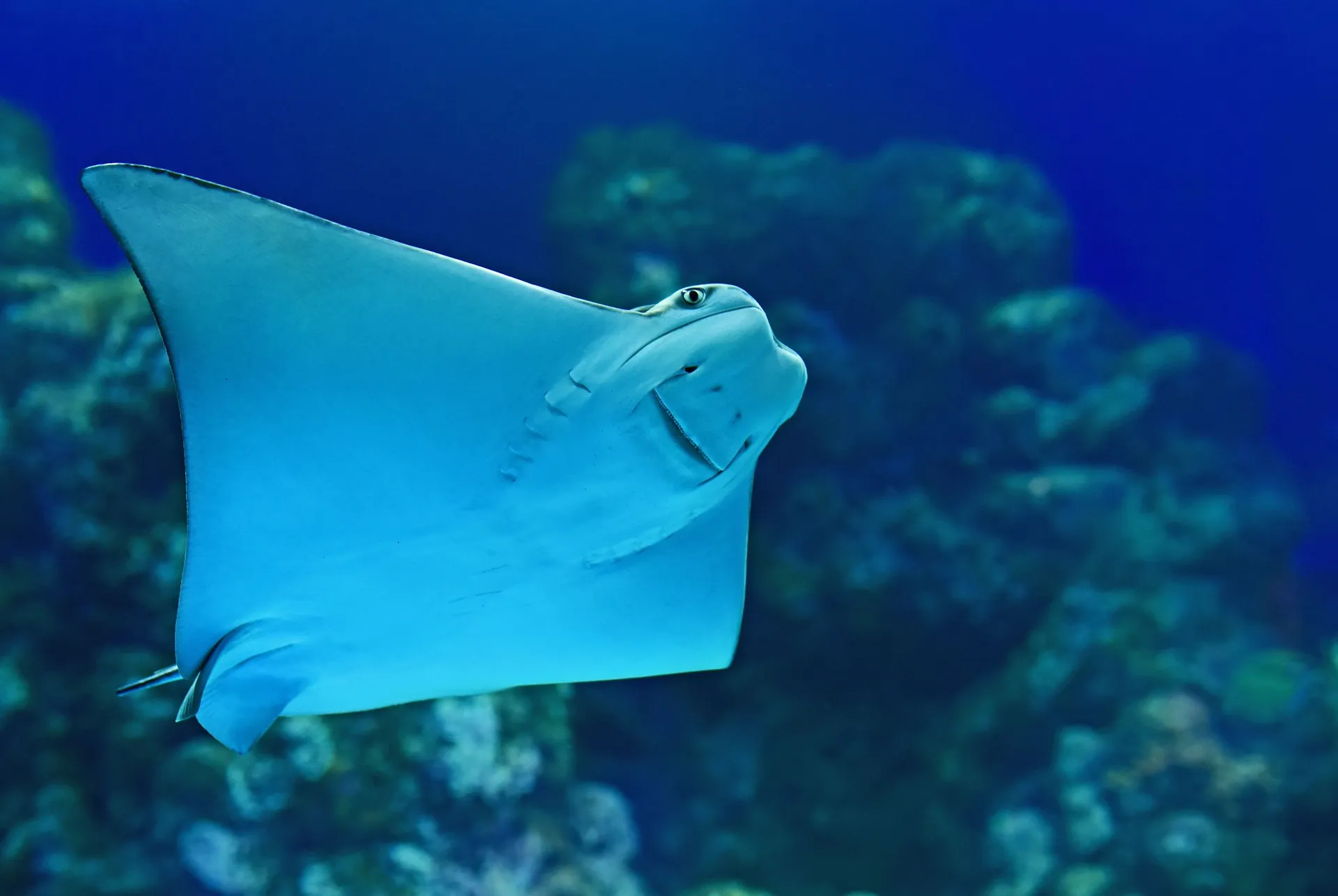
Cruising close to the sea floor -
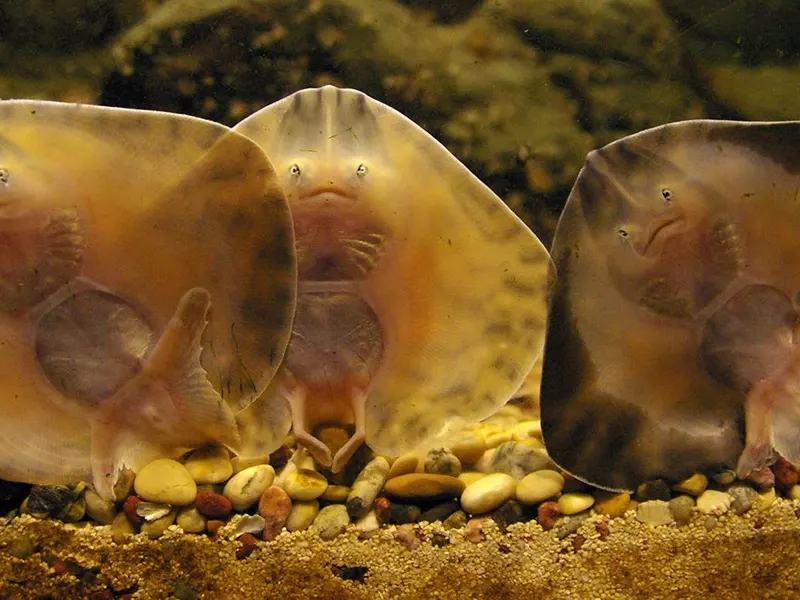
In the shallows at dusk -
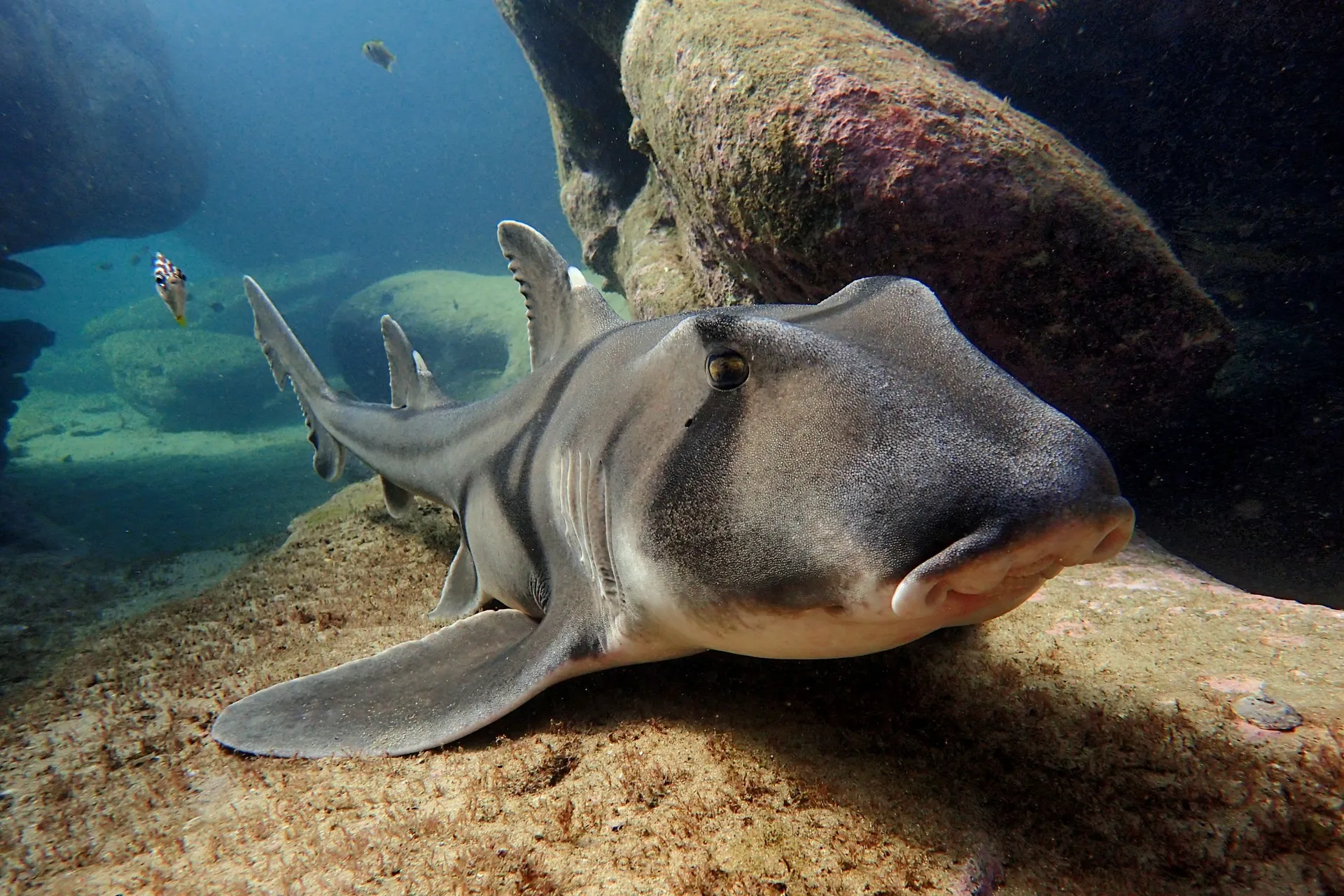
Sheltering on the reef
Go deeper
Size & biology
- Birth: 30cm.
- Matures: female 130cm; male 120cm (NE Atlantic). Size at maturity varies regionally.
- Max. TL: 240cm.
- Age at maturity: female 23 years; male 20 years (Central Med.).
- Max. age est.: female 76 years; male 50 years (Central Med.).
- Oviparous, females produce 55–158 eggcases annually.
- Incubation period 15 months.
- Voracious predator; diet consists of benthic invertebrates, cephalopods and teleosts.
Conservation status
IUCN Red List: Global: Endangered (2006) Europe: Critically Endangered (2015) Mediterranean: Endangered (2016) Historically targeted due to its large size and thick wings. It’s population in European waters is estimated to have declined by >80% over three generations (75-90 years). This skates slow life history characteristics and low fecundity make it vulnerable to overexploitation.
Management
Subject to prohibitions under the CFP and RFMO.
Commercial importance
No longer targeted but occasionally taken as bycatch in multispecies trawl fisheries where it may be unreported or mislabelled (the scarcity of this species may result in uncertainty in terms of identification).
References & further reading
Assessment: RJA/NEA/2020
- Dulvy et al.
- Ebert & Stehmann.
- Ellis et al.
- Last et al.
- Kadri et al.
- Gordon et al.
- Ellis et al.
- ICES WGEF Report.