Norwegian Skate
Dipturus nidarosiensis (Storm, 1881)
Endangered- Maximum length
- 2 m
- Depth range
- From 125 to 1,235m.
- FAO code
- JAD
Meet the Norwegian Skate
- Also known as
- NORWEGIAN SKATE, Black Skate, Schwarzbäuchiger Glattrochen (DEU), Raya Noruega (ESP), Pocheteau de Norvège (FRA), Noorse Rog (NLD).
How to identify
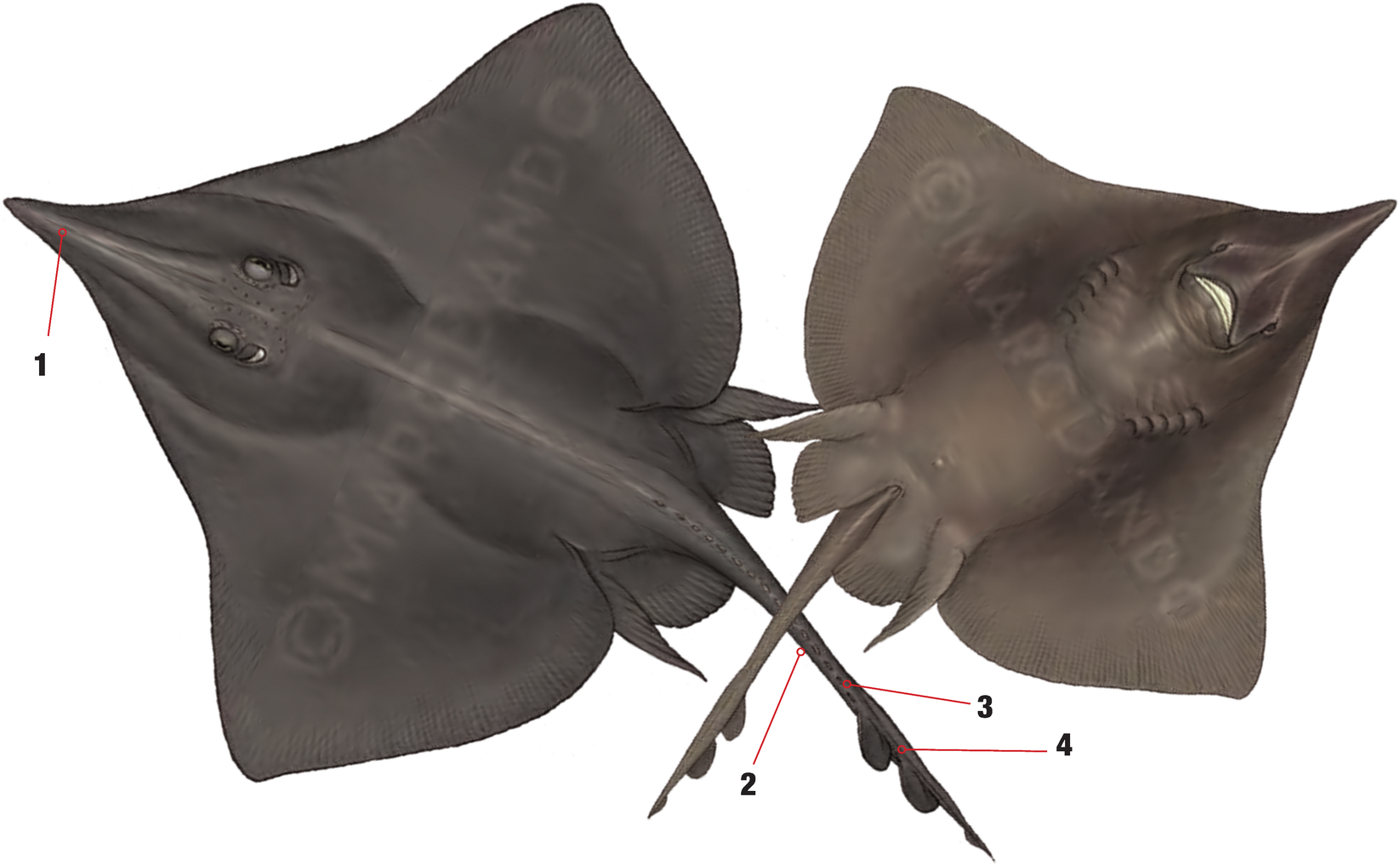
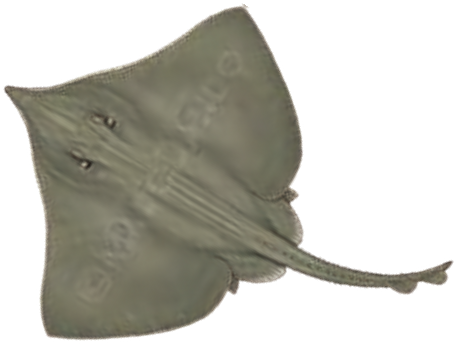
The numbers match the arrows on the illustration.
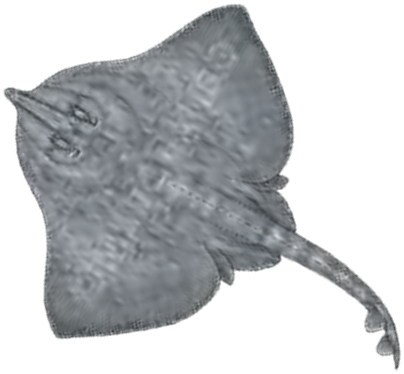
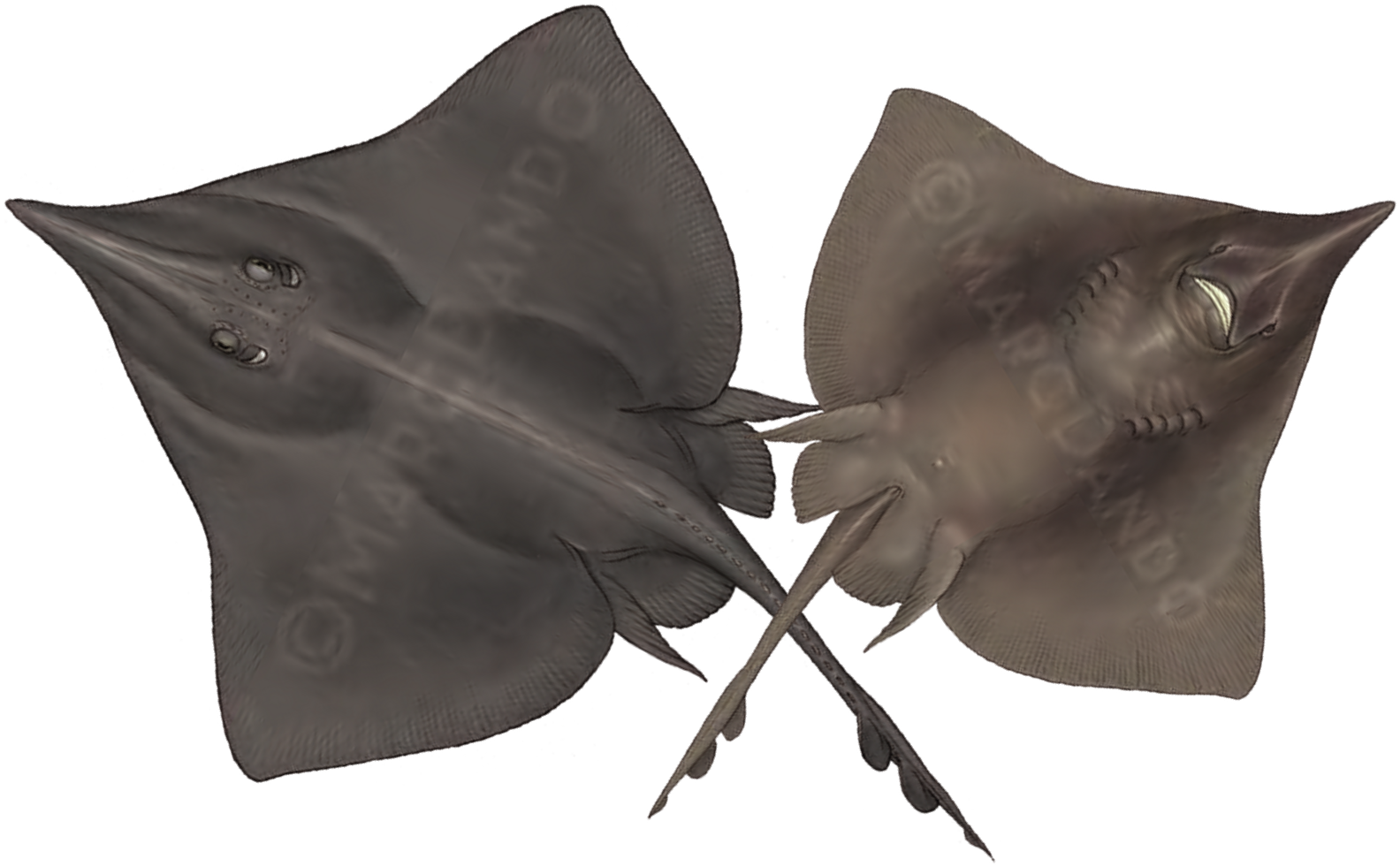
- Long, pointed snout.
- Short, solid tail.
- 40–50 thorns along midline of tail. Flanked by parallel rows in females.
- 1–3 interdorsal thorns.
Colouring & markings
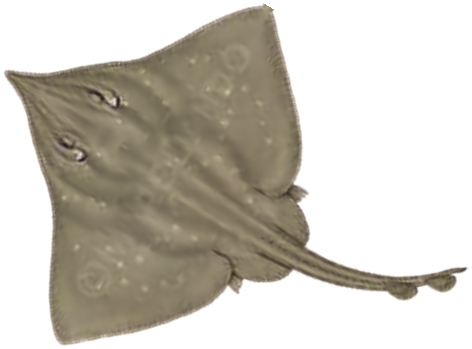
- Dorsal surface plain dark grey to brown with black spots marking pores.
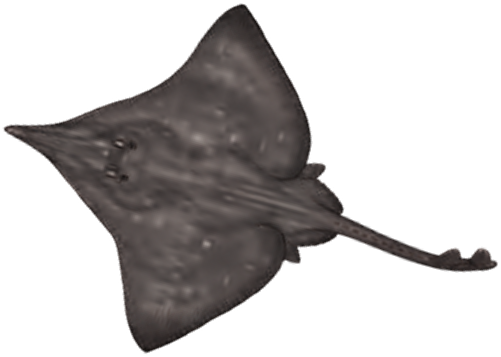
- Ventral surface uniformly dark brownish black, usually darker than the dorsal surface and often covered in mucus when caught.
Teeth
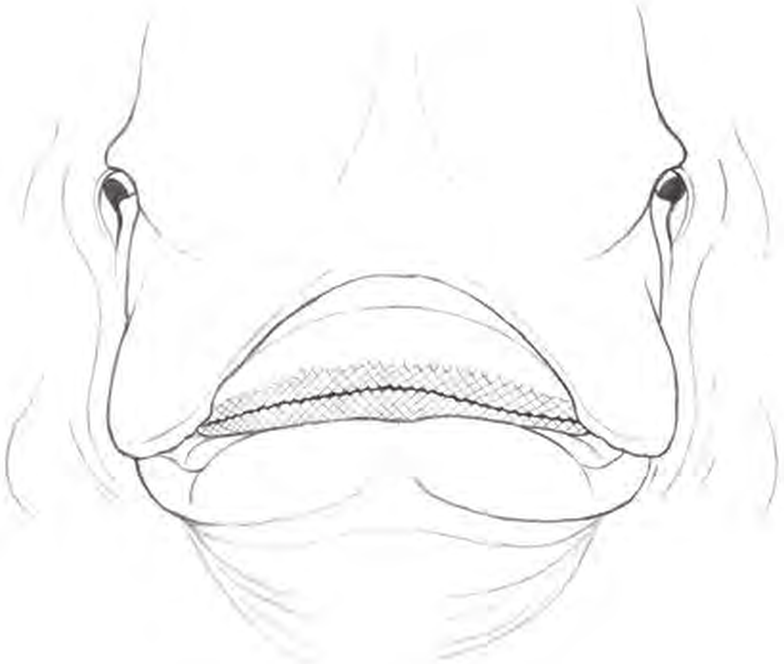
Teeth set in pavement pattern in juveniles and females. Teeth set in parallel rows in adult males. Upper jaw: 34–42 rows in juveniles; 42–50 rows in adults.
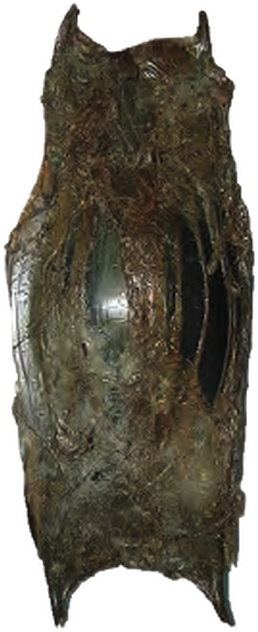
Eggcase
71(1). Research, 62–120mm wide. 153–260mm long (excl. Marine horns). Helgoland Long rectangular capsule with short horns and distinct keels and aprons. Eggcases found in the central Porcu western Mediterranean Sea smaller than in those found in Eggcase the Atlantic.
How big do they get?
Where they live
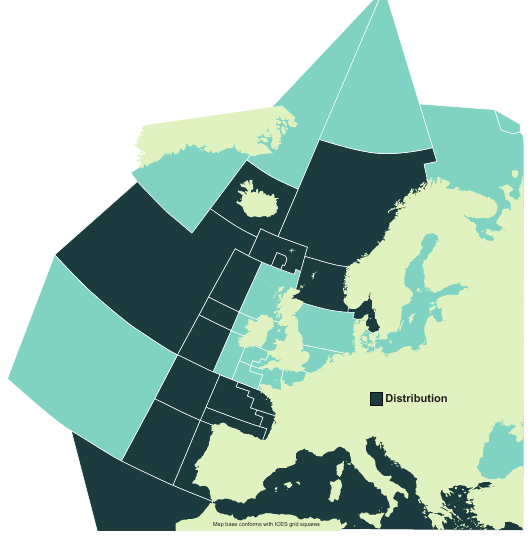
Distribution
Northeast Atlantic from Iceland to Norway, the Mid-Atlantic Ridge, Rockall Trough and Porcupine Seabight to South Africa. Present in the Mediterranean Sea.
Habitat
Demersal from 124–1,235m over continental and insular shelves and slopes.
In the wild
-

Recorded on a Shark Trust survey dive -
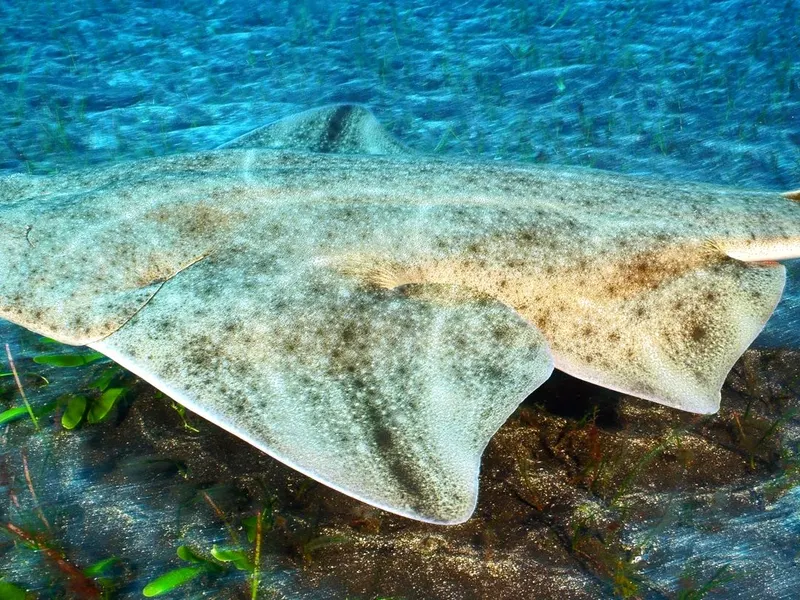
Resting on a sandy seabed -
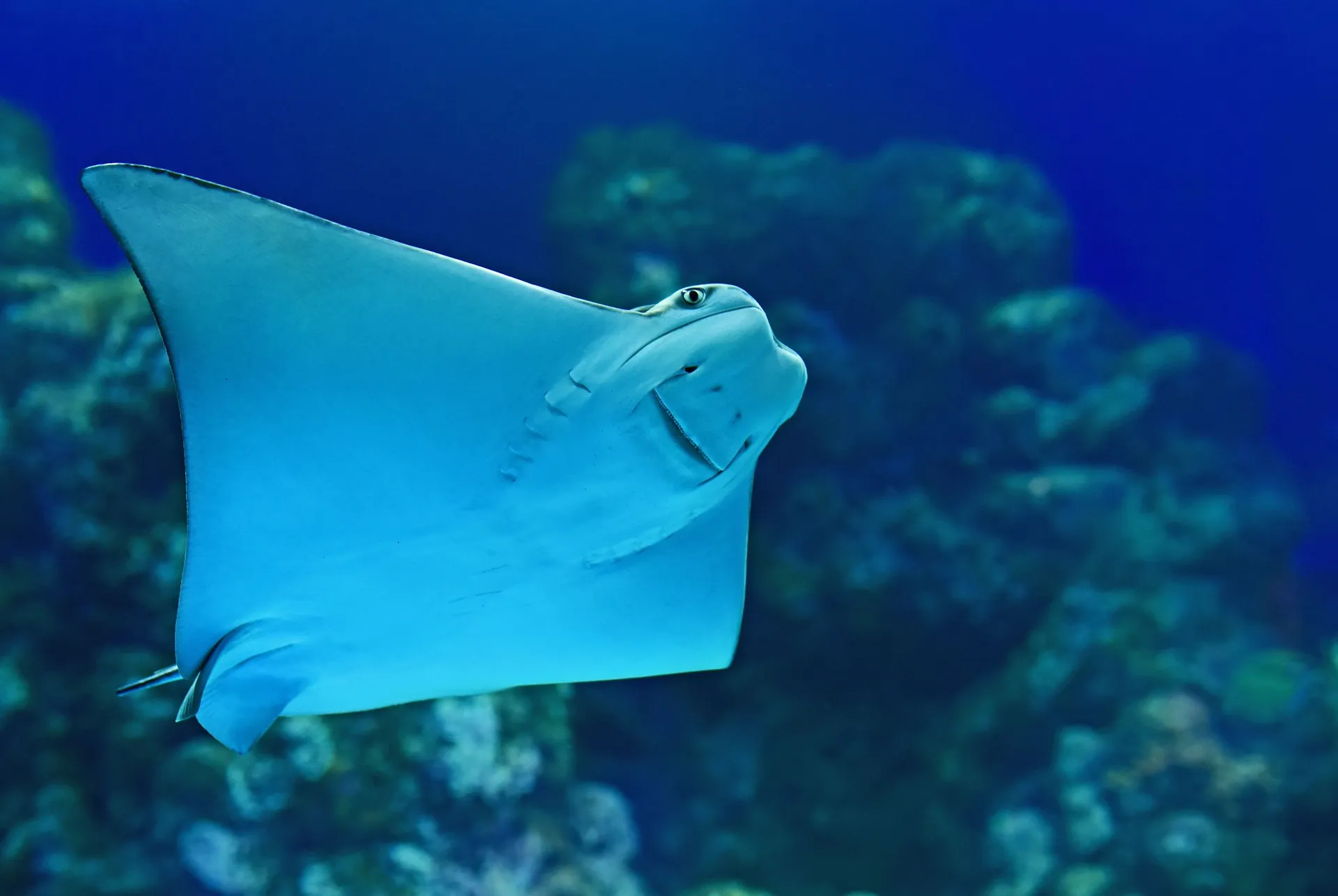
Cruising close to the sea floor -
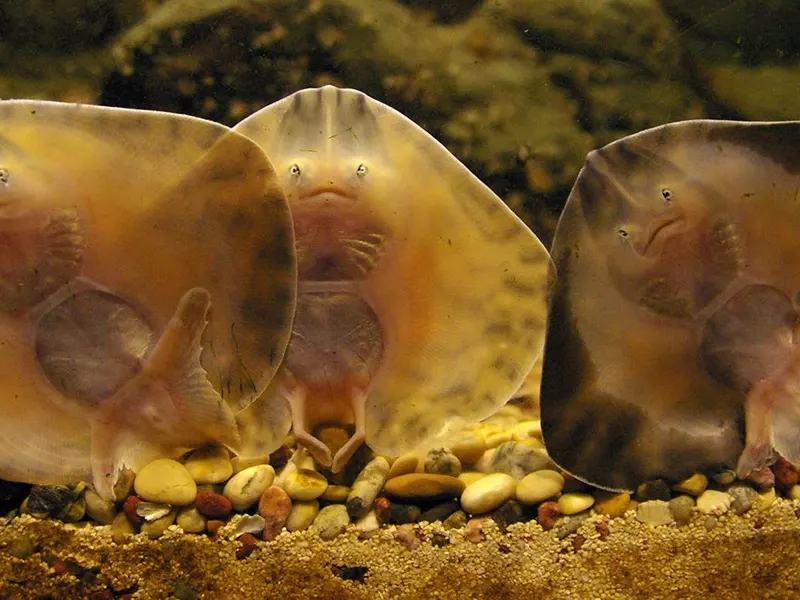
In the shallows at dusk -
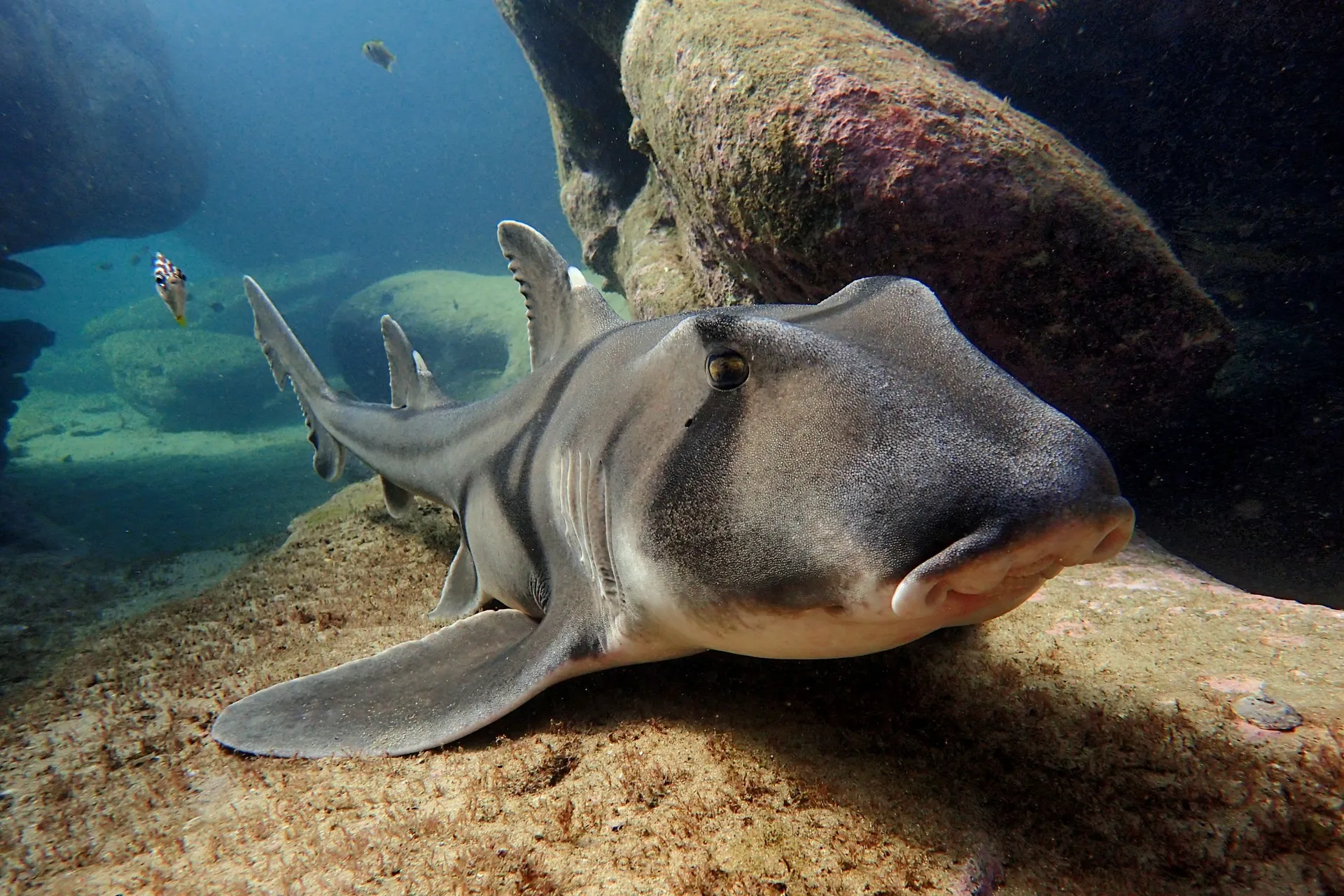
Sheltering on the reef
Go deeper
Size & biology
- Max. TL: 200cm, possibly to 250cm.
- Oviparous, little else is known about the biology of this skate.
- Feeds primarily on invertebrates and benthic teleosts. Adults prey on larger teleosts.
Conservation status
IUCN Red List: Global: Near Threatened (2015) Europe: Near Threatened (2015) Mediterranean: Not Evaluated. A relatively rare, deepwater skate in the Northeast Atlantic. One of the largest skates across its range, likely threatened due to its large size and slow life history characteristics.
Management
Subject to prohibitions under the CFP and RFMO.
Commercial importance
Low commercial importance. Taken as bycatch in deepwater trawl fisheries and usually discarded.
References & further reading
Assessment: JAD/NEA/2020
- Ebert & Stehmann.
- Follesa et al.
- Last et al.
- Stehmann et al.
- Porcu et al.
- Lynghammar, A.
- Ellis et al.