Longnosed Skate
Dipturus oxyrinchus (Linnaeus, 1758)
Vulnerable- Maximum length
- 1.5 m
- Depth range
- From 90 to 900m, most commonly ~200m.
- FAO code
- RJO
Meet the Longnosed Skate
- Also known as
- LONGNOSED SKATE, Sniper’s Skate, Sharpnose Skate, Long-nosed Burton Skate, Spitzrochen (DEU), Raya Picuda (ESP), Pocheteau Noir (FRA), Arzilla Monaca (ITA), Scherpsnuitrog (NLD), Raia Bicuda (PRT).
How to identify
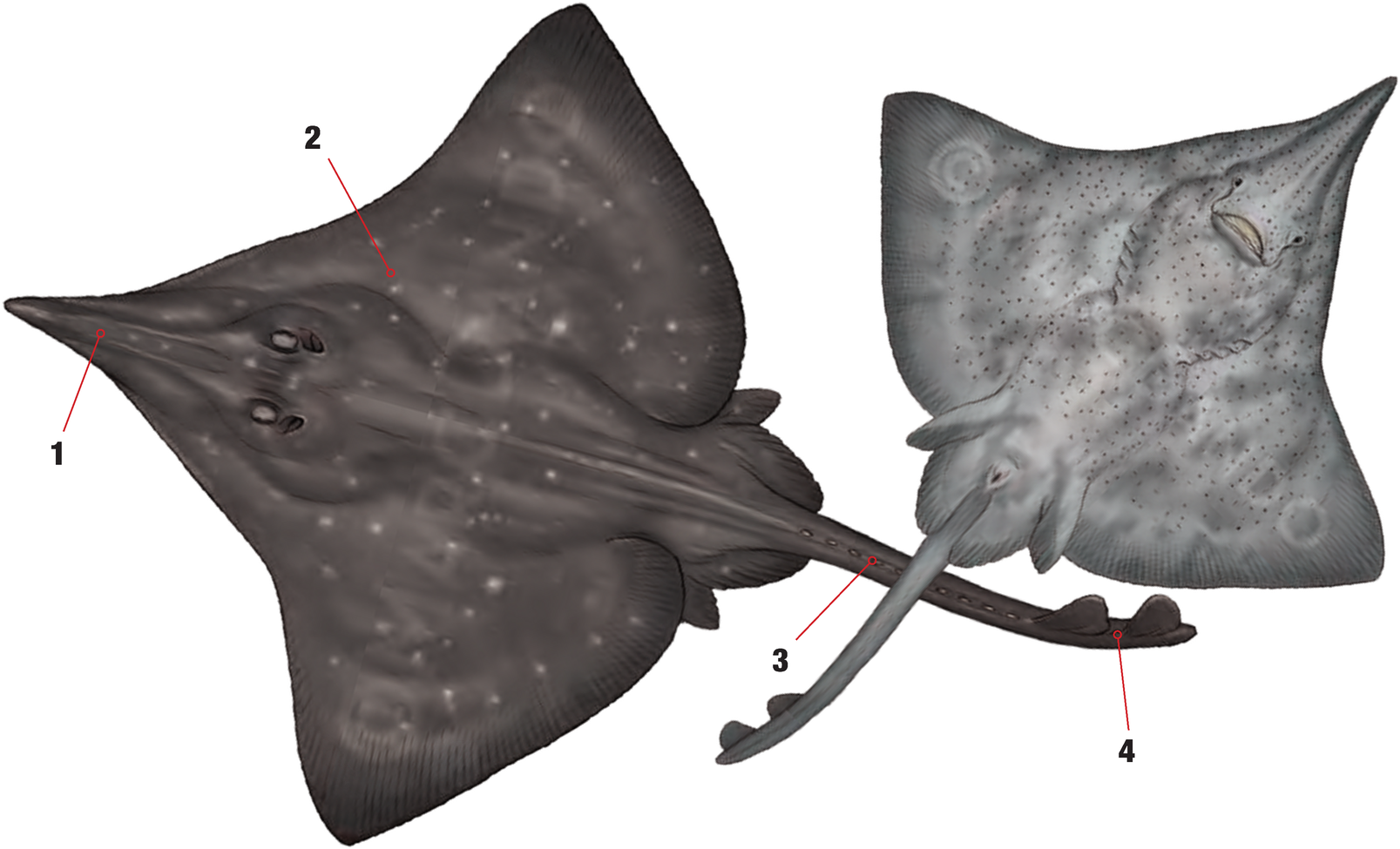
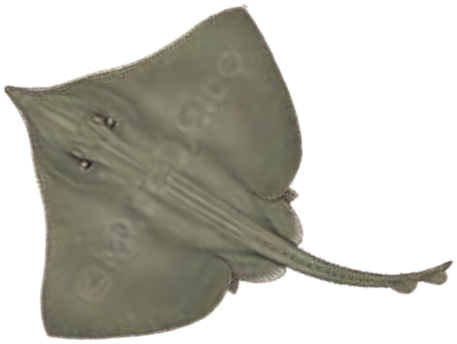
The numbers match the arrows on the illustration.
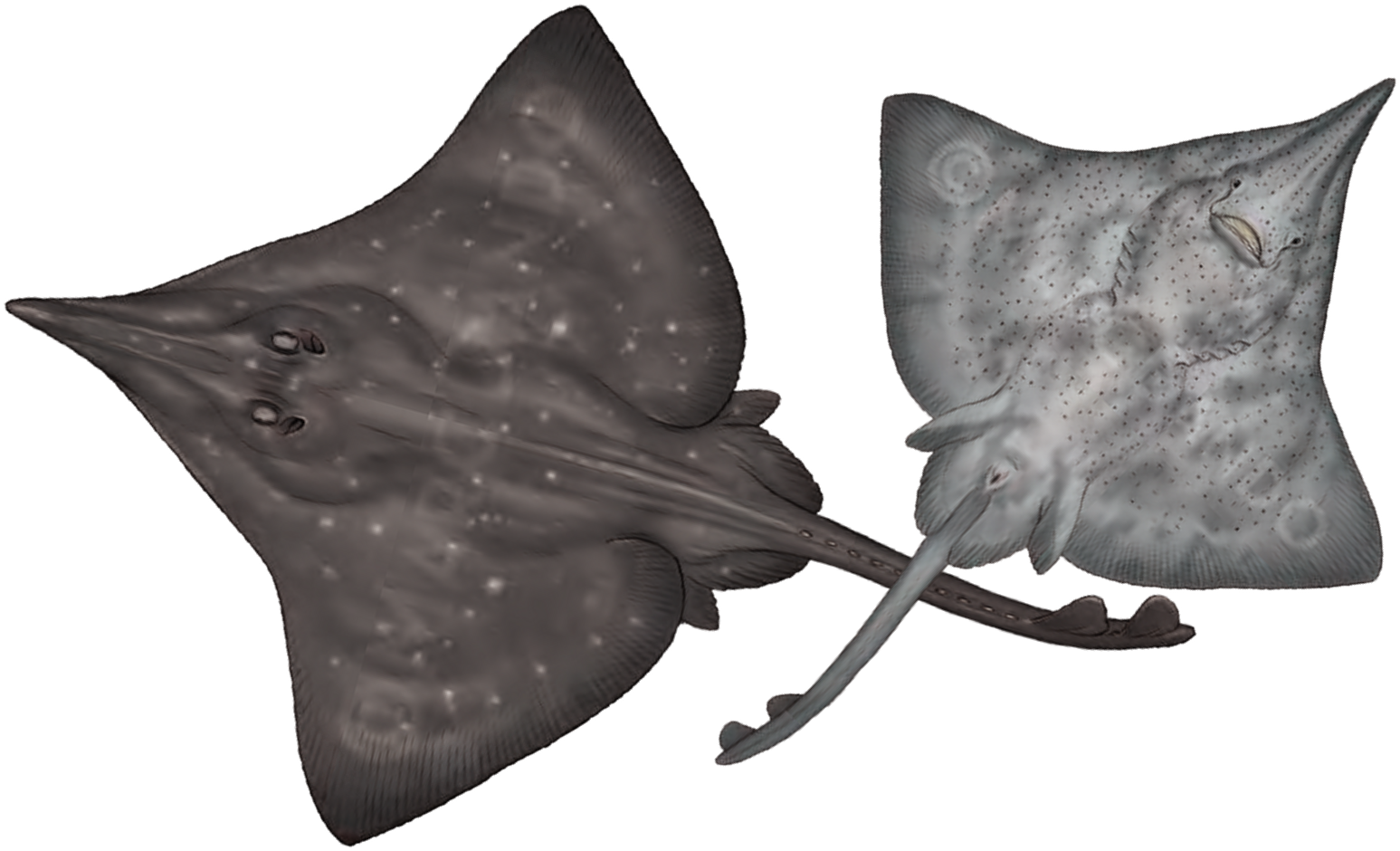
- Conspicuously long, pointed snout.
- No thorns on disc but entirely spinulose dorsal surface in adults.
- Row of 4–11 thorns on tail, often worn off in adults.
- 0–1 thorns between dorsal fins.
Colouring & markings
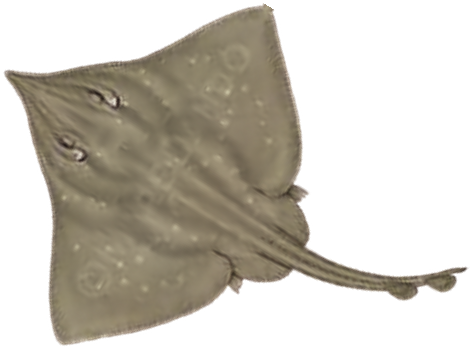
- Dorsal surface pale brown in juveniles becoming dusky brown to grey in adults.
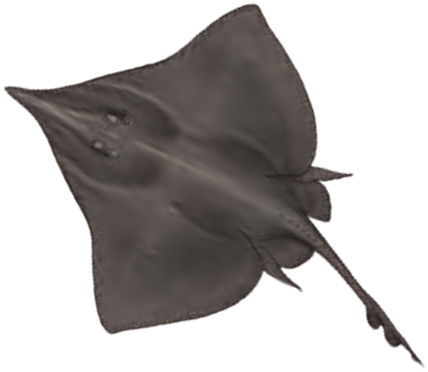
- Ventral surface pale brown in juveniles becoming dark brown to bluish grey in adults.
- Pattern of light and dark spots dorsally.
- Mucous pores marked with black dots and streaks.
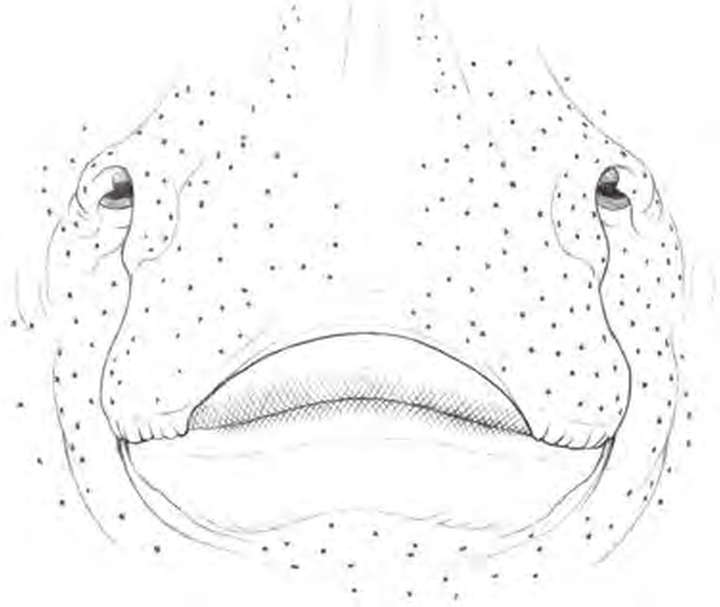
Teeth
Plate-like with small cusps, arranged in a pavement pattern. Upper jaw: 32–42.
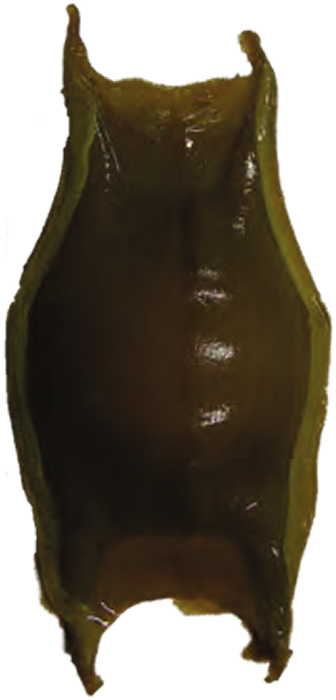
Eggcase
Bellodi 110–120mm wide. Andrea 140–235mm long (excl. horns). Eggcase Large, rectangular eggcases.
How big do they get?
Where they live
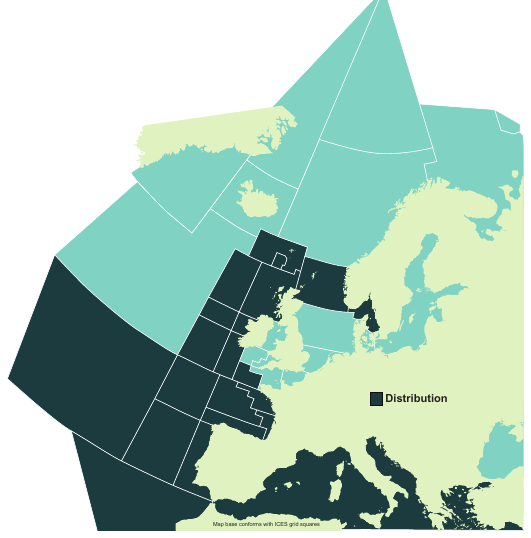
Distribution
Northeast Atlantic from Norway, the northern North Sea and Faroe Islands to Morocco, including the Azores, Canary Islands and Madeira. Found in the Mediterranean Sea.
Habitat
Demersal from 90–900m. Most commonly ~200m. Found on the continental shelf and slope on soft, sandy and gravelly substrates.
In the wild
-

Recorded on a Shark Trust survey dive -
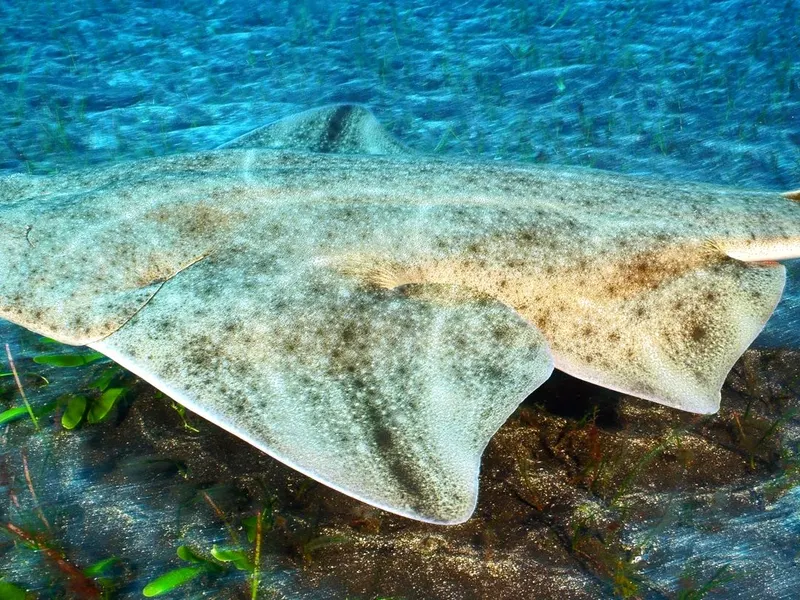
Resting on a sandy seabed -
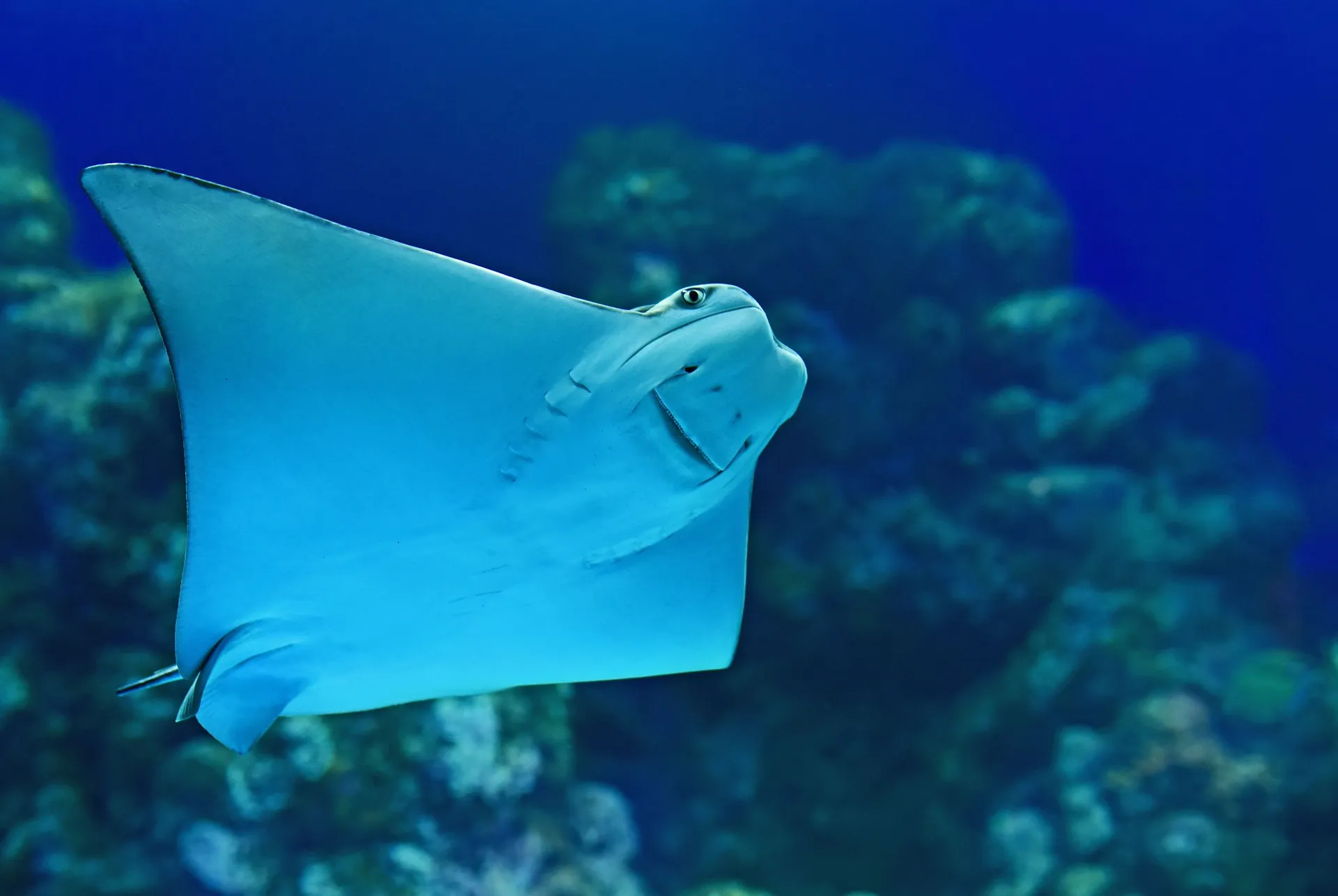
Cruising close to the sea floor -

In the shallows at dusk -
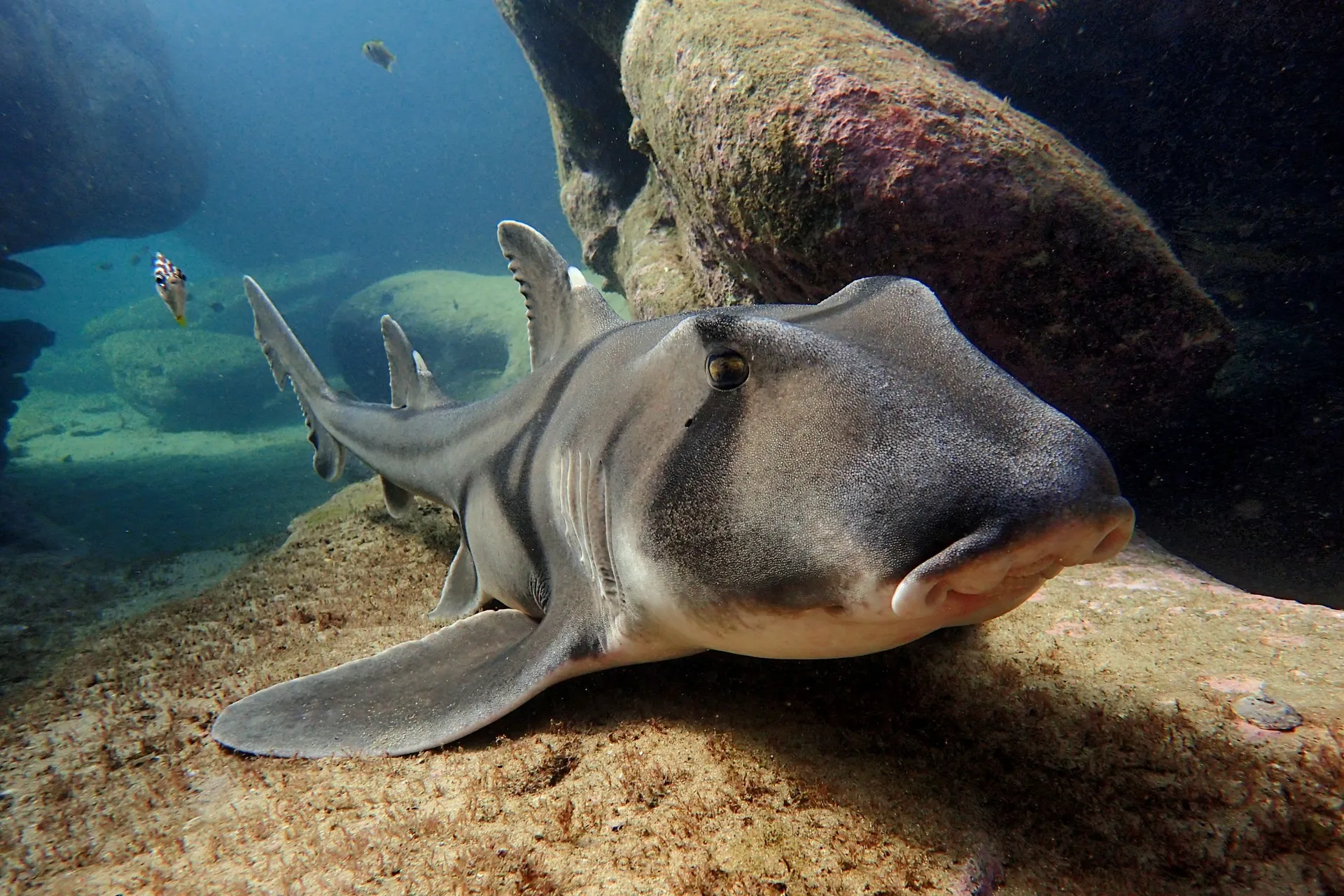
Sheltering on the reef
Go deeper
Size & biology
- Birth: 17cm.
- Matures: female 90cm; male 70–80cm.
- Max. TL: 150cm.
- Age at maturity: 6–8 years (both sexes).
- Oviparous with eggcases laid in spring/early summer.
- A generalist feeder preying on fishes and bottom invertebrates e.g. cephalopods, crustaceans and molluscs.
Conservation status
IUCN Red List: Global: Near Threatened (2015) Europe: Near Threatened (2015) Mediterranean: Near Threatened (2016) A large bodied skate with presumed slow life history characteristics making it vulnerable to exploitation by deepwater fisheries. Overlap with deepwater fisheries and low catch levels suggest this skate has declined, but the extent of any decline is unknown. Genetically distinct populations in the Northeast Atlantic and Mediterranean limits population dispersal.
Management
Subject to regulations under the CFP.
Commercial importance
Taken as bycatch in bottom trawl and longline fisheries. Large specimens are sometimes retained and used for human consumption; smaller specimens are often discarded.
References & further reading
Assessment: RJO/NEA/2020
- Ebert & Stehmann.
- Ellis et al.
- Ellis et al.
- Last et al.
- Mulas et al.
- Griffiths et al.