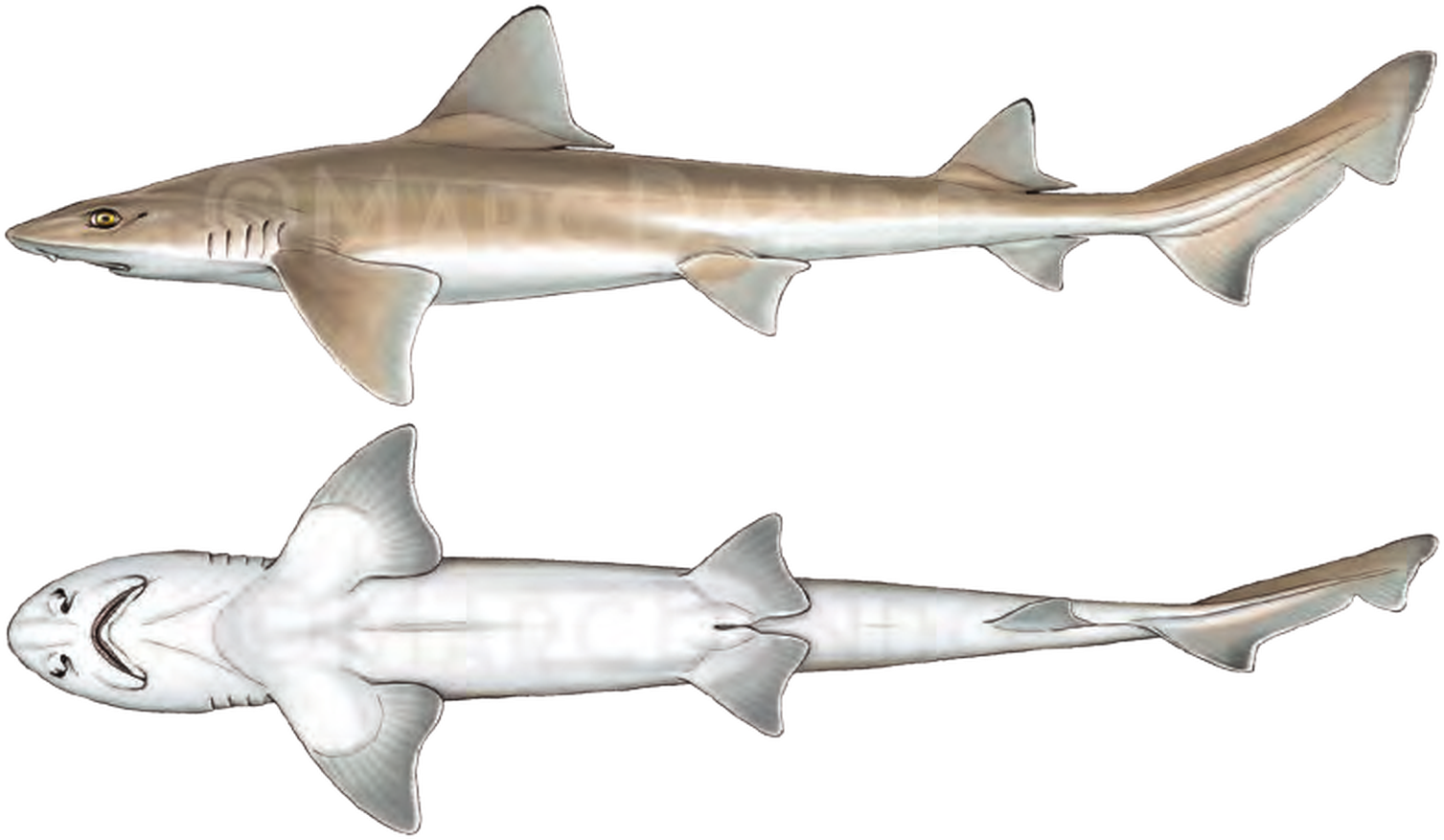
Common Smoothhound
Mustelus mustelus (Linnaeus, 1758)
Endangered- Maximum length
- 1.64 m
- FAO code
- SMD
Meet the Common Smoothhound
- Also known as
- COMMON SMOOTHHOUND, Grey Mouth Dog, Common Houndshark, Smooth Dogfish, Sweet William, Glatt Hai (DEU), Musola (ESP), Emissole Lisse (FRA), Cagnoleto (ITA), Cação (PRT).
How to identify
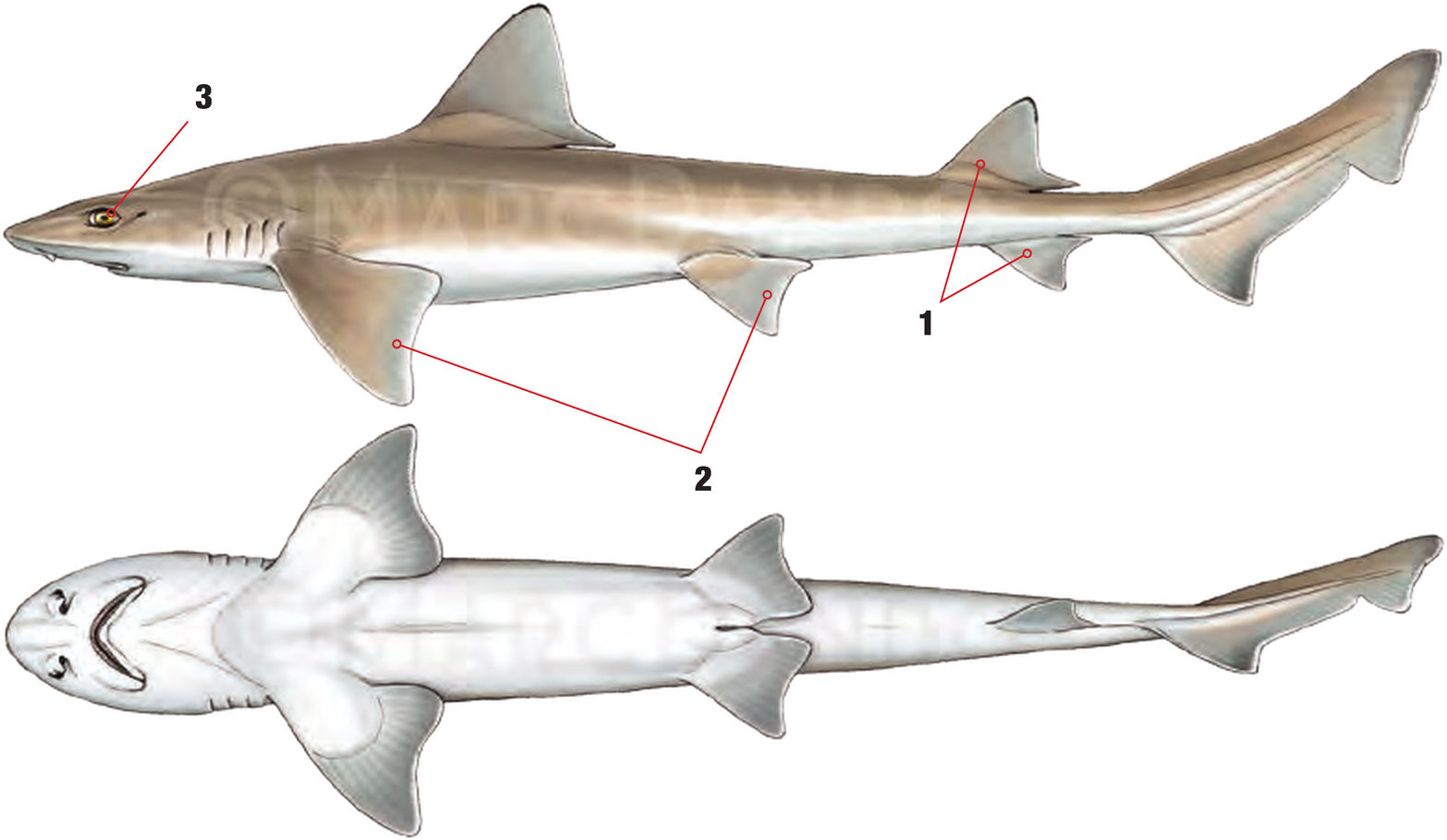
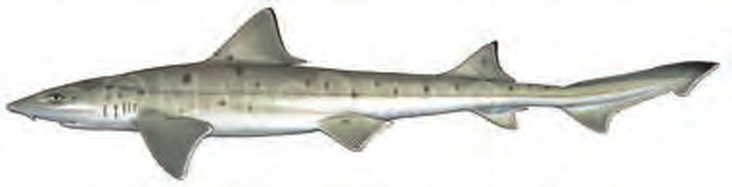
The numbers match the arrows on the illustration.
- Second dorsal fin much larger than anal fin.
- Moderately large pectoral and pelvic fins.
- Large, close set eyes.
Colouring & markings
- Uniform grey to grey brown dorsally.
- No white spots, some specimens with dark spots.
- White ventrally.
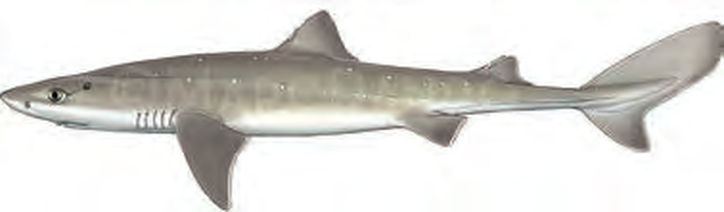
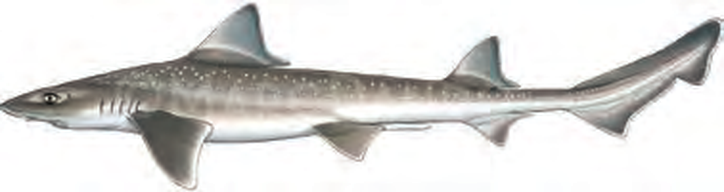
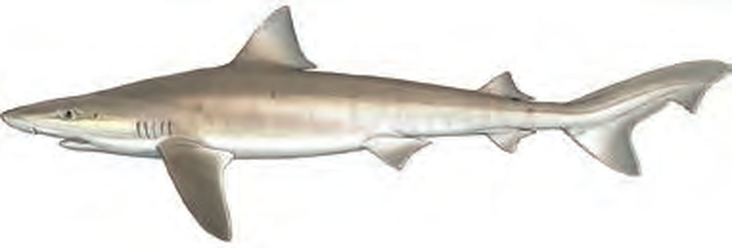
- Often mistaken with the Starry Smoothhound M. asterias; genetic analysis is the most reliable method for accurate identification.
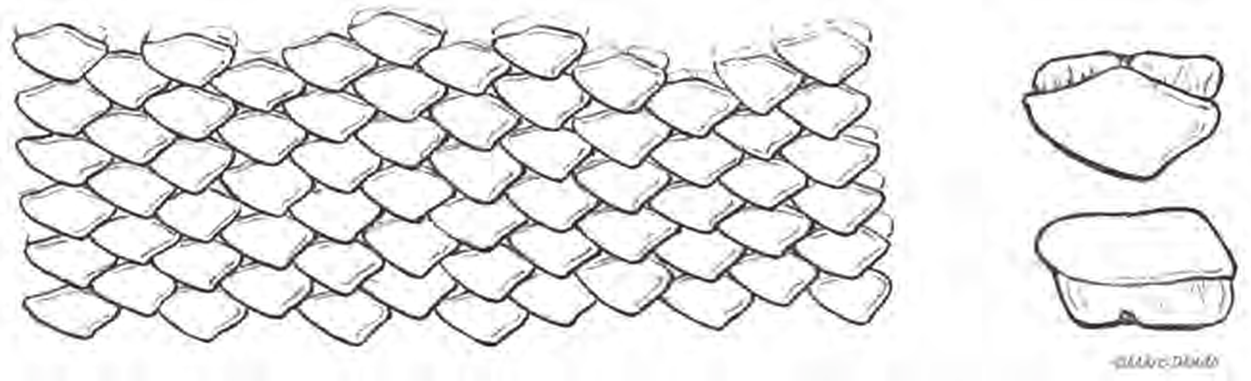
Teeth
Teeth molar-like and asymmetric, arranged in multiple Cusp reduced to a low point; cusplets absent except in Denticles in oral cavity confined to tongue tip and front
How big do they get?
Where they live
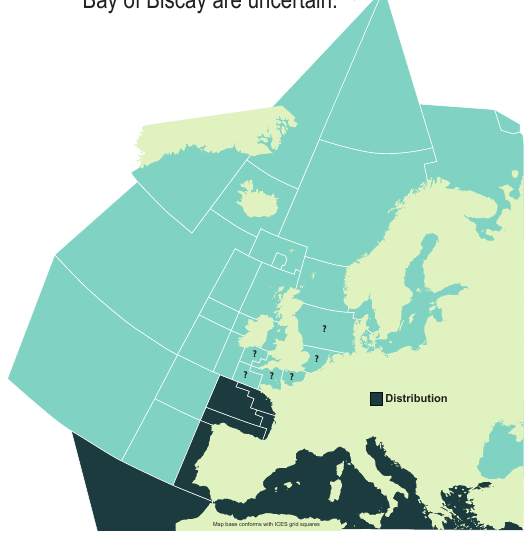
Distribution
Widespread in the Eastern Atlantic from the Bay of Biscay to South Africa, incl. Canary Islands and Mediterranean Sea. Distribution extends into the southwest Indian Ocean. Records in the northern most parts of its range may be confused with Starry Smoothhound, M. asterias, and presence in waters north of the Bay of Biscay are uncertain.
Habitat
Sandy and muddy substrates from shallows to at least 350m, most common <50m on continental shelves and upper slopes. Record of M. mustelus from 624m in Mediterranean Sea. Predominantly demersal but can be found in midwater.
In the wild
-

Recorded on a Shark Trust survey dive -
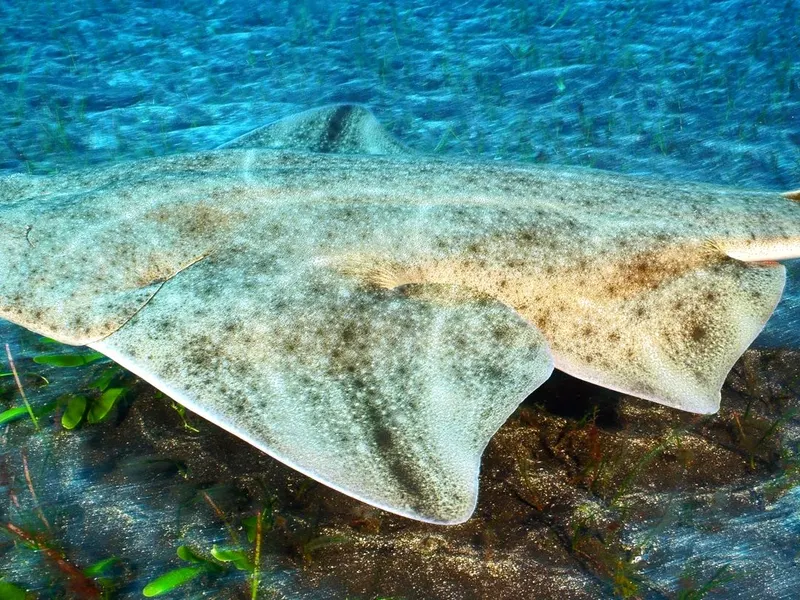
Resting on a sandy seabed -

Cruising close to the sea floor -
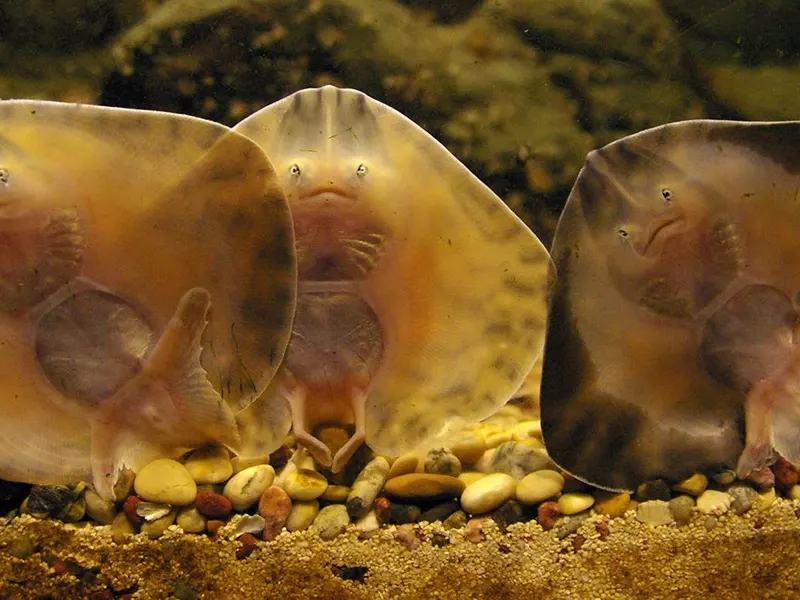
In the shallows at dusk -
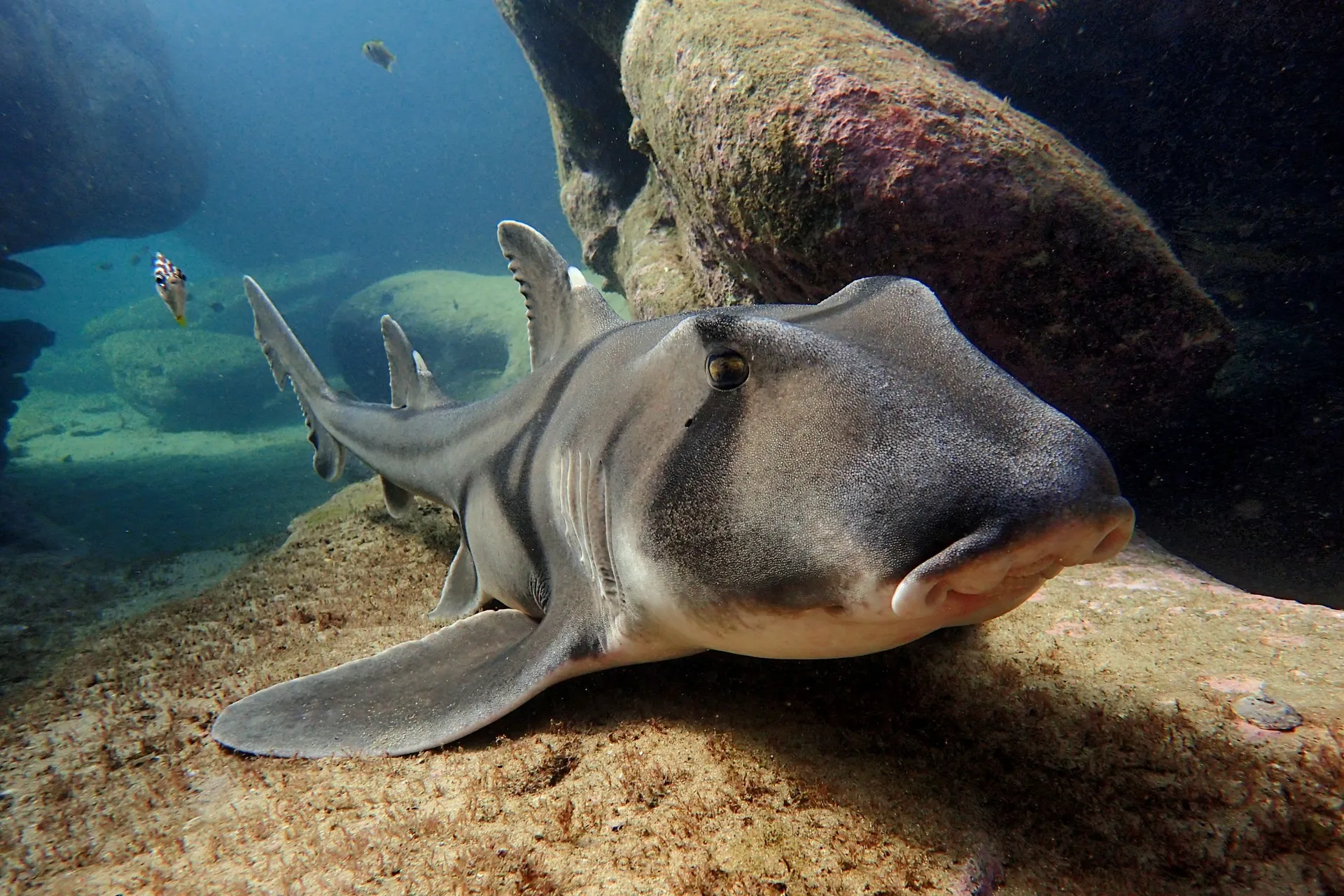
Sheltering on the reef
Go deeper
Size & biology
- Birth: 39cm.
- Matures: female 80cm; male 70–74cm.
- Max. TL: female 164cm; male ≥110cm.
- Age at maturity: female 12–15 years; male 6–9 years. Max. age: 24 years.
- Viviparous with yolk-sac placenta, litters of 4–15 pups after a 10–11 month gestation period.
- Primarily feeds on crustaceans; also cephalopods and teleosts.
Conservation status
IUCN Red List: Global: Vulnerable (2009) Europe: Vulnerable (2015) Mediterranean: Vulnerable (2016) Life history leaves species vulnerable to fishing pressure. Often misidentified, with little historic species-specific data available. Population declines reported in some regions.
Management
No species-specific management in the Northeast Atlantic. Subject to FNA regulations.
Commercial importance
Widely caught in a variety of bottom trawl, gillnet and longline fisheries; commercially important in Mediterranean. Sold fresh and frozen for human consumption, occasionally used for fishmeal. Caught by recreational anglers.
References & further reading
Assessment: SMD/NEA/2020
- Ebert & Stehmann.
- Ebert et al.
- Farrell et al.
- ICES WGEF Report.
- Serena et al.
- Smale & Compagno.
- Farrell et al.
- Mytilineou et al.
- Tserpes et al.