Starry Smoothhound
Mustelus asterias Cloquet, 1821
Near Threatened- Maximum length
- 1.4 m
- Depth range
- From surface to ≥100m.
- FAO code
- SDS
Meet the Starry Smoothhound
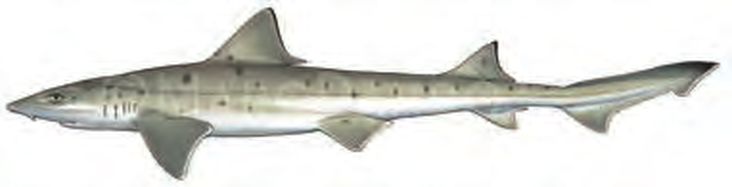
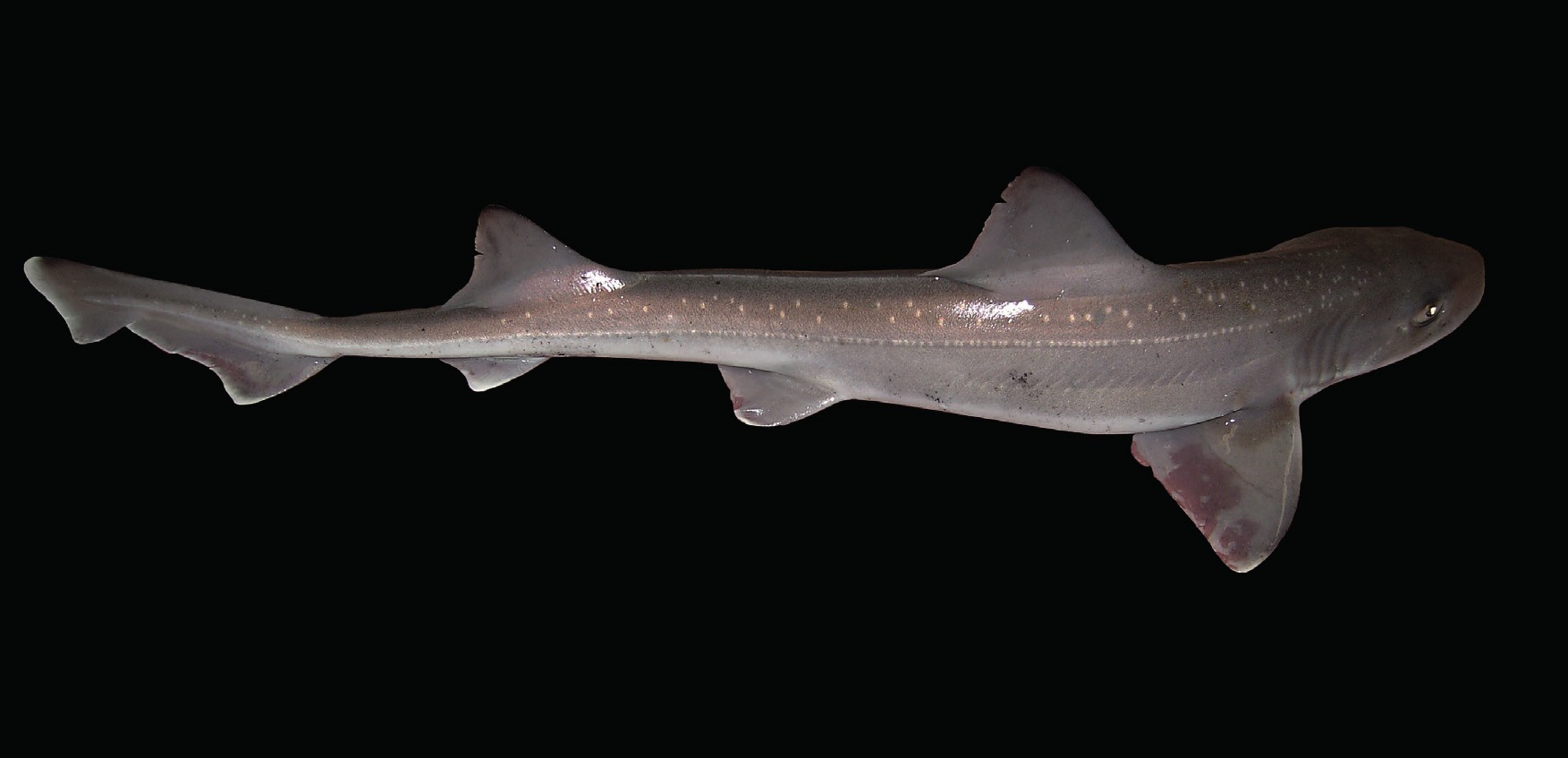
Starry Smoothhounds, as their name suggests, have small white spots or ‘stars’ scattered over their back.
- What they eat
- Crustaceans, shellfish and molluscs.
- Also known as
- STARRY SMOOTHHOUND, Stellate Smoothhound, Aristotle’s Shark, Gefleckter Hundshai (DEU), Musola Estrellada (ESP), Emissole Tachetee (FRA), Gevlekte Toonhaai (NLD), Cação-pintado (PRT).
How to identify
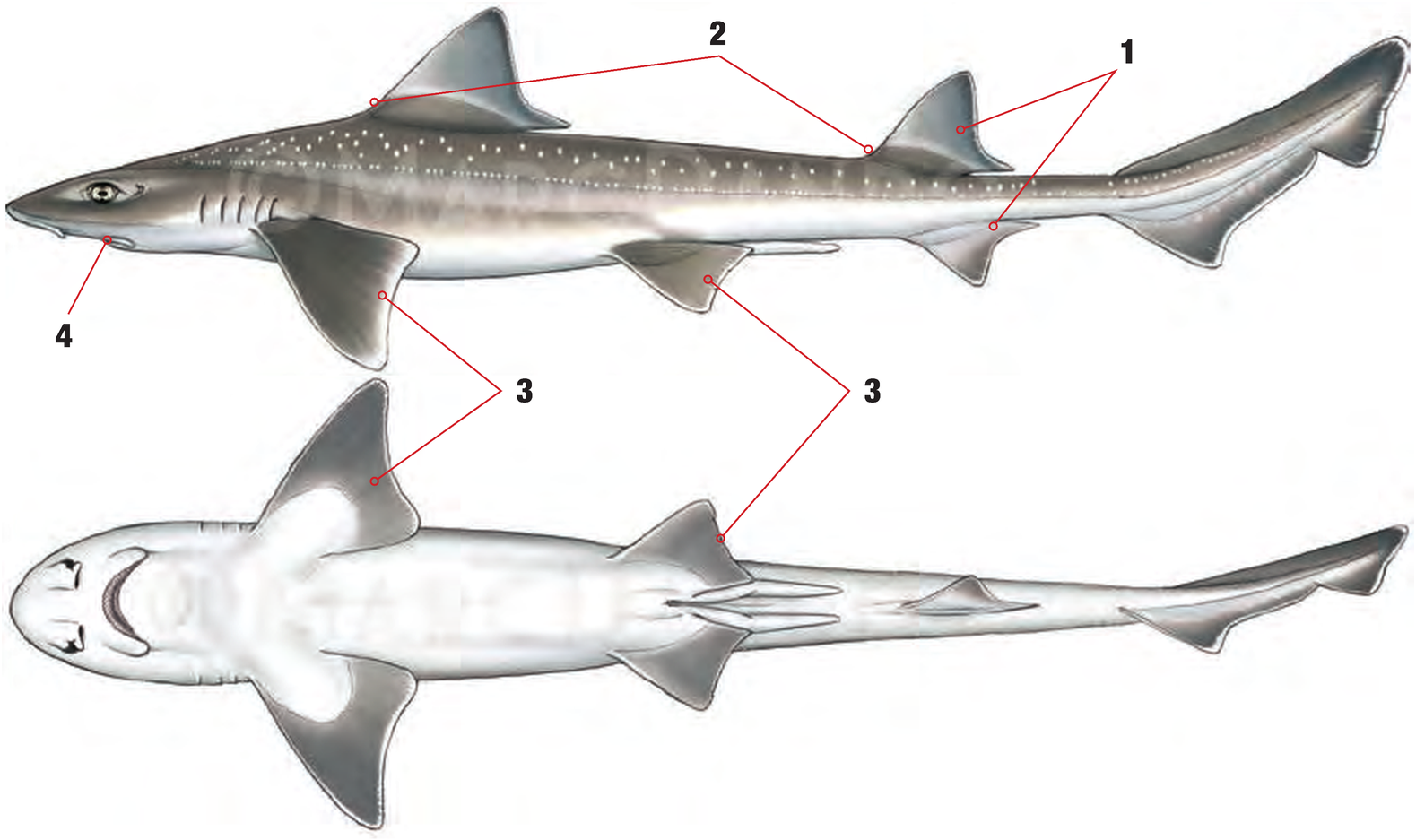
The numbers match the arrows on the illustration.
- Second dorsal fin much larger than anal fin.
- No dorsal spines.
- Large pectoral and pelvic fins.
- Molar like teeth (c.f. Tope Galeorhinus galeus, which has cusped teeth).
Colouring & markings
- Grey to grey-brown dorsally.
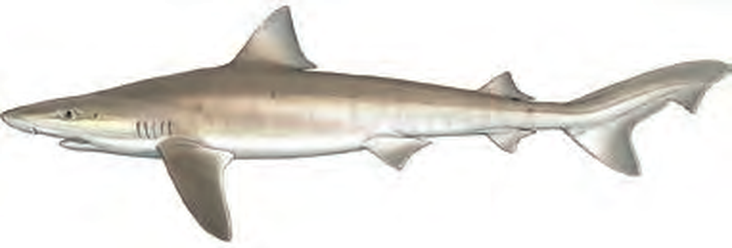
- Rows of white spots might be present on flanks. Absence of spots often leads to confusion with the Common Smoothhound M. mustelus.
- White ventrally.
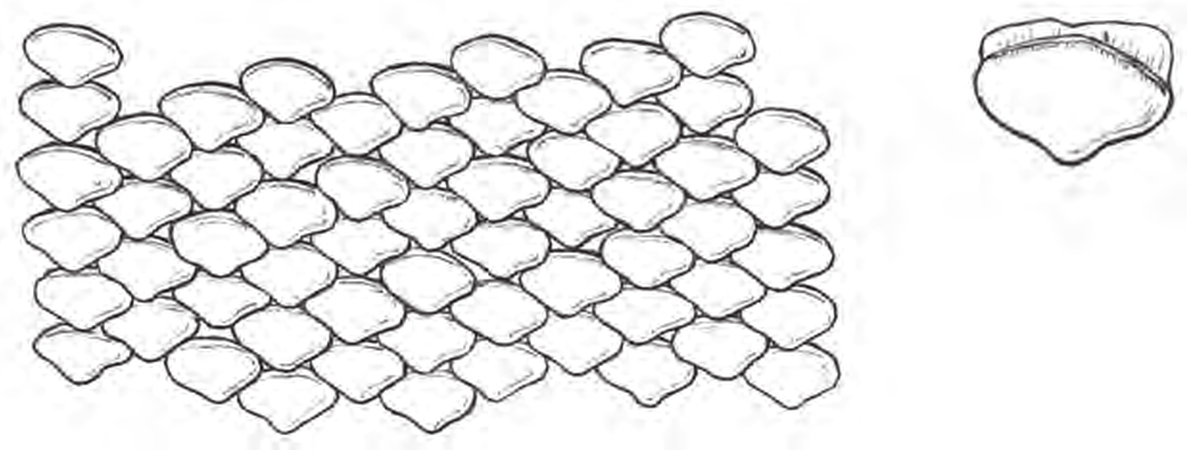
Teeth
Molar-like teeth, asymmetric with low cusp. Very young may have cusplets. Denticles cover entire oral cavity.
How big do they get?
Where they live
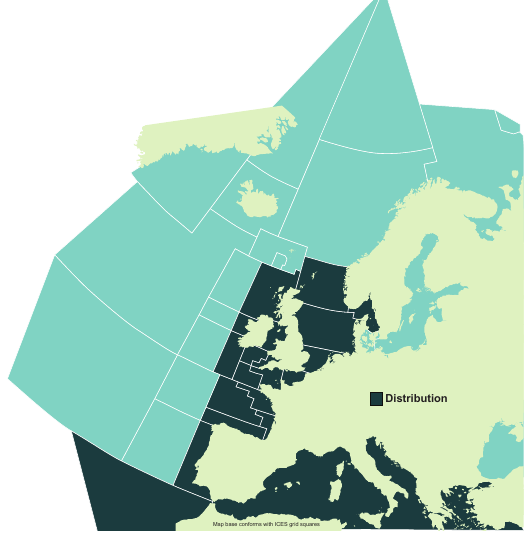
Distribution
Northeast Atlantic from southern Norway to at least the Bay of Biscay. Nominally recorded further south, to Mauritania and the Canary Islands, including the Mediterranean Sea, but there is potential for taxonomic confusion. 1-3
Habitat
Demersal, found on continental and insular shelves, intertidal to ≥100m. Predominantly found on sandy and gravelly bottoms. Young are born inshore, adults may possibly migrate inshore in summer.
In the wild
-

Recorded on a Shark Trust survey dive -
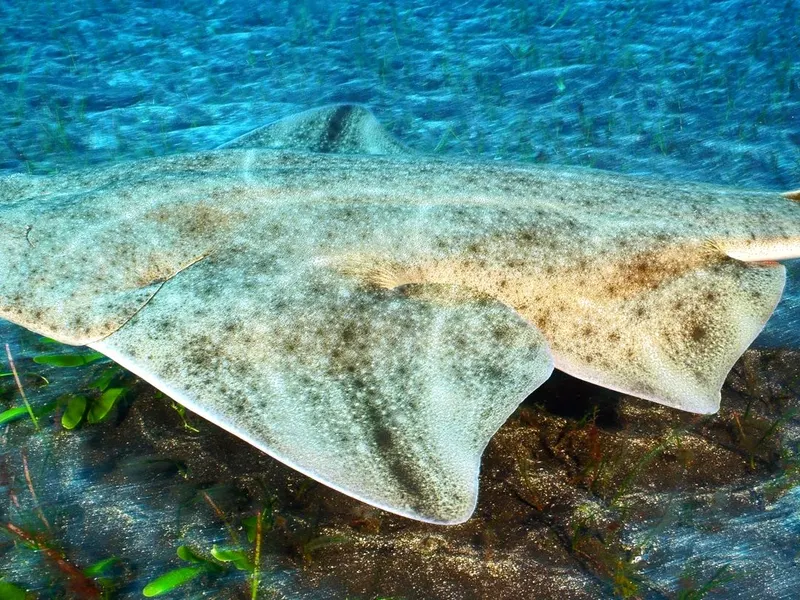
Resting on a sandy seabed -
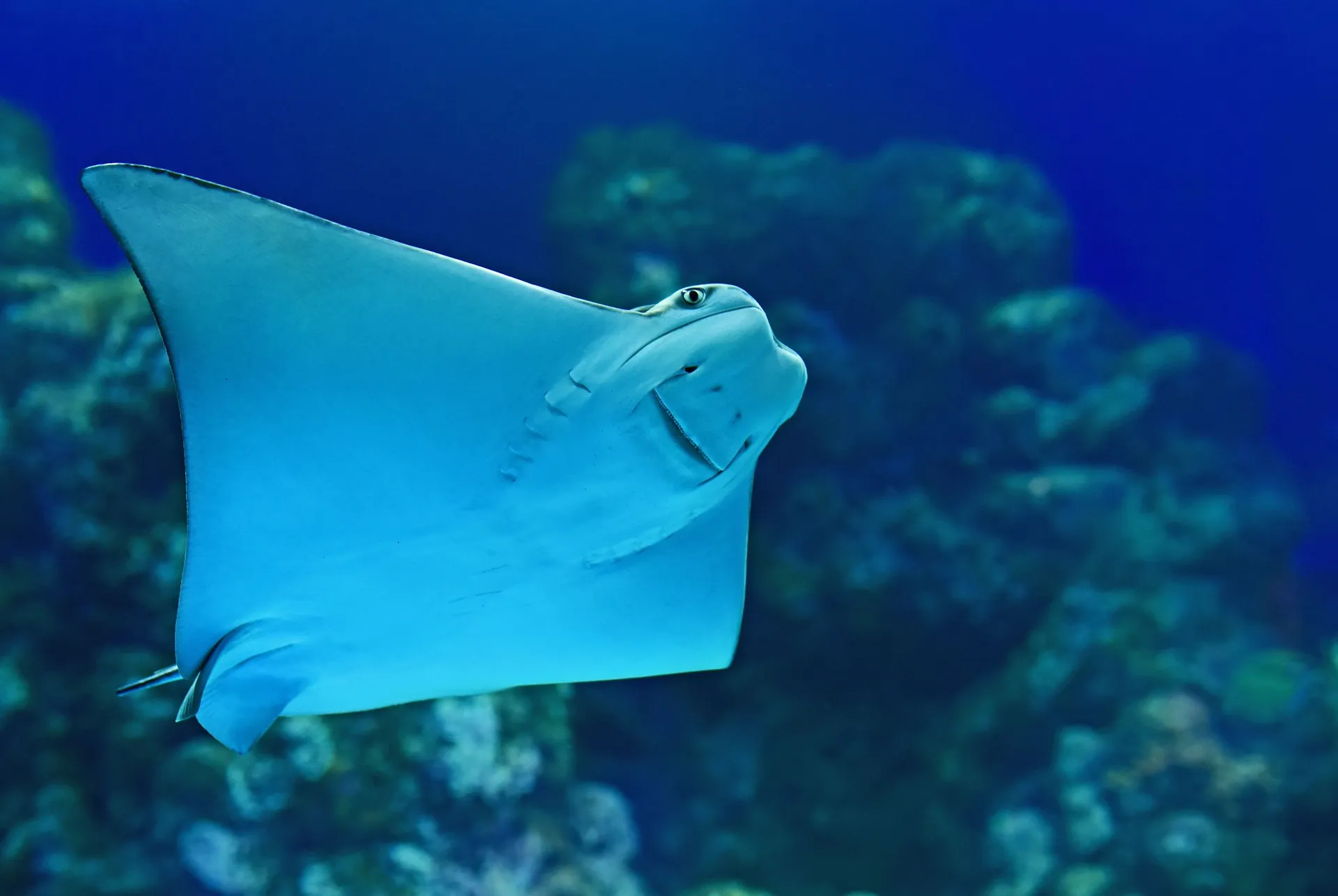
Cruising close to the sea floor -
In the shallows at dusk -
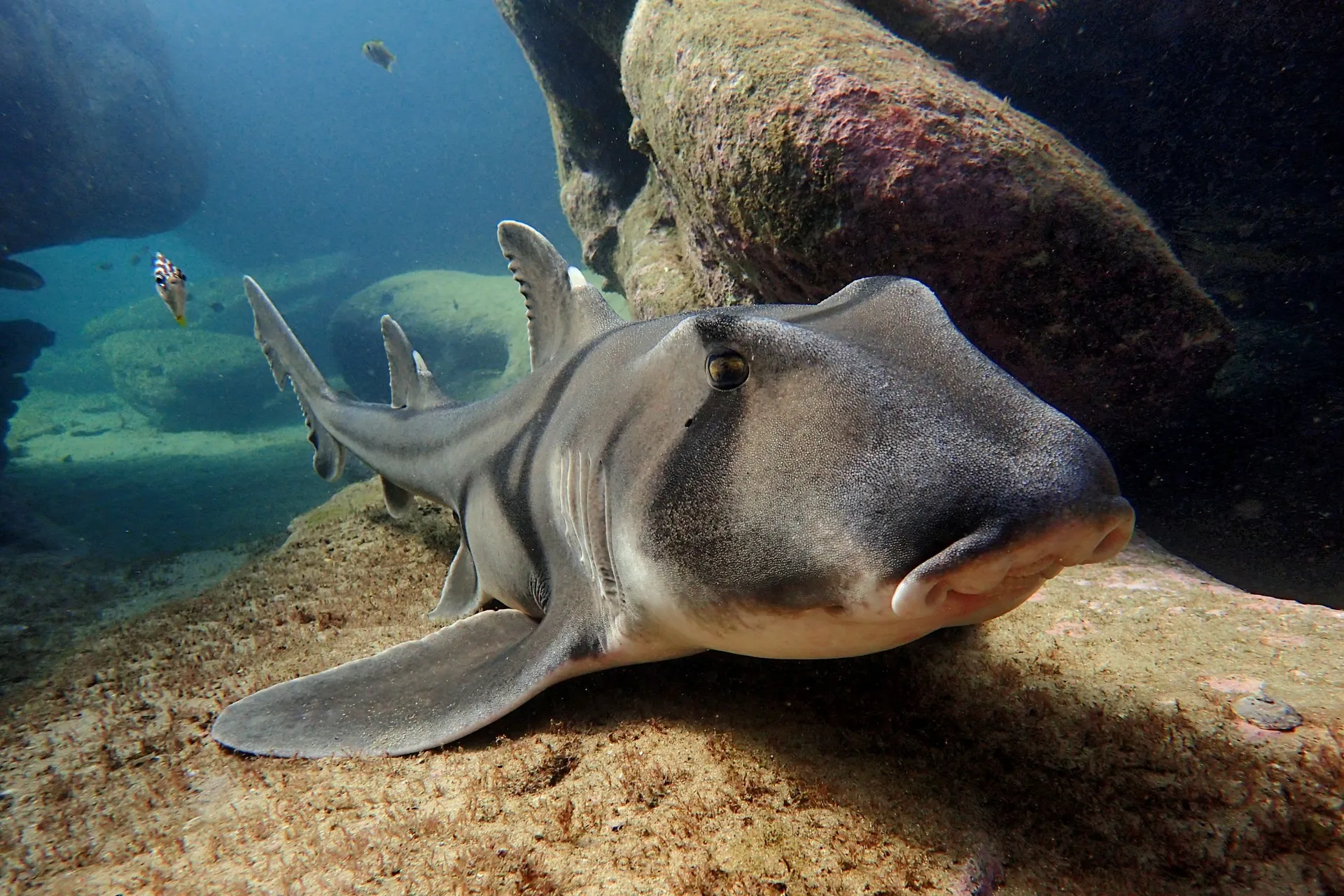
Sheltering on the reef
Go deeper
Size & biology
- Birth: 28–32cm.
- Matures: female 83–91cm (96cm in Med.); male 72–85cm.
- Max. TL: 130cm, possibly to 140cm.
- Age at maturity: female 6 years; male 4–5 years.
- Viviparous, litters of 2–25 pups in summer after a gestation period of ~12 months. Litter size increases with size of female.
- Feeds almost exclusively on crustaceans.
Conservation status
IUCN Red List: Global: Least Concern (2009) Europe: Near Threatened (2015) Mediterranean: Vulnerable (2016) Limited species-specific catch data exists for the Starry Smoothhound as landings data normally groups all smoothhounds together. Population trends should be monitored to species level across its range to inform effective management.
Management
No species-specific management in the Northeast Atlantic. Subject to FNA regulations.
Commercial importance
Bycatch species in Atlantic bottom trawls, gillnets and line gear, where discarding is variable. Valued in the Mediterranean for its meat which is utilised fresh, frozen or salted-dried. Popular with recreational anglers and can be caught from shore.
References & further reading
Assessment: SDS/NEA/2020
- Ebert et al.
- Ebert & Stehmann.
- Eryilmaz et al.
- Farrell et al.
- Farrell et al.
- Farrell et al.