Nursehound
Scyliorhinus stellaris (Linnaeus, 1758)
Vulnerable- Maximum length
- 1.62 m
- Depth range
- From 20 to 125m.
- FAO code
- SYT
Meet the Nursehound
Also known as the Greater-Spotted Catshark, Greater-Spotted Dogfish and Bull Huss, Nursehounds have quite a few names to choose from!
- What they eat
- Crustaceans, cephalopods and other smaller fish.
- Also known as
- NURSEHOUND, Bull Huss, Greater Spotted Catshark, Greater Spotted Dogfish, Rock Salmon, Flake, Rigg, Großer Katzenhai (DEU), Alitán (ESP), Grande Roussette (FRA), Gata Nostrana (ITA), Kathaai (NLD), Pata-roxa-gata (PRT).
How to identify
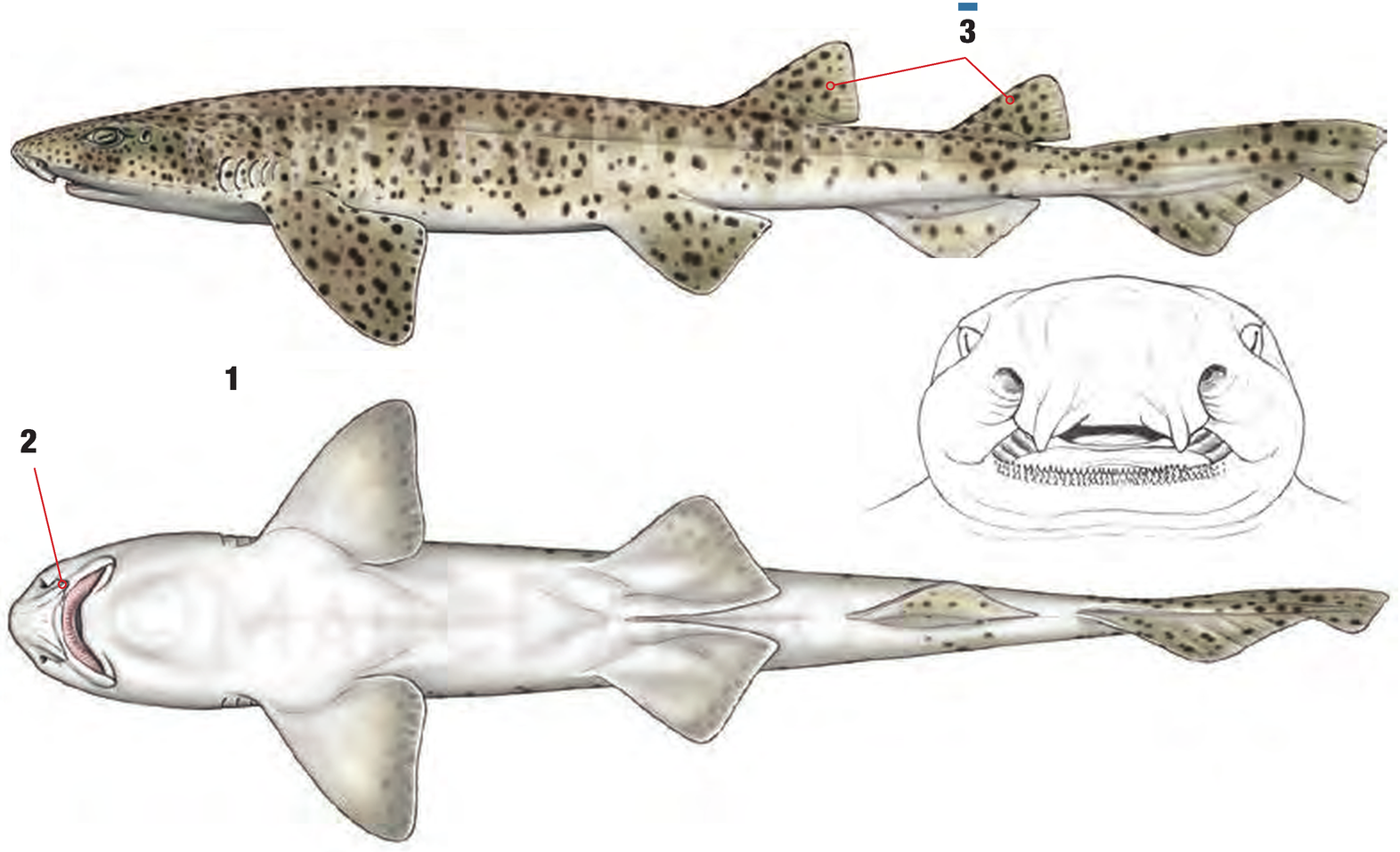
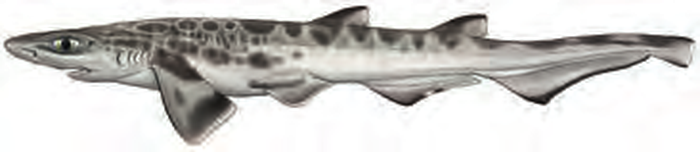
The numbers match the arrows on the illustration.
- Relatively stocky catshark.
- Nasal furrows do not reach mouth.
- Second dorsal fin smaller than first; no dorsal spines.
Colouring & markings
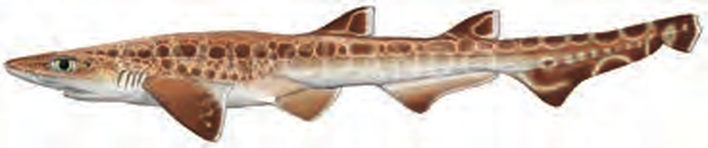
- Creamy brown dorsally, numerous large and small dark brown spots, sometimes interspersed with white spots. 7–8 saddles sometimes visible.
- White ventrally.
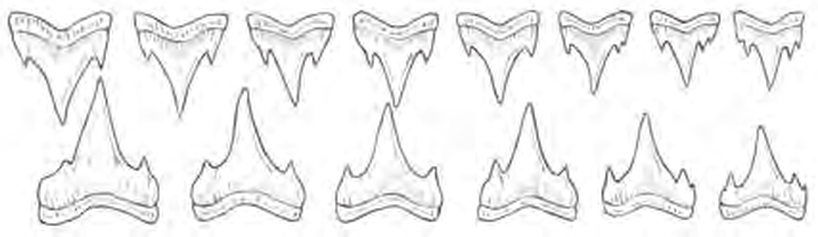
Teeth
Front teeth single-cusped and erect; cusplets developing further back in jaw. Upper jaw: 44–56 teeth. Lower jaw: 38–46 teeth.
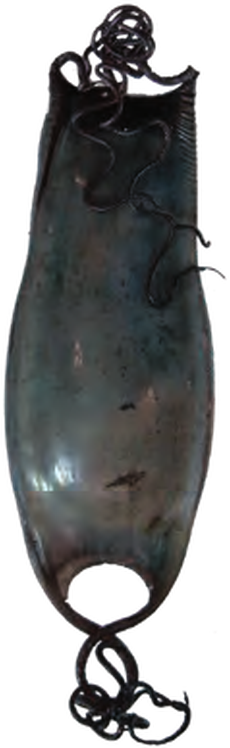
Eggcase
33–37mm wide. 89–125mm long (excl. tendrils). Thick, curled tendrils extend from each corner. Similar shaped eggcase to the Smallspotted Catshark.
How big do they get?
Where they live
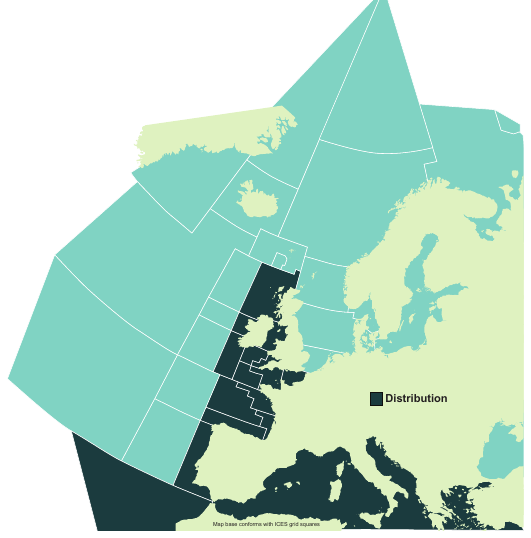
Distribution
Northeast Atlantic from southern Scandinavia to the British Isles and south to Morocco including the Canary Islands. Found in the Mediterranean Sea.
Habitat
Inshore on continental shelf, intertidal from 20–125m (to 400m in Med.), most common <60m. Often found on rough or rocky substrate, or areas with heavy algal cover. Locally abundant in some regions and found to segregate spatially by sex.
In the wild
-
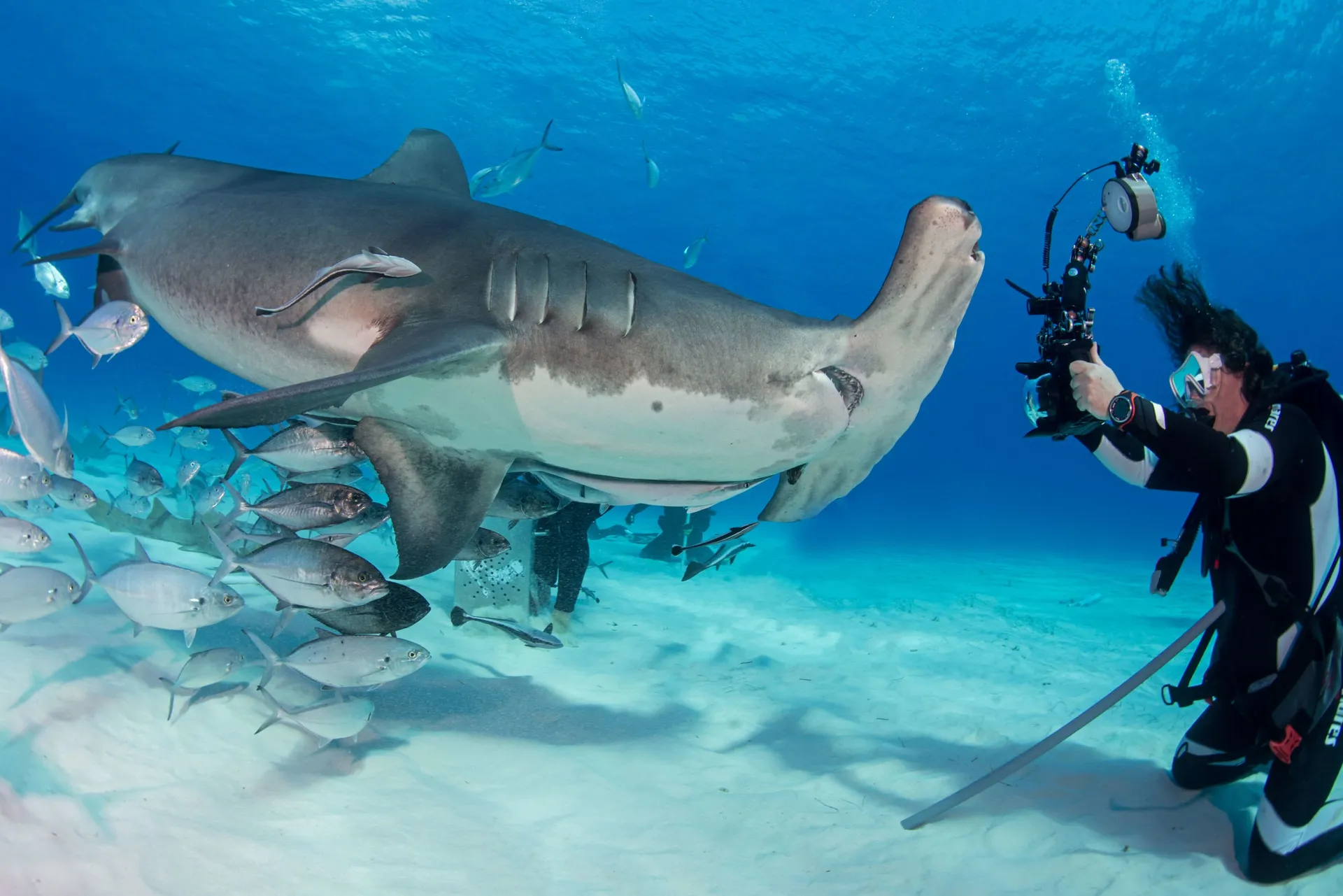
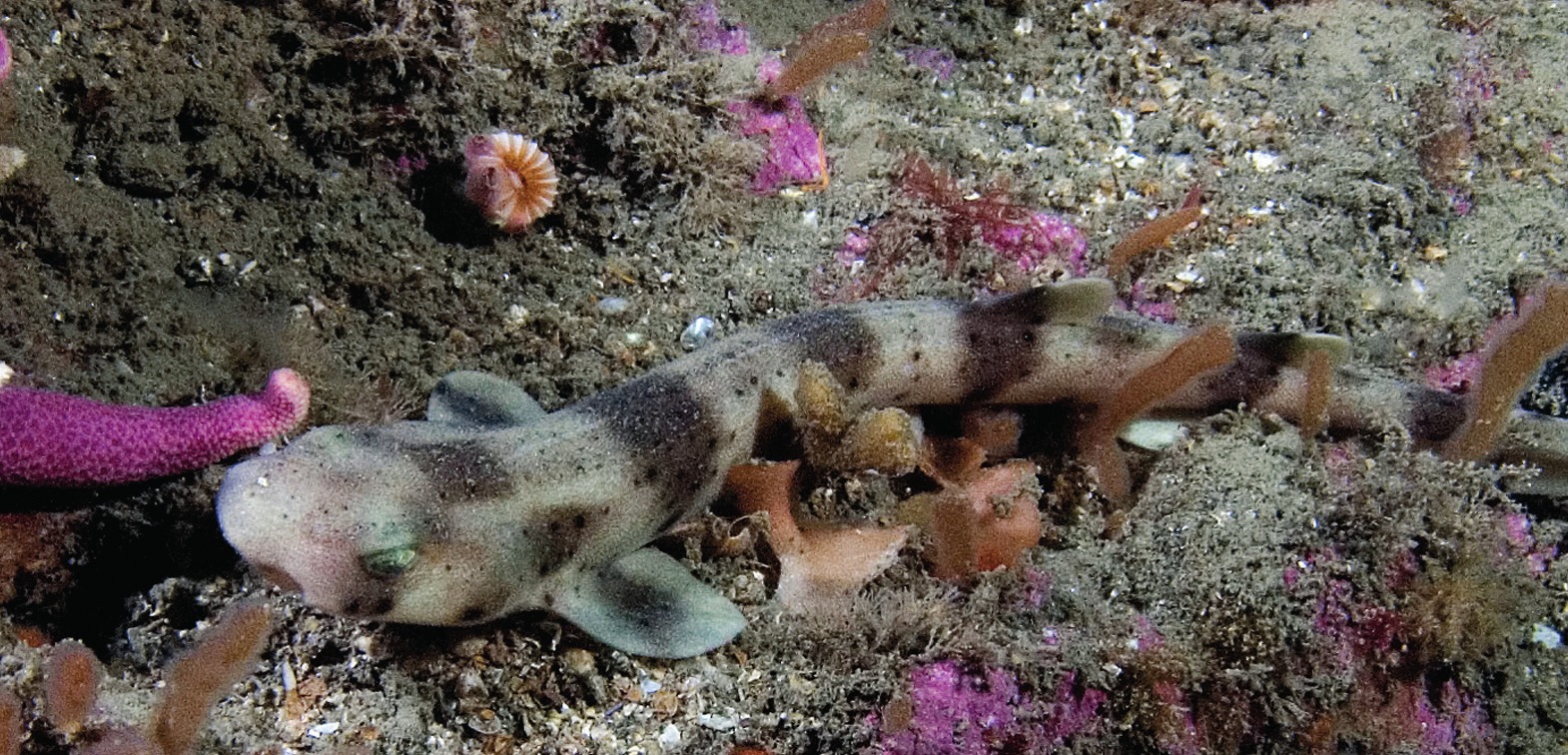
Recorded on a Shark Trust survey dive -
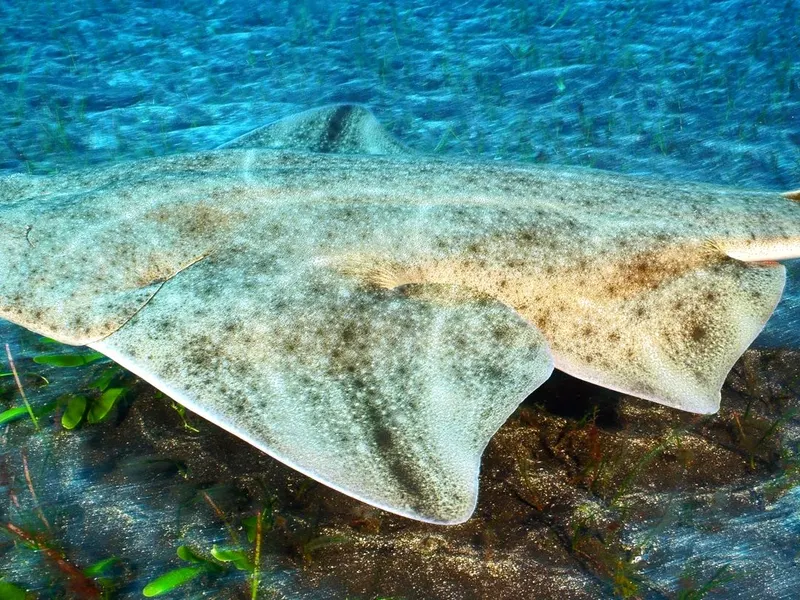
Resting on a sandy seabed -
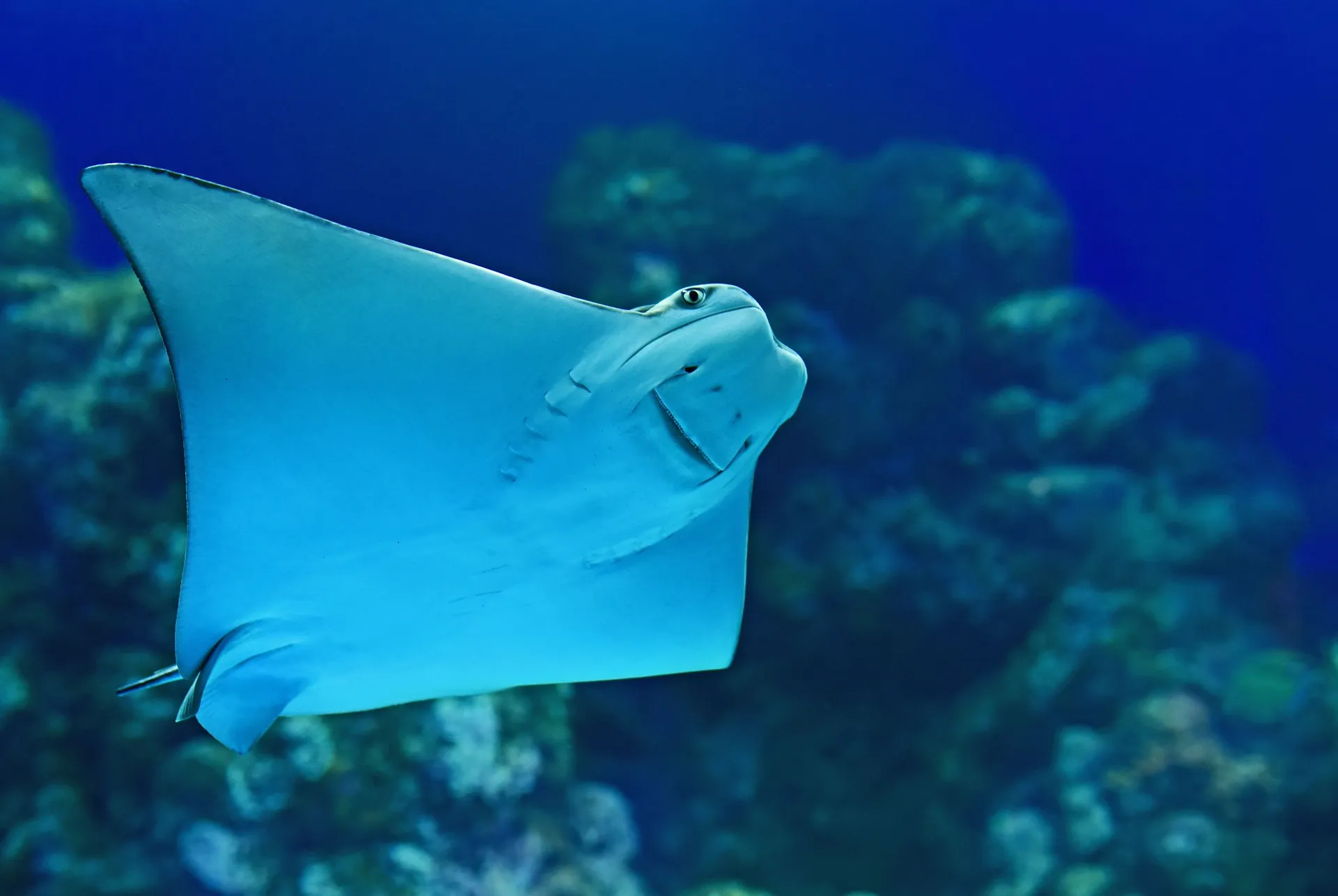
Cruising close to the sea floor -
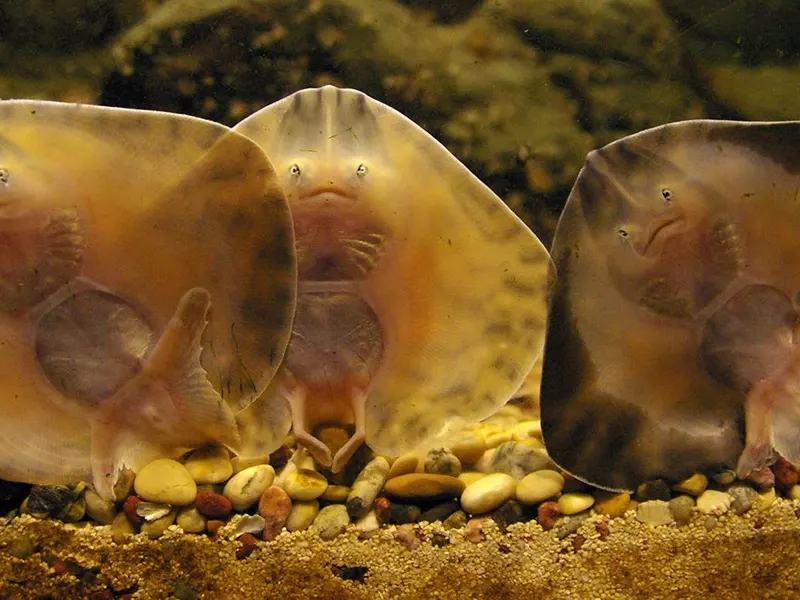
In the shallows at dusk -
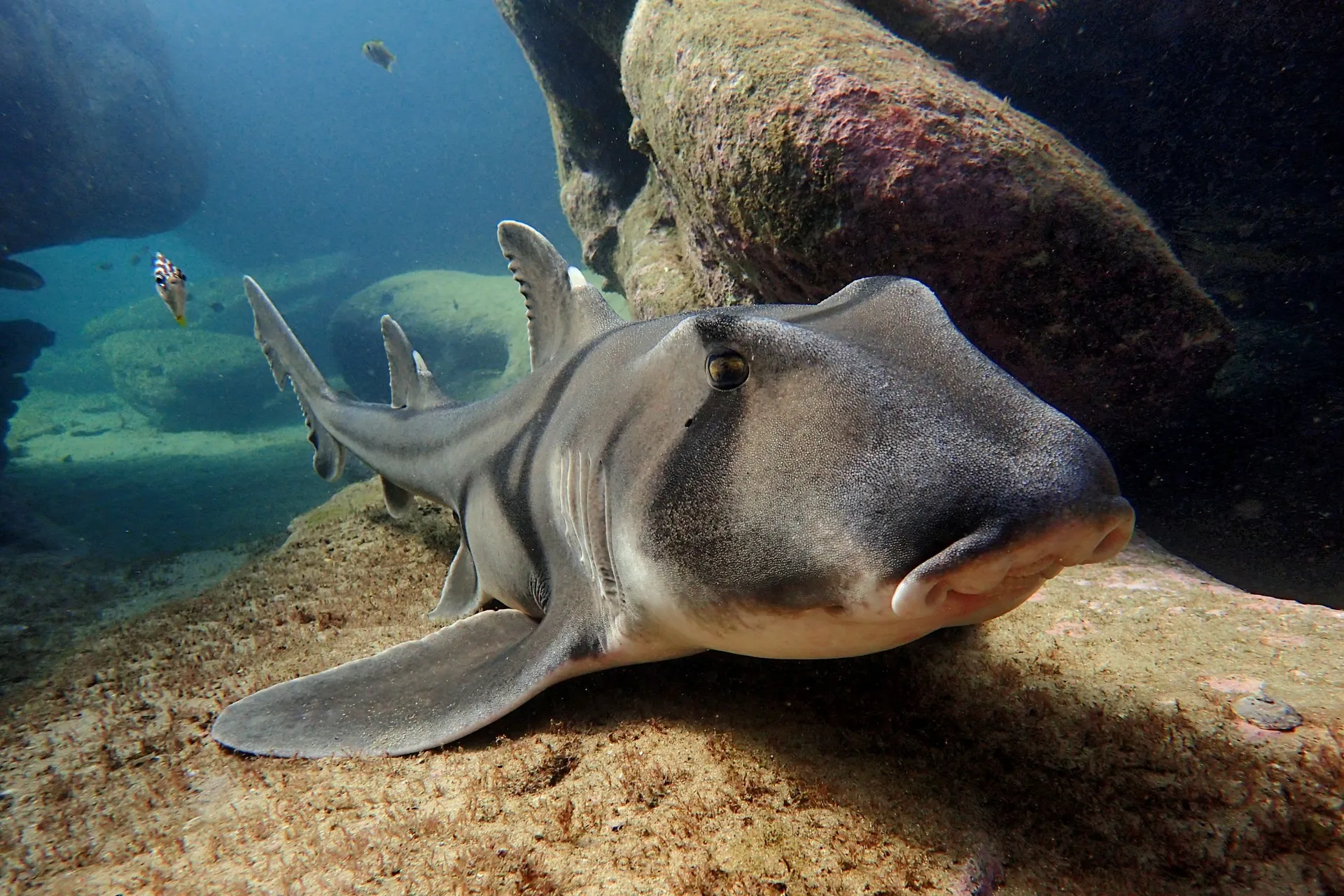
Sheltering on the reef
Go deeper
Size & biology
- Birth: 16cm.
- Max. TL: 162cm, most common to 130cm.
- Oviparous, females produce one egg per oviduct. Eggs more commonly laid in spring/summer; incubation period up to 9 months.
- Moves between different habitats within a home range during nocturnal and diurnal cycles.
- Diet consists primarily of cephalopods, crustaceans, molluscs and small teleosts; other sharks (incl. Smallspotted Catshark S. canicula) also reported.
Conservation status
IUCN Red List: Global: Near Threatened (2009) Europe: Near Threatened (2015) Mediterranean: Near Threatened (2016) While it can be locally abundant, limited connectivity between populations and a relatively low fecundity may make this species vulnerable to overexploitation. Declines have been recorded in the Mediterranean.
Management
No species-specific management in the Northeast Atlantic. Subject to FNA regulations.
Commercial importance
Minimal commercial importance. Primarily taken as bycatch in demersal trawl, gillnet and longline fisheries; usually discarded in Northern Europe. Meat is utilised fresh or dried-salted for human consumption as well as for fishmeal..
References & further reading
Assessment: SYT/NEA/2020
- Ebert et al.
- Ebert & Stehmann.
- Ellis et al.
- Ellis et al.
- Soares & De Carvalho.
- Gordon et al.
- Soldo et al.
- Ragonese et al.
- Martin et al.
- ICES WGEF Report.