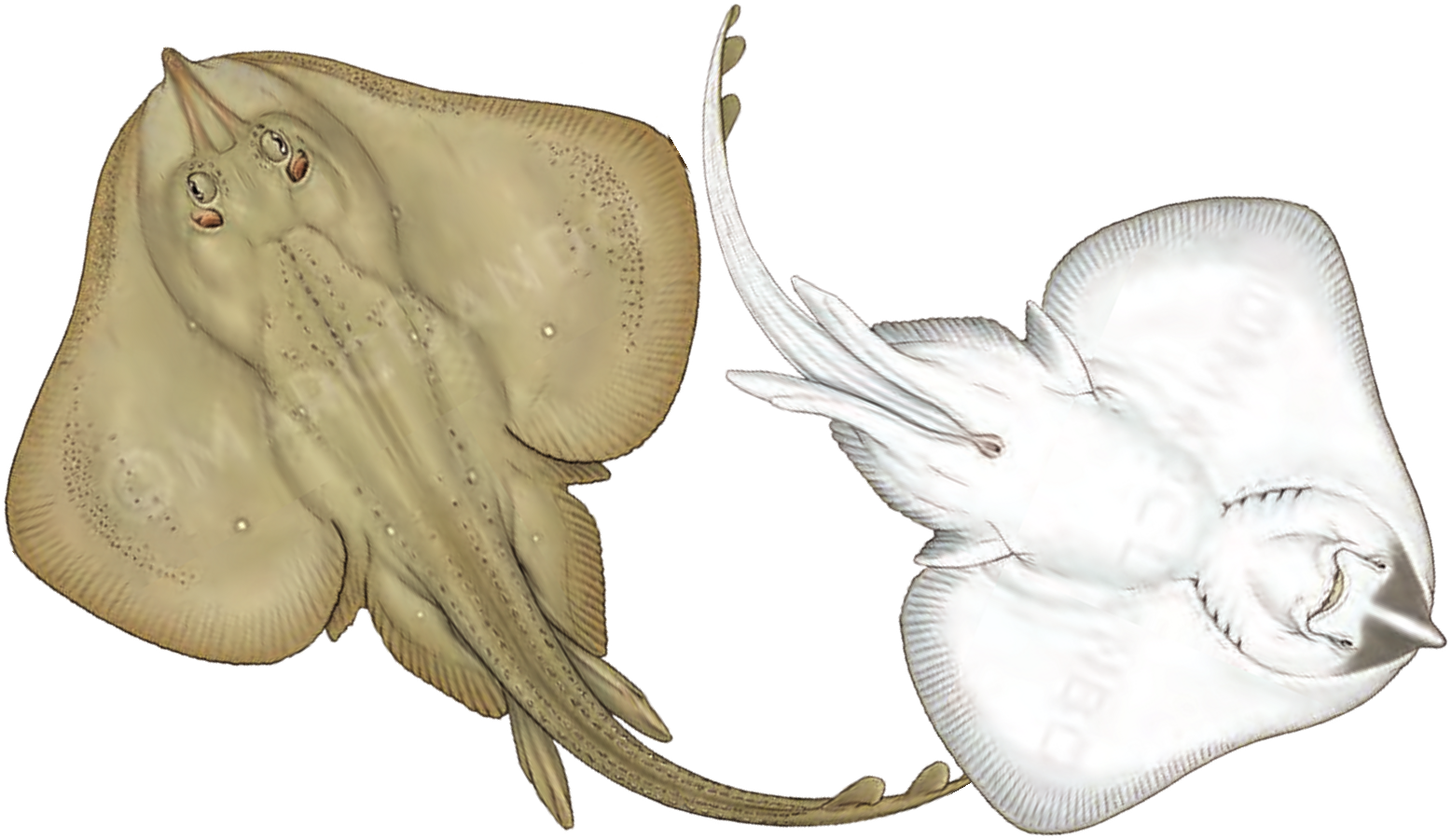
Sandy Ray
Leucoraja circularis (Couch, 1838)
Vulnerable- Maximum length
- 1.2 m
- Depth range
- From 70 to 800m.
- FAO code
- RJI
Meet the Sandy Ray
- Also known as
- SANDY RAY, Sandy Skate. Leather Ray, Faroese Roker, Sandroche (DEU), Raya Falsa Vela (ESP), Raie Circulaire (FRA), Razza Rotonda (ITA), Zandrog (NLD), Raia de São Pedro (PRT).
How to identify
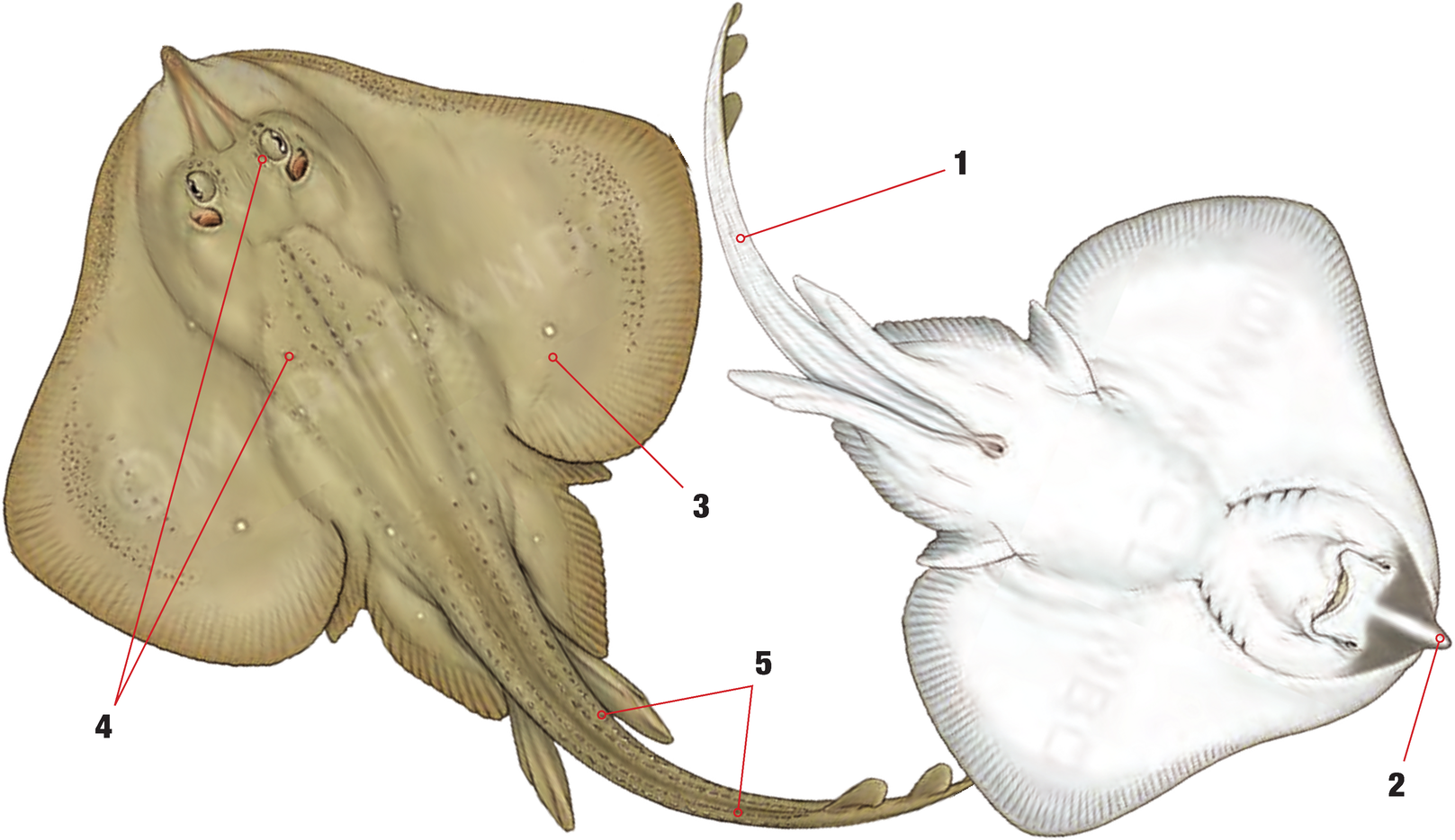
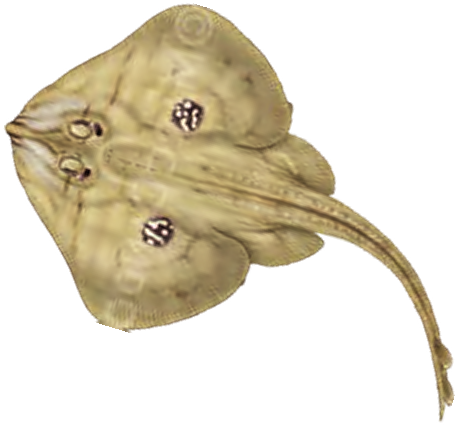
The numbers match the arrows on the illustration.
- Slender tail only slightly longer than body.
- Short snout with bluntly angled tip.
- Dorsal surface entirely spinulose.
- Distinct rosette of orbital thorns and triangular patch of thorns on nape to shoulder region.
- 3–5 rows of thorns along tail, with only median row present in juveniles.
Colouring & markings
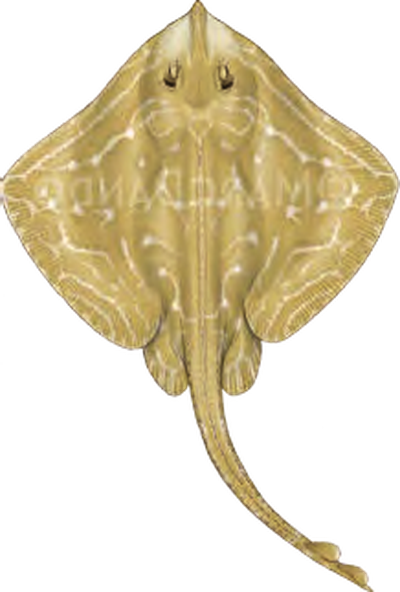
- Dorsal surface light brown (sandy) to red brown.
- 4–6 pairs of symmetrical small creamy spots with dusky margins on wings and pelvic lobes.
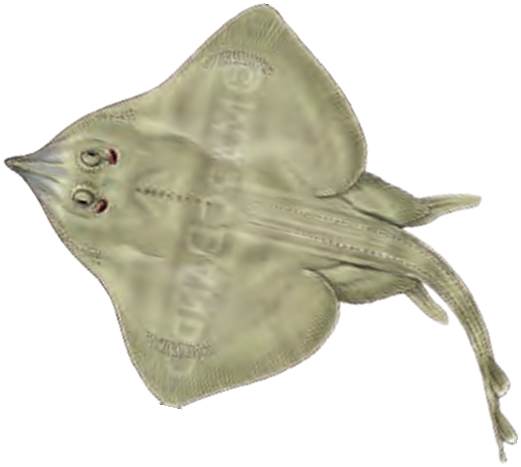
- Ventral surface white with dusky margins on wings and pelvic fins.
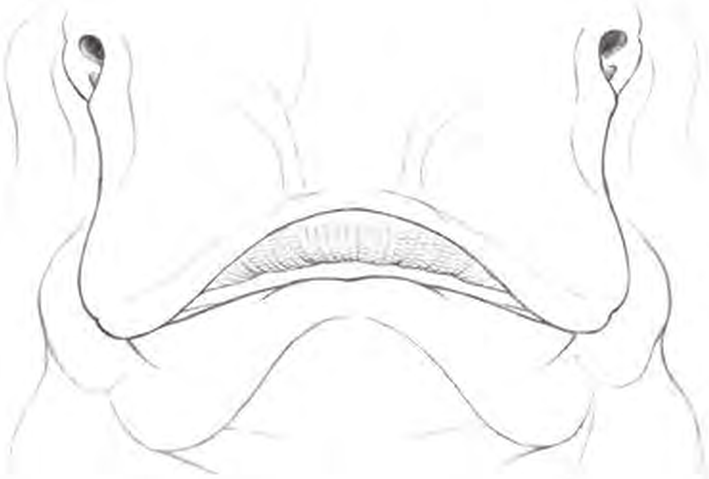
Teeth
Bluntly pointed, arranged in pavement pattern in females and juveniles. Pointed, arranged in parallel rows in adult males. Upper jaw: 64–84.
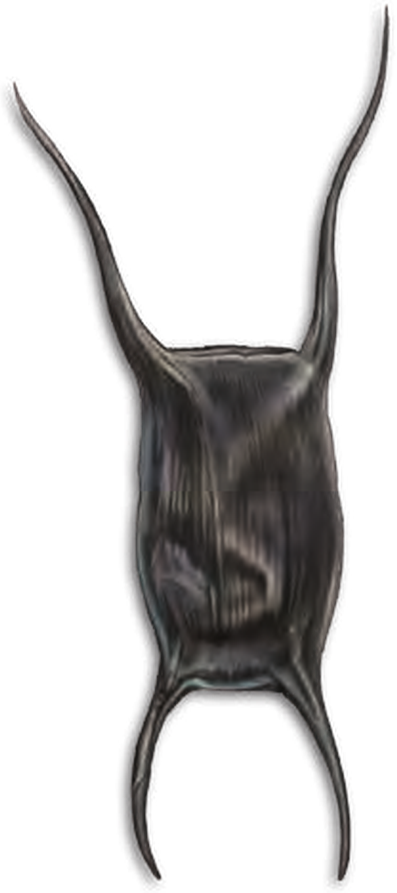
Eggcase
46–53mm wide. 82–94mm long (excl. horns). Surface of eggcase is smooth. Anterior horns very long, roughly twice the length of the posterior horns. Similar eggcase to the Cuckoo Ray Leucoraja naevus.
How big do they get?
Where they live
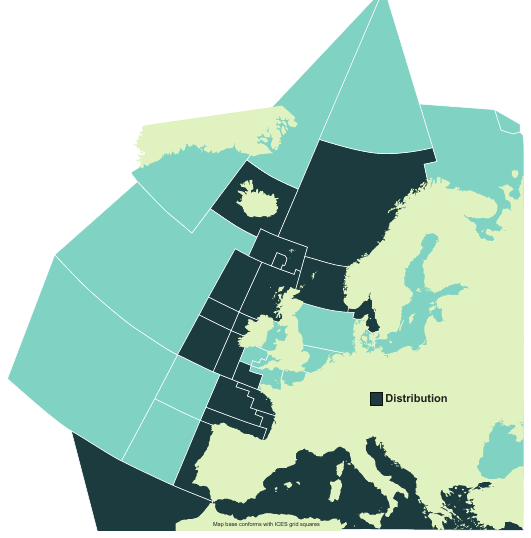
Distribution
Northeast Atlantic from Iceland and Norway to Morocco including the Western Mediterranean Sea.
Habitat
Demersal from 70–800m. Found on sandy and muddy substrates. Primarily on the upper continental slope and on offshore banks.
In the wild
-
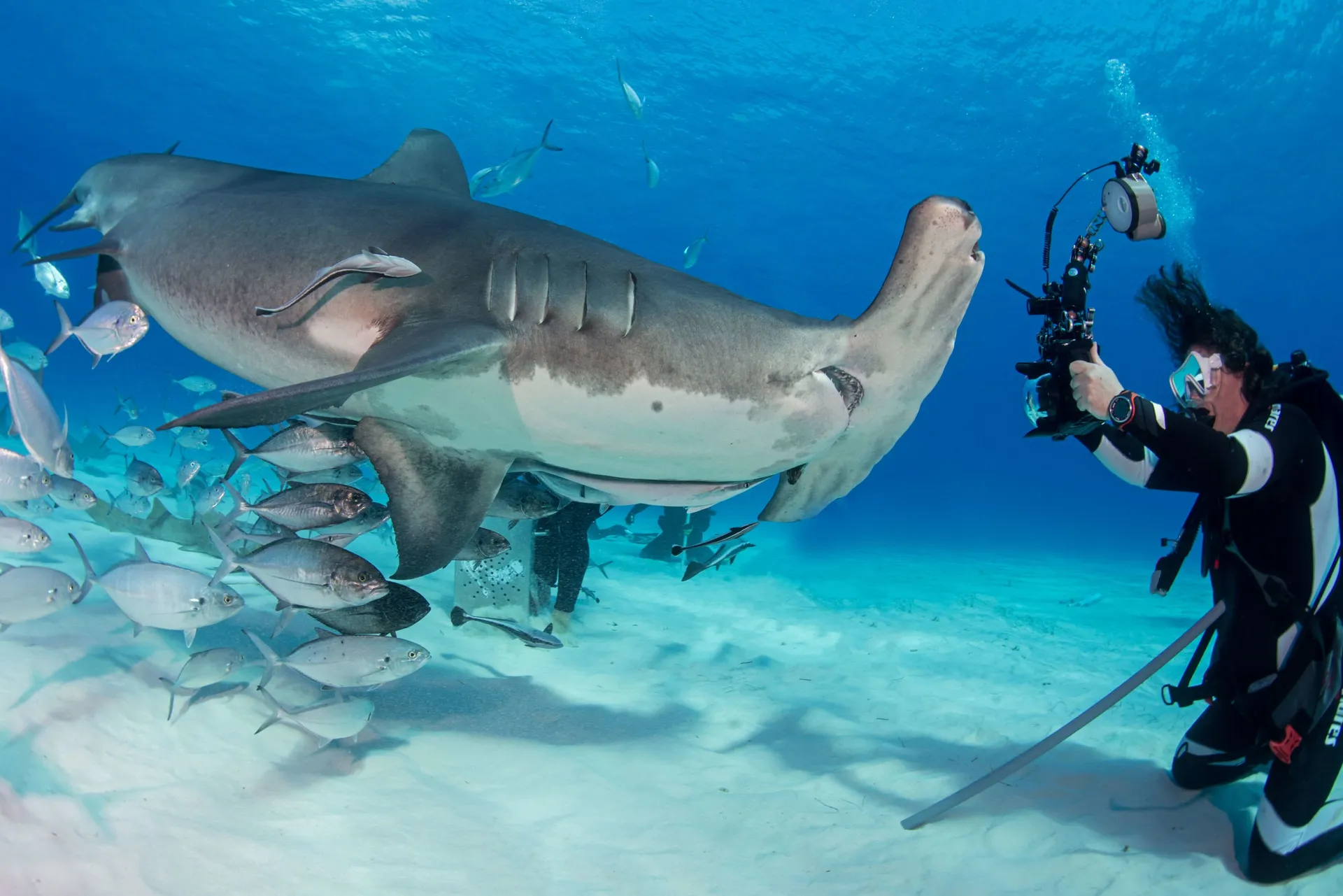
Recorded on a Shark Trust survey dive -
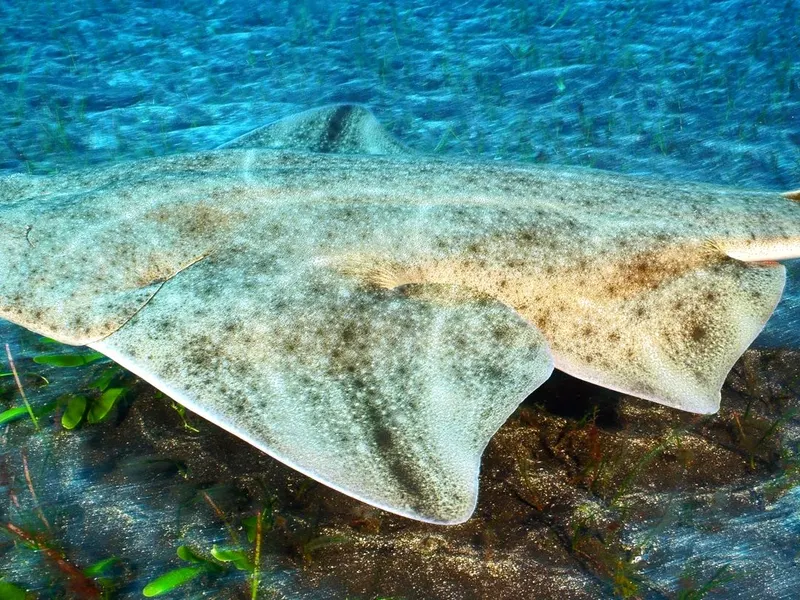
Resting on a sandy seabed -
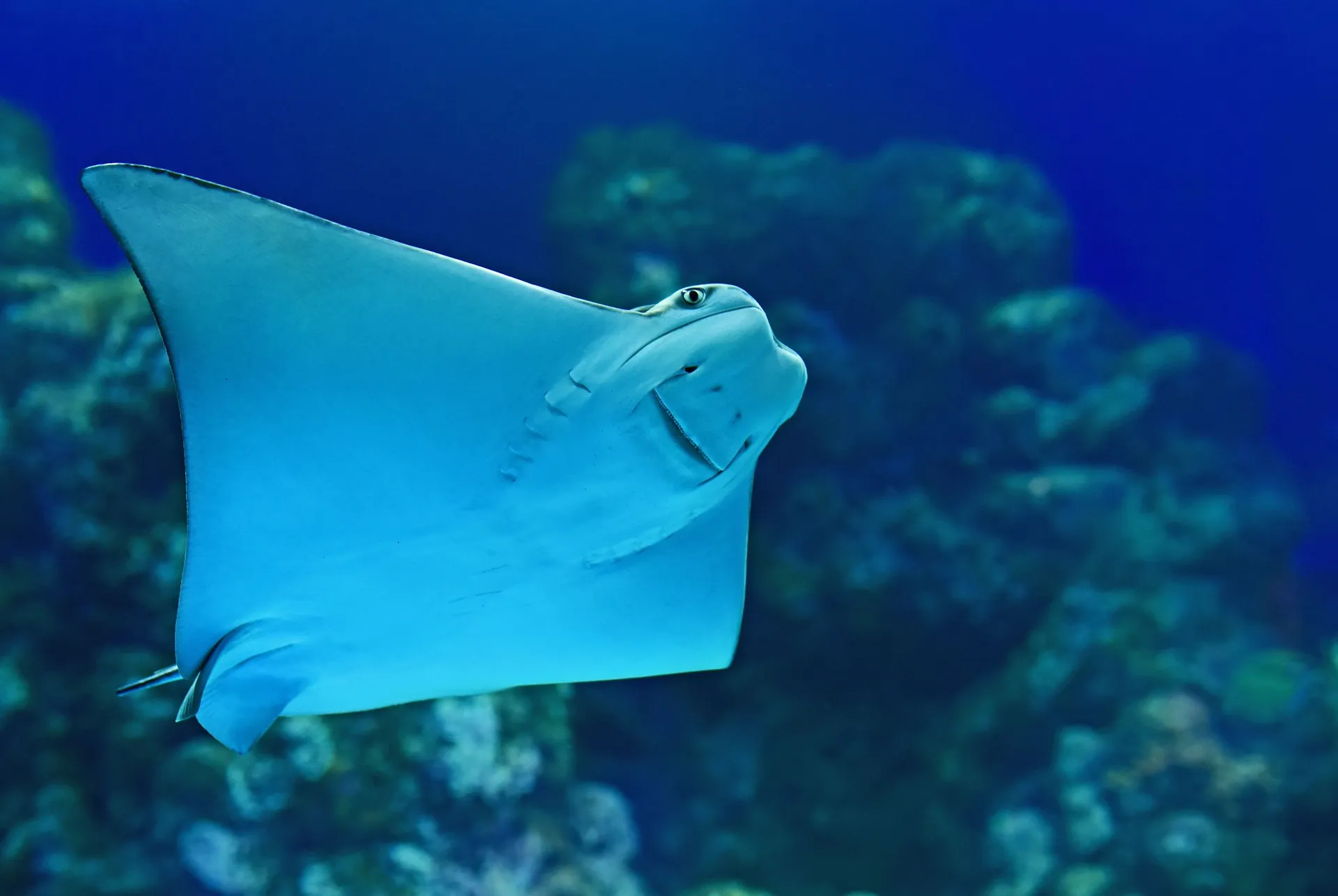
Cruising close to the sea floor -
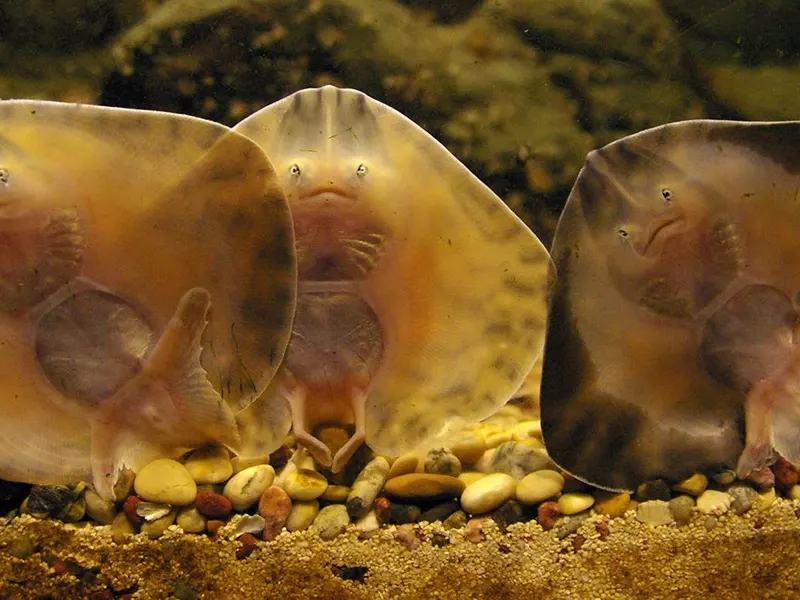
In the shallows at dusk -
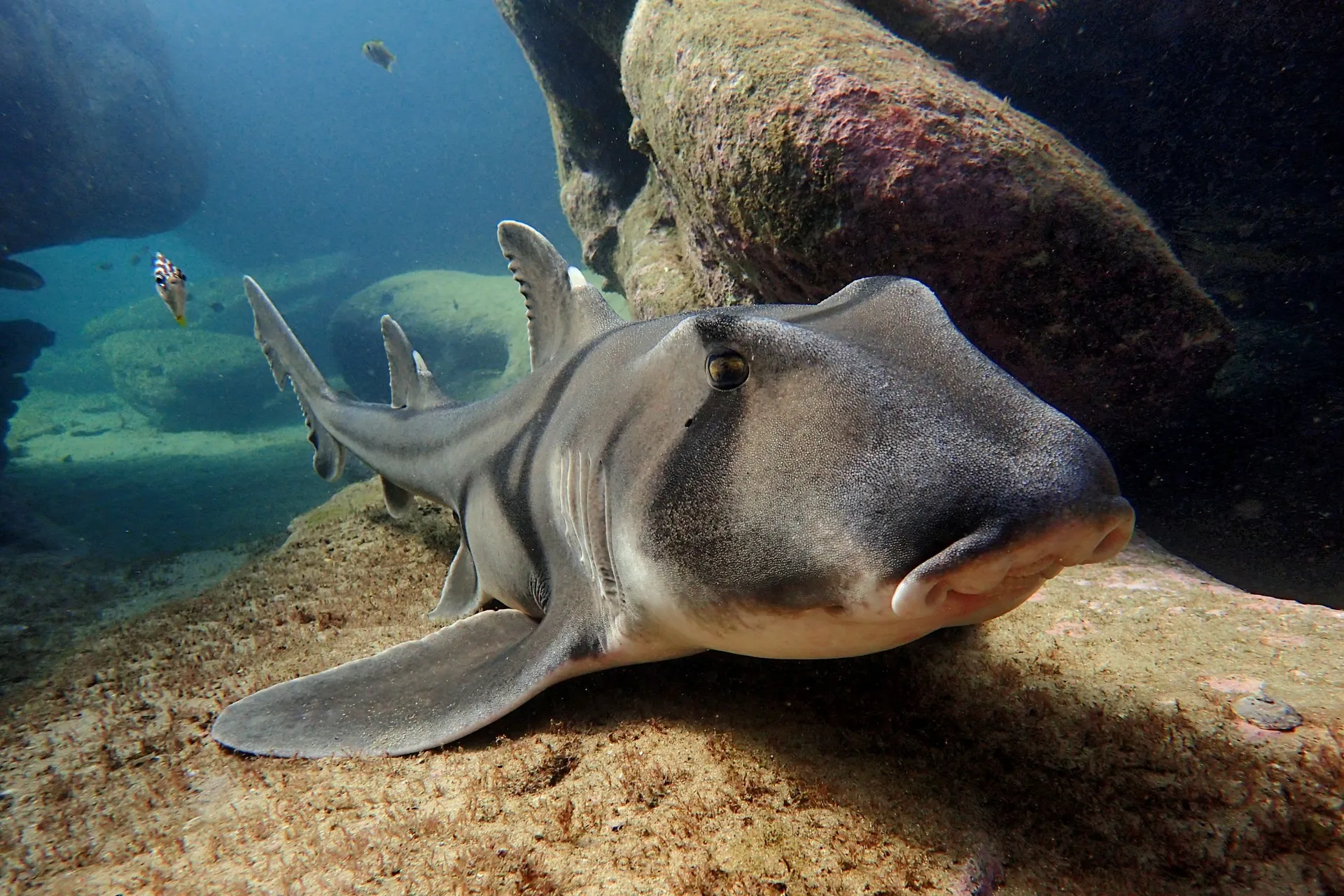
Sheltering on the reef
Go deeper
Size & biology
- Matures: female >90cm; male 73cm.
- Max. TL: 120cm.
- Oviparous; females lay their eggs on soft substrates from August to November. Little else is known about the biology of the Sandy Ray.
- Diet consists of benthic invertebrates and small teleosts..
Conservation status
IUCN Red List: Global: Endangered (2015) Europe: Endangered (2015) Mediterranean: Critically Endangered (2016) The distribution and depth range of this species falls entirely within the range of deepwater fishing operations. Taken as bycatch in intensive longline and bottom trawl fisheries across its range that has led to declines. Confusion between this species and the Small-eyed Ray Raja microocellata (known locally as ‘Sandy Ray’) is still thought to occur in some countries when recording landings.
Management
Subject to regulations under the CFP and prohibitions under RFMO.
Commercial importance
Not targeted by fisheries but taken as bycatch in mixed trawl, gillnet and longline fisheries. Large specimens sometimes landed and used for human consumption.
References & further reading
Assessment: RJI/NEA/2020
- Ebert & Stehmann.
- Ferretti et al.
- Last et al.
- McCully et al.
- Nicolaus et al.
- ICES WGEF Report.