Small-eyed Ray
Raja microocellata Montagu, 1818
Near Threatened- Maximum length
- 91 cm
- Depth range
- From surface to 100m.
- FAO code
- RJE
Meet the Small-eyed Ray
- Also known as
- SMALL-EYED RAY, Small-Eyed Skate, Painted Ray, Owl Ray, Painted Skate, Kleinäugiger Rochen (DEU), Raya Colorada (ESP), Raie Mêlée (FRA), Kleinoogrog (NLD), Raia Zimbreira (PRT).
How to identify
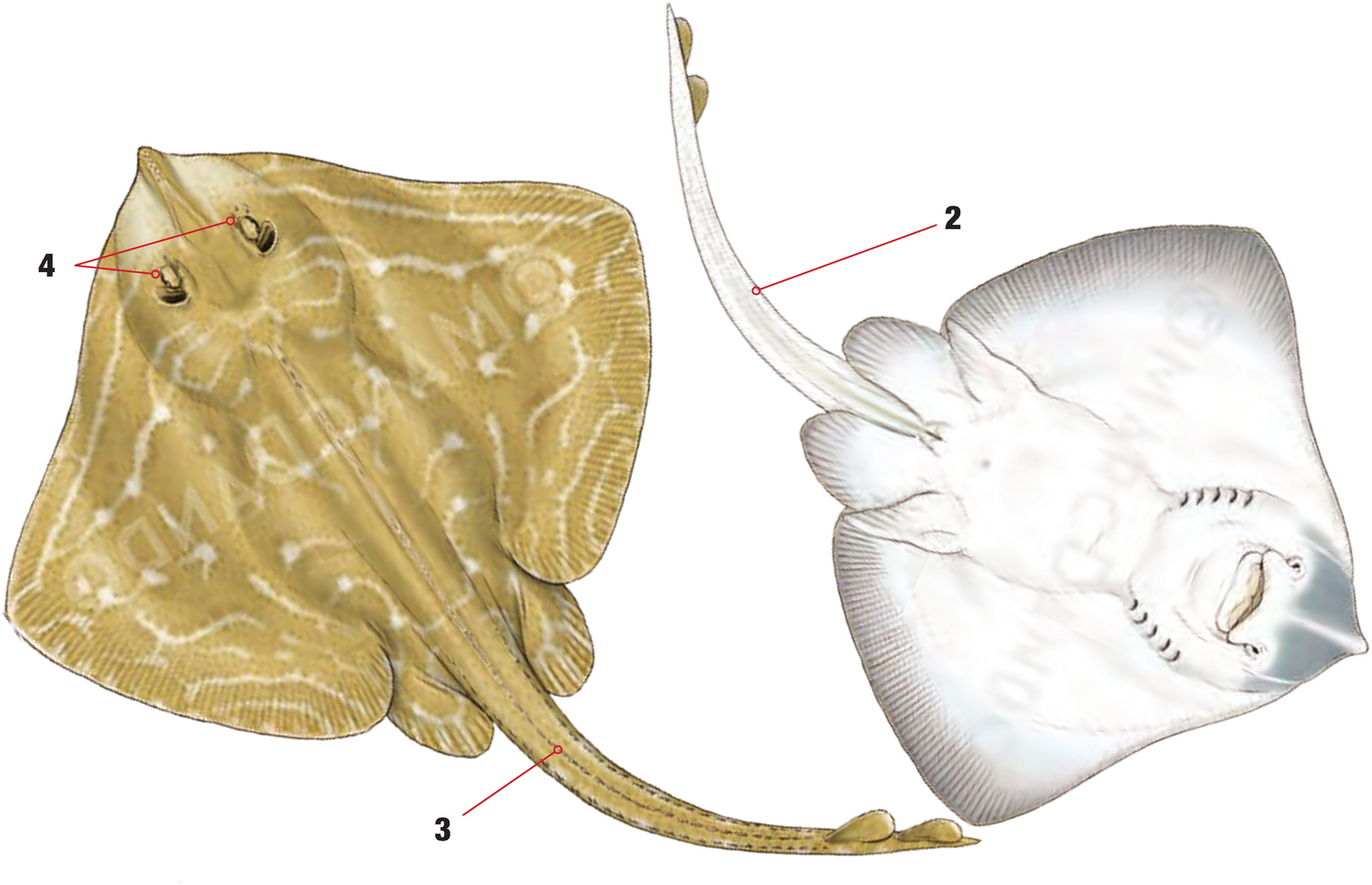
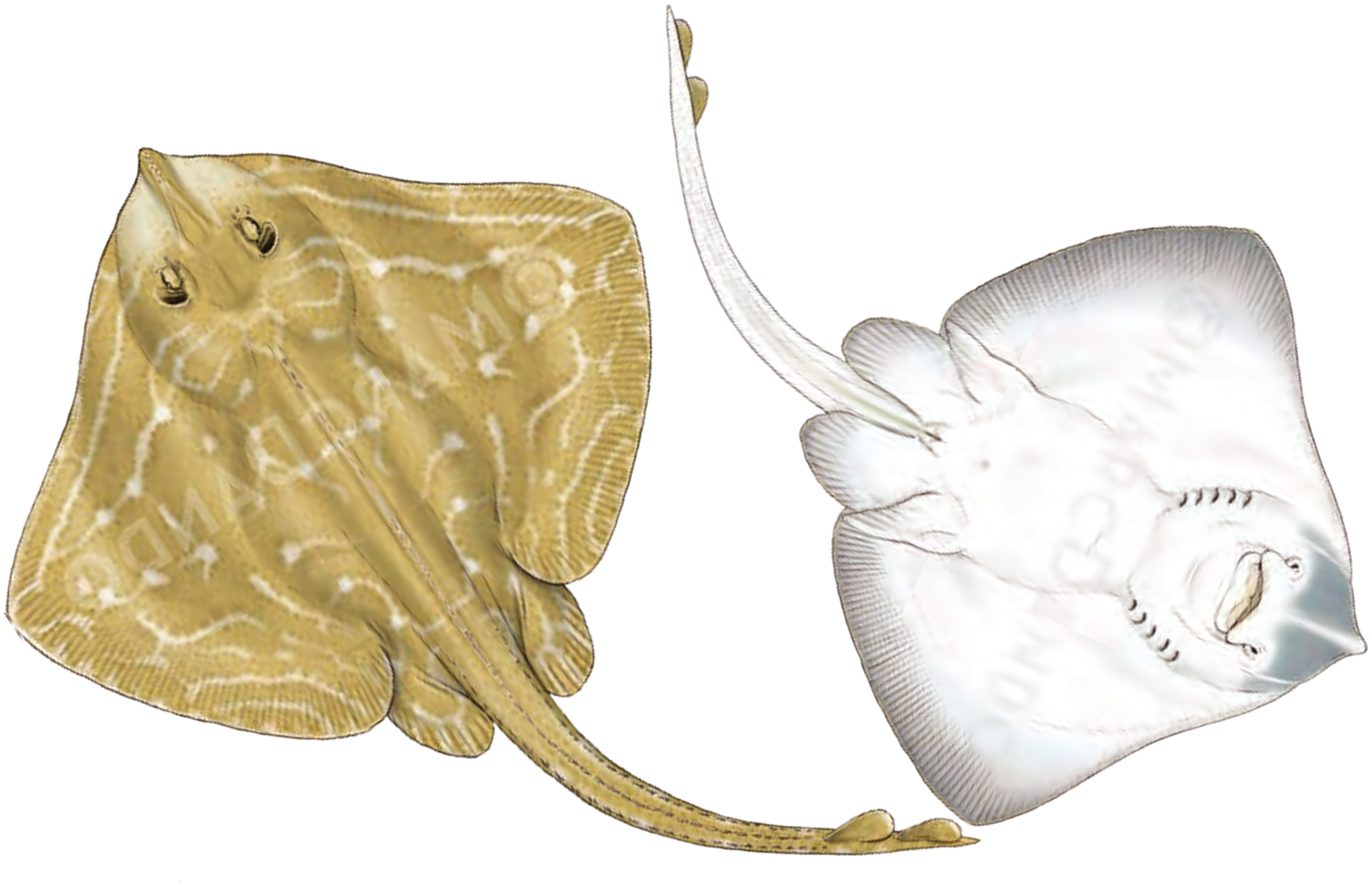
The numbers match the arrows on the illustration.
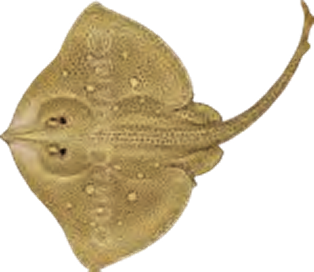
- Conspicuously small eyes.
- Tail slightly shorter than body.
- Row of ~50 thorns along midline to first dorsal fin.
- Orbital thorns present.
Colouring & markings
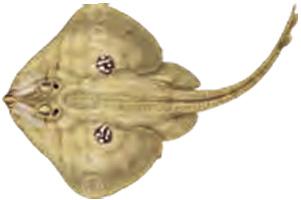
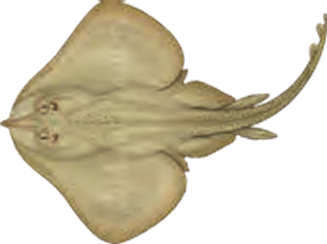
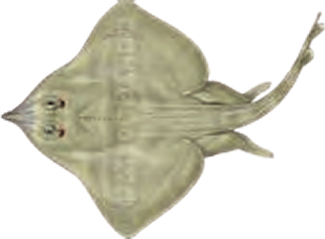
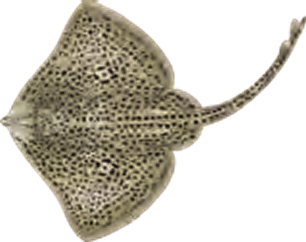
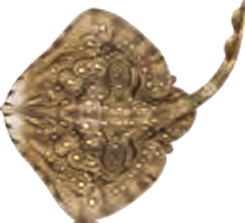
- Dorsal surface pale sandy brown to olive grey.
- Light bands running almost parallel to margins of disc.
- Lighter streaks, spots and blotches in regular patterns.
- Ventral surface white.
Teeth
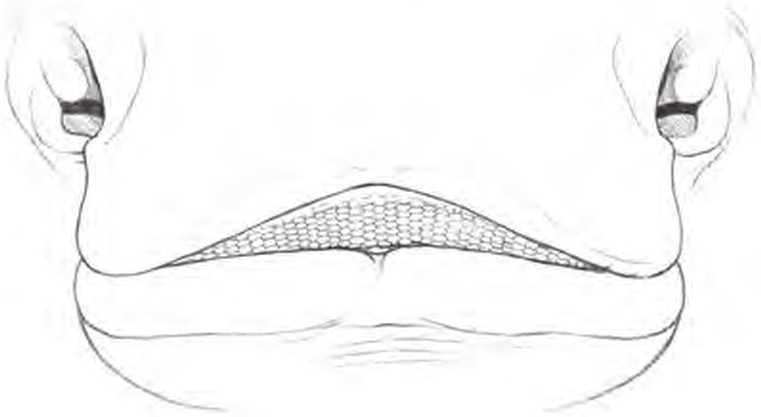
Obtuse, flat and close-set in females and juveniles. Middle series sharper in males. Upper jaw: 44–52.
Eggcase
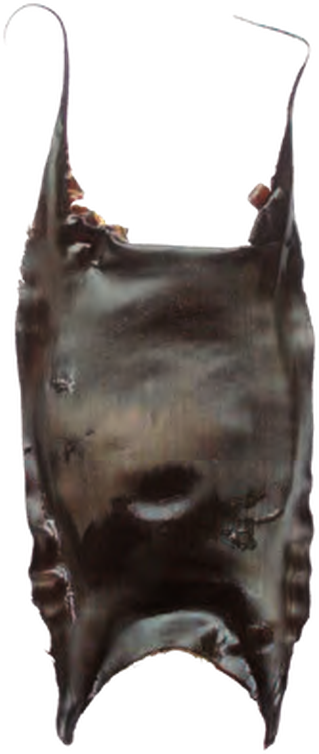
31–59mm wide. 70–95mm long (excl. horns). Long, filamentous horns and fibrous keels. Similar eggcase to the Thornback Ray, Raja clavata.
How big do they get?
Where they live
Distribution
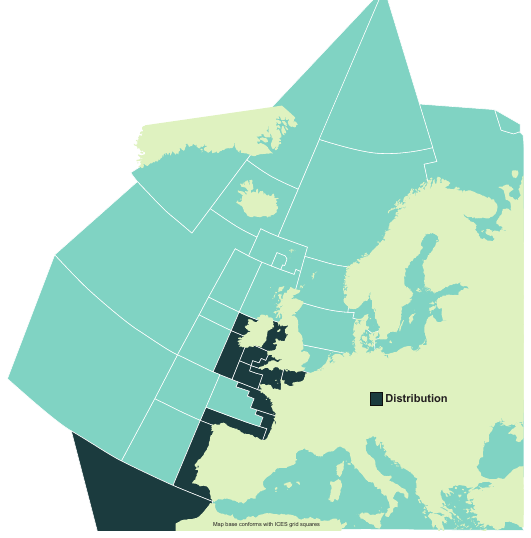
Northeast Atlantic from the British Isles to Morocco. Most commonly found in the Bristol and English Channels. Absent from the North Sea and Mediterranean Sea.
Habitat
Benthic to ~100m. Found on the continental shelf over soft substrates favouring inshore sandy bays and sandbanks. Juveniles occur in shallow water, larger specimens found further from shore.
In the wild
-

Recorded on a Shark Trust survey dive -
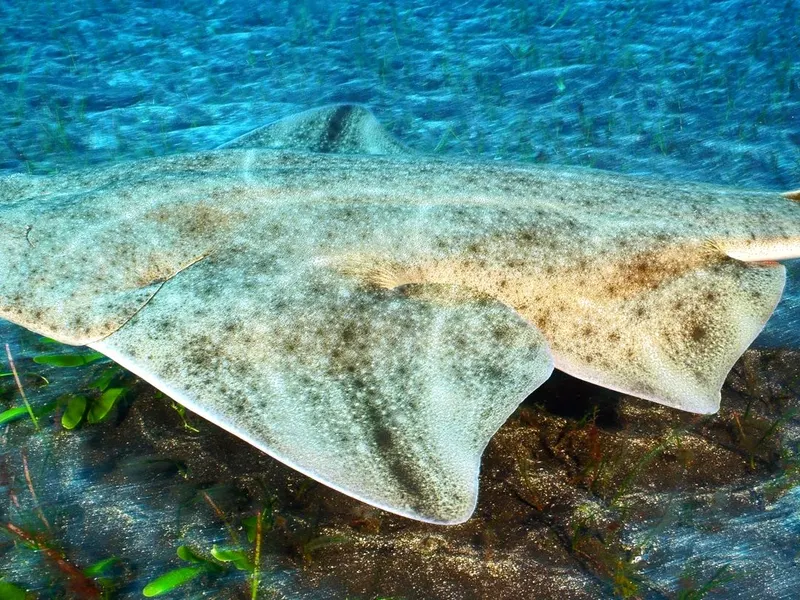
Resting on a sandy seabed -
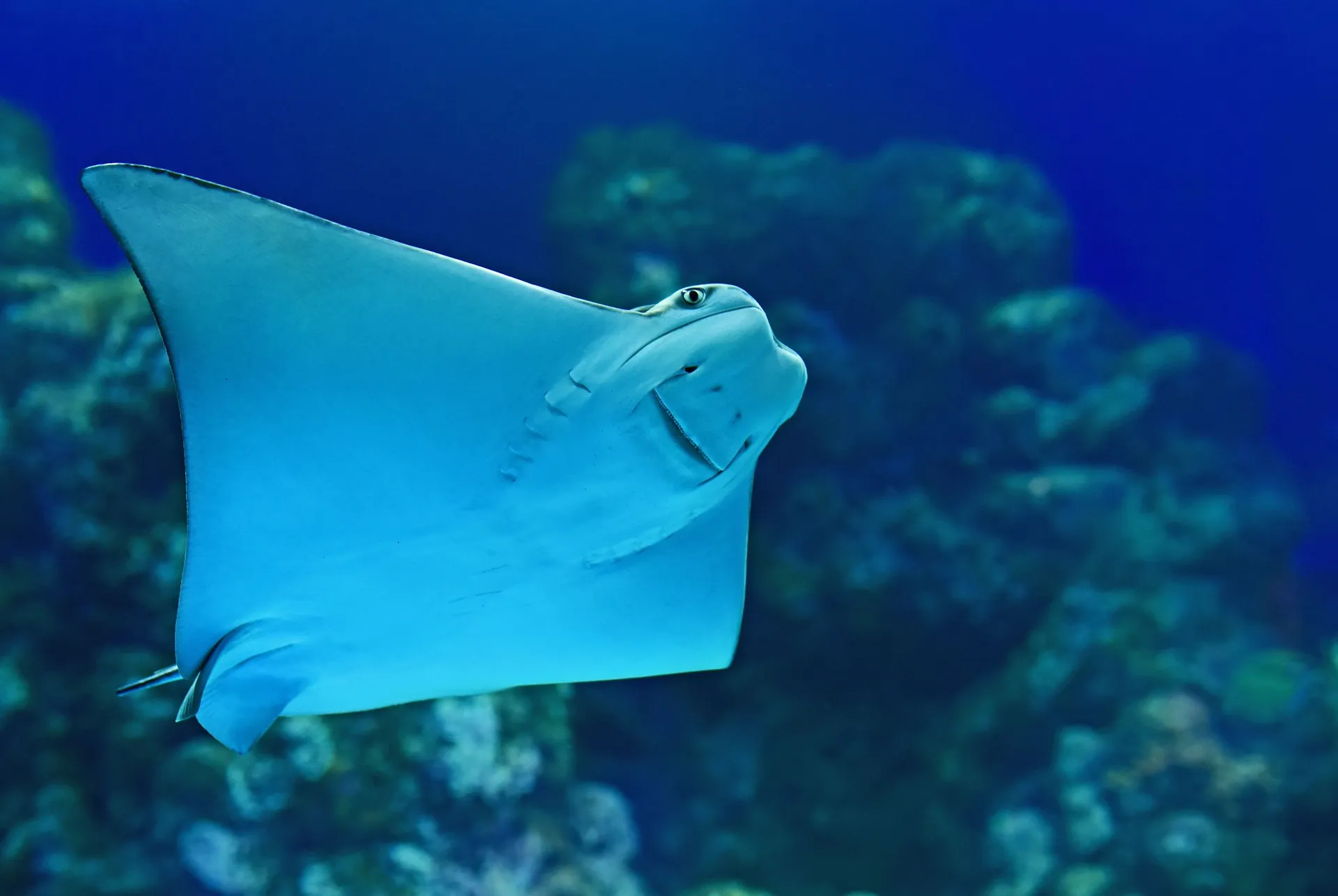
Cruising close to the sea floor -
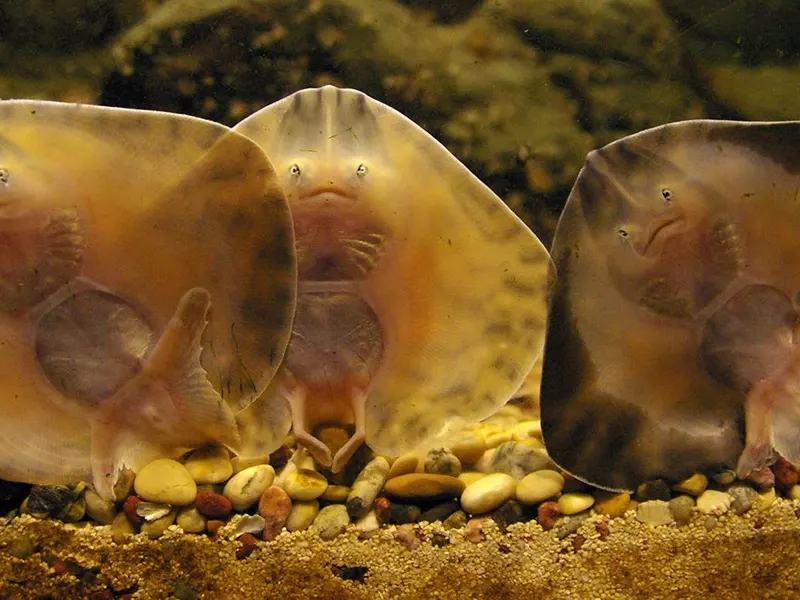
In the shallows at dusk -
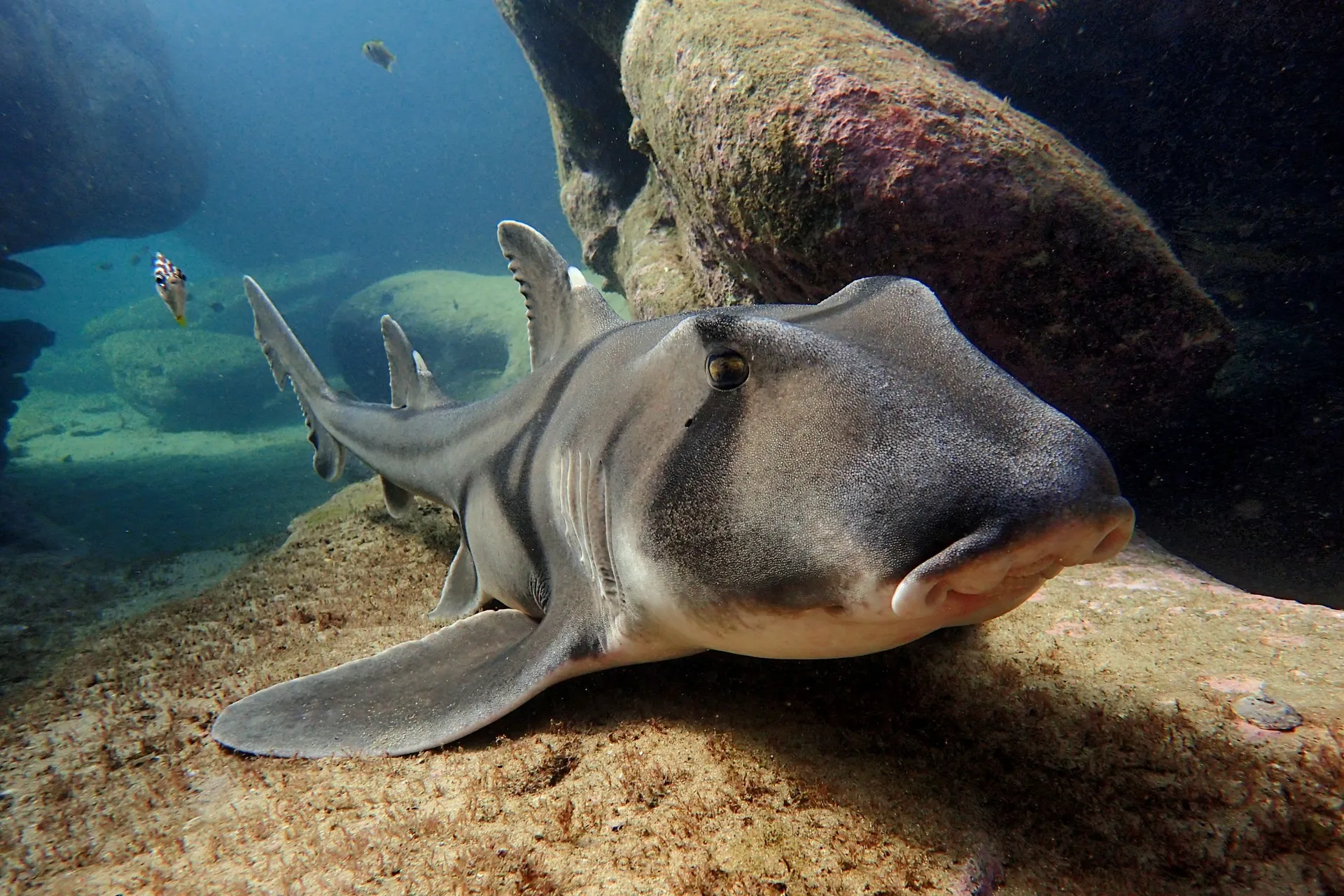
Sheltering on the reef
Go deeper
Size & biology
- Birth: 10–13cm.
- Mature: ~58cm.
- Max. TL: 91cm.
- Oviparous, females produce 54–61 eggcases annually.
- Eggcases frequently laid June-September. Embryonic development takes 7 months.
- Juveniles feed on benthic crustaceans; adults primarily feed on teleosts.
Conservation status
IUCN Red List: Global: Near Threatened (2009) Europe: Near Threatened (2015) The Small-eyed Ray is potentially vulnerable to overexploitation from localised fishing and habitat disturbance due to restricted geographical distribution and localised abundance.
Management
Subject to regulations under the CFP.
Commercial importance
Not usually targeted but an important part of commercial skate fisheries in parts of South Wales, Devon and Cornwall, particularly the Bristol Channel. Taken as bycatch in trawl and gillnet demersal fisheries. Popular species with recreational anglers.
References & further reading
Assessment: RJE/NEA/2020
- Ebert & Stehmann.
- Ellis, J.
- Ellis & Walls.
- Last et al.
- Gordon et al.
- Kaiser et al.
- Gibson et al.
- ICES Advice.