Spotted Ray
Raja montagui Fowler, 1910
Least Concern- Maximum length
- 80 cm
- Depth range
- From 30 to 150m, rarely to 530m.
- FAO code
- RJM
Meet the Spotted Ray
- Also known as
- SPOTTED RAY, Spotted Skate, Homelyn Ray, Spotted Homelyn Ray, Roker, Gefleckter Rochen (DEU), Raya Pintada (ESP), Raie Douce (FRA), Razza Maculata (ITA), Gevlekte Rog (NLD), Raia Manchada (PRT).
How to identify
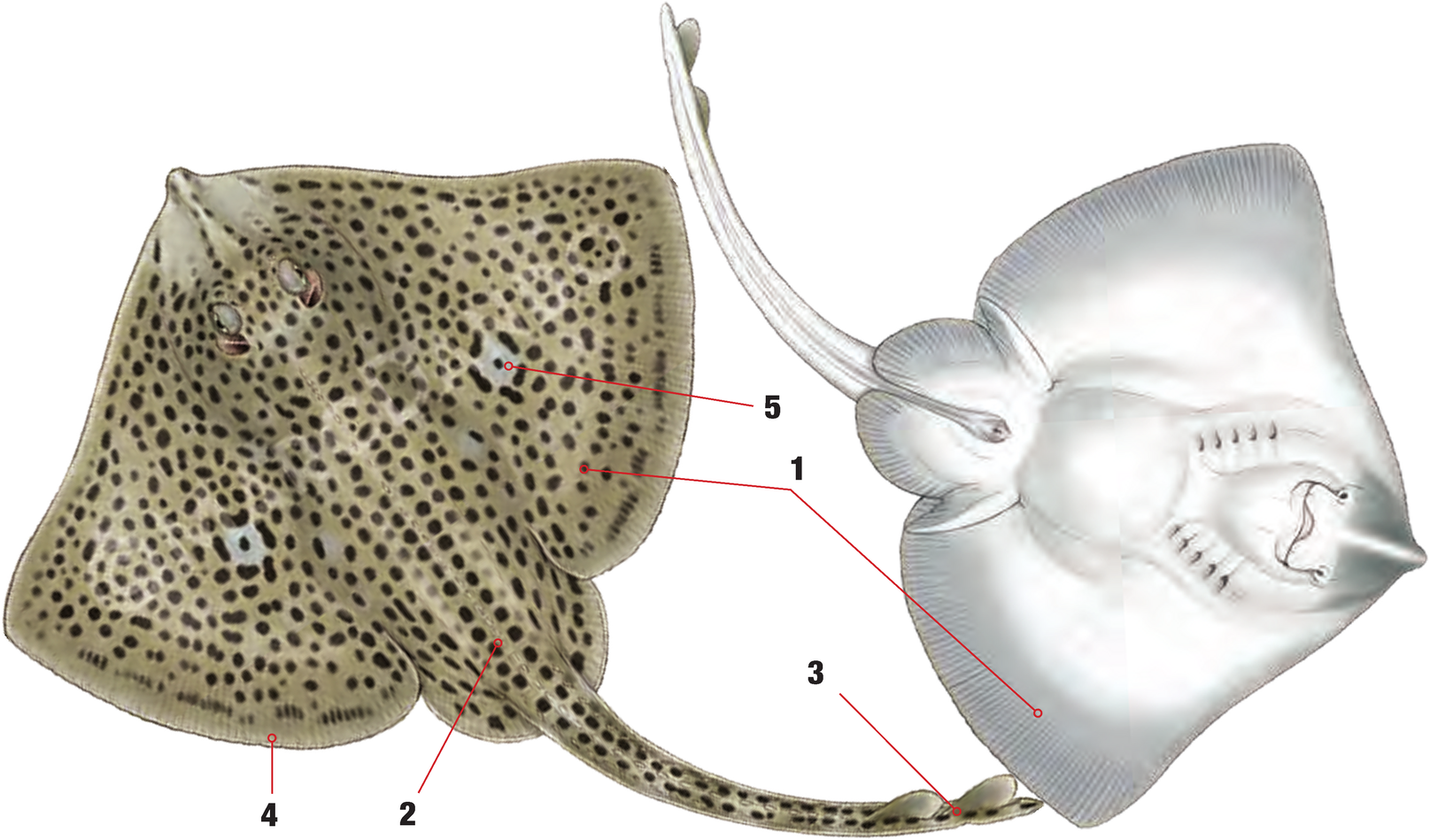
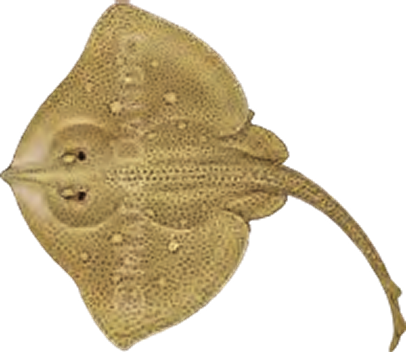
The numbers match the arrows on the illustration.
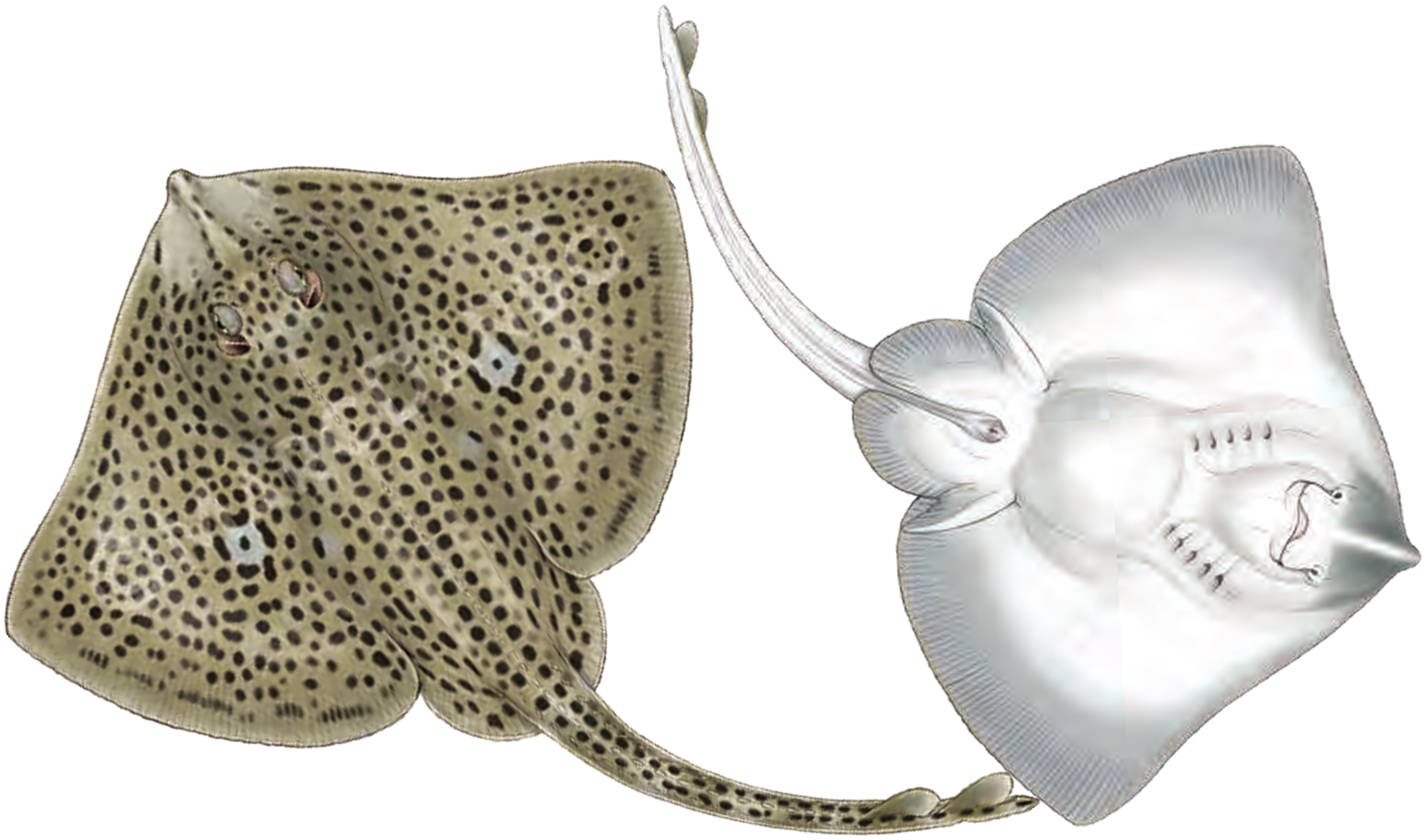
- Broad wings, almost form right angles.
- Row of 20–50 thorns from nape to first dorsal fin.
- 1–2 interdorsal thorns.
- Numerous dark spots which do not extend to very edge of disc.
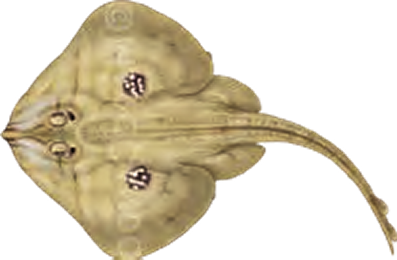
- Frequently a a ring of dark spots present on the wings giving the appearance of an ‘eye-spot’.
Colouring & markings
- Dorsal surface pale greyish-brown to yellow, and smooth.
- Ventral surface white with darker margins.
Teeth
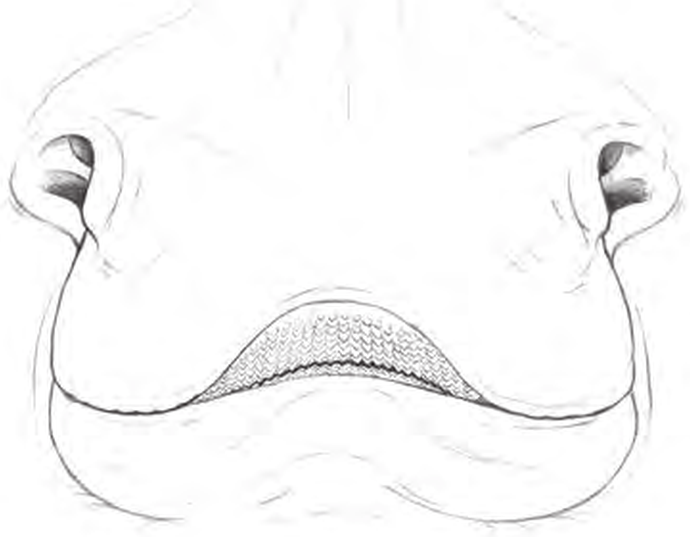
Flat, blunt cusp in pavement pattern in females and juveniles. Sharper, longer and set in parallel rows in mature males. Upper jaw: <60 (c.f. Blonde Ray Raja brachyura, >60).
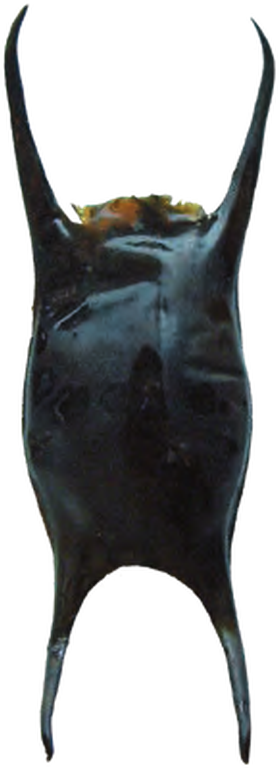
Eggcase
29–37mm wide. 32–75mm long (excl. horns). No keels. Similar eggcase to the Cuckoo Ray, and Leucoraja naevus, Undulate Ray Raja undulata.
How big do they get?
Where they live
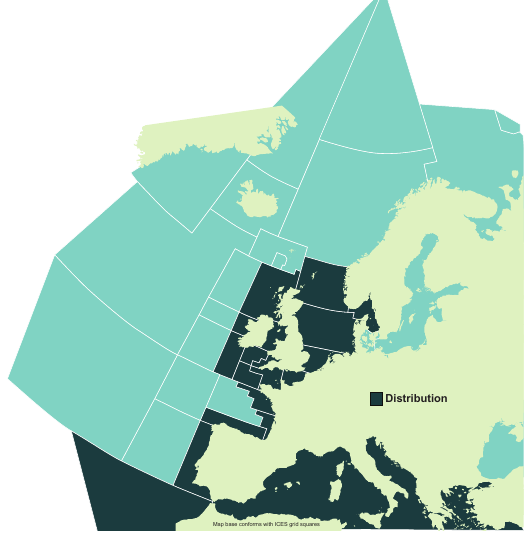
Distribution
Widely distributed in the Northeast Atlantic from the British Isles and Norway south to Morocco, including the Canary Islands and Mediterranean Sea.
Habitat
Demersal from 30–150m, rarely to 530m. Found in coastal areas and on the continental shelf over soft substrates.
In the wild
-

Recorded on a Shark Trust survey dive -
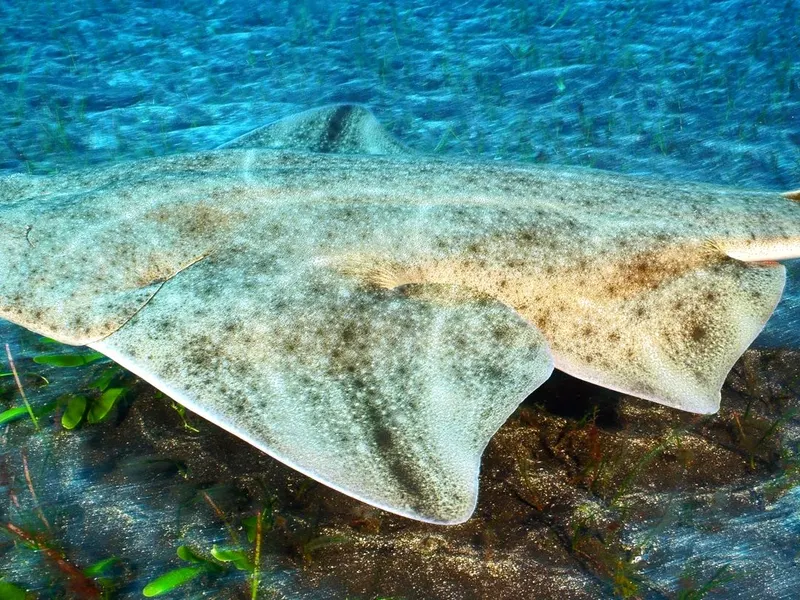
Resting on a sandy seabed -
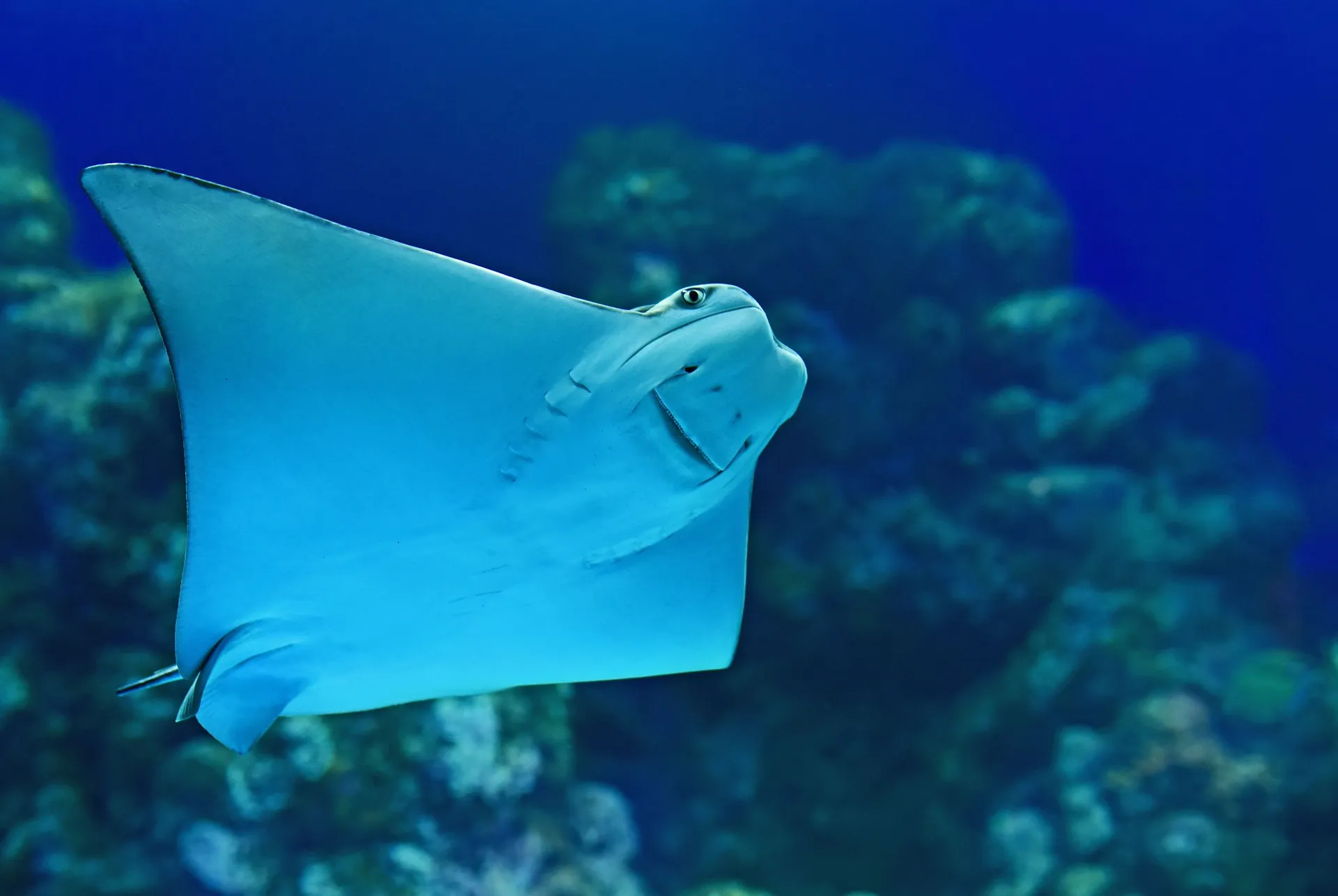
Cruising close to the sea floor -
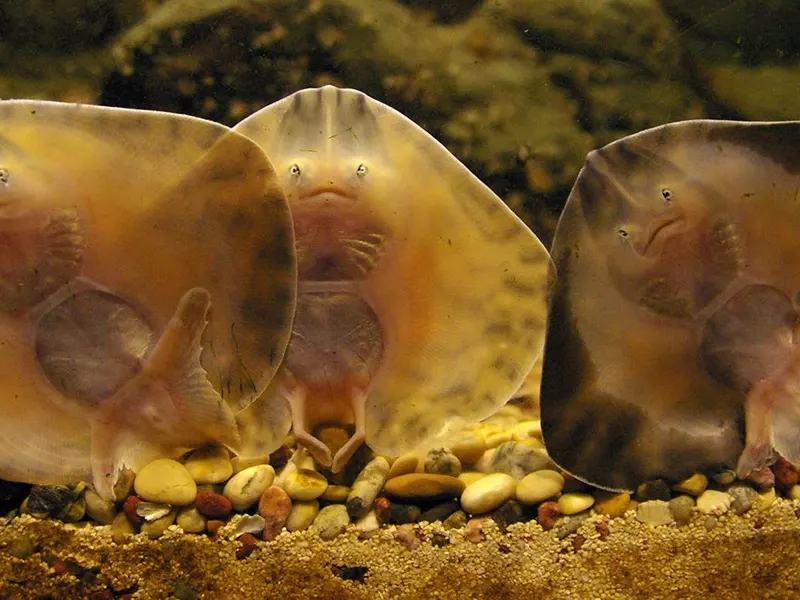
In the shallows at dusk -
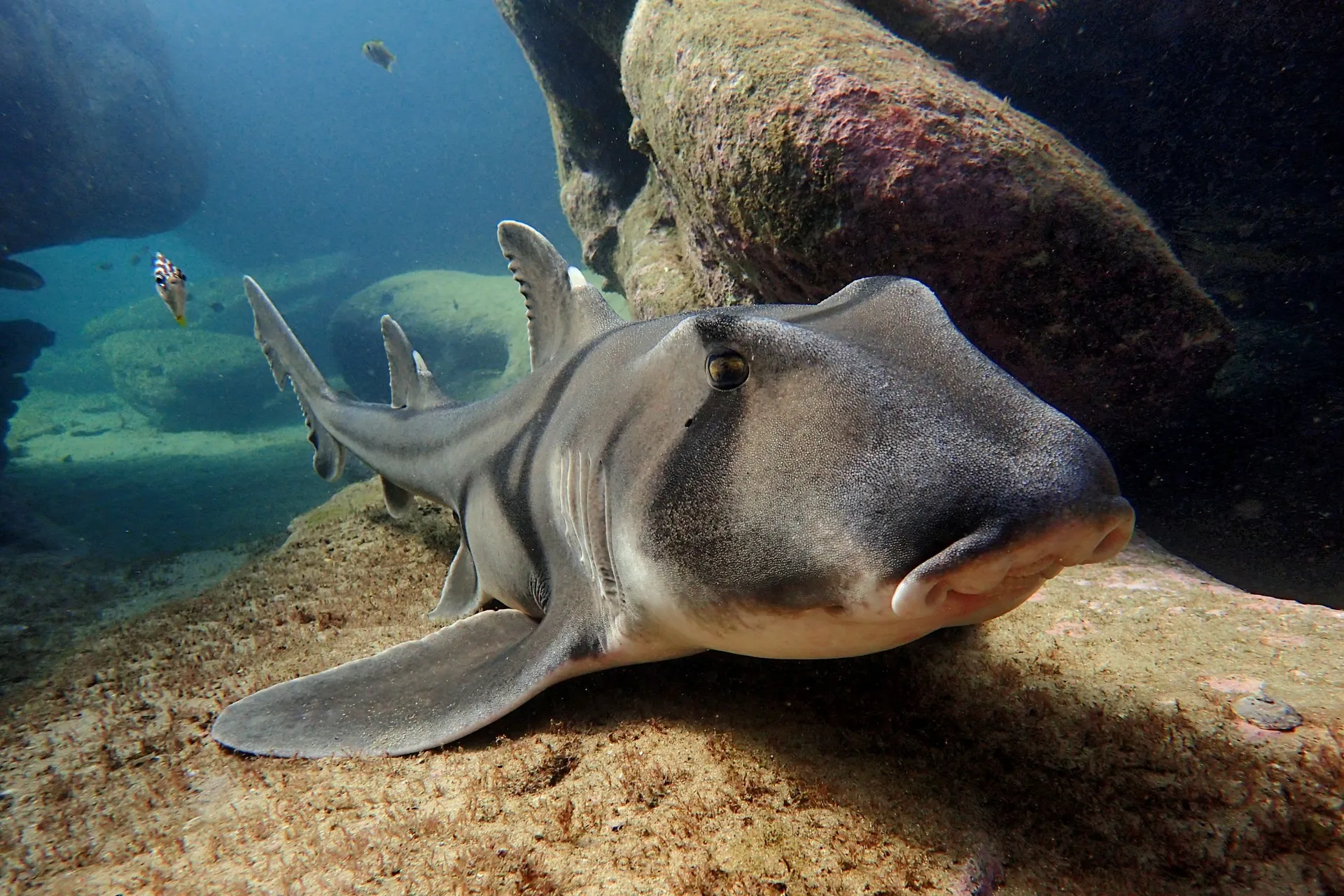
Sheltering on the reef
Go deeper
Size & biology
- Birth: 8–10cm.
- Matures: female 49–70cm; male 40–66cm.
- Max. TL: 80cm.
- Oviparous, females lay 60–70 eggcases per year during summer on sandy or muddy substrates. Embryonic development takes 5–6 months.
- Juveniles prey on small crustaceans; adults on larger crustaceans and teleosts.
Conservation status
IUCN Red List: Global: Least Concern (2007) Europe: Least Concern (2015) Mediterranean: Least Concern (2016) A smaller bodied, widespread skate common in landings from fisheries and trawl surveys. Its small size and high fecundity may mean it is more resilient to fishing pressures than larger bodied skates.
Management
Subject to regulations under the CFP.
Commercial importance
Regularly taken as bycatch in multispecies trawl and gillnet fisheries across its range. Larger species are landed and sold for human consumption. 1-3
References & further reading
Assessment: RJM/NEA/2020
- Ebert & Stehmann.
- Ellis et al.
- Ellis et al.
- Last et al.
- McCully et al.
- Gordon et al.