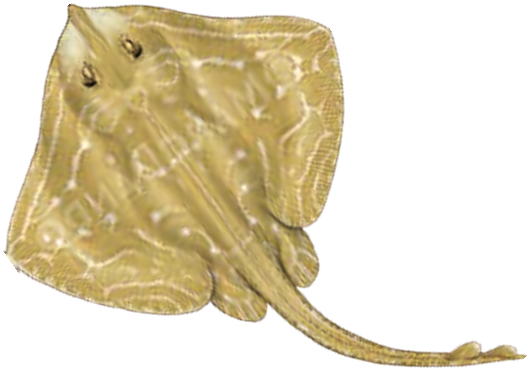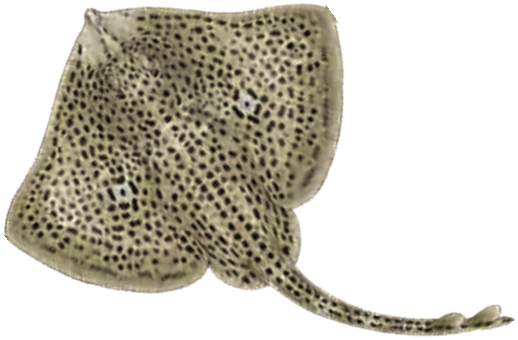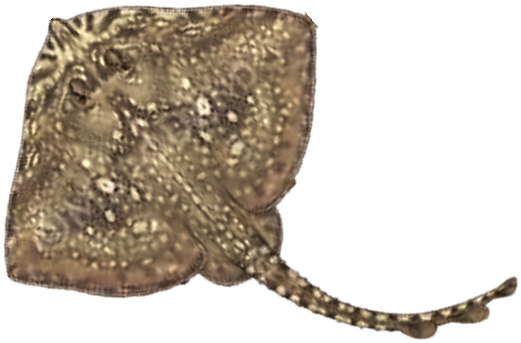
Blonde Ray
Raja brachyura Lafont, 1871
Near Threatened- Maximum length
- 1.2 m
- Depth range
- From 0 to 900m, most commonly to <150m.
- FAO code
- RJH
Meet the Blonde Ray
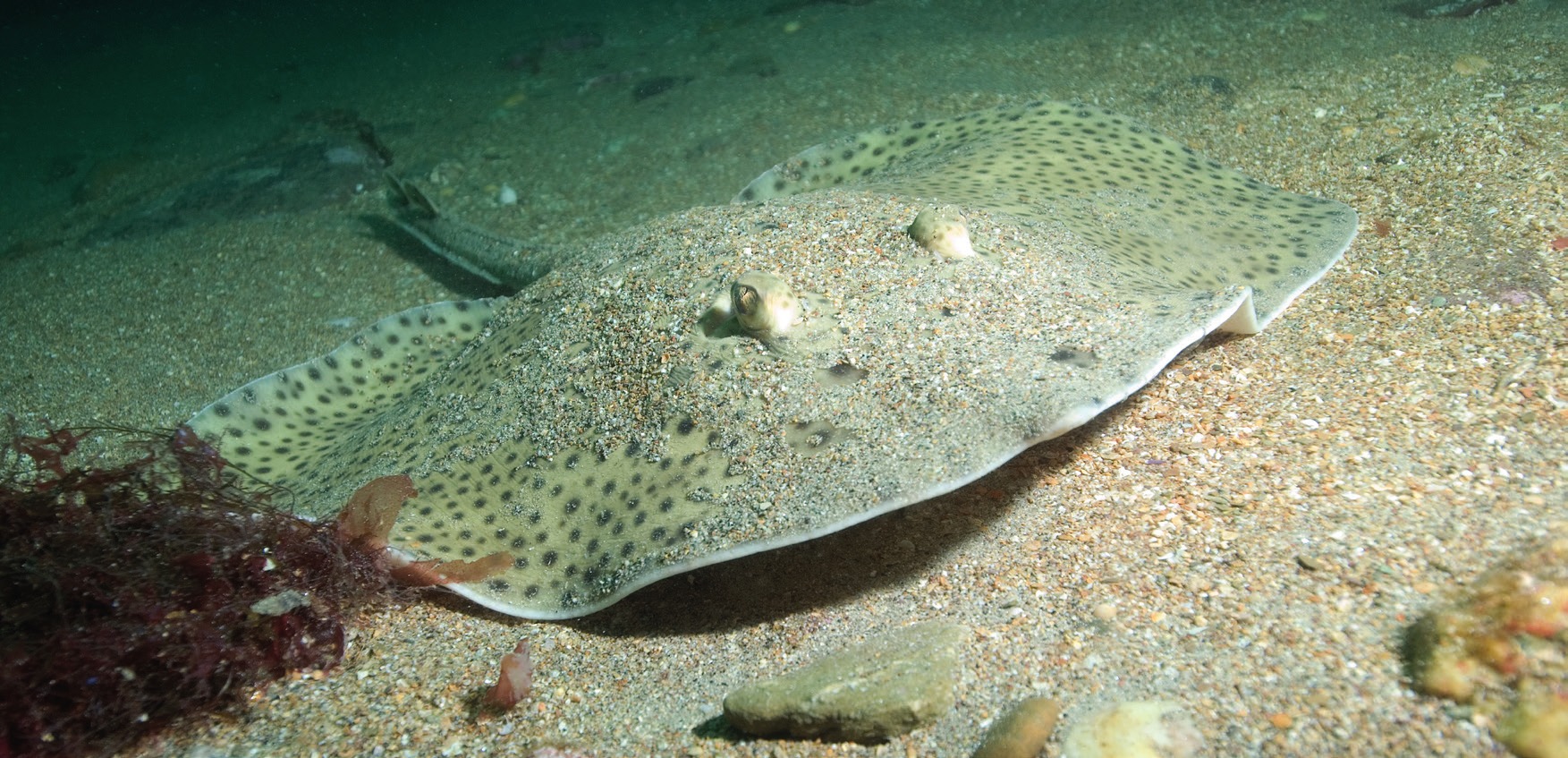
The Blonde Ray has brilliant camouflage against sandy bottoms, hiding it from any predators. It also has small prickly spines all over its dorsal side.
- What they eat
- Cephalopods, sandeels, small crustaceans and molluscs.
- Also known as
- BLONDE RAY, Blonde Skate, Roker, Blondrochen (DEU), Raya Boca de Rosa (ESP), Raie Lisse (FRA), Razza a Coda Corta (ITA), Blonde Rog (NLD), Raia Pontuada (PRT).
How to identify
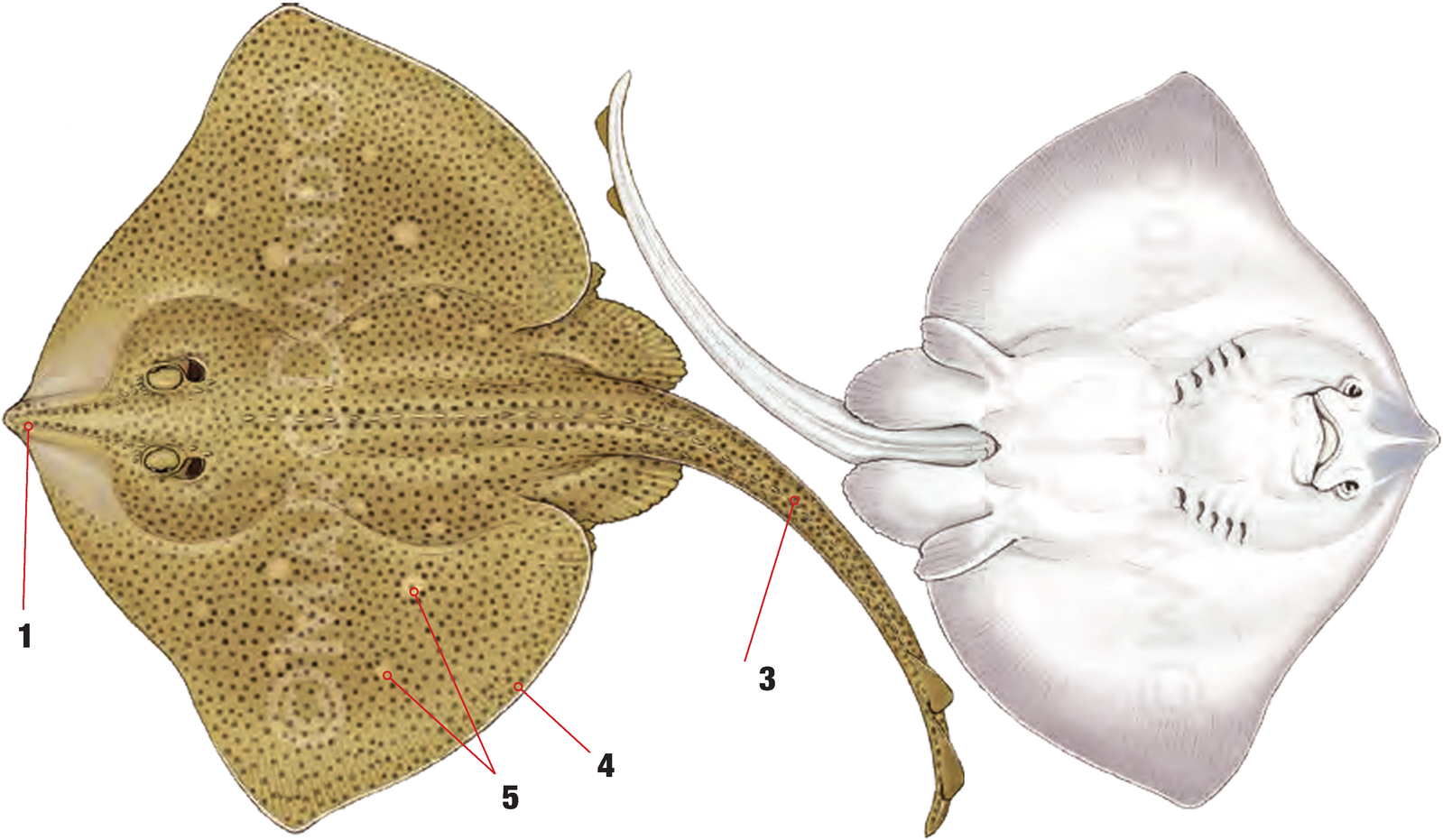
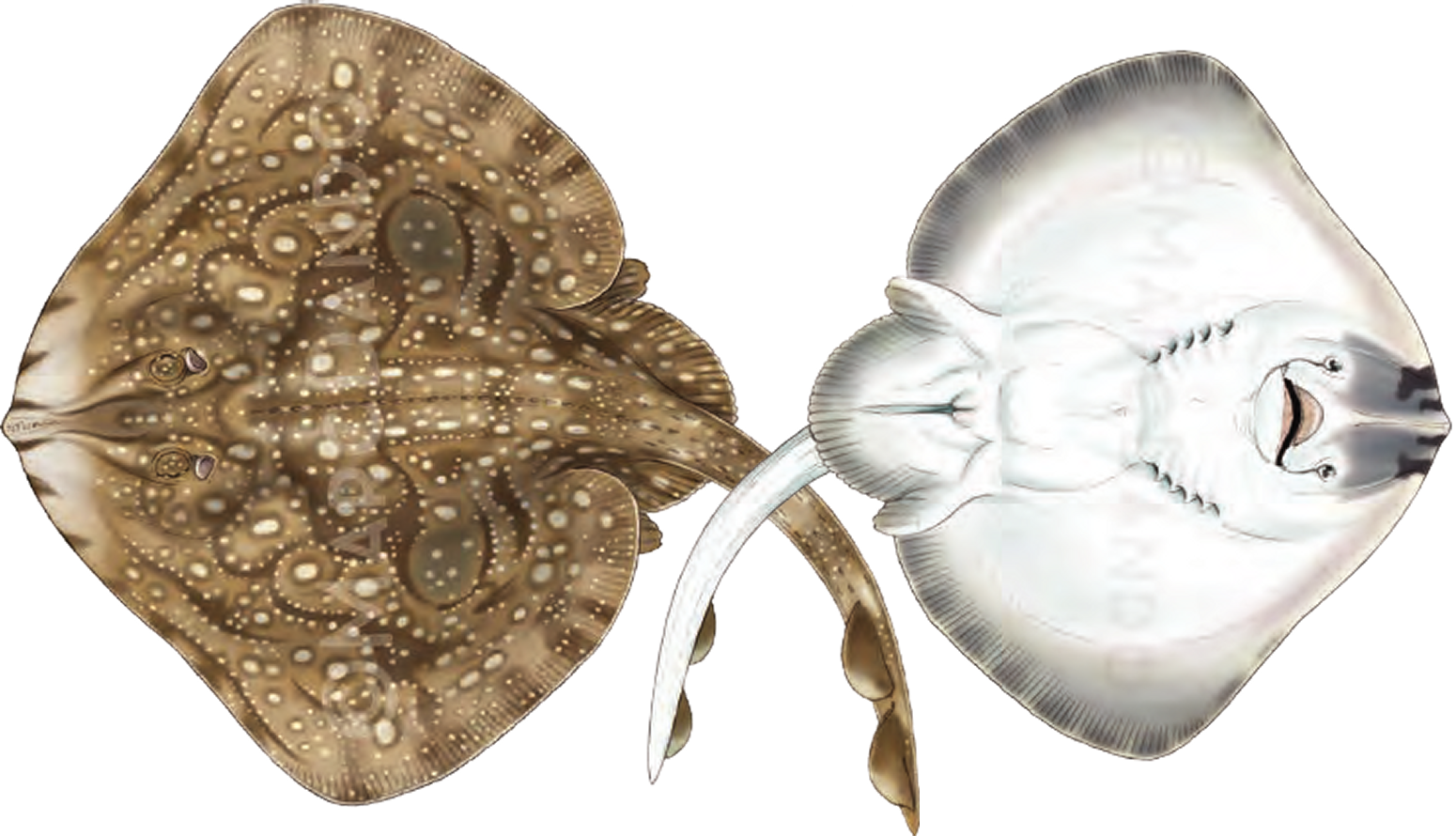
The numbers match the arrows on the illustration.
- Large skate with short snout.
- Median row of 40–45 thorns on juveniles and adult females.
- Row of thorns present but interrupted on males.
- Spots extend to very edge of wings.
- Larger, paler spots often scattered symmetrically on disc.
Colouring & markings
- Dorsal surface pale brown to greyish-brown and covered in dark spots.
- Ventral surface white.
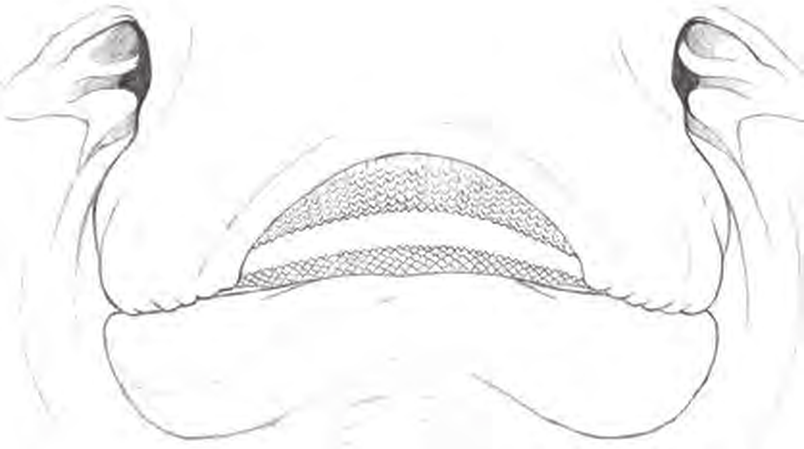
Teeth
Both sexes have similar sharp, cusped teeth., Upper jaw: 60–90 (c.f. Spotted Ray Raja montagui, <60).
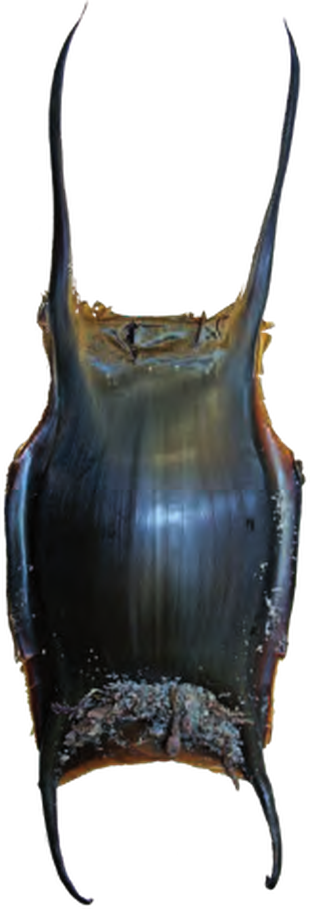
Eggcase
33–86mm wide. 82–132mm long (excl. horns). Well defined keels and aprons. Upper horns longer than lower horns. Lower horns strongly curled at the tips. Similar eggcase to the Thornback Ray Raja clavata, although significantly larger.
How big do they get?
Where they live
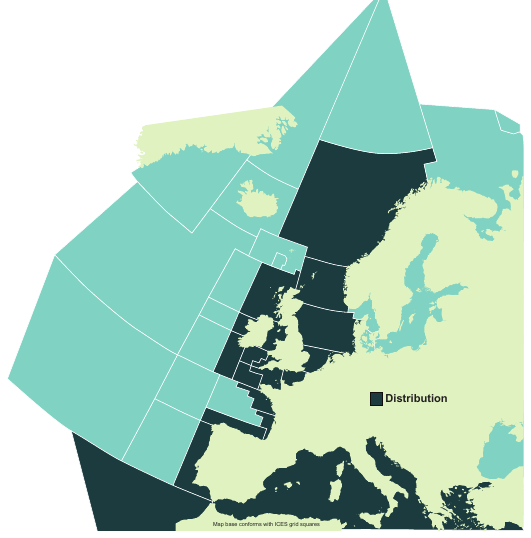
Distribution
Northeast Atlantic from southern Norway to Morocco and the Western Mediterranean Sea. Patchy distribution in the North Sea.
Habitat
Demersal to 900m on continental shelves and upper slopes. Most commonly from the shallows to <150m in areas protected from strong tidal currents. Prefers soft substrates such as sand, and often found near sandbanks.
In the wild
-
Recorded on a Shark Trust survey dive -
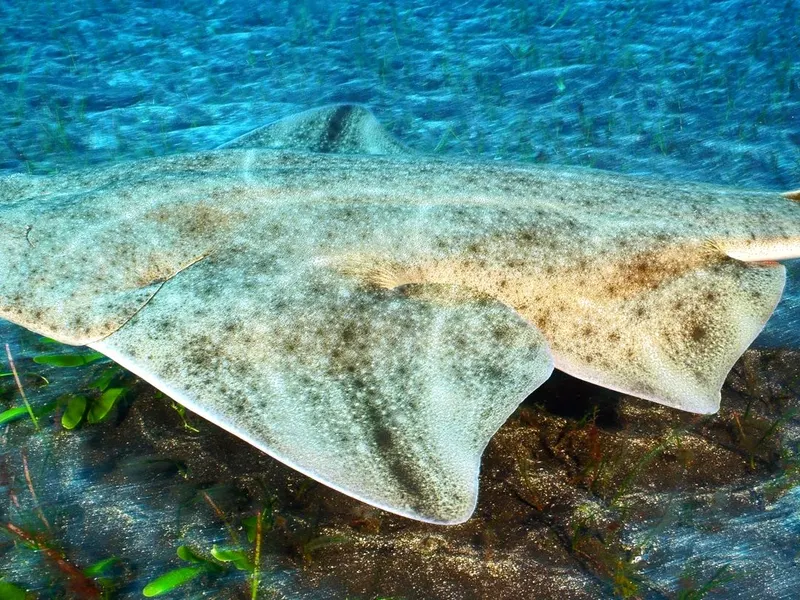
Resting on a sandy seabed -
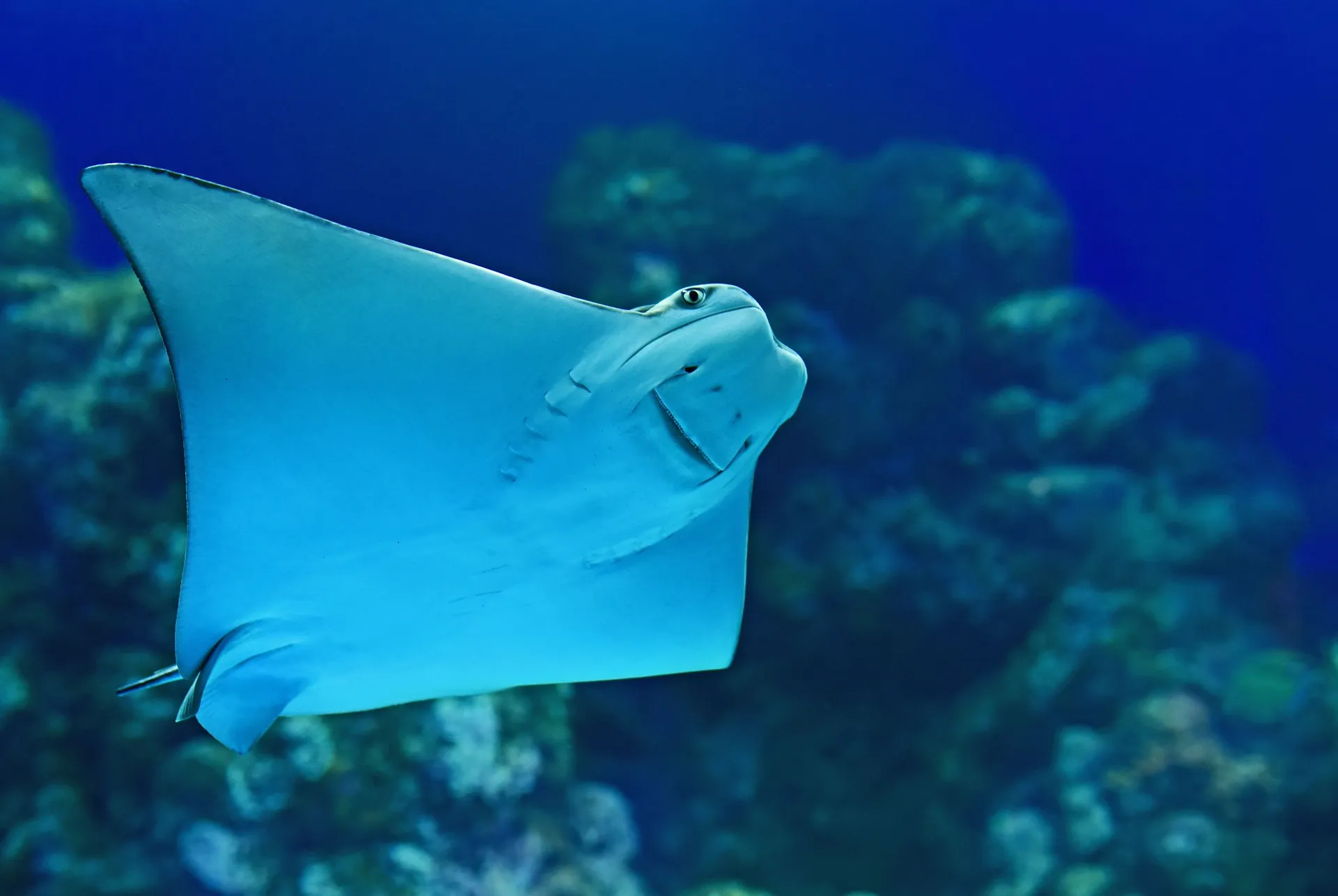
Cruising close to the sea floor -
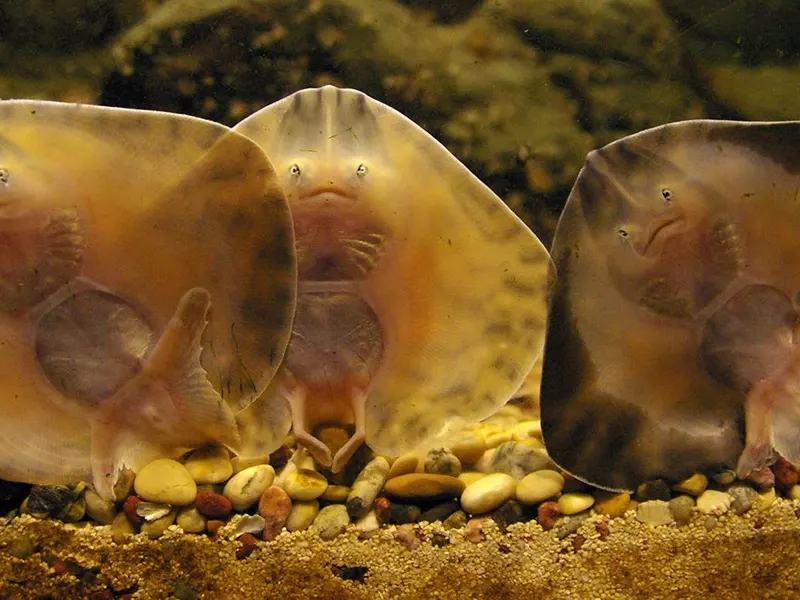
In the shallows at dusk -
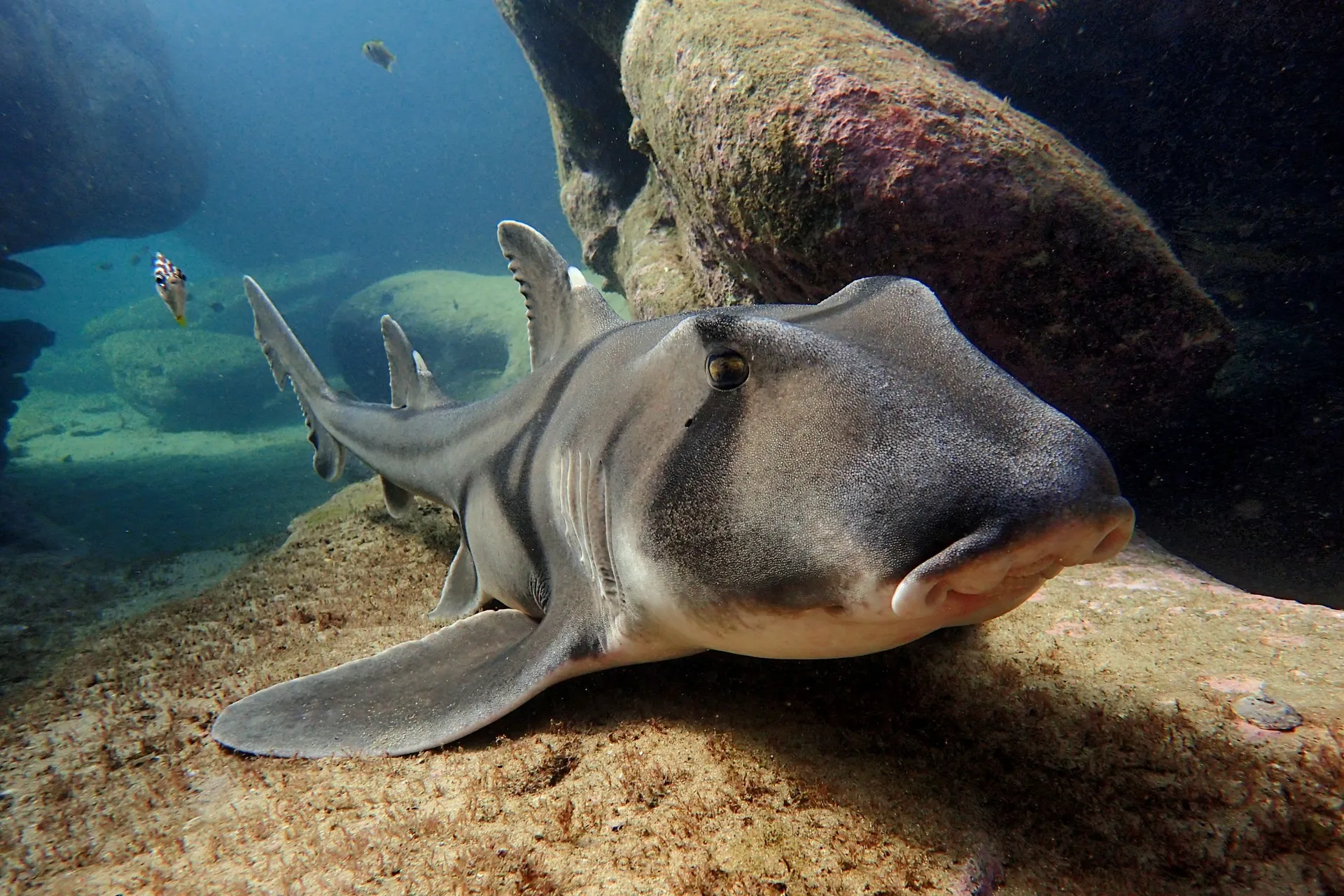
Sheltering on the reef
Go deeper
Size & biology
- Birth: 16–18cm.
- Mature: 80–90cm.
- Max. TL: 120cm.
- Age at maturity: 5 years. Max. age est.: 15 years.
- Oviparous, eggcases laid between February and August with incubation lasting around seven months.
- Primarily feeds on crustaceans, with adults favouring cephalopods and small teleosts.
Conservation status
IUCN Red List: Global: Near Threatened (2009) Europe: Near Threatened (2015) Mediterranean: Near Threatened (2016) A large, late maturing skate that is potentially vulnerable to overexploitation from demersal fisheries. Taken as bycatch and targeted where abundant.
Management
Subject to prohibitions and regulations under the CFP.
Commercial importance
A commercially valuable species in demersal fisheries. May be targeted in areas of local abundance and caught as bycatch in multispecies fisheries. Utilised for human consumption. Popular species in recreational fisheries.
References & further reading
Assessment: RJH/NEA/2020
- Ebert & Stehmann.
- Ellis et al.
- Last et al.
- McCully et al.
- McCully et al.
- Gordon et al.
- Porcu et al.
- Martin et al.