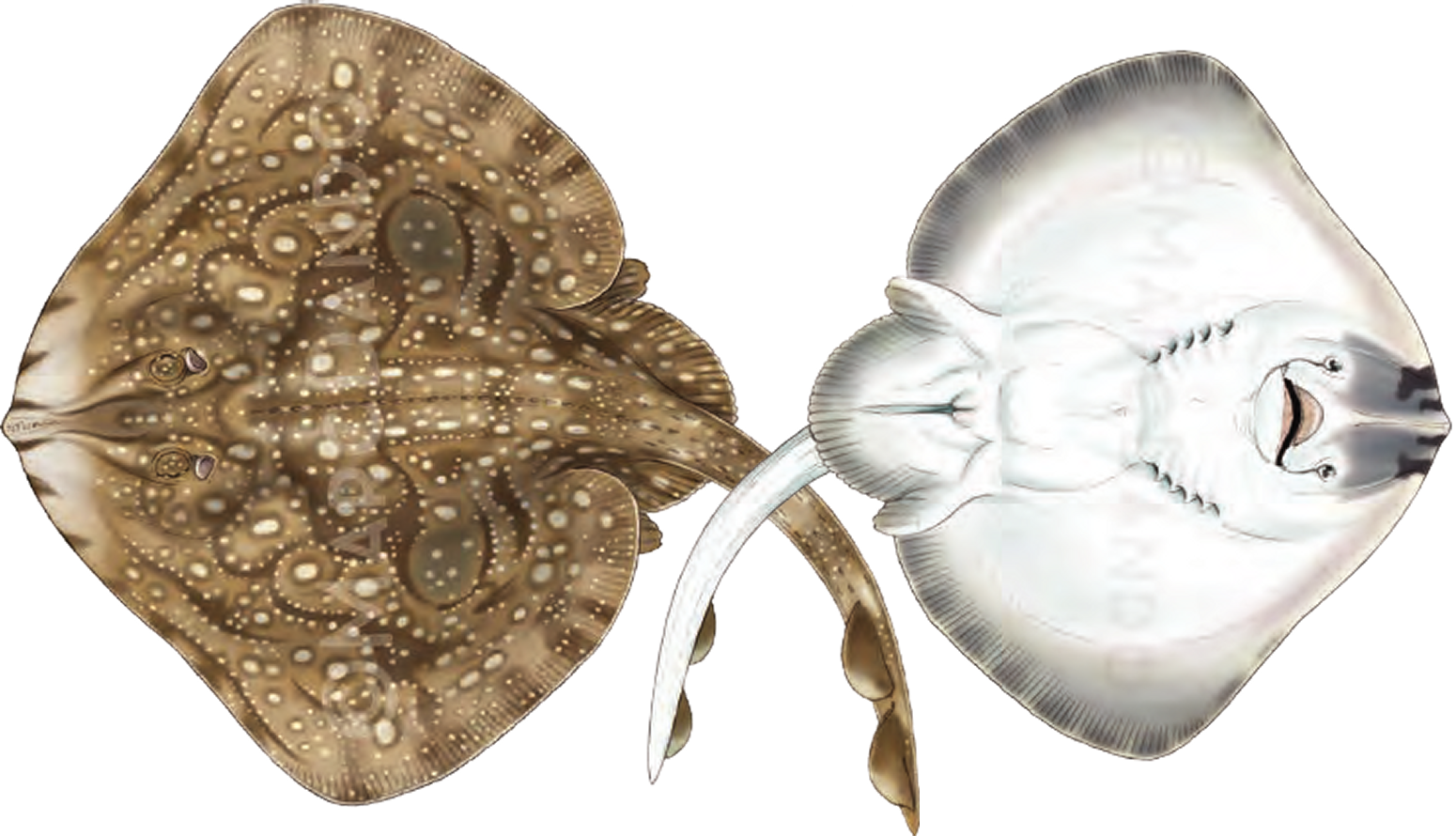
Undulate Ray
Raja undulata Lacepède, 1802
Near Threatened- Maximum length
- 1.14 m
- Depth range
- 200m, primarily <100m.
- FAO code
- RJU
Meet the Undulate Ray
- Also known as
- UNDULATE RAY, Undulate Skate, Painted Ray, Wellenlinien-Rochen (DEU), Raya Mosaica (ESP), Raie Brunette (FRA), Razza Ondulata (ITA), Raia-curva (PRT), Golfrog (NLD).
How to identify
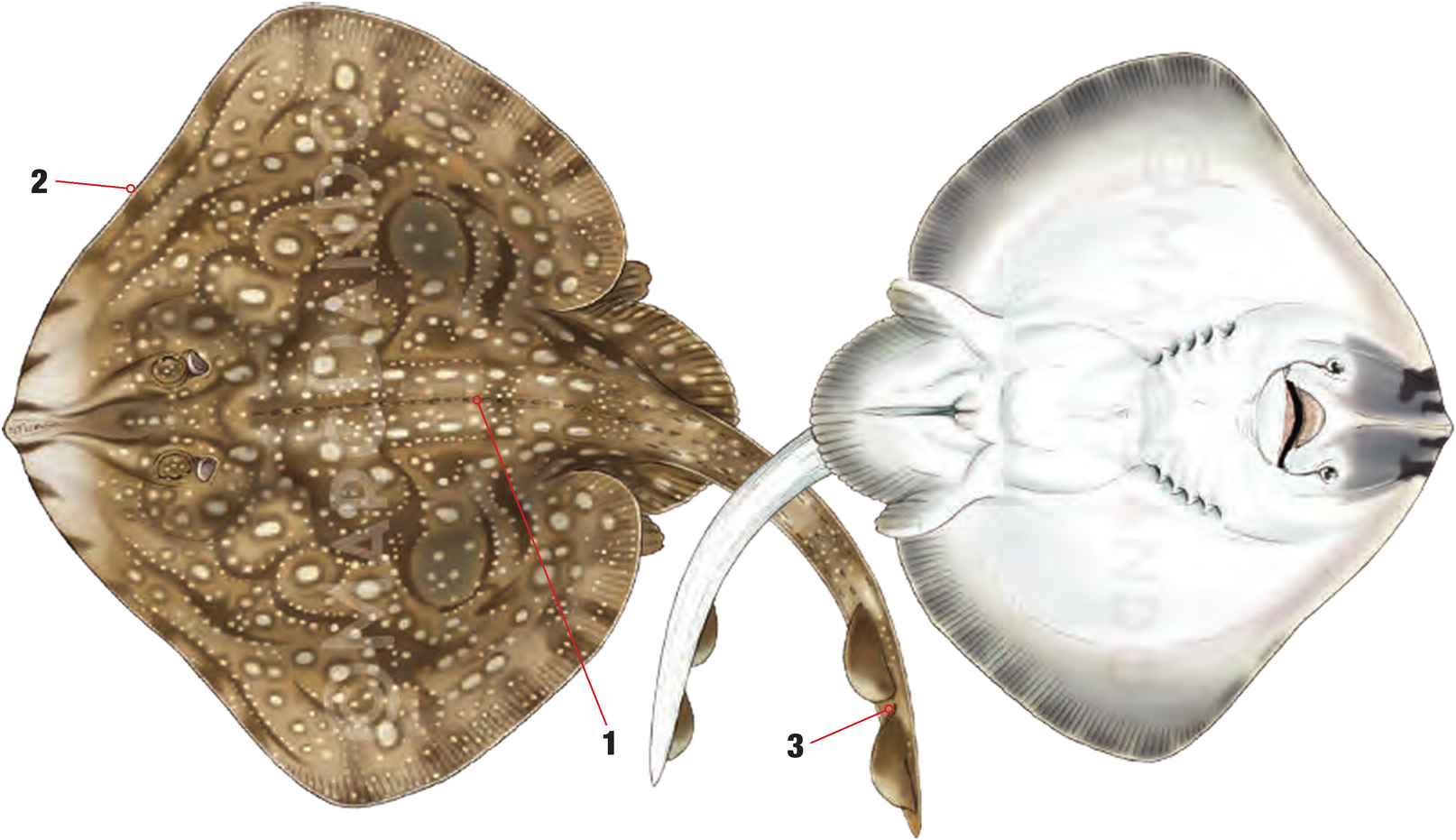
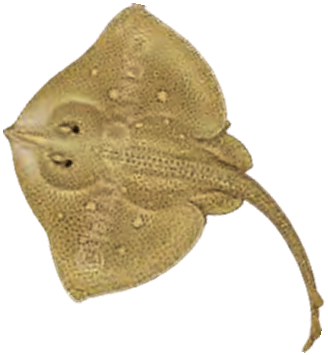
The numbers match the arrows on the illustration.
- Median row of 20–55 thorns from nape to first dorsal fin. Parallel rows occasionally present in adult females.
- Undulated anterior disc margin.
- 0–2 interdorsal thorns.
Colouring & markings
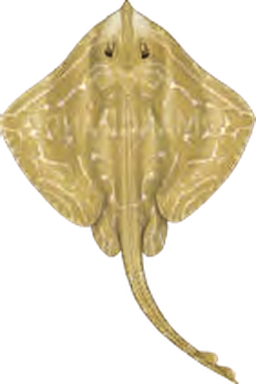
- Dorsal surface greenish yellow to greyish brown.
- Pattern of undulating dark bands bordered by rows of small white spots.
- Other larger white spots present.
- Ventral surface white with grey margins.

Teeth
Small teeth, inner series of teeth fairly flat and with blunt cusp, middle series pointed, outer series chisel- edged. Teeth set in a mosaic pattern. Upper jaw: 40–50.
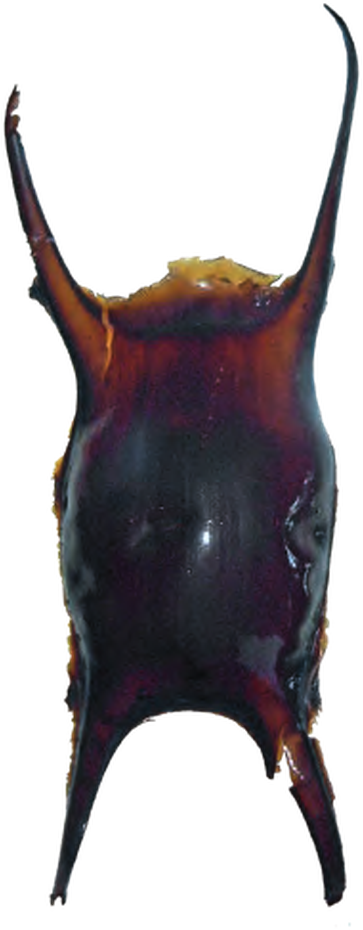
Eggcase
32–37mm wide. 72–89mm long (excl. horns). No lateral keels. Similar eggcase to Spotted Ray, Raja montagui.
How big do they get?
Where they live
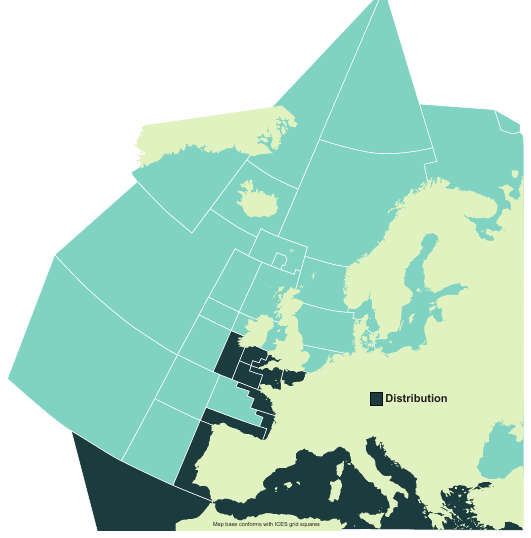
Distribution
Patchy distribution in the Northeast Atlantic from southwest British Isles to Senegal, including the Canary Islands, and Western Mediterranean Sea.
Habitat
Demersal to 200m, primarily <100m, most abundant <50m. Found on sandy and muddy substrates on the continental shelf and inshore in outer estuaries and lagoons. Locally abundant in some areas of its range e.g. English Channel.
In the wild
-
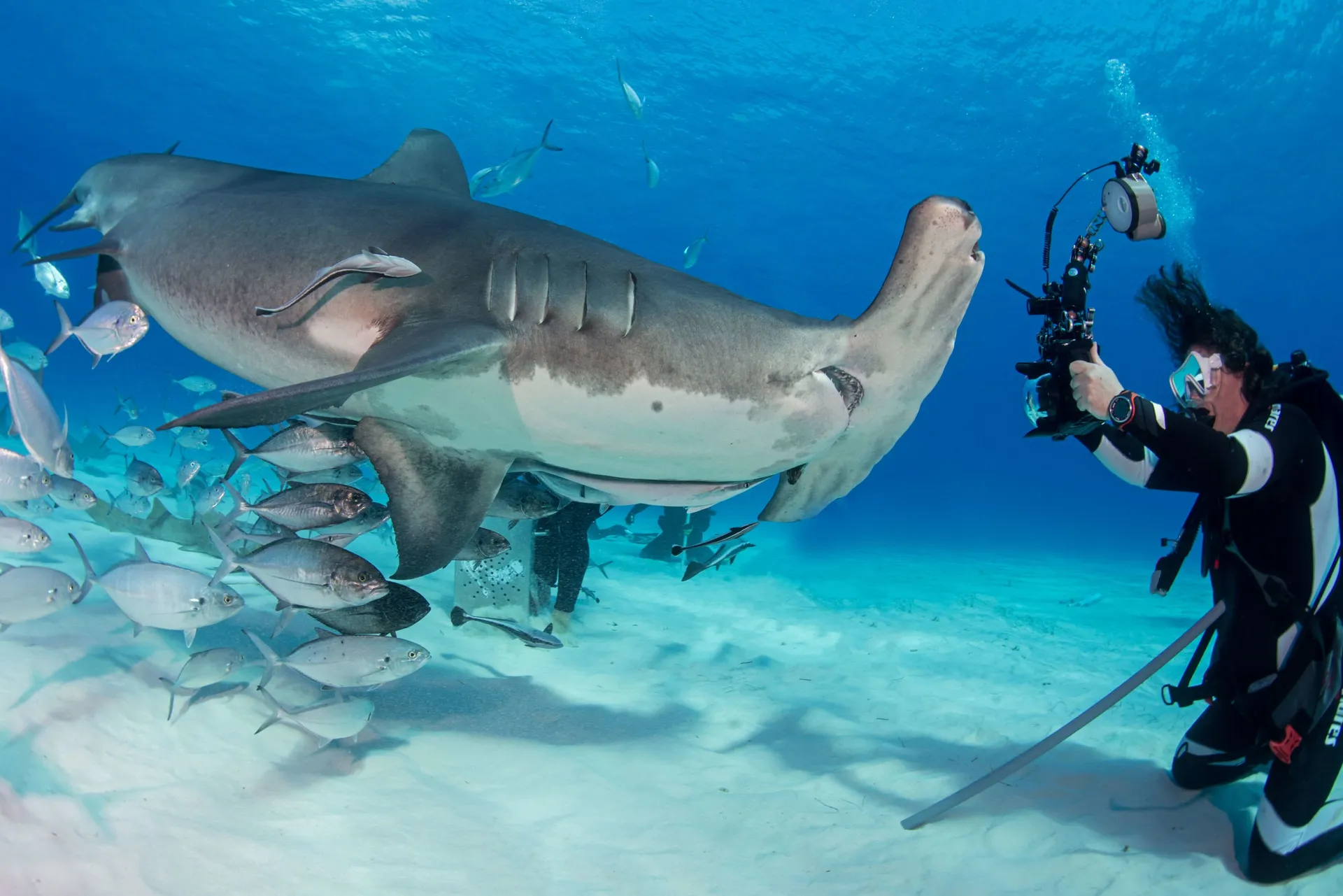
Recorded on a Shark Trust survey dive -
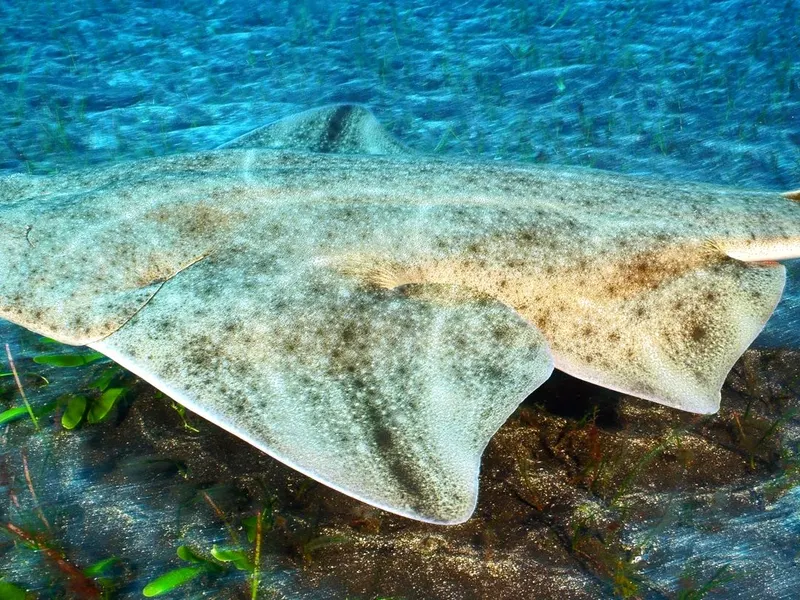
Resting on a sandy seabed -
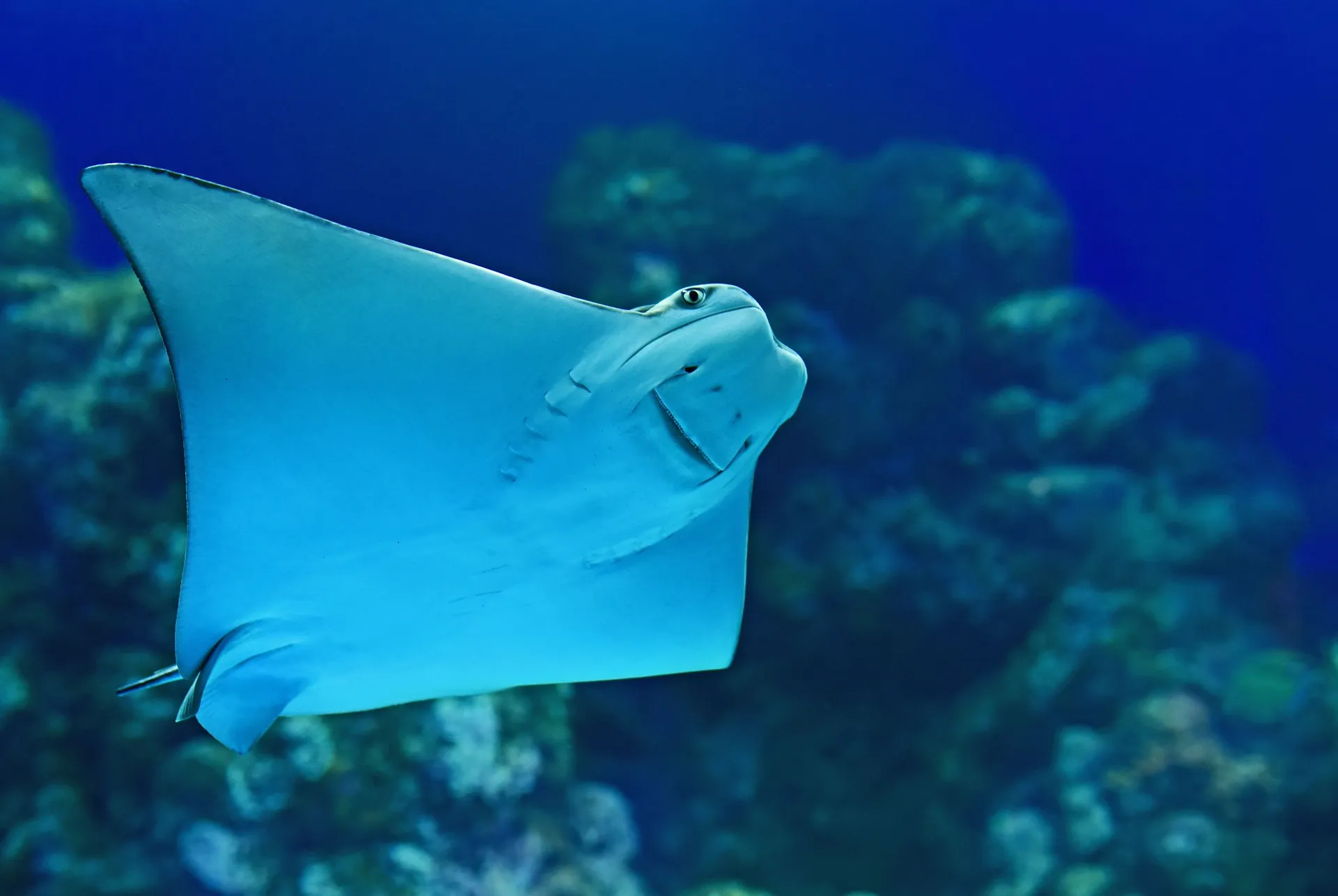
Cruising close to the sea floor -
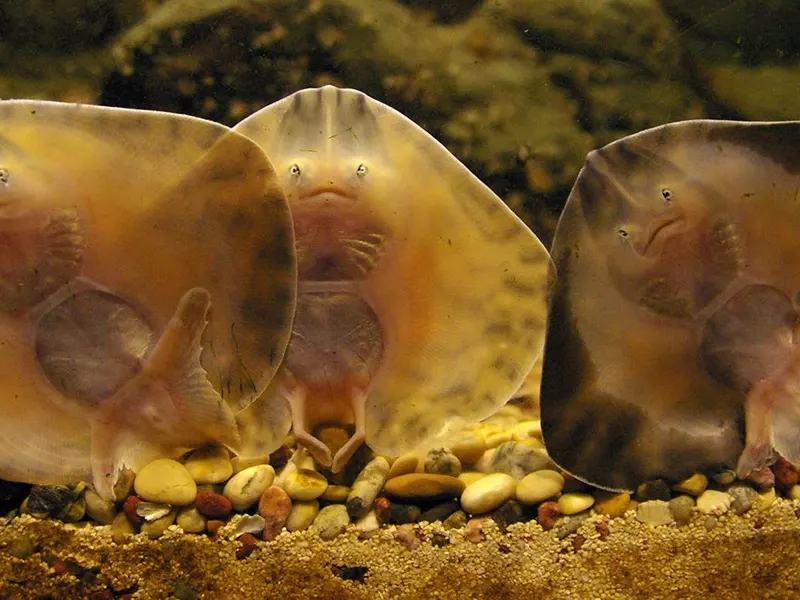
In the shallows at dusk -
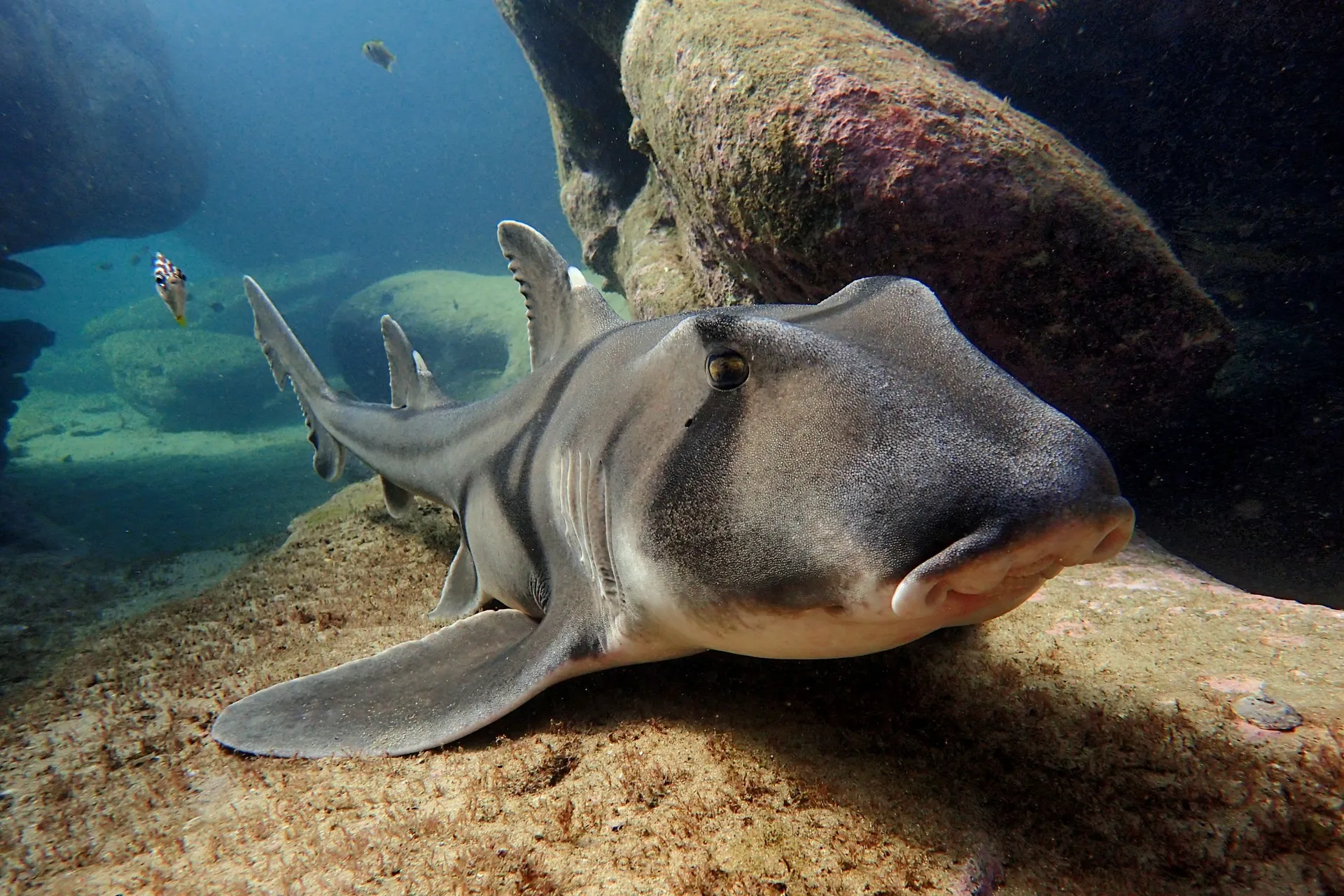
Sheltering on the reef
Go deeper
Size & biology
- Birth: 14cm.
- Matures: female 75–84cm; male 71–78cm.
- Max. TL: 114cm, possibly to 120cm.
- Age at maturity: female 9 years; male 7.5 years.
- Oviparous, eggcases usually laid between March and September.
- Females produce around 30 eggcases annually.
- Juveniles primarily feed on small crustaceans; adults feed on larger benthic crustaceans and teleosts.
Conservation status
IUCN Red List: Global: Endangered (2009) Europe: Near Threatened (2015) Mediterranean: Near Threatened (2016) A medium sized skate with a relatively slow growth rate. Its discrete populations may make it susceptible to localised depletion. The degree of genetic exchange between populations is unknown.
Management
Subject to prohibitions and regulations under the CFP.
Commercial importance
A commercially important species in those inshore areas where it is locally common. Bycatch of demersal fisheries using beam, trawl and trammel net gear. Utilised for human consumption where retained. Caught in recreational fisheries.
References & further reading
Assessment: RJU/NEA/2020
- Coelho et al.
- Ebert & Stehmann.
- Ellis et al.
- Last et al.
- Ellis et al.
- Coelho & Erzini.
- Gordon et al.