Cuckoo Ray
Leucoraja naevus (Müller & Henle, 1841)
Near Threatened- Maximum length
- 75 cm
- Depth range
- From 30 to 500m, most commonly to 200m.
- FAO code
- RJN
Meet the Cuckoo Ray
- Also known as
- CUCKOO RAY, Cuckoo Skate, Butterfly Skate, Kuckucksrochen (DEU), Raya Santiguesa (ESP), Raie Fleurie (FRA), Razza Cuculo (ITA), Grootoogrog (NLD), Raia-de-dois-olhos (PRT).
How to identify
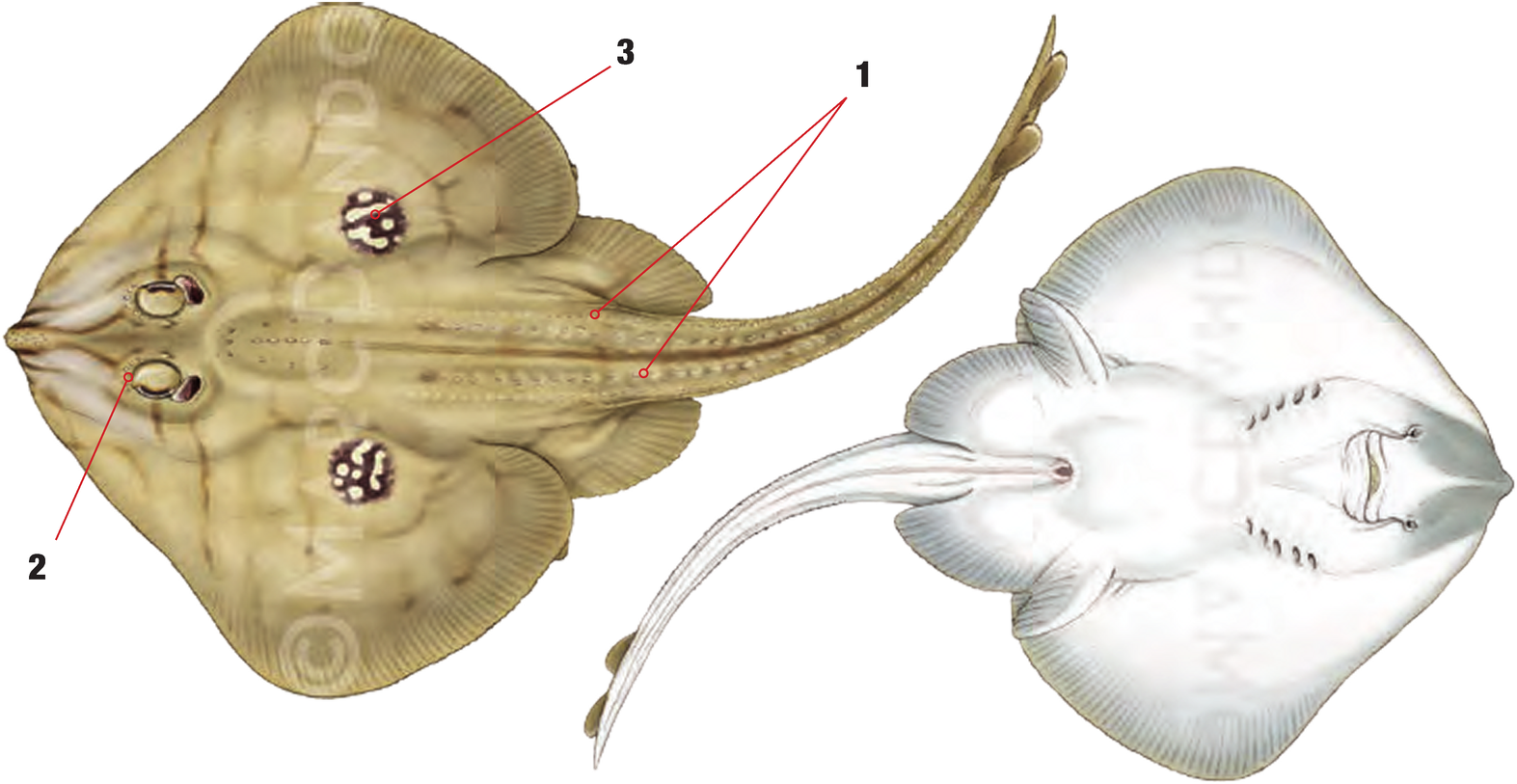
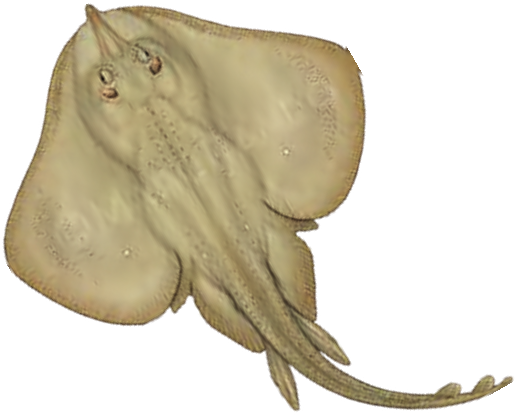
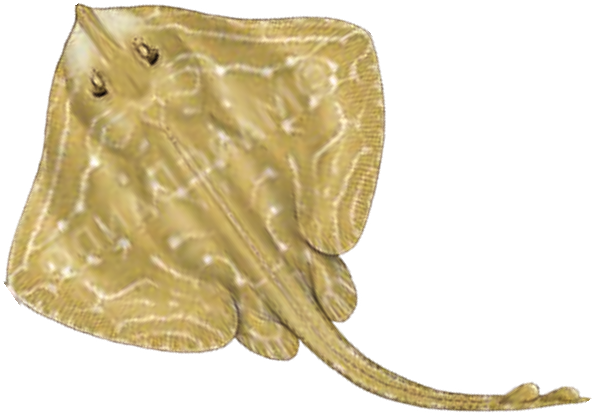
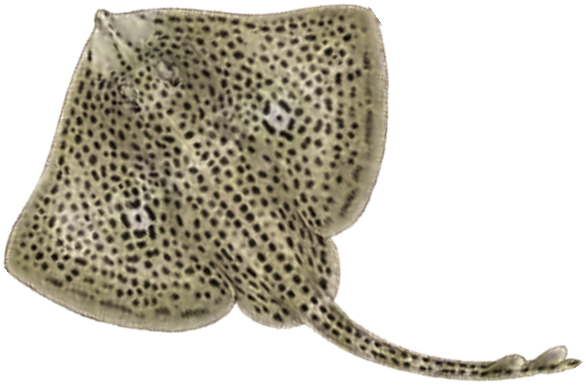
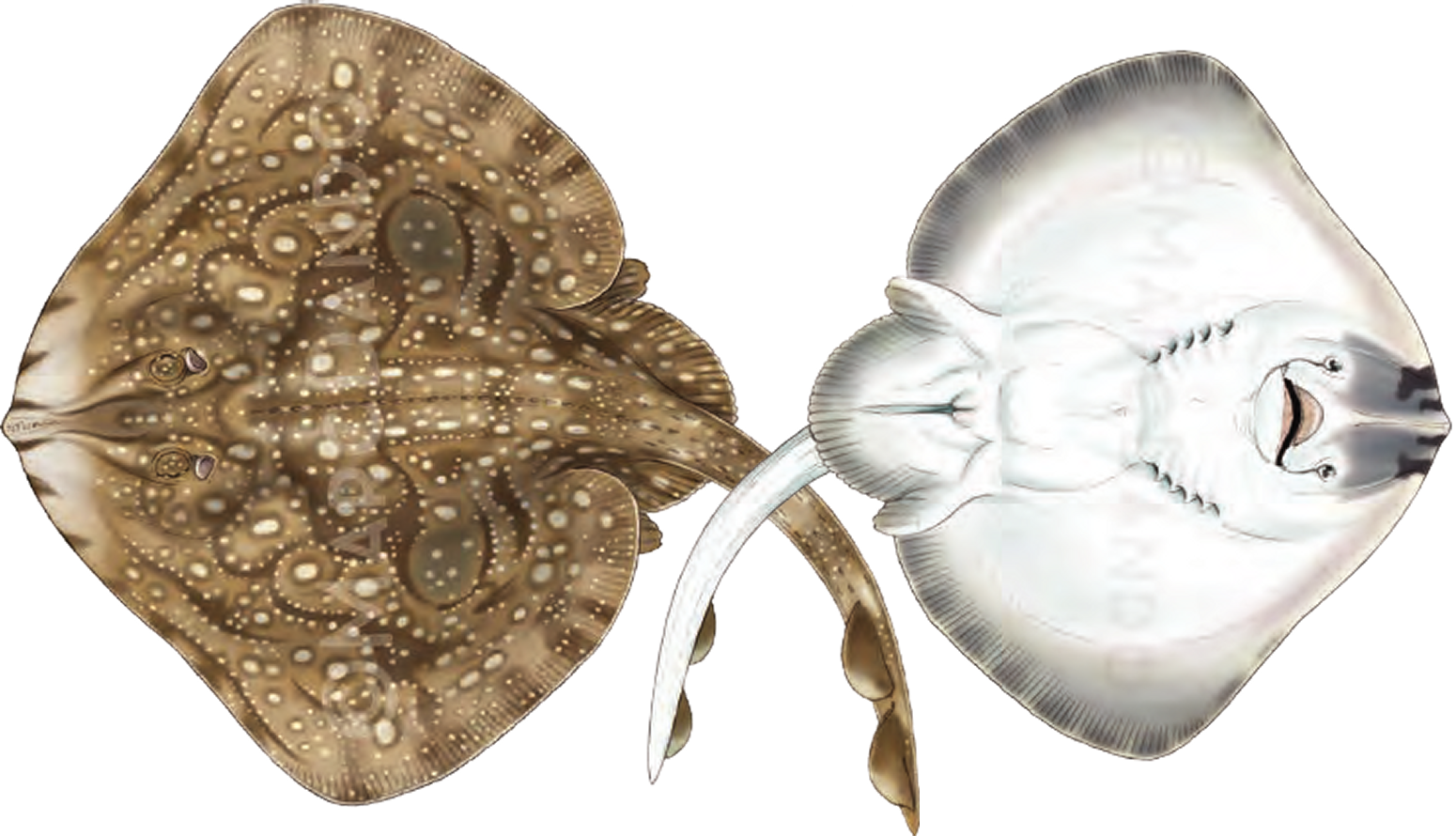
The numbers match the arrows on the illustration.
- 3–5 rows of thorns along tail joining to 2 median rows on trunk.
- 9–13 thorns on each orbital rim.
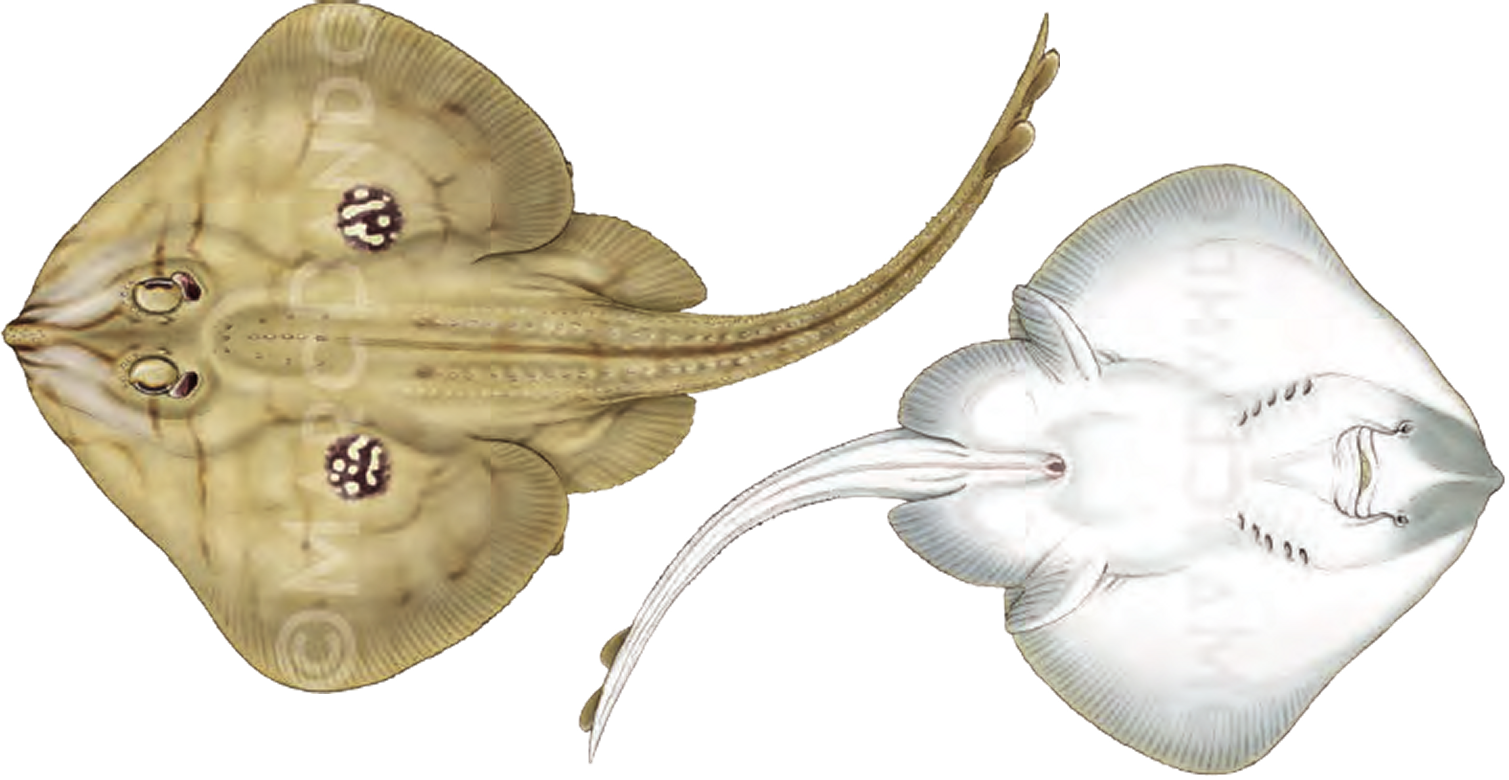
- Large black and yellow eyespot on each pectoral fin.
Colouring & markings
- Dorsal surface spinulose.
- Light grey to brown dorsal surface.
- Ventral surface white with grey margin.
Teeth
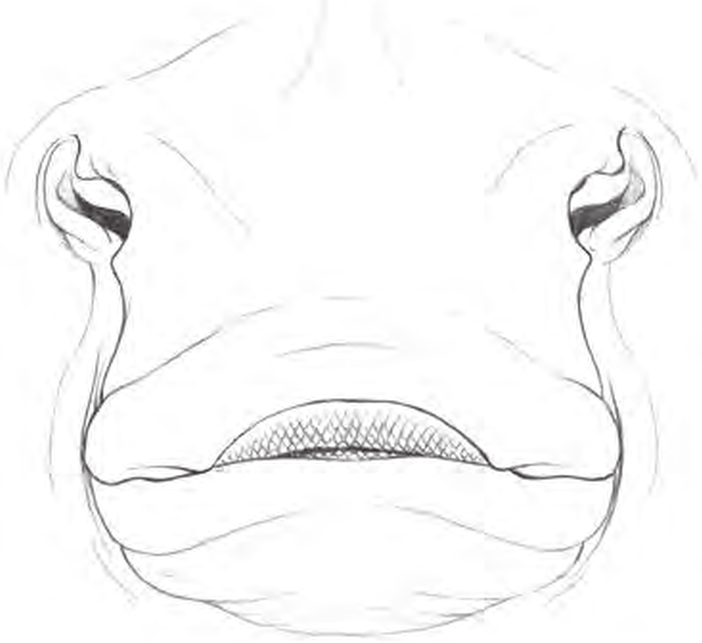
Sharp cusped teeth. Upper jaw: 54–60.
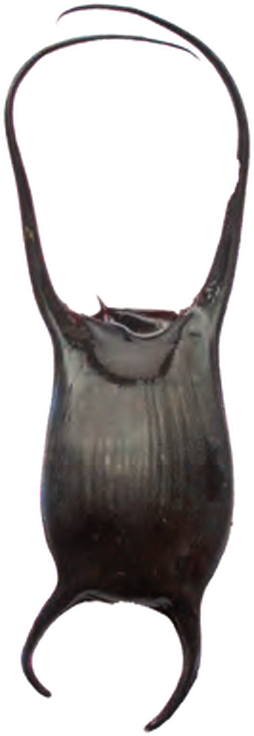
Eggcase
28–37mm wide. 32–65mm long (excl. horns). Delicate and rounded capsule with a smooth texture. If unbroken, upper horns are very long, about twice the length of the lower horns. Similar eggcase to the Spotted Ray Raja montagui, Shagreen Ray Leucoraja fullonica and Sandy Ray L. circularis.
How big do they get?
Where they live
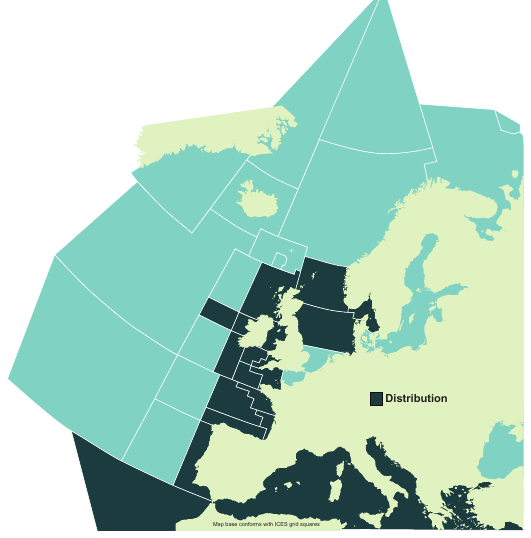
Distribution
Northeast Atlantic from Norway to Morocco including the Mediterranean Sea.
Habitat
Demersal from 30–500m. Most commonly to 200m. Found on the continental shelf and upper slopes over sandy and coarse substrates.
In the wild
-
Recorded on a Shark Trust survey dive -
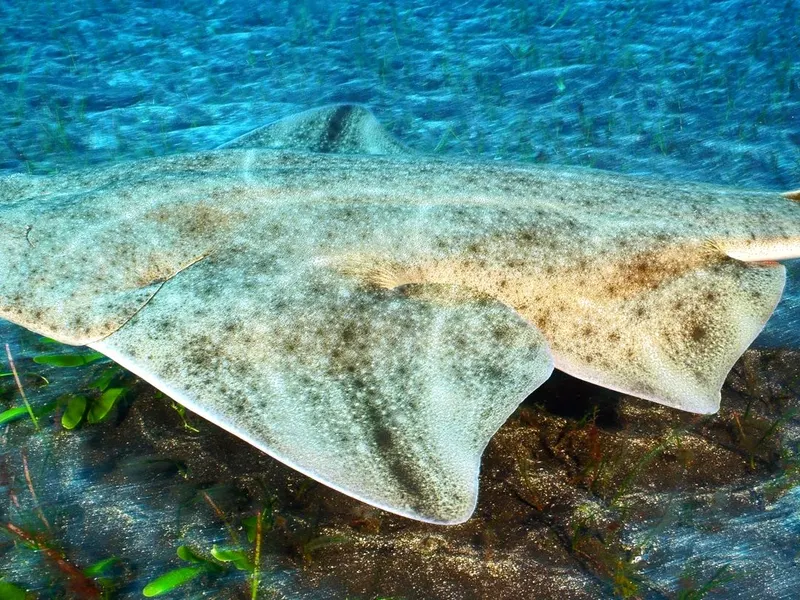
Resting on a sandy seabed -
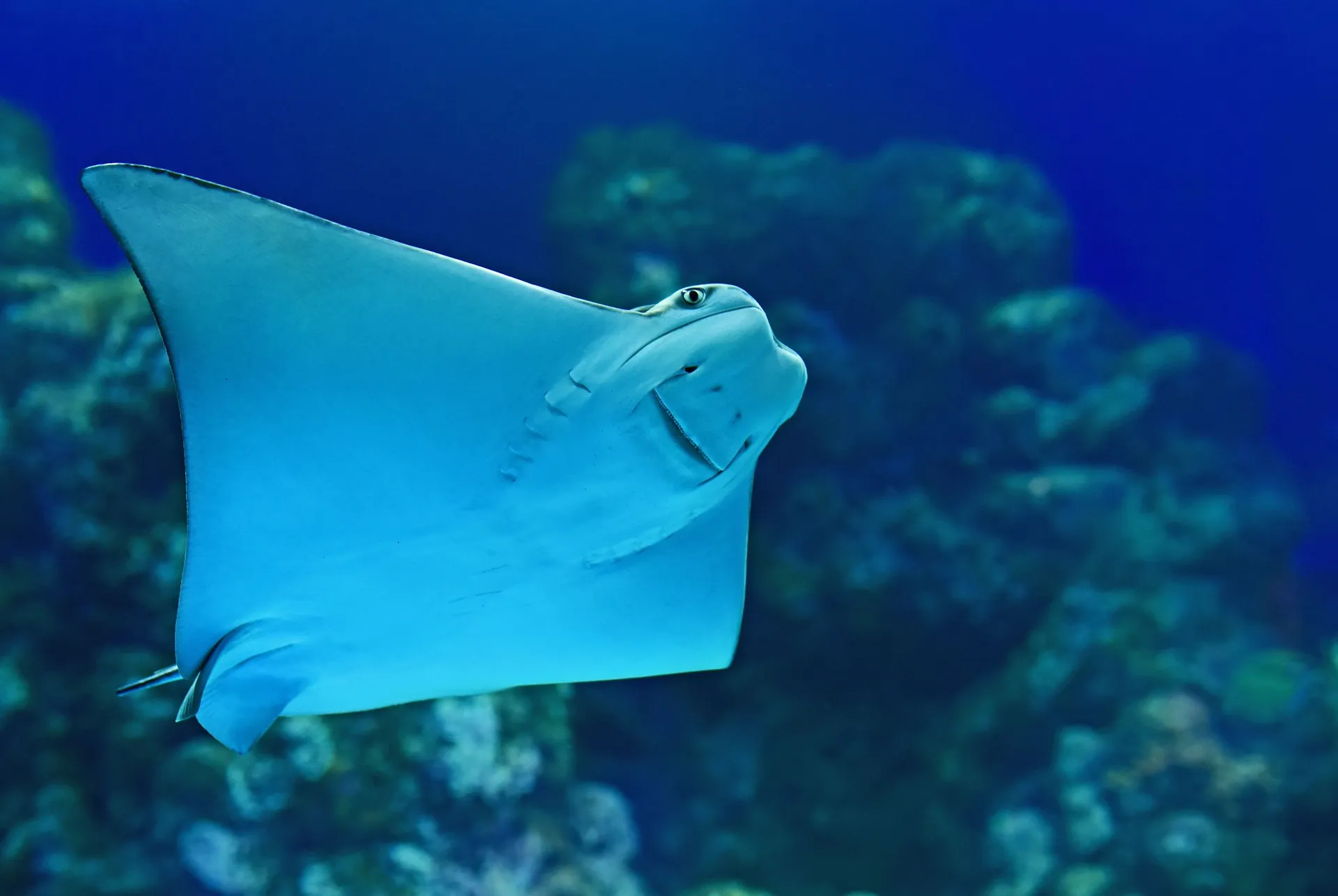
Cruising close to the sea floor -
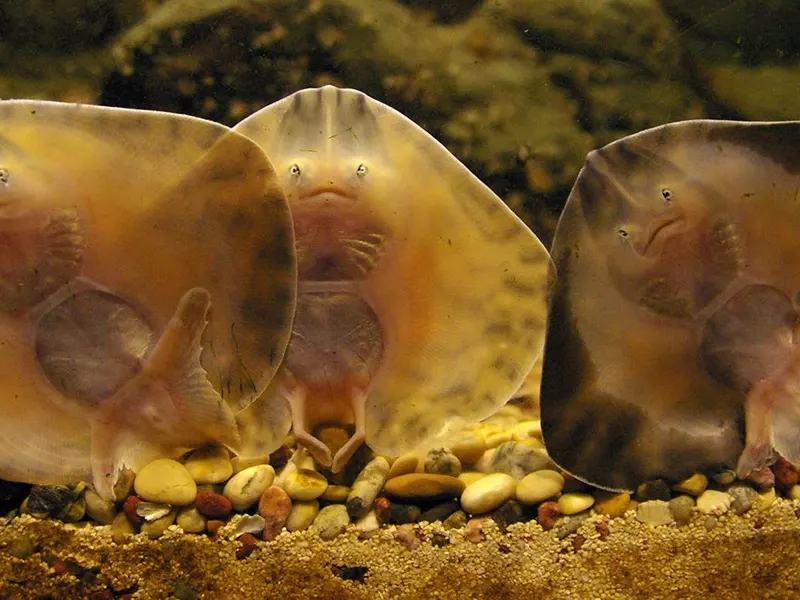
In the shallows at dusk -
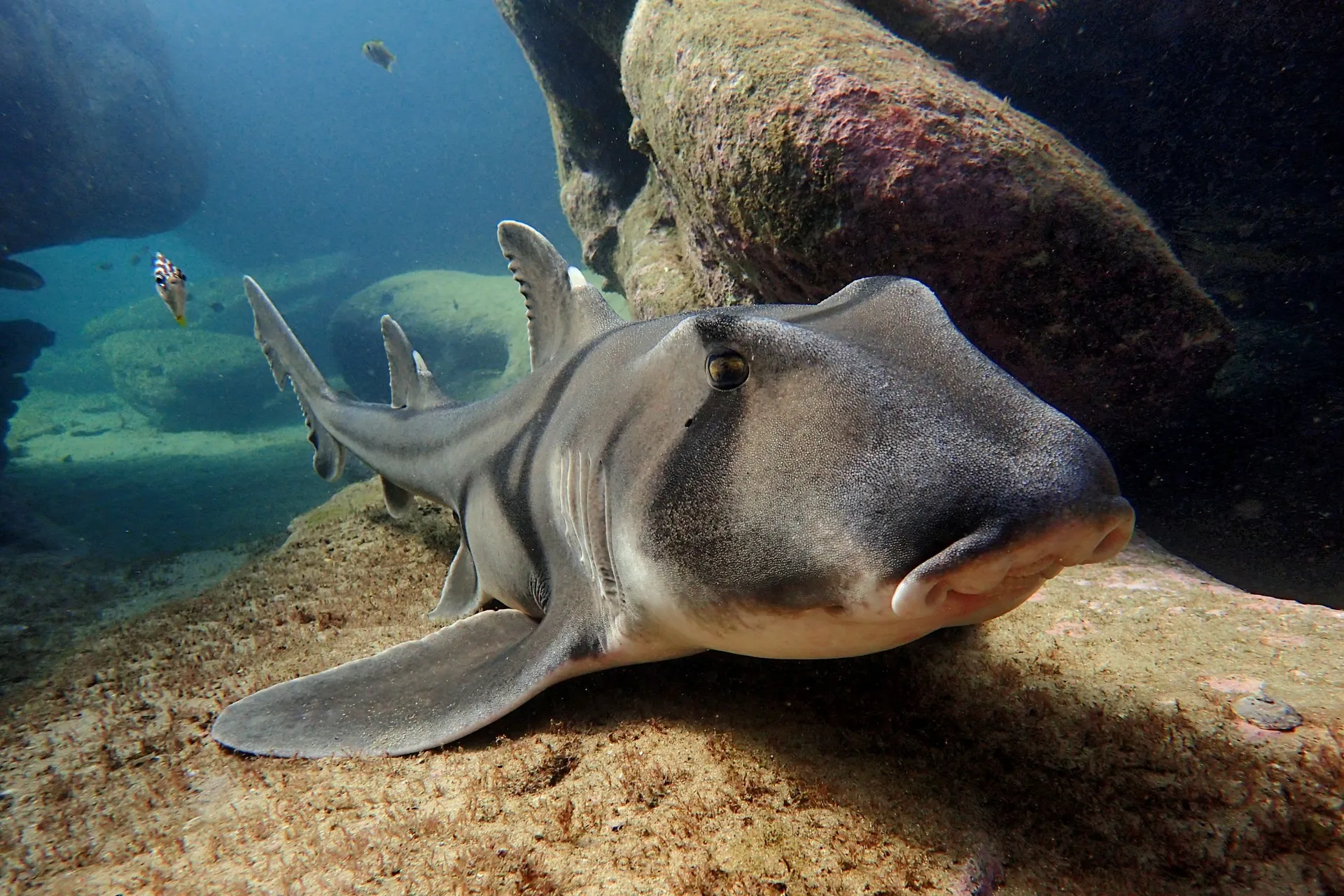
Sheltering on the reef
Go deeper
Size & biology
- Birth: 9–12cm.
- Matures: female 53–60cm; male 50–57cm.
- Max. TL: female 75cm; male 67cm.
- Max. age est.: 12 years.
- Oviparous, females produce ~100 eggcases throughout the year.
- Embryonic development takes ~8 months.
- Feeds on crustaceans, polychaete worms and teleosts.
Conservation status
IUCN Red List: Global: Least Concern (2015) Europe: Least Concern (2015) Mediterranean: Near Threatened (2016) A relatively widespread skate, the Northeast Atlantic population has remained stable. As a smaller bodied skate, the Cuckoo Ray may be better able to withstand fishing pressure than larger bodied skates. Further research on stock levels is needed due to issues with misidentification.
Management
Subject to regulations under the CFP.
Commercial importance
No targeted fisheries exist for the Cuckoo Ray in the Northeast Atlantic but it’s taken as bycatch in demersal, gillnet and offshore trawl and dredge fisheries targeting hake, anglerfish, scallops and flat fish. As a smaller species of skate, it is less valued and frequently discarded however sometimes landed and utilised for human consumption.
References & further reading
Assessment: RJN/NEA/2020
- Ebert & Stehmann. Gordon et al.
- Ellis et al. Griffiths et al.
- Ellis et al. ICES Advice.
- Last et al. Craven et al.
- Farias et al.