Ghost Catshark
Apristurus manis (Springer, 1979)
Least Concern- Maximum length
- 88 cm
- FAO code
- APA
Meet the Ghost Catshark
- Also known as
- GHOST CATSHARK, Geister-Tiefwasserkatzenhai (DEU), Pejegato Fantasma (ESP), Holbiche Fantôme (FRA).
How to identify
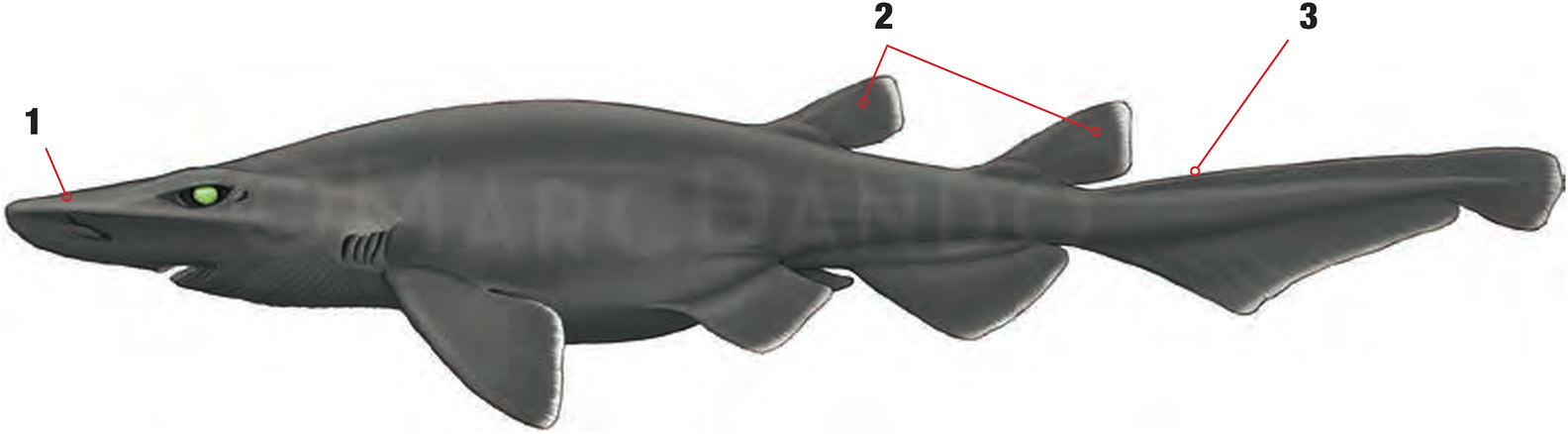
The numbers match the arrows on the illustration.
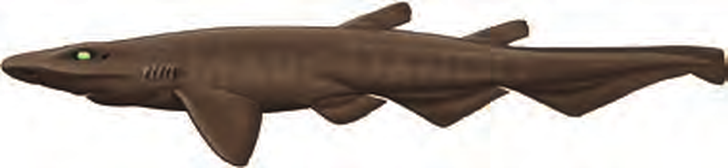
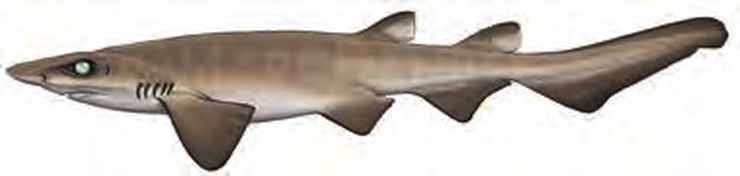
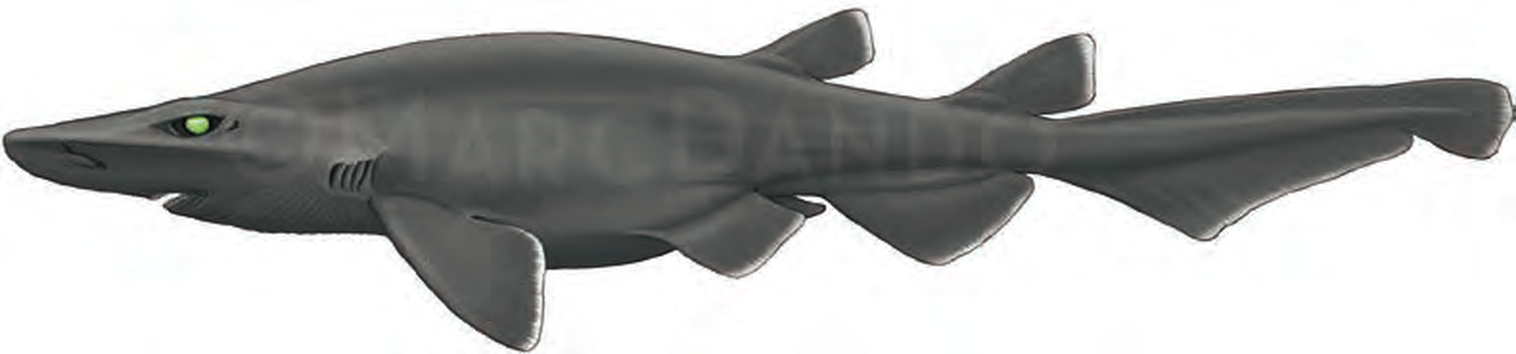
- Stout body strongly tapering into a broad, flattened head and elongated snout.
- Equal sized dorsal fins, first fin originating over midbase of pelvic fin. Interdorsal space greater than base of first dorsal fin.
- Long, narrow caudal fin with a visible crest of large denticles.
Colouring & markings
- Uniform grey or blackish.
- Dorsal and pectoral fin-tips sometimes lighter, especially juveniles.
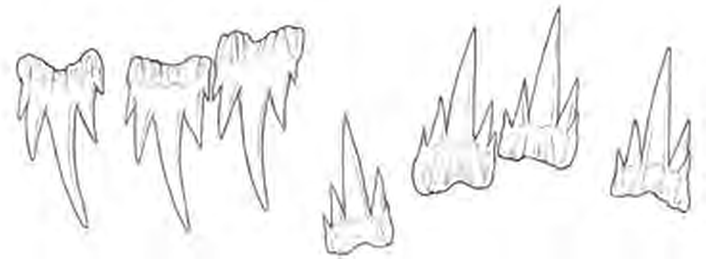
Teeth
Teeth enlarged in adult males. Upper jaw: 59. Lower jaw: 52.
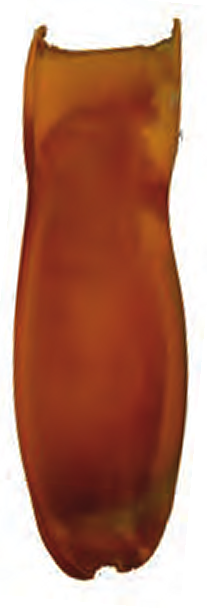
Eggcase
Flammang Brooke 63−71mm long. Vase shaped with short ~2mm Eggcase anterior horns. Lacking any tendrils.
How big do they get?
Where they live
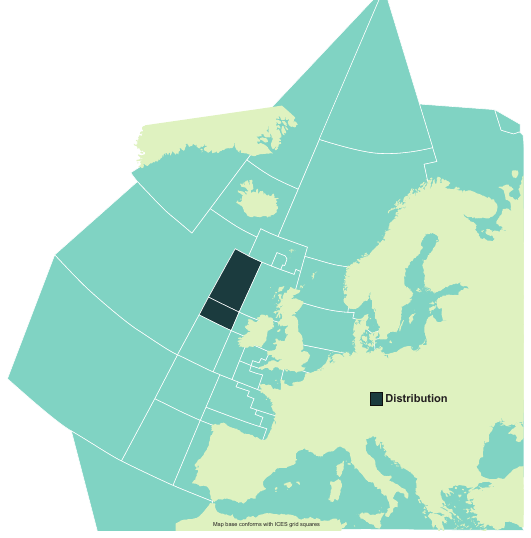
Distribution
Reported in Rockall Trough and the Porcupine Bank in Northeast Atlantic. Also off South Africa, in Eastern Atlantic and the coast of Massachusetts, USA, in Northwest Atlantic.
Habitat
Deepwater shark found on continental slopes from 600−1,900m; primarily deeper than 1,500m.
In the wild
-
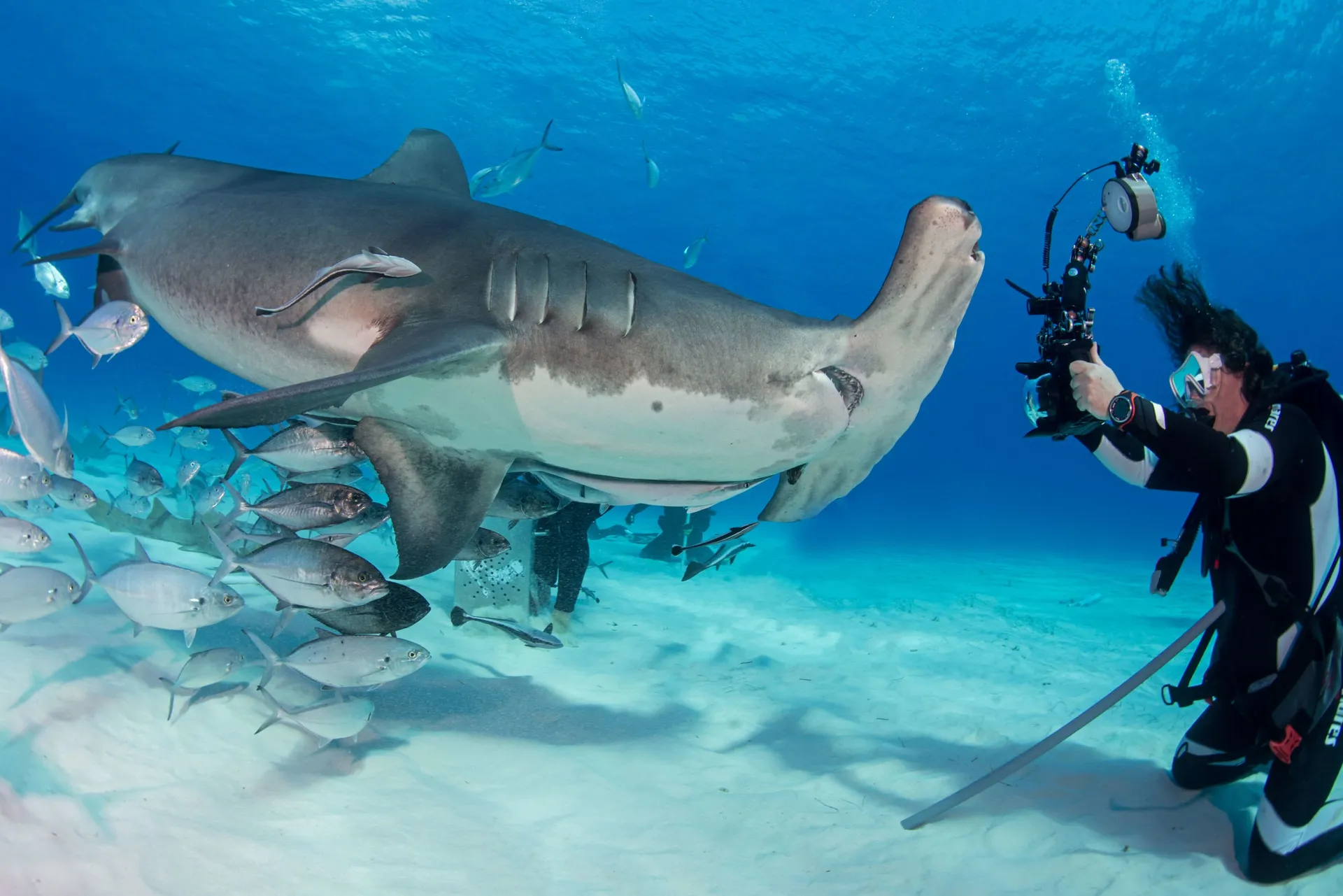
Recorded on a Shark Trust survey dive -
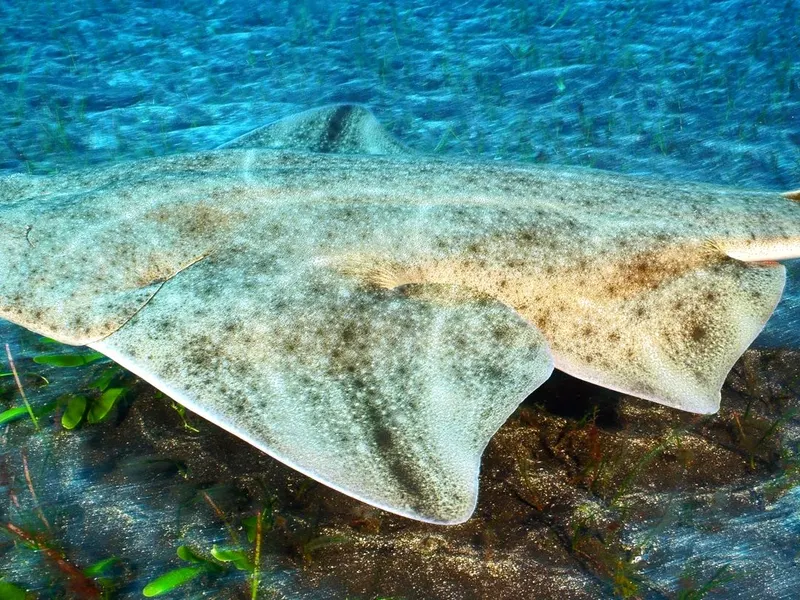
Resting on a sandy seabed -
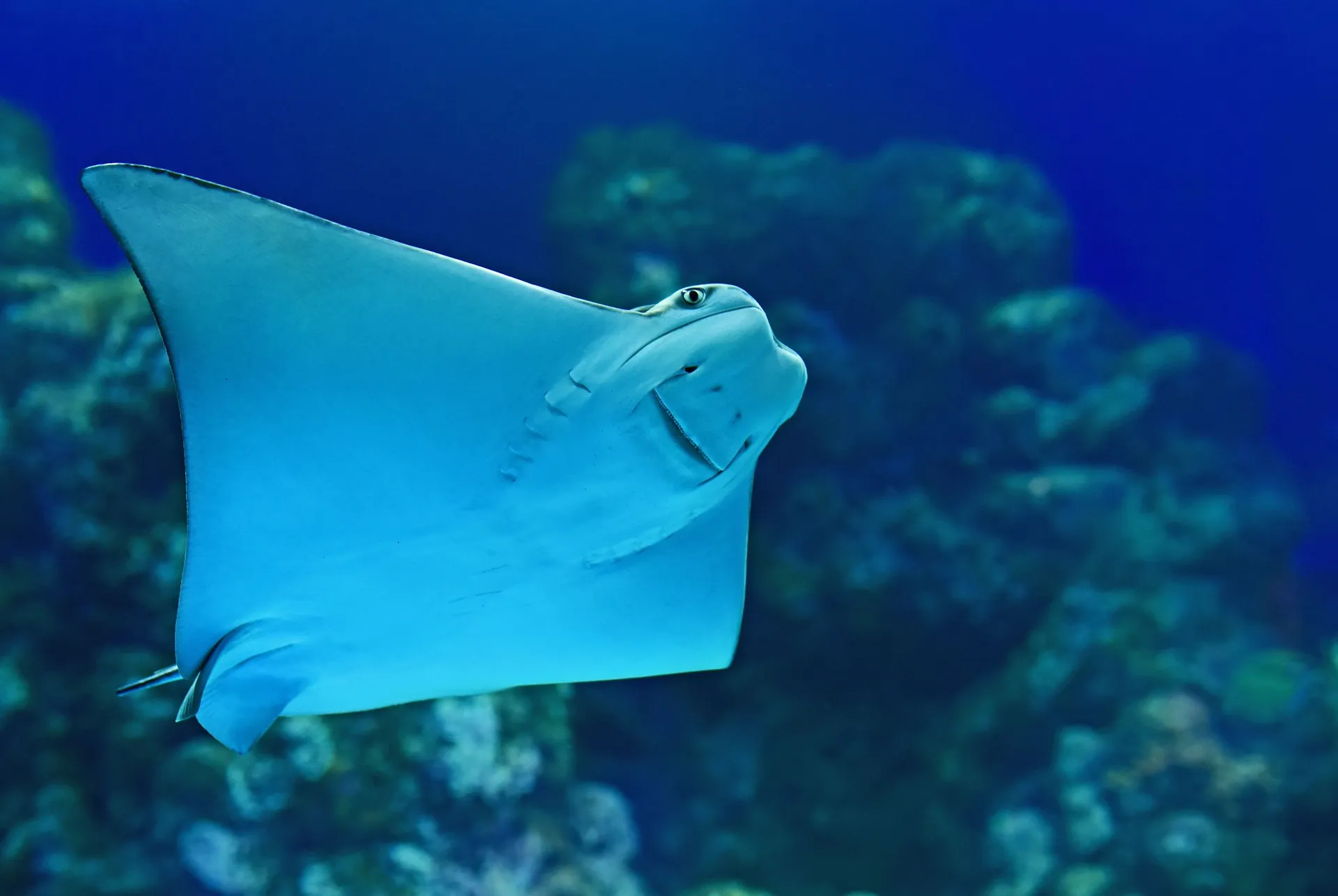
Cruising close to the sea floor -
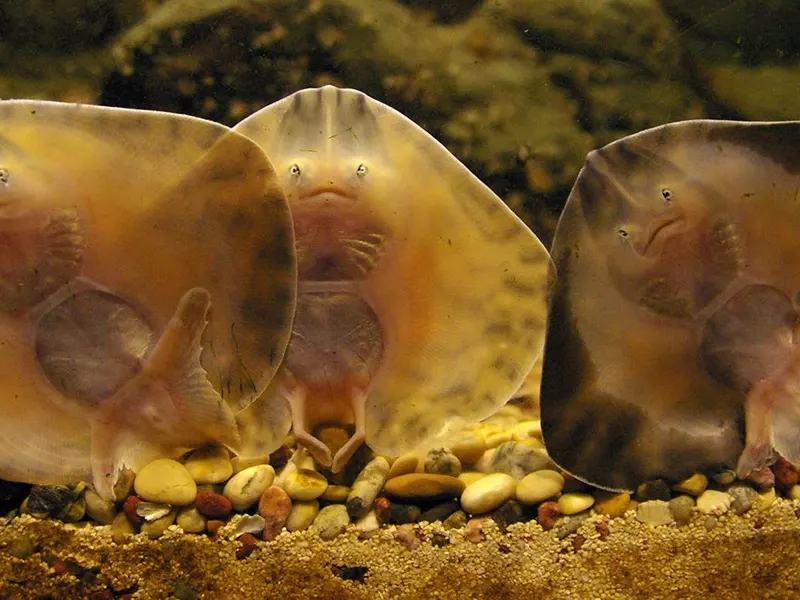
In the shallows at dusk -
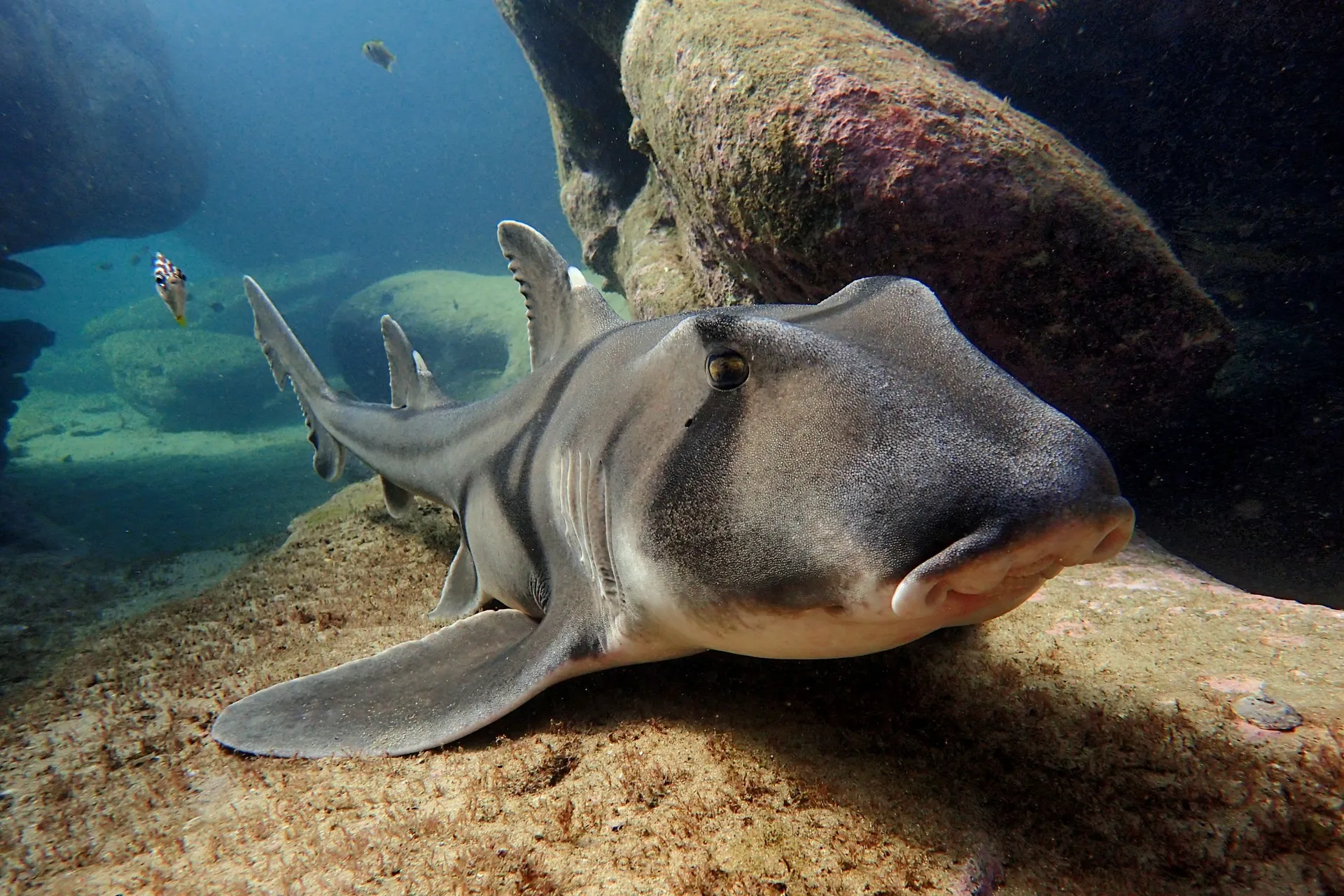
Sheltering on the reef
Go deeper
Size & biology
- Birth: smallest free-swimming specimen recorded was 20cm.
- Matures: female 70−76cm; male 85cm.
- Max. TL: 88cm.
- Oviparous. Little else is known about the biology or diet of this shark.
- Other Apristurus sp. feed on crustaceans, cephalopods and small teleosts.
Conservation status
IUCN Red List: Global: Least Concern (2019) Europe: Least Concern (2015) Much of this species range lies below the depth of current fisheries, offering it some protection from overexploitation. Future expansion of deepwater fisheries, could pose a threat to this little-known shark.
Management
Subject to prohibitions under the CFP and FNA regulations.
Commercial importance
No target fisheries exist for the Ghost Catshark; possibly taken as bycatch and discarded in deepwater trawl fisheries.
References & further reading
Assessment: APA/NEA/2020
- Ebert & Stehmann.
- Ebert et al.
- Pollom et al.
- Johnston et al.
- Walls, R.
- Flammang et al.