

White Ghost Catshark
Apristurus aphyodes Nakaya & Stehmann, 1998
Least Concern- Maximum length
- 54 cm
- Depth range
- From 1,000 to 1,800m.
- FAO code
- API
Meet the White Ghost Catshark
- Also known as
- WHITE GHOST CATSHARK, Pale Catshark, Heller Tiefwasserkatzenhai (DEU), Tiburó gato fantasma (ESP), Holbiche spectre (FRA), Witte kathaai (NLD).
How to identify
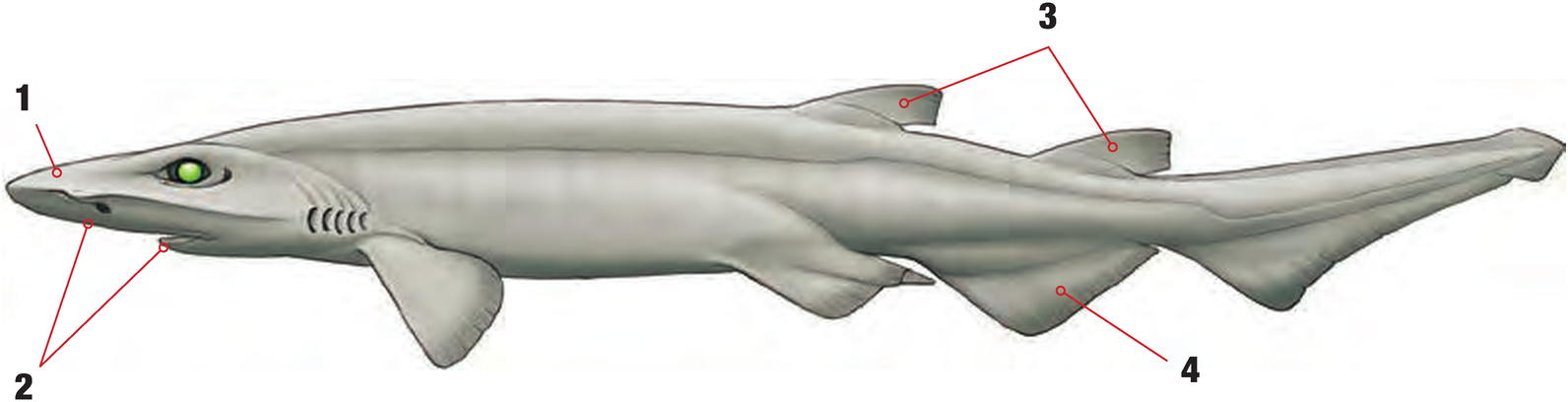
The numbers match the arrows on the illustration.
- Broad and flattened head with elongated snout.
- Large nostrils and broadly arched mouth extending in front of eyes.
- Both dorsal fins of similar size.
- Large anal fin separated from long tail fin by notch.
Colouring & markings
- Uniformly whitish to grey.
- Fins sometimes slightly darker than body.
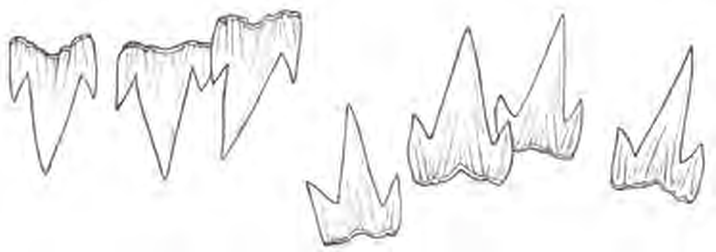
Teeth
Small teeth with single high medial cusp bordered by 2–3 smaller lateral cusplets. Teeth similar in both jaws. Upper jaw: 56–68. Lower jaw: 46–64.
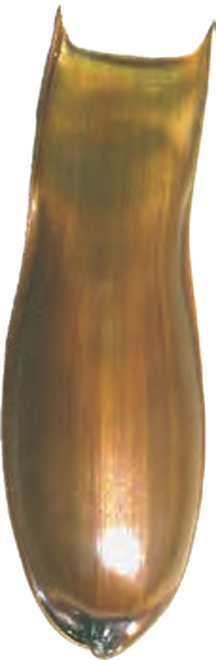
Eggcase
26(1). Cybium, 2002. 14–17mm wide. 43–52mm long. Iglésias Eggcase is similar in shape to other Apristurus species. Vase shaped, horns are short Eggcase and curled. Eggcase lacks long tendrils.
How big do they get?
Where they live
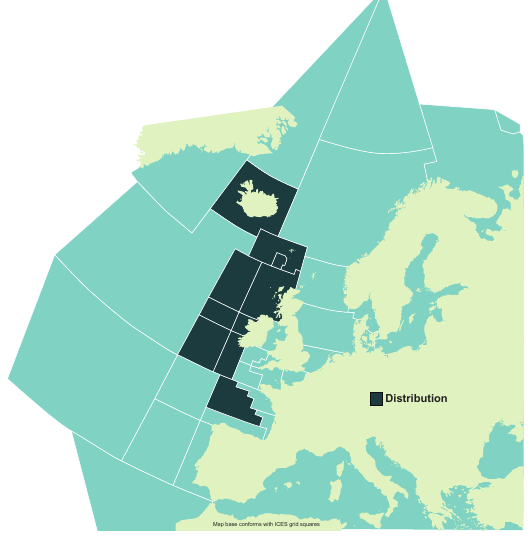
Distribution
Northeast Atlantic from Iceland to the Bay of Biscay and Galicia Bank Seamount, including the Porcupine Seabight and Lousy Bank.
Habitat
Found on upper to mid continental, insular and deep Atlantic slopes from 1,000–1,800m. Normally found over soft, sandy bottoms in temperatures 3.7–9.7°C.
In the wild
-

Recorded on a Shark Trust survey dive -
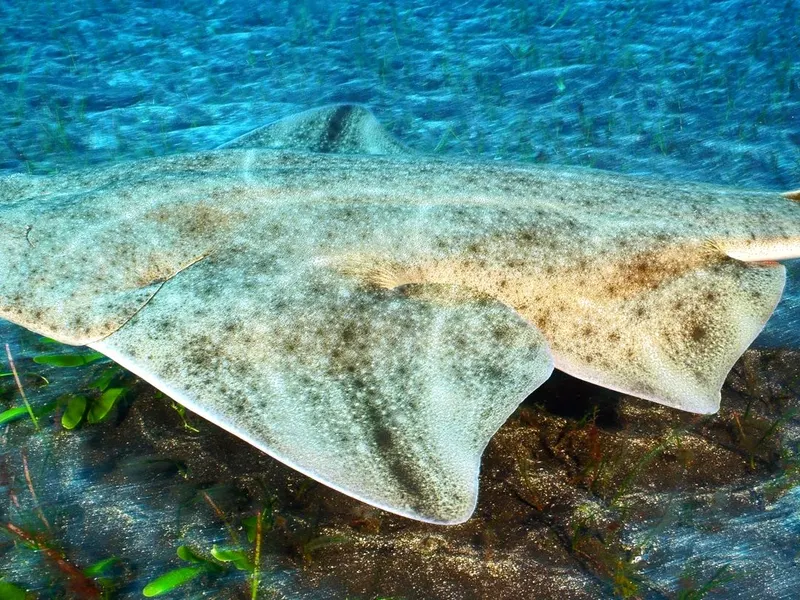
Resting on a sandy seabed -
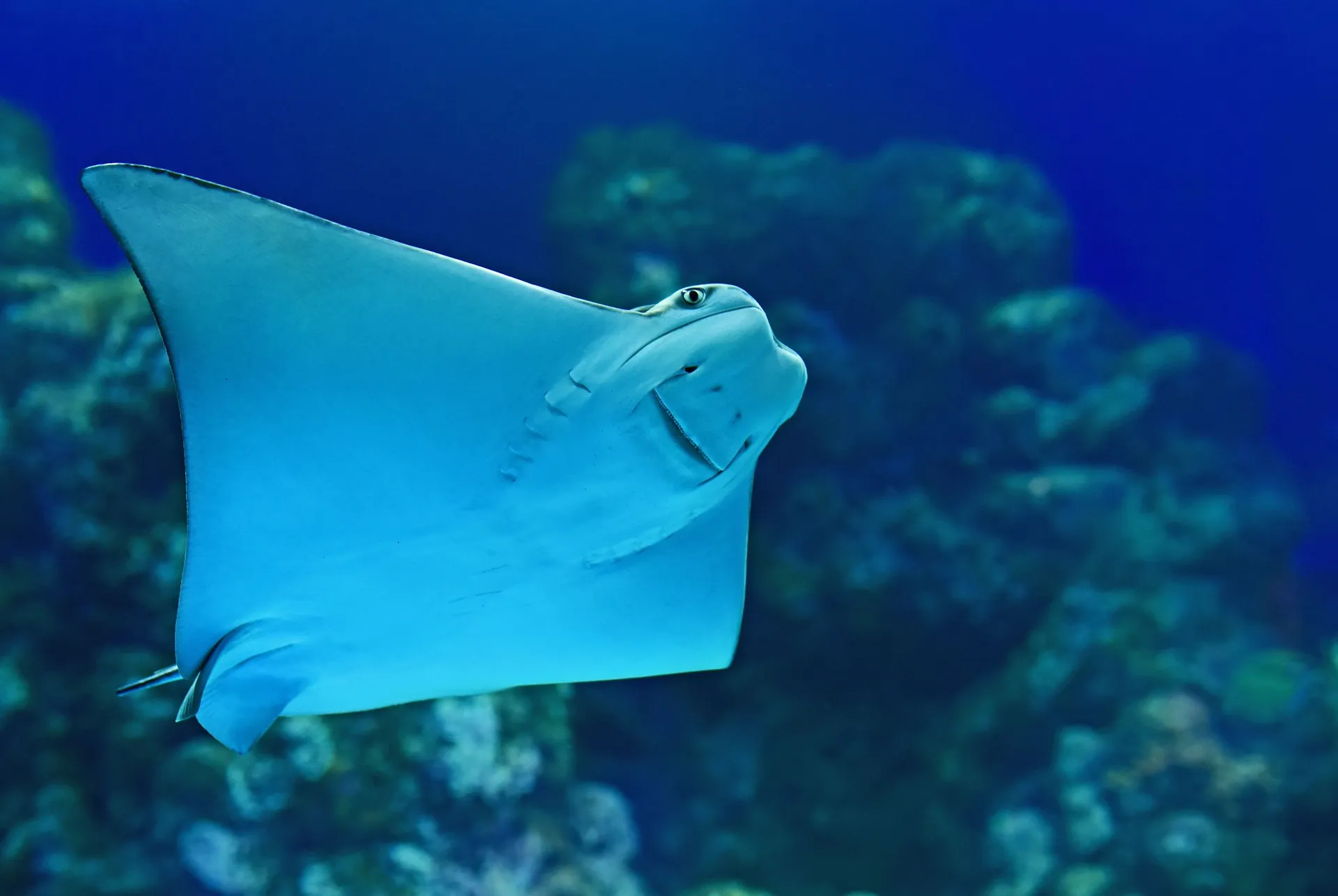
Cruising close to the sea floor -
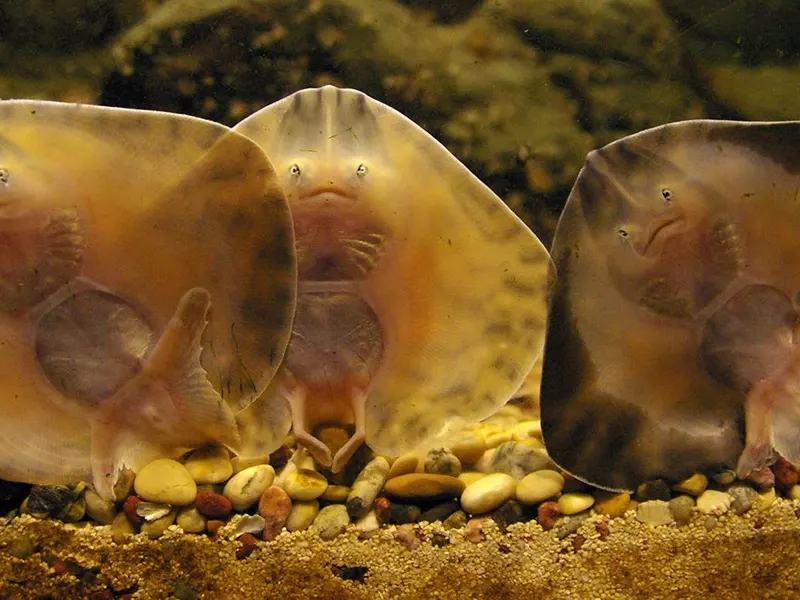
In the shallows at dusk -
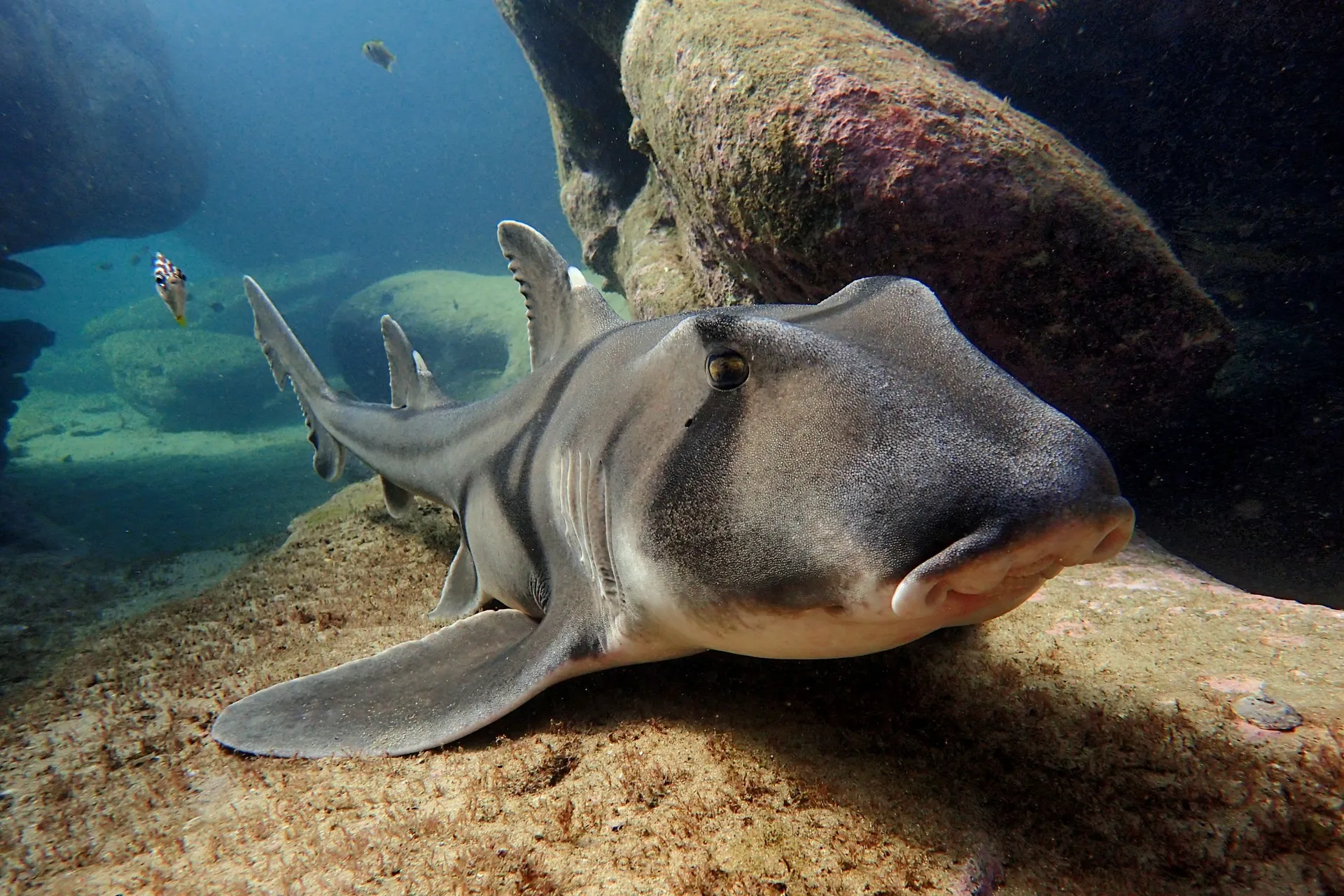
Sheltering on the reef
Go deeper
Size & biology
- Matures: female 50–56.9cm; male 47–49cm.
- Max. TL: ≥54cm.
- Oviparous, little else known about reproduction and biology.
- Feeds on crustaceans, cephalopods and small benthic fishes.
Conservation status
IUCN Red List: Global: Least Concern (2015) Europe: Least Concern (2015) A little-known catshark, within one of the most taxonomically confused genera of sharks (Apristurus). Much of its range lies outside the reach of deepwater fisheries affording it some protection from overexploitation.
Management
Subject to prohibitions under the CFP and FNA regulations.
Commercial importance
Not commercially important. Occasionally taken in large numbers as bycatch in deepwater trawl fisheries.
References & further reading
Assessment: API/NEA/2020
- Ebert & Stehmann.
- Ebert et al.
- Rodríguez-Cabello et al.
- Walls, R.
- ICES WGEF Report.
- Moore et al.
- Iglésias et al.
- Neat et al.