Iceland Catshark
Apristurus laurussonii (Saemundsson, 1922)
Least Concern- Maximum length
- 72 cm
- Depth range
- From 560 to 2,060m.
- FAO code
- APQ
Meet the Iceland Catshark
- Also known as
- ICELAND CATSHARK, Flathead Catshark, Madeira Catshark, Atlantic Ghost Catshark, Island-Tiefwasserkatzenhai (DEU), Pejegato De Madera (ESP), Roussette De Madère (FRA), Atlantische Spookkathaai (NLD).
How to identify
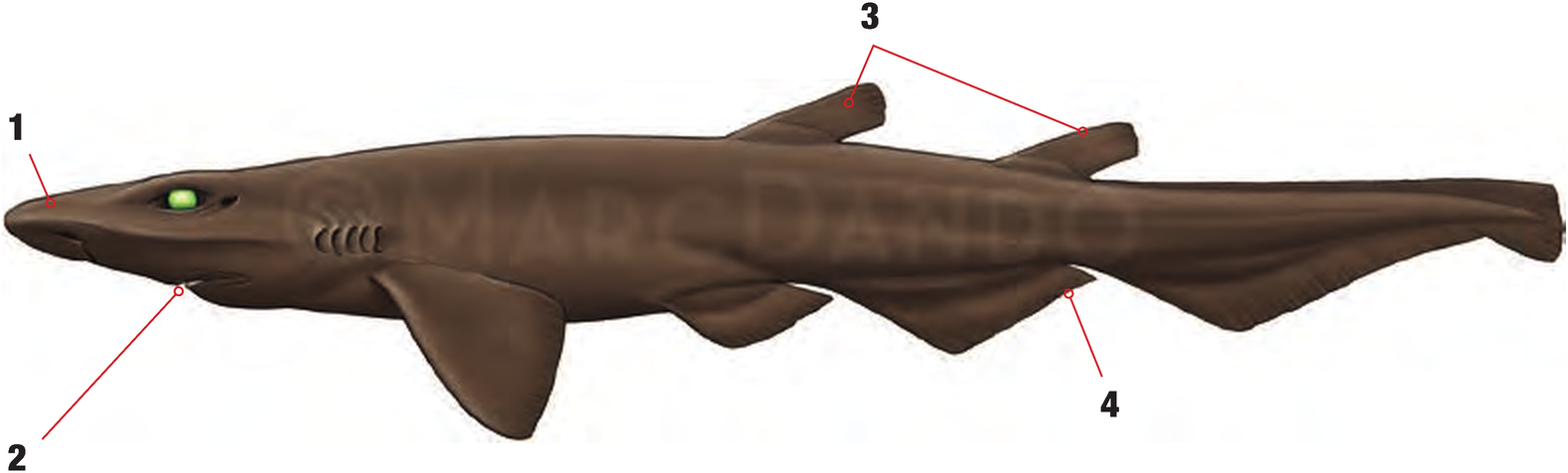
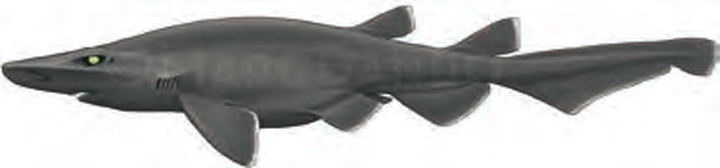
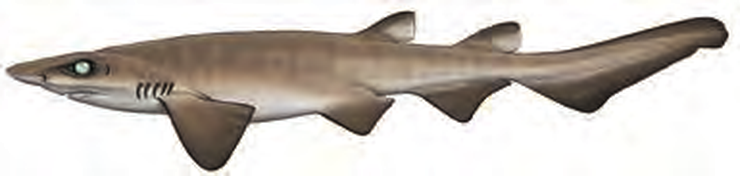
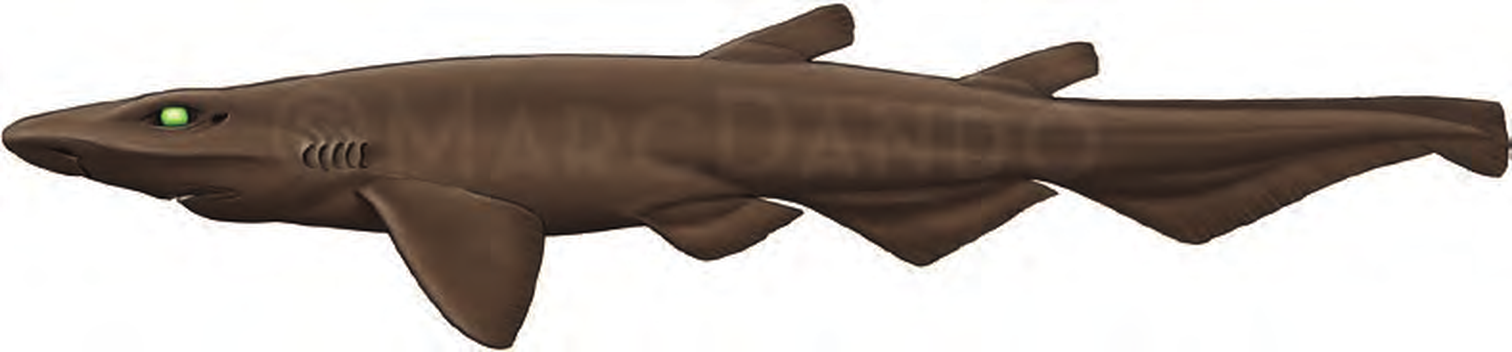
The numbers match the arrows on the illustration.
- Slender body with broad, flattened head and short snout.
- Long, broadly arched mouth.
- First dorsal fin slightly larger than second.
- Large, elongated anal fin separated from elongated tail fin by small notch.
Colouring & markings
- Uniform dark brown.
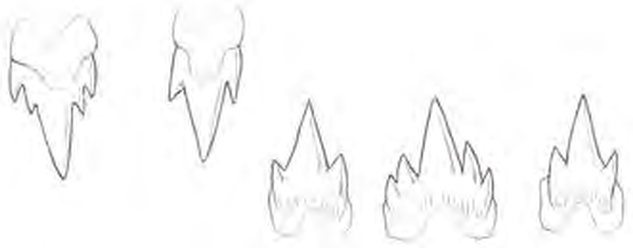
Teeth
Teeth small in both upper and lower jaws, each with long central cusp with one to three smaller lateral cusps on each side. 2-4 Upper jaw: 54–102. 2-4 Lower jaw: 43–106. 2-4
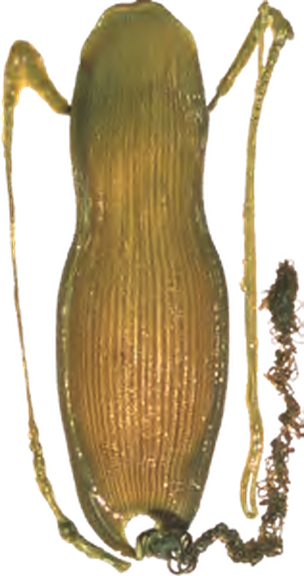
Eggcase
26(1). 24–27mm wide. Cybium, 61–72mm long. Long, fine striations run 2002. length of the eggcase. Anterior end with long, weak Iglésias fibrous threads in each corner. Posterior end with spiralled Eggcase tendrils extending from two small ‘horns’.
How big do they get?
Where they live
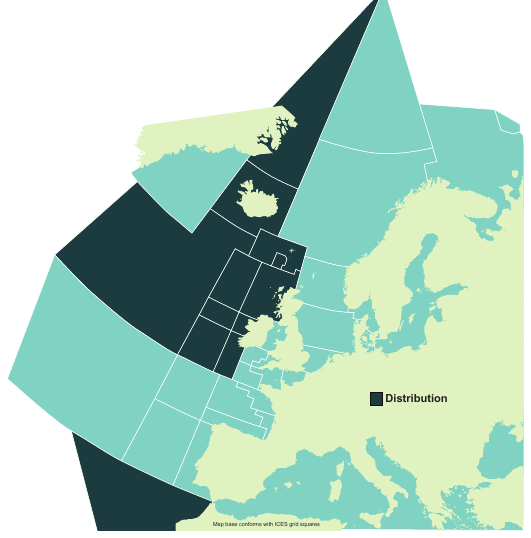
Distribution
North and Central Atlantic. North Atlantic from Iceland, Faroe Islands to west of Scotland and Ireland. Also reported off Madeira and Canary Islands. Occurs in the Northwest and Western Central Atlantic.
Habitat
Likely demersal deepwater shark found on upper continental slopes from 560–2,060m. Catches of this shark occurred in bottom waters with temperature range of 1.7–4.3ºC.
In the wild
-
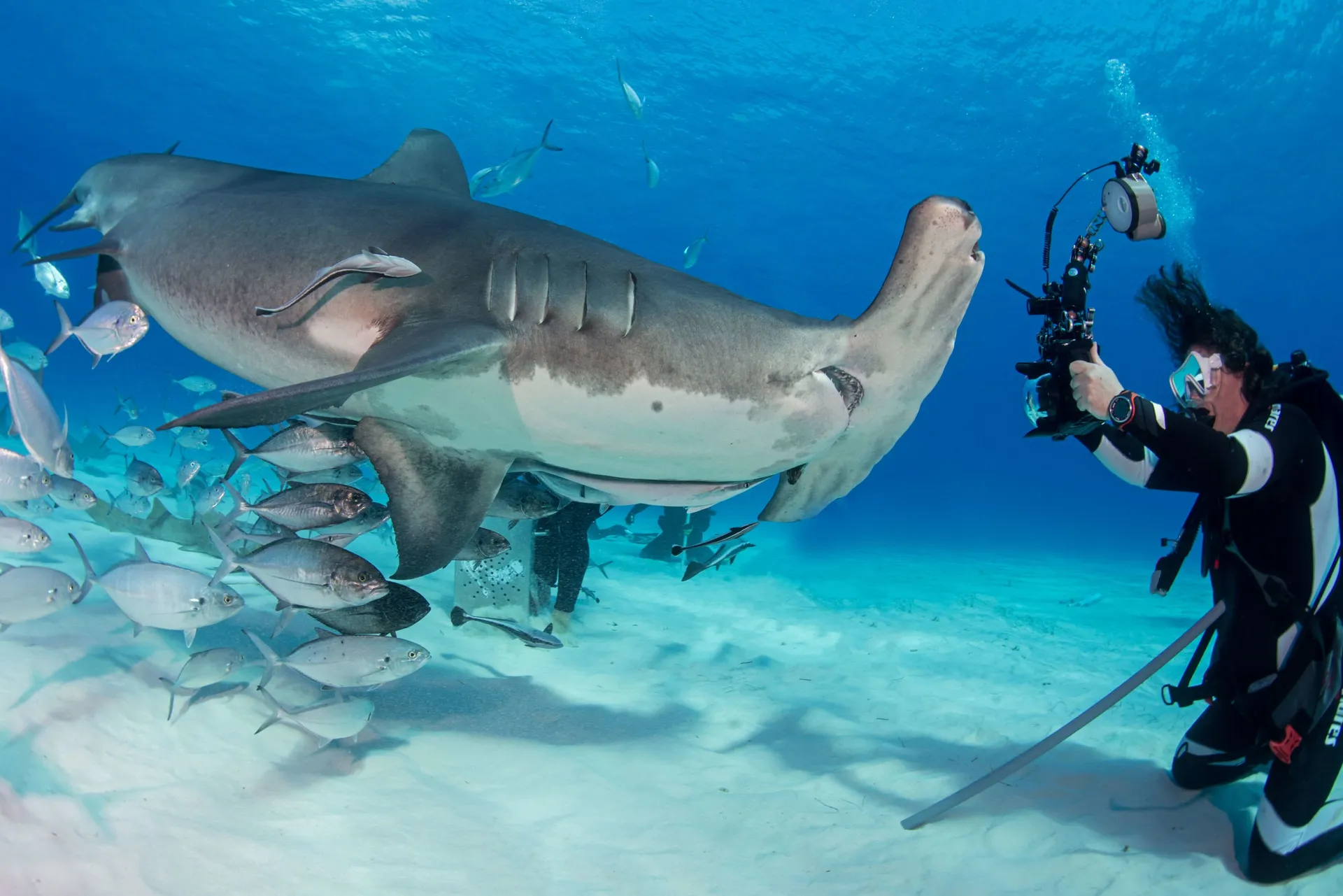
Recorded on a Shark Trust survey dive -
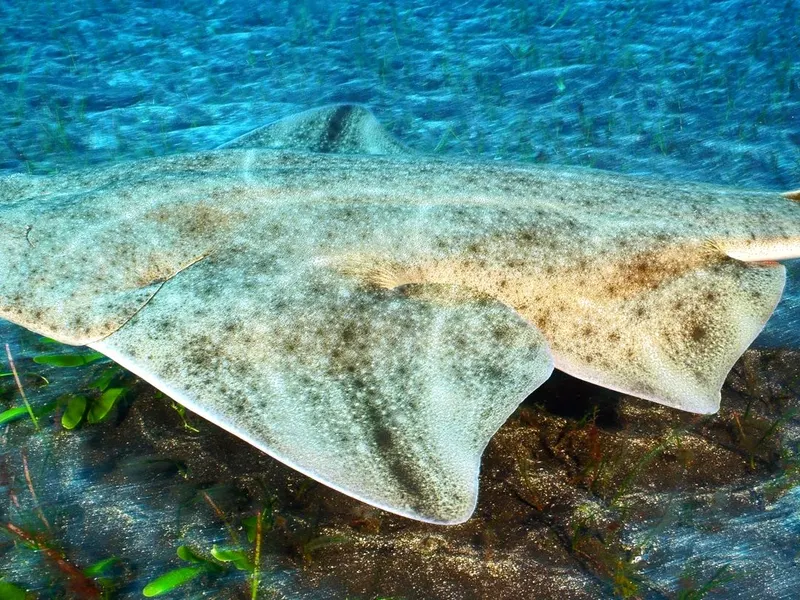
Resting on a sandy seabed -
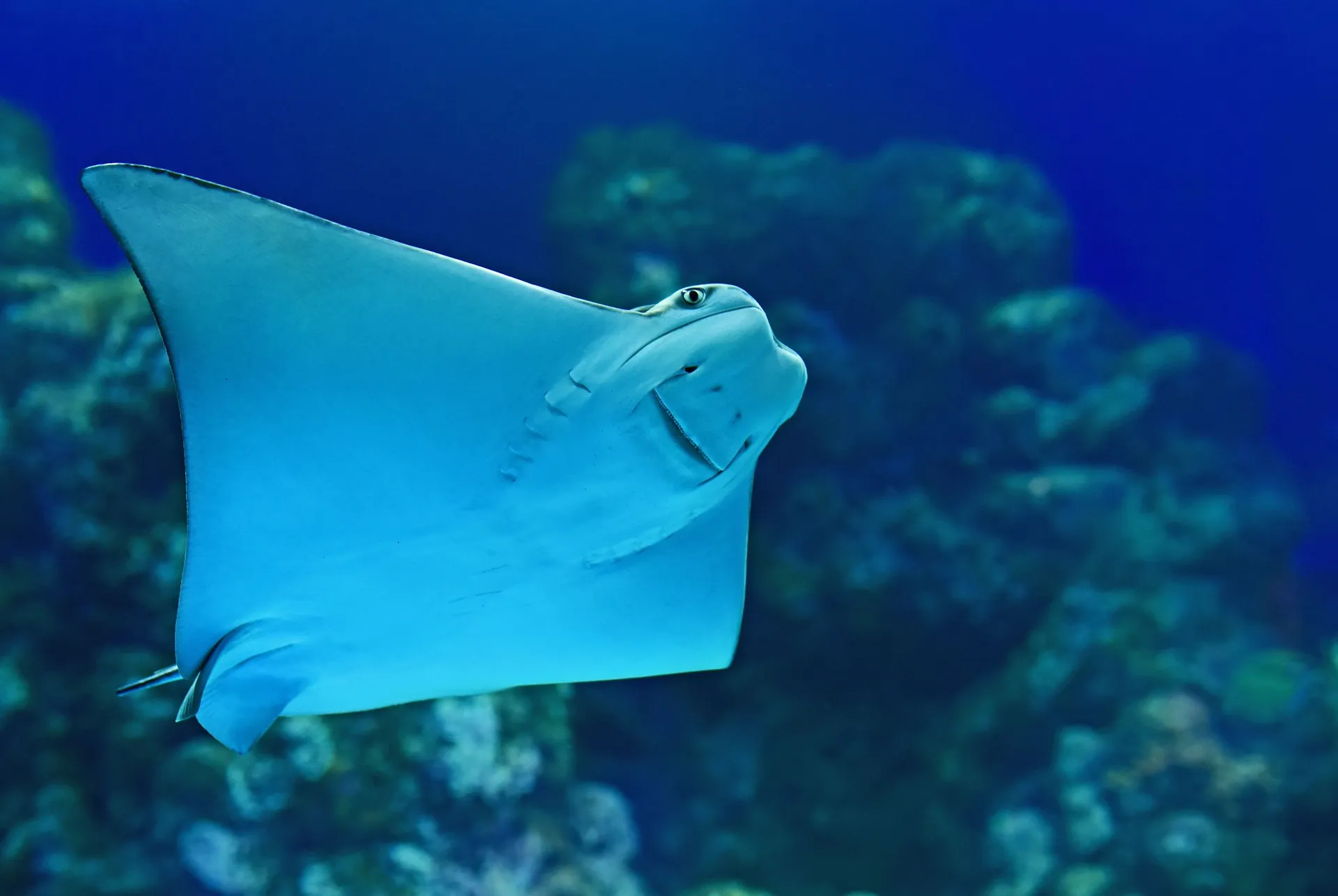
Cruising close to the sea floor -
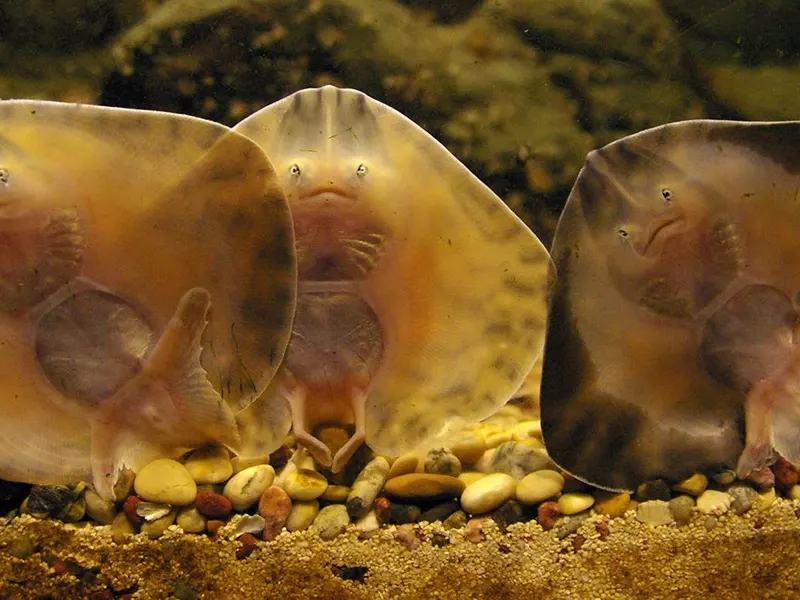
In the shallows at dusk -
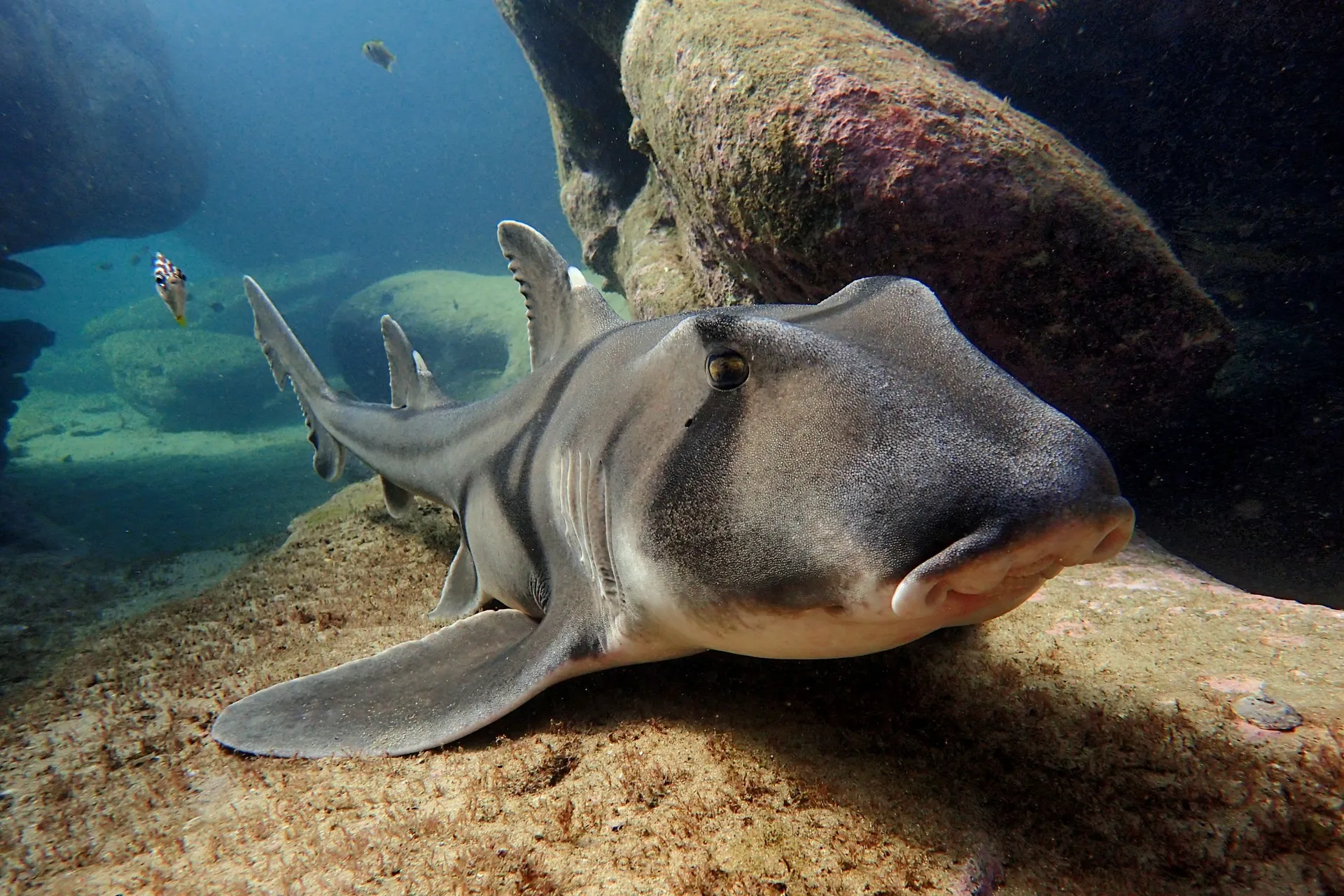
Sheltering on the reef
Go deeper
Size & biology
- Birth: smallest specimen reported 25cm.
- Matures: smallest mature female reported 59.2cm.
- Max. TL: 72cm.
- Oviparous, little else is known about the biology of this shark.
- Diet unknown. Likely consists of crustaceans, cephalopods and small benthic fishes.
Conservation status
IUCN Red List: Global: Data Deficient (2007) Europe: Least Concern (2015) A relatively common bycatch in several deepwater trawl fisheries. These fisheries do not overlap with the majority of this species habitat, as such, the current risk of overexploitation is low.
Management
Subject to prohibitions under the CFP and FNA regulations.
Commercial importance
Low commercial importance; a relatively common bycatch in deepwater bottom trawl fisheries but generally discarded.
References & further reading
Assessment: APQ/NEA/2020
- Walls, R.
- Ebert & Stehmann.
- Ebert et al.
- Iglésias & Nakaya.
- Iglésias et al.